
The question arrives at two moments: after a storm has taken a few tiles off, and after a brown mark has spread across a bedroom ceiling with nobody sure when it began. The answer is different in each case, which is why a flat yes or no does not exist. Buildings insurance is designed to respond to an event that is sudden and external. Roof coverings also wear out, and insurers treat that as a maintenance matter for the owner.
This guide explains how cover for the roof normally works, using published material from the Financial Ombudsman Service and Which?, and what makes a claim more or less likely to be accepted. It describes the policy, not the steps to take after a storm, which you will find in our storm damage claims guide. Nobody can promise that a claim will succeed. Our part is to report what the roof needs, and the reason.
What a buildings policy is built to pay for
A standard buildings policy covers the structure of the home: walls, floors, roof, fixed fittings and, usually, the outbuildings named in the schedule. Contents cover is a separate section that deals with your belongings. A roof therefore sits in the buildings part, and the insurer pays only when the damage comes from one of the causes the policy lists.
Those causes are often called named or specified perils. Fire, flood, storm, theft and vandalism are the familiar ones, and the full list sits in your policy documents. Many policies also offer accidental damage as an extra, which can respond to a one-off incident such as a ladder going through a slope. It is optional on some policies and built in on others, so look for it on your schedule rather than assuming.
Notice how many of those events are sudden. A storm arrives on a particular night. A tree falls on a particular afternoon. The insurer can see an event, a date and a link between the two. That is the pattern the whole system leans on, and it explains most of the disappointments that follow.
It also explains why the date matters so much to the person who handles your claim. A tile that blew off during a named windy night can be tied to that night. A tile that has been missing since before you noticed it cannot, and the insurer may reasonably ask when you first saw the gap, what the weather was doing, and who last looked at the roof. Having answers ready, even rough ones, saves a lot of back and forth.
Read three things in your own paperwork: the definition of storm, the list of exclusions, and whether accidental damage is included. Your policy wording beats any general guide, ours included.
What an insurer usually excludes
The Financial Ombudsman Service explains that policies often exclude gradual damage and wear and tear. The roof you are asking about may have lost slates because the nails rusted over twenty winters, or may have started leaking at a flashing that perished with age. Neither is an event. Both are the long, slow decline that exclusions were written for.
Which? makes the same point in its guide to winter cover: a standard policy may not pay for wear and tear, and one example it gives is water entering your home through a poorly maintained roof. The reasoning is that insurance is for the unexpected, whereas upkeep is a predictable cost of owning a house.
What counts as wear and tear on a roof?
Typical examples include slipped slates and failing nails on an old roof, perished mortar on a ridge, cracked lead, moss-clogged valleys, tired flat-roof felt and a clogged gutter that has soaked the eaves. In each, the damage developed over months or years. A roofer can often see that in the condition of the edges and the staining, which is why a documented survey matters, as the later sections explain.
Exclusions can also catch work done to the roof. A repair that was never completed properly, or damage that follows from a neglected defect, can be argued to fall outside cover. Again, the wording of your policy is what counts.
How a storm is defined and why that matters
For a storm claim, the line between covered and not covered often turns on the definition. Which? says insurers commonly lean on the Association of British Insurers definition, which includes wind speeds with gusts of at least 55mph. Not every policy uses the same words, and your own wording decides, but the underlying idea is consistent: there has to be a storm, and the storm has to be what damaged the roof.
The Financial Ombudsman Service describes how it approaches complaints. Its approach has three parts. Was there a storm on the day claimed? Is the damage the kind it normally associates with storms? And was the weather the main reason the roof was hurt, or would it have failed anyway? If a roof was already in poor condition and the owner knew, or if the weather only brought an old fault to light, it is unlikely to uphold a complaint.
Do the figures show how often claims are paid?
Which? cites Financial Conduct Authority data on storm claims made in 2024, of which only 32% ended in a payout. Treat that as a reason to read your policy, not as a forecast for your own roof, because each claim turns on its facts. We cannot say whether yours would be accepted.
Sudden damage versus a slow leak
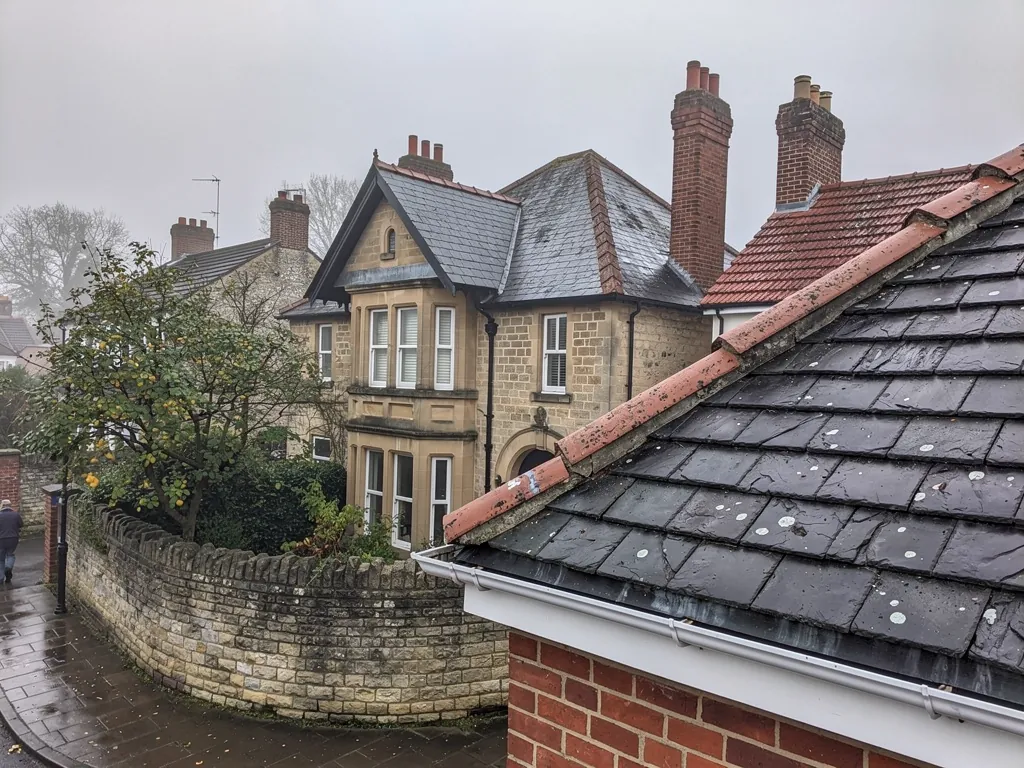
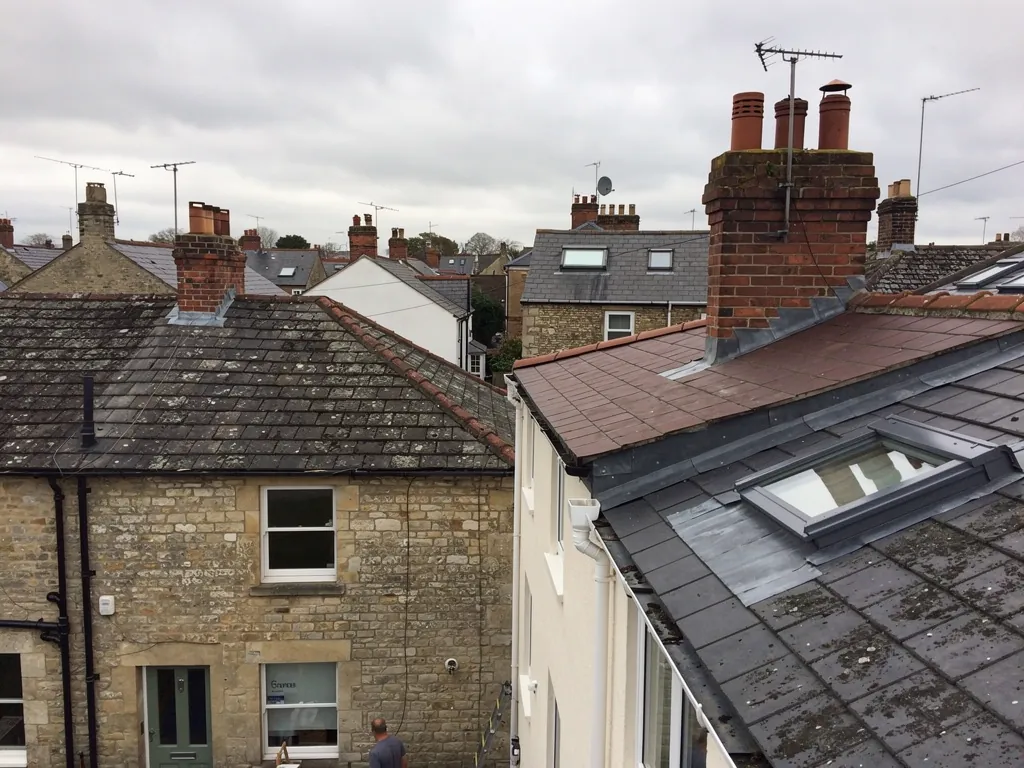
The contrast is easiest to see with two houses on the same street. In the first, a high wind lifts a section of ridge, and the next morning there are tiles on the lawn and a wet patch in the loft. In the second, a Victorian slate roof has been losing slates one by one for years, and a ceiling stain has grown quietly since last winter.
The first has an event that can be dated. Neighbours may have lost slates the same night, and the local weather reports for that date will say something about the conditions. The second has no date at all, and a roofer who looks at it sees corrosion at the nail holes, lichen over old breaks and dark lines on the timber where water has run for a long time. An insurer's assessor sees the same, and the claim for the second house faces a very different reception.
What if I cannot tell which I have?
That is common, and a roofer's survey exists for exactly that. Photographs of the damaged area, the fixings and the underside of the slope separate fresh breaks from old ones. A report that records the condition honestly is useful whichever way the claim goes, and a related page describes roof reports for insurance.
If you suspect cover will be an issue, our guide to wear and tear claims explains how roofers describe the difference.
Why a maintained roof helps your position
You cannot make a policy pay for something it excludes, but you can avoid giving anyone a reason to say the damage was already there. A roof that has been looked at regularly, with gutters cleared, loose slates refixed and flashings checked, leaves a record. Dated photographs and receipts show that the covering was sound before the event, which supports a claim that the storm, not neglect, was the cause. Even an annual note of what you checked, with a phone photograph of each slope, builds a useful history over a few years.
Maintenance also lowers the chance of the event in the first place. Ridge tiles that are mechanically fixed are less likely to lift in a gale. Valleys that are clear do not overflow. A flashing in good order does not let water in at the first heavy shower. Each is dull, inexpensive and entirely within your control, in contrast with the weather.
Our seasonal roof maintenance checklist sets out what to look at when you stand in the garden or climb into the loft, and what to leave to a roofer. Check your policy for any condition about taking reasonable care of the property, because a lapse can matter if a claim is tested.
When you are buying rather than owning, the same logic applies in reverse; see roof checks when buying a house for what to look at before exchange.
Telling your insurer, temporary repairs and keeping records
Advice from the Association of British Insurers issued around Storm Eunice in 2022 is blunt and sensible. Get in touch with your insurer promptly. If necessary, arrange temporary emergency repairs to stop the damage getting worse, but speak to your insurer first. Hold on to every receipt, as the claim includes them.
In practice that means a few simple habits.
- Photograph the damage before anyone touches it, from the ground and, if it is safe, from a window or the loft. Wide shots show where it sits on the house and close ones show the break itself.
- Note the date, the weather and what you saw or heard.
- Ring the insurer before you commission anything beyond a make-safe.
- Keep the invoice for any temporary work, and ask the roofer to describe in writing what they found.
If a claim is turned down and you disagree, the Financial Ombudsman Service says to complain to the insurer first. Should no final response arrive within eight weeks, or should you dislike the one you get, the complaint can then go to the Ombudsman. The Ombudsman's own storm damage page explains the process, and Which? has a winter cover guide worth reading.
Insurance, guarantees and planning for the next job
People sometimes confuse insurance cover with a roofer's guarantee. They do different jobs. A policy responds to events. A guarantee is the contractor's promise about the quality of the work they did. Ours is a 10-year workmanship guarantee, in writing, and it is not an insurance product. Our answer on insurance-backed or workmanship guarantees sets out how to read the wording on any guarantee you are offered.
One more link between policies and roof work is alteration. Changing a roof can touch planning and Building Regulations, and a house that has had unapproved work can raise awkward questions later. Our guide to planning permission for roof work covers the planning side, and your insurer can tell you whether they need notice of a major change.
If you have a roof problem and are unsure whether it is an event or wear, a survey can settle it. A survey from us means photographs of the roof, a plain explanation of the findings and a written quote that proposes only the work the fault justifies. Wherever you are in Swindon or the villages around it, start from our home page or ring 01793 626096.