
Planning permission and Building Regulations are two separate systems, and roof owners mix them up all the time. Planning asks whether a change is acceptable for the look and character of a place. Building Regulations ask whether the work is safe, weatherproof and energy efficient. This guide covers planning only. If you want the second system, our guide to roof work and Building Regulations deals with it on its own.
The short position is reassuring. Stripping a roof and putting the same sort of covering back usually needs no planning application at all. The picture changes when you alter the shape or the openings of the roof, when the house is listed, or when the address sits in a conservation area or a National Landscape. Below we take each case in turn, using the planning rules for England, and end with how to ask Swindon Borough Council a direct question before you spend money.
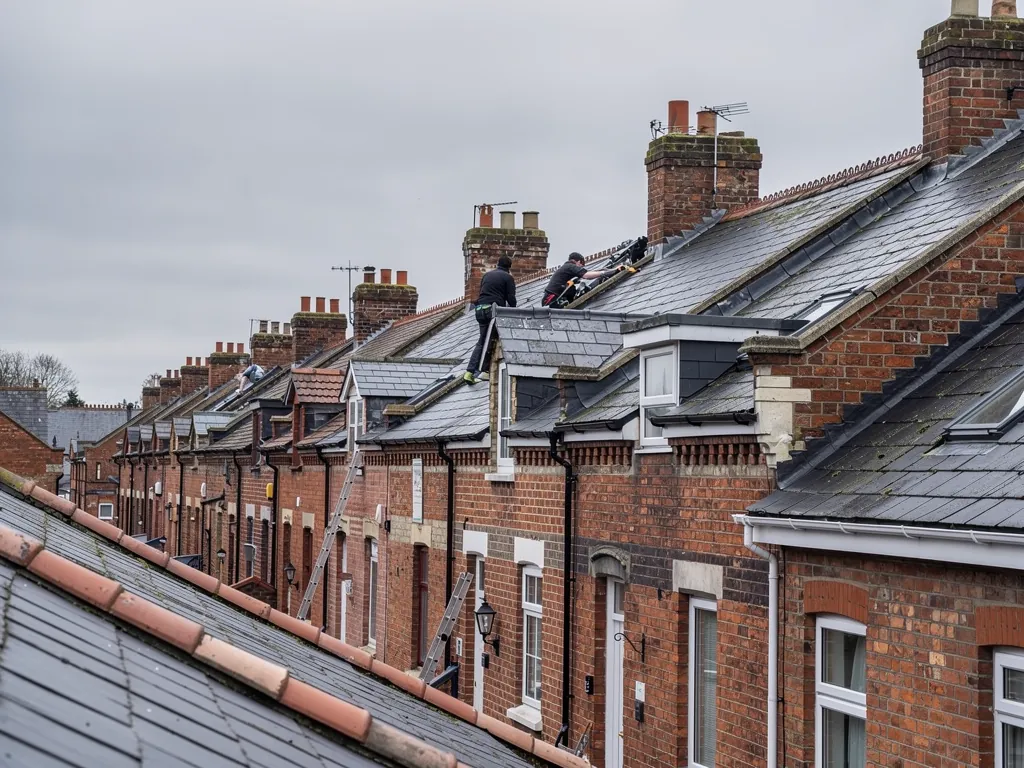
Like-for-like re-roofing: the usual case
Planning law defines development widely, yet it leaves out upkeep and improvement that leaves a house looking the way it always has from outside. Replacing worn slates with new slates, or old concrete tiles with the same profile in the same colour, falls inside that carve-out. Nobody is asking you to apply for permission to keep the rain out.
The word that matters is "materially". Seen from the street, the roof makes up much of a house's face, so a change that people would notice from the street can cross the line. Swapping natural slate for a bright red pantile, or putting a dark grey fibre-cement slate on a terrace where every neighbour has clay, changes the street scene. Raising the ridge or altering the pitch does the same. The test is about appearance in the round, not a single measurement, which is why we look at the neighbouring roofs when we survey.
What if I change the material?
On an ordinary house outside any protected area, a close match in colour, profile and texture normally stays on the safe side. A very different covering is a judgement call, and Swindon's planning officers are the people who make it. Ask before you order materials, not after the roof is on.
Does the covering have to match the old one exactly?
Not exactly. Some old coverings are no longer made, and a modern equivalent is accepted in most cases. Where the old covering is natural slate or clay on a street of similar roofs, the planning team tends to care more.
Roof windows and the Class C limits
Fitting a roof window, a rooflight or a similar alteration is covered by Class C of the General Permitted Development Order. It lets you do the work without an application, provided you stay inside the conditions. The alteration may stand no more than 0.15 metres proud of the original slope, and nothing may end up taller than the top of the original roof. Chimneys, flues, soil and vent pipes, and solar panels are dealt with under separate wording, so they do not fall under this class.
There is one condition that catches people out. A window set into a side-facing slope has to carry obscure glass. It also has to be fixed shut, unless the opening part sits more than 1.7 metres above the floor inside. That height only relaxes the fixed-shut rule. Obscure glass is needed on every side-slope window, whatever height it sits at.
Does a roof window need permission in a conservation area?
Class C contains no exclusion for article 2(3) land, so roof windows can still be permitted development in a conservation area or a National Landscape. Two things can switch that off: an Article 4 direction or a planning condition on the property, and listed status. Check both before you book the work.
What about the flashing and the structure?
Planning says nothing about whether the opening is safe or weathertight. That falls to Building Regulations, and a loft room can bring in escape rules as well. Our guide to planning for roof windows goes through the details window by window.
Dormers and Class B
Adding a dormer, or any extra roof space, comes under Class B. The limits are tighter than for roof windows because the change is bigger. The addition cannot be taller than the existing roof at its highest point. It cannot push out past a front slope that faces the road, which in plain terms rules out a front dormer on a street-facing elevation. Verandas, balconies and raised platforms are excluded, and so are chimneys, flues and soil pipes.
The extra roof space is capped too: 40 cubic metres for a terraced house, 50 cubic metres in any other case. Materials must be of a similar appearance to the existing house, and the edge of the addition should sit, so far as practicable, at least 0.2 metres back from the eaves. Side windows need obscure glass and must stay shut unless the opening part is more than 1.7 metres above the floor.
Why can't I build a dormer in a conservation area?
Class B does not apply where the house is on article 2(3) land. That phrase takes in conservation areas, Areas of Outstanding Natural Beauty (now called National Landscapes), National Parks, the Broads and World Heritage Sites. On that land a dormer needs a planning application, and the council weighs it against the character of the area.
Does a terraced house get a smaller allowance?
Yes. The 40 cubic metre figure for terraces is lower than the 50 for other houses, and a terrace is often where a shared roofline makes the council most careful anyway. A loft conversion with a dormer also brings Building Regulations into play, so read the loft-related points in our Building Regulations guide as well.
Article 2(3) land, conservation areas and Article 4 directions
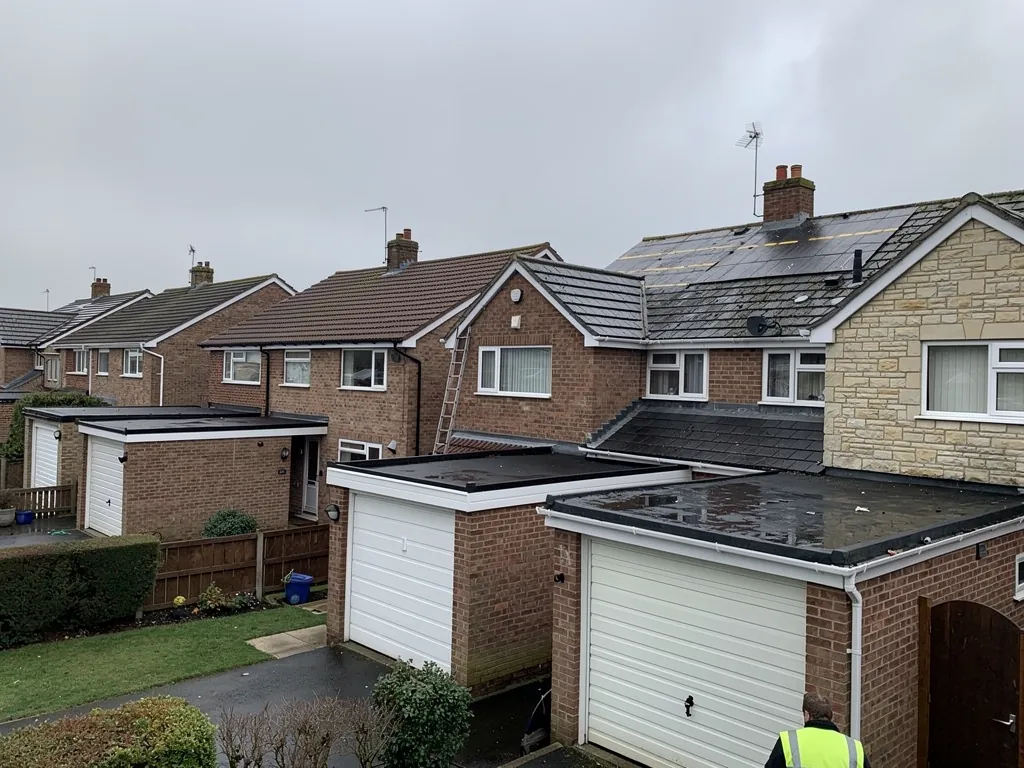
Article 2(3) land is the legal name for areas where permitted development rights are cut back. It covers a conservation area, an Area of Outstanding Natural Beauty, land specified under the Wildlife and Countryside Act, the Broads, a National Park and a World Heritage Site. Around Swindon, the two that matter are conservation areas and the National Landscapes: the North Wessex Downs reaches into parts of the borough, and the Cotswolds begins not far beyond it. Those bodies advise, but the council decides the application.
An Article 4 direction is a separate tool. It lets the council withdraw specified permitted development rights across a defined area, so a job that is normally free of an application suddenly needs one. Swindon's conservation areas list runs to 27 entries, and the council notes Article 4 directions for Bishopstone and for the Railway Village. The Railway Village direction was adopted in 1980. Its terms bring in permission for repainting the outside, extending or altering the house, and putting up garden structures. The cottages there were listed in 1970, and the village became a conservation area in 1975. In 2020 to 2021 the village joined a single larger designation, Swindon's Railway Conservation Area.
Can a new covering go on without an application in a conservation area?
A straight replacement covering normally still needs no application even there, but the conservation area adds a layer of caution about materials, and the council can bring in extra rules for individual properties. A phone call is a cheap way to avoid an expensive correction later.
How do I find out whether an Article 4 direction applies?
Ask the council. Our guide to roofs in the Railway Village and Swindon's conservation areas explains the local picture.
Listed buildings and other consents
Listed building consent is a different permission with a different test. It applies to any alteration that touches whatever gives a listed house its architectural or historic value. Carrying out such work without consent is an offence, which is why we ask early on whether a house is listed. Replacing a roof covering with a different material is the sort of change that falls inside the rule, and even careful repair can raise the question when it changes the look of the roof.
Most homeowners are surprised that listed building consent covers more than the front of the house. Rear slopes, chimneys, lead flashings and even rainwater goods can all matter. The Railway Village is the nearest example for Swindon: the 1980 leaflet that goes with its Article 4 direction says most properties are listed and that consent tends to be expected.
What about churches and chapels?
Methodists, Roman Catholics, the Baptist Union, the United Reformed Church and the Church of England each run an internal system for listed churches that are in use, known as the ecclesiastical exemption. Other faiths do not get it, so a Unitarian or Quaker meeting house goes through the council like any other listed building, and so does any church that has closed for worship.
Are there other consents to consider?
A scheduled monument has a consent regime of its own, decided by the Secretary of State. Roofs with bats or nesting birds raise a wildlife issue, so say so early. If the house is listed or protected, re-roofing in a conservation area or on a listed house covers the practical side.
Asking Swindon Borough Council
Swindon Borough Council encourages applicants to apply online for planning permissions, and its pages point to the Planning Portal for help and paper forms. It also recommends pre-application advice, which is the right tool when you are unsure. The council's own guide to applying for planning permission sets out the steps. For a conservation area question, the council's conservation team has its own email address, conservation@swindon.gov.uk.
If your home sits outside the borough, the local planning authority changes. Many places we work in, such as Marlborough, Cirencester, Faringdon or the West Berkshire towns, have a different council for planning, so ask the one that covers your address.
What should I send before I ask?
A few photographs of the front, rear and the roof slope you want to alter, the covering you propose, and a note of whether the house is listed. The survey photographs that come with a written quote from Skyline Swindon Roofing are useful here, and we will talk through what they show if you want to send them to the council.
Should I sort planning before I pay a deposit?
Yes. Do not hand over money for work that depends on a consent you have not got. Our answer on the roofer deposit covers what is reasonable to pay and when.
Putting permissions in writing also helps when you sell. A buyer's solicitor will ask what has been changed, and our guide to roof checks when buying a house shows what they look for. Insurers can ask the same questions, as our guide to roof insurance cover explains.