
Living in a conservation area does not mean you need permission every time the roof wears out. Swapping a tired covering for one that looks and behaves the same way is normally not development at all. The questions start when the new roof would look different from the old one: another colour, a different slate size, a flat-faced tile where pantiles used to be, or a ridge that reads differently from the street.
Listing is a separate matter and a stricter one. This guide covers the like-for-like test, listed building consent, the coverings that tend to get accepted, and the special case of the Railway Village. It deals with re-roofing only; for roof windows in a protected area, see conservation rooflights. The wider picture of a full roof replacement sits on its own page.

What a conservation area changes for a roof
A conservation area is land the council has judged worth protecting because of its architectural or historic character. Swindon Borough Council's list has 27 entries, from the Old Town and the railway areas to villages such as Wroughton, Highworth, Chiseldon and Bishopstone.
The label adds scrutiny to changes that affect appearance. The council's 2021 notice for the railway area spells out the effects: consent to demolish, extra publicity for applications and six weeks' warning before tree work. Nothing there says a roof must be left alone. It means that when a roof does need permission, the street scene is weighed alongside the house.
Will a conservation area stop my new roof going on?
Not by itself. Under section 55 of the 1990 planning legislation, upkeep or alteration that leaves a building's outward look essentially unchanged is not classed as development. Most like-for-like re-roofs sit comfortably inside it.
What can take that freedom away?
Two things. An Article 4 direction is the tool a council uses to take certain permitted development rights away within a mapped area, and a listing brings its own consent regime. Swindon's conservation page lists such directions covering Bishopstone and the railway village. If your house sits under either, ask before you order materials.
Planning permission and Building Regulations are separate systems. A re-roof needing no planning permission can still need a building control application, and the other way round.
Like-for-like on a real street
Like-for-like sounds simple until you stand on the pavement with a sample board. Planners look at what a passer-by sees: the material first, then colour and texture, then the size and proportion of the units, then how the roof is finished at ridge, hips, verges and eaves.
Take slate. Natural slate replaced with natural slate in a similar size and grey is a clean job. A concrete or fibre-cement lookalike may cost less, but its edges are thicker and it ages differently. Where the whole street is roofed in natural slate, that difference shows within a couple of winters, and it is exactly what a conservation officer notices.
Clay works the same way. A plain clay roof has a lively, slightly uneven texture because the tiles are small and gently cambered. Lay large machine-made interlocking tiles instead and the roofline loses that texture even when the colour is close.
Which small details get forgotten?
Ridge and hip finishes, verge treatment, leadwork and rainwater goods all belong to the roof's character. A half-round cast iron gutter swapped for a square plastic one changes the eaves line, and a flat-topped ridge in place of a bonnet one changes the skyline. Our survey records these so the new roof repeats them.
What if a previous owner already used something cheaper?
Then the existing roof is not the benchmark you might hope for. Councils tend to look at the original covering or the prevailing one on the street. Where a 1970s concrete tile replaced slate, a return to slate is welcomed.
Listed buildings and the consent they need
Under section 7 of the 1990 listed buildings legislation, nobody may carry out work that alters a listed house in a way touching its special interest without authority, and section 9 makes ignoring that an offence. Roofs frequently define how a listed house looks, so a full replacement can easily count.
Repair is treated differently from replacement. Putting back a few slipped slates with matching ones, or refixing a loose ridge, is the sort of small repair that is a matter of care. Stripping a whole slope and relaying it in another material is not. If the work would change the building's character, listed building consent is needed from the local planning authority before it starts.
What does the council want to see?
It wants to know what covers the roof now, what will cover it afterwards, and why. Photographs of the existing roof, a sample of any new material and a note of any change to timbers or leadwork usually help. Where a house has stone slates or handmade clay, expect the council to ask for the same again.
Cotswold District Council's local plan, reproduced in its stone slate guidance, goes further. It resists taking natural roofing off a listed building for a modern substitute whenever that would damage the building's architectural or historic value.
Unsure whether you are listed? The council can confirm it. Ask before the scaffold goes up, because consent is far easier to obtain in advance than afterwards.
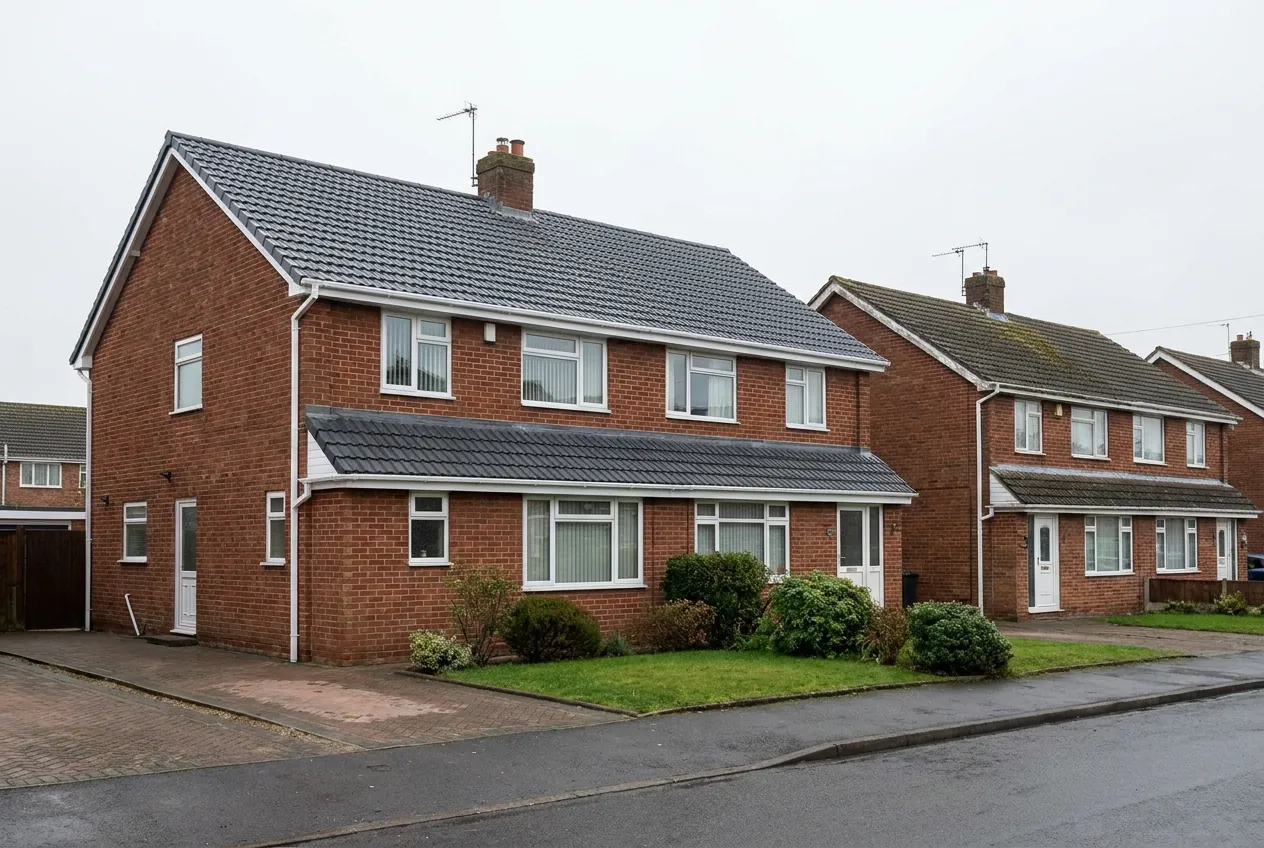
The Railway Village and its Article 4 direction
The GWR Railway Village is the nearest thing Swindon has to a protected terrace, and it carries more rules than a typical conservation area. By the council's appraisal, the village became a conservation area in 1975 and its cottages were listed in 1970. From 2020 to 2021 it has formed part of Swindon's Railway Conservation Area. A separate Article 4 direction dates from 1980.
That direction takes in the village's residential streets and Church Place. It puts under planning control work that would otherwise need no application. The list takes in painting the exterior, extending or altering, putting up garden structures and creating new crossovers. The council's old leaflet reports that the majority of houses carry a listing and that listed building consent is usually needed.
What are the roofs like?
Council surveyors noted weighty pitched roofs, generally slate. A Railway Village re-roof therefore means natural slate in a similar size and pattern, with leadwork and chimney details put back as they were.
Can I add a dish or aerial?
The appraisal expects to resist dishes and aerials bolted to a stack or a slope, and any that go ahead need permission plus listed building consent where necessary. Old fixings you plan to remove are a gain, but check before adding anything new.
Plans for a Railway Village roof go through Swindon Borough Council's conservation team. Agree the slate, ridge and leadwork in writing before accepting a quote, so the price and the consent describe the same roof.
Coverings that tend to be accepted
There is no approved list, because every case turns on the individual building. But the logic is consistent: the nearer a new covering sits to the old in material, texture and proportion, the less argument follows.
Natural slate is the covering most linked with Victorian and Edwardian streets, and it lasts. MyBuilder's guide, updated in August 2026, puts the life of a properly laid slate roof at 80 to 100 years or more. That longevity is one reason conservation officers like it, and it can justify a higher outlay than a covering that may need replacing sooner.
What about stone slates on older houses?
On Cotswold-edge cottages and farmhouses within reach of Swindon, natural stone slate is the traditional covering. Cotswold District Council's technical guidance describes diminishing courses, graded from big slates at the eave to small ones high on the slope. English Heritage policy, reproduced there, prefers freshly split stone slates to second-hand, and would return salvaged ones solely to their original building. It calls concrete or fibre-resin substitutes inappropriate for historic buildings. Sandstone and limestone slates must not be combined.
Can I use a modern lookalike?
On an unlisted house you may get away with one that passes the like-for-like test, but it is a gamble without asking first. Cotswold-style slates made from reconstituted material are concrete, and one manufacturer's data sheet puts them at roughly 84 kg per square metre once laid. On a listed building, the policy above calls them unsuitable. If you are weighing slate against something lighter, our guide to a heavier roof covering explains the structural side.
Building Regulations still apply
A heritage designation does not excuse a roof from Building Regulations. By the Planning Portal's tests, you will not normally need building control for a re-cover when under 25 per cent of the total building envelope and under 50 per cent of the roof itself is touched. Breach either figure, or choose a covering whose fire performance differs or that adds 15 per cent or more to the load, and approval applies.
Strip a roof to the rafters and rebuild, and Approved Document L counts that as renewing a thermal element, which can bring a better U-value into play. Our page on Part L and insulation when re-roofing has the numbers. It accepts a lesser figure where full insulation depth would cost head room, so a conservation officer and a building control officer sometimes need to speak.
Who deals with the building control side?
Swindon Borough Council runs its own building control team, with registered building control approvers offering the private route. We explain what consent the job needs and deal with the notification paperwork for notifiable work. Our guide to planning permission for a re-roof covers the rest.
Does hidden timber change the consent route?
It can. A heritage roof may need rafter repairs before it can take a new covering, and that can alter what has to be approved. We photograph the timbers at survey, so the written quote reflects what is really there.
Getting a decision before work begins
The cheap mistakes are the ones caught early. Before committing to a roofer or a material, find out three things: whether the building is listed, whether an Article 4 direction covers your street, and whether the council has published a view on roofing materials in your area. Swindon's conservation team can help with the first two, and the conservation area appraisals usually answer the third.
Where there is doubt, ask for pre-application advice. The council's planning pages recommend it, and a short email with photographs and a sample of the proposed covering can help settle the question before any formal application. Keep that reply, because it records what was agreed.
What do we do on a protected roof?
We send photographs of your own roof with a written quote. The survey records the existing slate or tile size, the courses, the ridge and verge finish, the leadwork and the gutters, and we specify the new roof against that record. If consent is needed, we explain which kind and help assemble the description the council asks for. The workmanship carries a 10-year written guarantee, and we clear the site of waste afterwards.
What if the strip-out finds a surprise?
Old roofs hide things: rotten battens, patched timbers, redundant flues, unsuitable lead repairs. We stop, show you the photographs and agree the next step before extra work goes ahead. On a listed building, any change beyond the consented scope needs checking with the council first.
To talk through a roof in a protected area, ring 01793 626096, message us on WhatsApp, or use the enquiry form.