
A storm that takes tiles off a roof or pushes a branch through it leaves you with two jobs at once. The house has to be kept dry, and, if you hold buildings insurance, the damage has to be reported in a way that gives the claim its best chance. Neither job should wait, and neither should be done in a panic.
This guide sets out the sequence we would follow if the roof were ours: tell the insurer, protect the property, keep proof, and know what happens if the answer is no. It cannot say whether your claim will be paid, because the outcome turns on the policy wording and the facts, and the decision belongs to your insurer. We are roofers, not claims handlers. What we can do is explain the roofing side, so that what you tell the insurer is accurate and what you hand over is useful. If water is coming in now, begin with what to do if your roof is leaking.
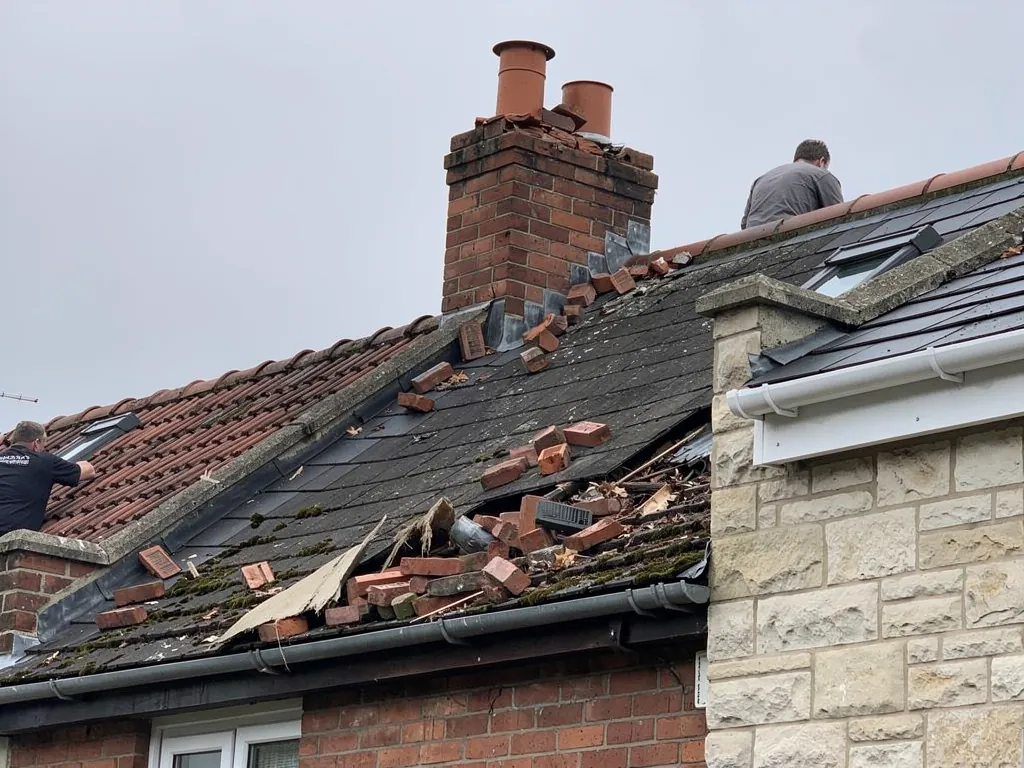
Ring your insurer before you do anything else
The first call is to your insurer, ideally the same day you find the damage. Advice that the Association of British Insurers issued during Storm Eunice in 2022 put it simply: get in touch as soon as you can. Many policies set a time limit for reporting or require prompt notice, and early contact also means you learn what the insurer expects before you spend money.
What should I have to hand for the call?
Your policy number, when you first spotted the damage, a brief account of what happened, and which room or roof area is affected. If you have photographs, say so. You do not need a roofer's report to open a claim, and you do not need to know the cause with certainty. Describe what you can see and avoid guessing at reasons.
What should I ask them?
Ask whether the policy covers the type of damage, what excess applies, whether the insurer will send someone, and which temporary repairs it will pay for. Ask whether it has a preferred repairer and whether you may use your own. Write down the claim reference, the name of the person you spoke to and the date. If anything is said on the phone that matters, confirm it afterwards by email so there is a record.
How does an insurer define a storm?
Not necessarily. Which? reports that insurers often rely on an ABI definition that includes gusts of at least 55mph. If the wind that damaged your roof was ordinary rough weather, the policy may still respond to the damage in other ways, but be ready for the insurer to ask when the storm happened and how bad the weather was.
Temporary repairs: what to do and what to keep
The same ABI advice tells policyholders to arrange temporary emergency repairs if necessary, to stop things getting worse, while checking with the insurer first. This is the part of a claim where homeowners most often lose out through haste or misunderstanding, so it is worth being careful.
What counts as a temporary repair?
Anything that stops further damage without altering the roof permanently: a tarpaulin or temporary cover fixed over a damaged slope, boarding over a smashed section, replacing a handful of missing tiles to close a gap, or a patch on a flat roof. Our page on temporary roof repairs shows what each of these involves. A full re-roof or major rebuild is not a temporary measure and should wait for the insurer's agreement.
Why do receipts matter?
Because the cost of reasonable emergency work may form part of your claim, and without proof you cannot show it. Keep every invoice, receipt and bank record, including for the hire of drying equipment, the purchase of tarpaulins or buckets, and any call-out charge. Ask whoever does the work to write down what they did, where, and when, and to photograph the damage before and after. We do that on every make-safe job.
Do not throw anything away. Broken tiles, damaged lead and a fallen branch are evidence of what happened and where. Bag or stack them if they are in the way, and tell the insurer you have kept them.
To see how emergency work is priced, read our guide to emergency roof repair costs, and for evenings and weekends our page on out-of-hours roofer costs.
Building the evidence file
A claim is a story supported by documents. The more clearly the documents tell it, the less room there is for argument. Start the file on day one and add to it as things happen.
Which photographs and videos help most?
Take them before anything is moved, in daylight if possible. Capture wide shots that show the house and the damaged area in context, then close-ups of the damage itself, then the inside effects: stains, drips, wet carpets, damaged belongings. From firm ground, and only where nothing overhead looks loose, photograph the roof line, the gutters and whatever has landed in the garden. A short video that pans from the damage on the roof to the matching stain indoors is useful. Do not climb up to take pictures.
What documents should go in the file?
- The policy schedule and the claim reference.
- Dated notes of every phone call, with names.
- Photographs and videos, in their original form.
- Receipts and invoices for temporary work and other costs.
- A roofer's survey report or written quote for the permanent repair.
- Records of earlier maintenance, such as invoices for previous roof work.
Why keep records of earlier maintenance?
Because the first thing an insurer asks is whether the roof was in good order before the storm. Policies often exclude gradual deterioration, and Which? gives the example of water getting in through a poorly maintained roof. An invoice for the repair you had done two years ago, or a survey that found the covering sound, is a simple way to show the roof was looked after.
For a record of the roof as it stands, our survey comes with photographs, and the quote follows in writing.
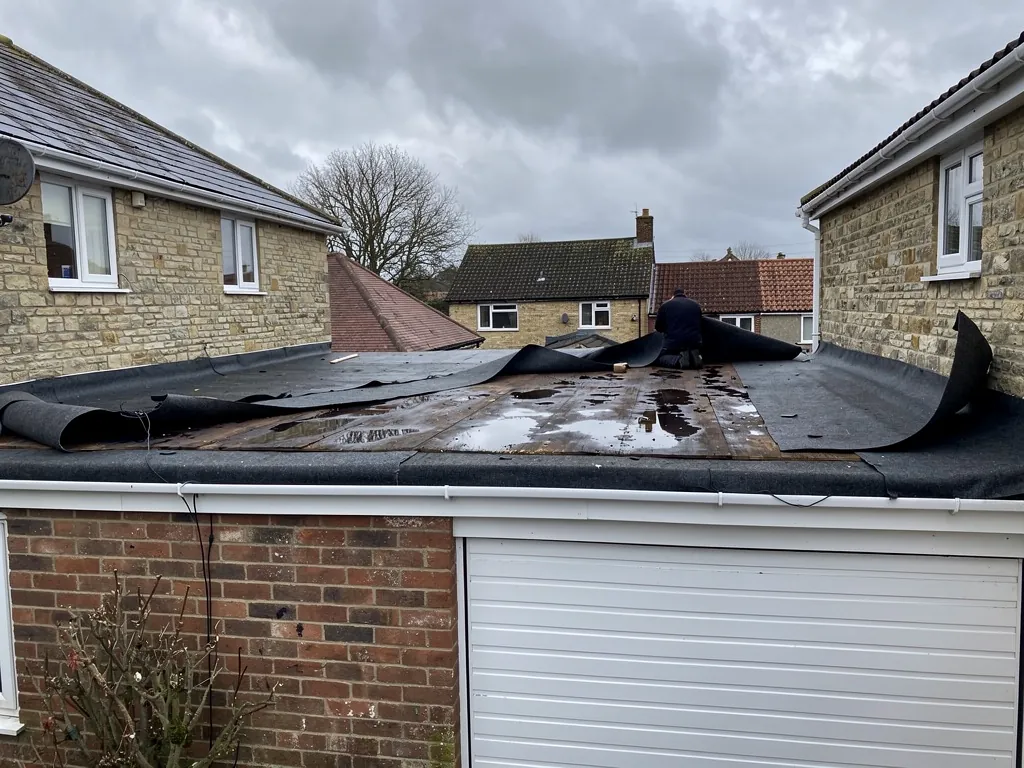
How insurers and the ombudsman judge a storm claim
Understanding the test helps you gather the right facts. The Financial Ombudsman Service, which settles disputes when a customer and an insurer cannot agree, considers three questions in a storm case. First, did a storm genuinely hit on the date given? Second, does the damage look like the usual product of storms? Third, did the weather do the main harm, or would something else have caused it regardless?
What does that mean for a roof?
A storm that lifts a ridge, strips slates in a line, or drops a tree limb on tiles leaves damage that fits the event. A leak that has been building in the loft for years does not. The more your photographs, notes and survey show a fresh, sudden cause, the easier it is to answer the second and third questions. It also helps to be straightforward about anything that was already wrong, because trying to hide it usually backfires.
What about wear and tear?
Standard policies may not cover it. The ombudsman expects the insurer to show that an exclusion really applies. It is, however, unlikely to back a customer whose roof was already poor and who knew it, or whose storm simply uncovered a fault that predated it. That is why a storm claim on an old, neglected roof is harder than the same claim on a sound one.
How often do storm claims pay out?
Which? reported in November 2025 that only 32% of storm-related claims made in 2024 resulted in a payout, quoting Financial Conduct Authority figures. That tells you not to assume a claim will succeed, and it is a reason to document the damage well.
The roofer's part: survey, report and permanent repair
Once the roof is safe, the permanent repair needs planning. Your insurer may send an assessor or adjuster, may ask for a quote, or may accept a roofer's report and photographs. Ask which it wants before commissioning work.
What do we provide?
A survey, photographs of the damage and the covering beside it, and then a quote in writing. The photographs show what the roof looks like, and the quote shows what has to be done to put it right. Our notes stick to what is visible: the type of covering, where it has failed, how, and what the repair involves. We do not name a particular storm as the cause unless the evidence supports it, because an honest account does more for you than a hopeful one.
Can you handle the claim for me?
No. Claims are not part of what we do, and no roofer can promise a payout. The claim is between you and your insurer. What we can do is give you the roofing information in a form that is easy to pass on.
Why does the size of the job matter?
Because a bigger quote is not a better one. A storm that removes eight tiles is a repair of eight tiles and any fixings or battens beneath, not a new roof. If the survey shows the wider roof has failed, we explain why, but we never inflate a claim. Our work comes with a 10-year workmanship guarantee in writing, which covers our workmanship and is separate from your insurance.
If the claim is refused or the offer is too low
A refusal need not be final. Ask for the decision in writing, with the reasons, and read the policy clauses it quotes. Check whether the insurer has assessed the right cause and whether it has taken account of your evidence.
How do I complain?
Start with the insurer's own complaints process. The ombudsman will consider a complaint once eight weeks have passed without a final answer, or earlier if the answer you receive is unsatisfactory. Its published guidance on storm damage explains how it looks at these cases and is worth reading before you reply to the insurer. You can find it on the Financial Ombudsman Service website.
What helps a complaint?
Dates, photographs, a roofer's written description of the damage, and a clear explanation of why you think the storm was the main cause. Should the insurer blame wear and tear, ask which parts it means, then reply with evidence of how the roof stood beforehand. Stay factual. A short, well-documented complaint is easier to assess than a long one.
Should I still repair the roof meanwhile?
Yes. The roof has to keep out the weather whatever happens to the claim, and unrepaired damage can lead to further harm that the insurer may later argue was avoidable. Keep the temporary measures in place, keep the receipts, and plan the permanent repair so that you are not left with an open roof while a dispute drags on.
Preparing before the next storm
The easiest claims are those where the roof was sound and the owner can show it. A few habits make that much more likely.
- Keep a folder with your policy, the schedule and the insurer's claim number.
- Photograph the roof, gutters and chimneys from the ground once a year, with dates.
- Keep invoices for any roof work, even small repairs.
- Have loose tiles, slipped slates and cracked flashings fixed promptly, rather than waiting for a gale to make the problem worse.
- Know where the water stopcock and the electrical consumer unit are.
A short, regular look is better than a big inspection once in a decade. Our guide to emergency roof repairs brings together the other storm topics in one place.
Unsure whether damage came from a storm? Photographs sent by WhatsApp or the enquiry form, or a call to 01793 626096, are enough for a first opinion. After a repair the site is cleared and waste removed, and the photographs are yours to keep.