
When a roof is open to the weather, the first job is not to mend it. It is to keep the building from taking on any more water. A temporary repair does exactly that, using whatever can be fixed quickly and safely: a tarpaulin, a sheet of waterproof membrane, a board battened over a hole. Done well, it protects ceilings, insulation and belongings until a permanent repair is possible.
Done badly, it does the opposite. A tarpaulin flapping loose in a gale can tear off more tiles, trap water against the roof or carry on rubbing at the slope until the damage is worse than the original. And even a neat temporary cover is only that. It is not a repair, it has a limited life, and it can mask faults that deserve a proper inspection. This guide sets out the main kinds of temporary cover, how long to expect them to hold, what makes a good one and when it is time to move on to the real thing. If your roof is leaking now, start with what to do about a roof leak.
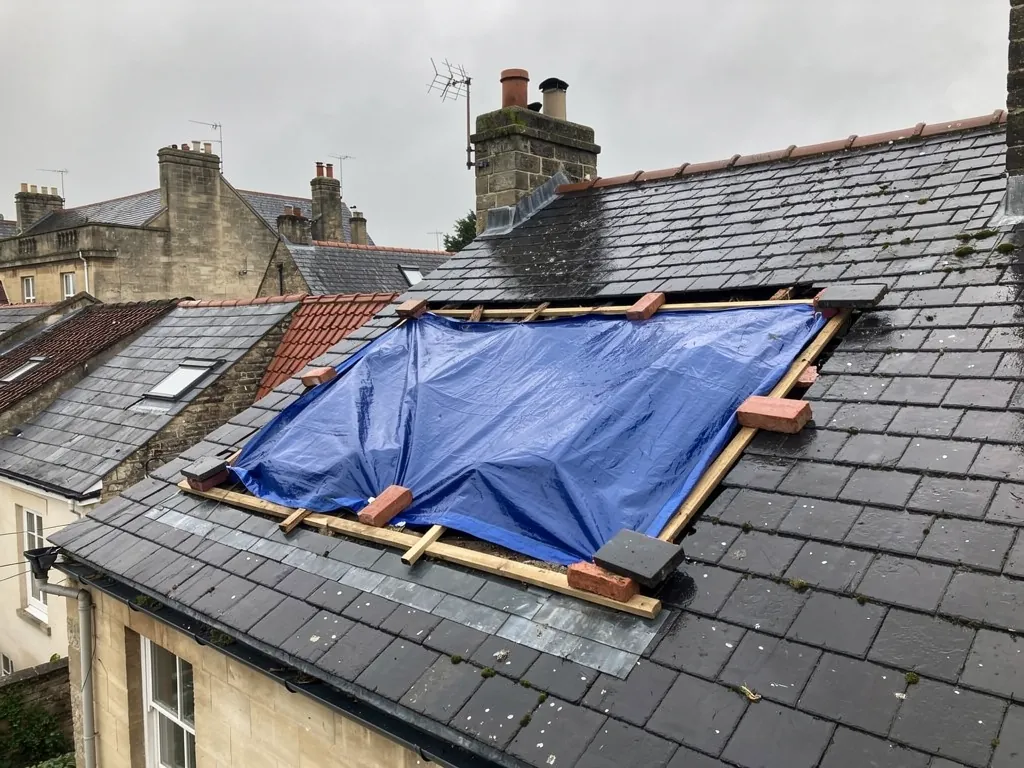
What a temporary repair is for
A temporary repair has three jobs. It keeps water out, so the damage does not spread to ceilings, wiring and floors. It makes the area safe, by covering holes and securing loose material that might fall. And it gives you time: time for the weather to improve, for a surveyor or roofer to look properly and for you to talk to your insurer if you are claiming.
What it does not do is mend anything. Missing tiles stay missing. A torn flashing stays torn. The cover simply holds the weather off the opening. That is why a temporary repair is always the first stage of a two-stage job, and why we describe it to customers as a make-safe.
When is a temporary repair the right call?
It is right when a permanent repair cannot be done safely or sensibly yet. Working on a wet, windy roof is dangerous and produces poor results, since tiles cannot be bedded or lead dressed properly in the rain. Equally, if the cause is not yet understood, a quick permanent fix risks sealing in a problem. Where the damage is small and the weather is fine, going straight to the repair is often better.
A roof that is letting water in goes to the front of our queue, and on that first visit the only aim is a dry building. Our overview of emergency roof repairs explains the order we work in.
Tarpaulins: cheap, quick and easy to get wrong
The tarpaulin is the best-known temporary cover, and the one most often fitted badly. A heavy-duty tarp, properly laid over the damaged area, is a perfectly good short-term measure. The trouble is in the detail.
A tarp needs to extend well beyond the damaged area, up and over the ridge where possible, so that water running down from above runs on to the cover and not under it. It should be fixed to timber battens rather than simply weighted down or nailed through the tiles, since nails through tiles make fresh holes. The battens are fixed to the roof structure, the tarp is stretched taut with no loose folds to flap, and the edges are secured so wind cannot get beneath them.
What goes wrong with a poorly fitted tarp?
Loose edges flap and abrade the tiles. Folds collect rainwater in pockets that run back towards the damage. A tarp laid under the lowest course of tiles can carry water into the gutter, which sounds good until the gutter overflows behind the fascia. A tarp pulled tight but fixed only at the top can tear in a gust. And a plain polythene sheet, the sort sold for garden use, breaks down in sunlight and can fail within weeks.
Can a tarp go on myself?
Do not go on the roof. Working at height in wet or windy weather is dangerous, and falls from roofs do happen. If water is coming in, put buckets and sheeting inside and call a roofer. Our guide to roof tarpaulins goes further into fitting and removal.
Temporary sheeting and battened covers
For larger openings, or where a tarpaulin will need to stay in place for some time, firmer covers are used. These include sheets of heavy waterproof membrane stapled and battened down, and timber boards or plywood fixed across an opening and then covered with membrane. A battened cover is stiffer than a tarpaulin, so it does not flap, and it can bridge a gap where tiles and battens have been lost or a section of structure is open.
On a flat roof, a temporary repair might be a patch of self-adhesive or liquid-applied membrane over a split, or a sheet of membrane laid over a ponding area. These can last well in the right conditions, but they are still patches. When a flat covering splits in one spot, the rest is frequently tired too, and a patch simply shifts the leak a metre along the deck.
What goes into a battened cover?
Boards or sheets are laid across the opening and fixed to sound rafters or battens, not to tiles that could shift. A membrane goes over the top, lapped from the ridge downward so each upper sheet sits over the one below. Laps are taped or sealed, edges are battened and nails are kept away from places where water collects.
A cover that is fixed to something sound, lapped downhill and secured at every edge will outlast a cover that is just heavy. Weight alone does not keep a tarp on a roof.
Is a sealant a temporary repair?
Sealant and mastic are sometimes smeared on to slow water at a joint. They can help for a short while, but they are not a repair, and they must be cleaned off before a proper job can be done. See our guide to roof sealant repairs for where they do and do not belong.
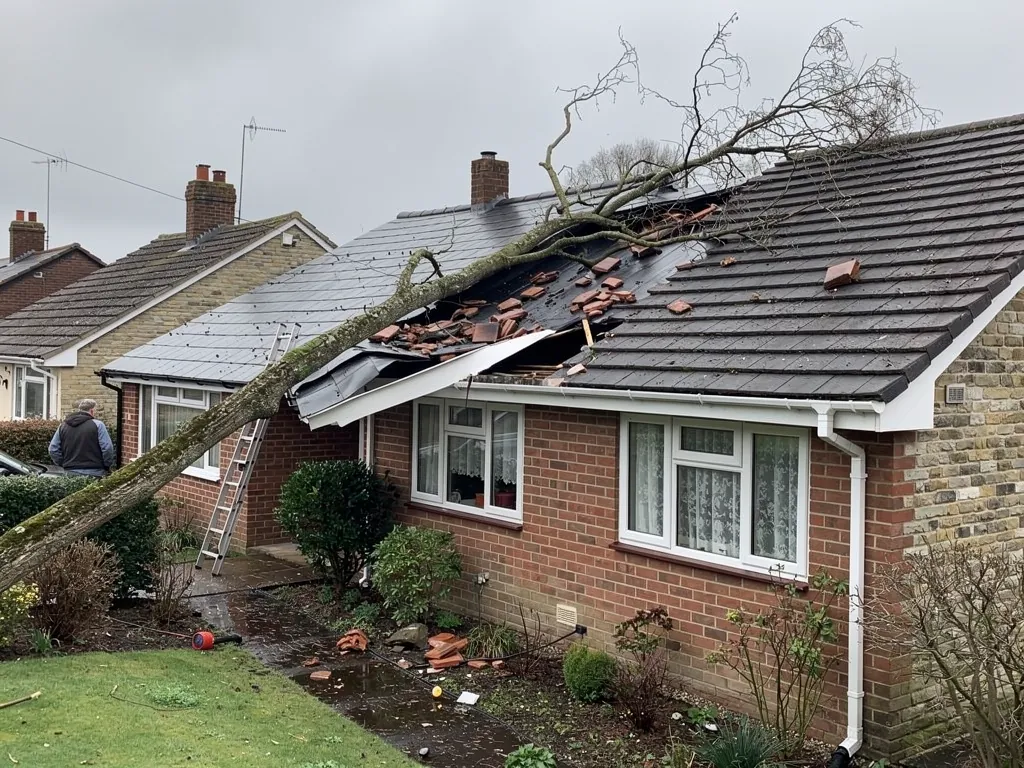
How long a temporary repair lasts
There is no honest single answer, because it depends on the cover, the roof, the exposure and the weather. A well-fixed battened cover on a sheltered slope may hold through a wet spell. A tarpaulin on an exposed ridge in a run of gales may not last the week. What we can say is that a temporary cover is designed for days or weeks, not months, and the longer it stays, the more it degrades.
Sunlight breaks down many plastics. Wind works at fixings and abrades edges. Rain gets under laps that have loosened, and frost can crack stiff membranes. Meanwhile, the area beneath may still be damp, so rot and mould can take hold under a cover that looks fine from the ground.
What should you check on a temporary cover?
After every windy spell, look from the ground for loose edges, tears, pooled water on the surface and slipped battens. Inside, watch the loft and ceilings. If a stain appears or grows, the cover has failed somewhere. Take a photograph, and tell the roofer.
When should it be replaced with a proper repair?
As soon as conditions and access allow. Once the weather settles, the damage has been surveyed, and you have decided how to proceed, the temporary cover should come off and the repair should go on. Leaving a tarp up through a whole winter is a false economy, because water that finds a way past it can rot battens and rafters you would otherwise have saved. Our page on how long a tarp can stay on covers it further.
Why a temporary repair is not a permanent one
It is tempting, once the drips have stopped, to leave a cover in place and put the permanent job off. There are four good reasons not to.
First, the underlying fault is unmended. A cracked rafter, missing tiles or a torn flashing is still there, and the structure it protects is still exposed. Second, a cover can hide further damage. Wet insulation, a damp wall plate or a failing section of felt can go unseen beneath it. Third, temporary covers fail without warning, usually in the next storm, which is when they matter most. Fourth, a cover left up for a long time can complicate a later insurance discussion, since an insurer may reasonably expect the damage to be put right once it is safe to do so.
What does a permanent repair add?
It replaces the missing or damaged material with proper new covering, restores the waterproof layer, refixes flashings and ridge, and deals with whatever caused the failure. It should leave the roof as sound as the rest of it, not just closed up. After the survey you receive a written quote, and the finished repair is covered by our 10-year workmanship guarantee in writing.
What is the cost?
A temporary cover is usually a modest cost beside the permanent repair, but the figure turns on how awkward the roof is to reach, the width of the opening and whether scaffolding is needed. Our page on emergency roof repair cost sets out what moves the price.
Temporary repairs, insurers and keeping records
If you are making a home insurance claim, temporary repairs need a little care. Association of British Insurers guidance put out during Storm Eunice in 2022 told householders to contact the insurer promptly. If emergency repairs were needed to prevent things getting worse, they should be arranged, but only after speaking to the insurer. The same advice was to keep any receipts, since they form part of the claim.
In practice that means three things. Photograph the damage before anything is covered, from the ground and, where it is safe, from the loft. Tell your insurer what you intend to do and ask whether they have a preferred process. And keep the paperwork: invoices, dates, what was done and why.
Does a temporary repair affect a claim?
Not if it is reasonable, documented and done to stop further damage. A claim is more likely to be questioned where damage continues after the owner could have prevented it. We do not handle insurance claims and cannot say what any insurer will pay, but our pages on storm damage claims and how insurers define a storm explain what to ask.
After a storm, our guide to checks to make after a storm shows what to record before you ring anyone.
What a make-safe visit should include
A good temporary repair starts with looking, not covering. Before anything goes on, whoever attends should trace the route the water takes, check the roof space for wet insulation and soft timber, and decide how much of the slope needs protecting. A cover that is too small leaves the edges of the damage open, and a cover that is too large just catches more wind.
You can expect the visit to leave the building drier and safer than it found it. Loose tiles at risk of falling are removed or secured, openings are closed, and the cover is fixed so it will last until the permanent work. Photographs before and after leave a dated record of the condition and the work.
What should you ask?
Ask what the cover is made of and how it is fixed, how long the roofer expects it to hold, and what the permanent repair is likely to involve. If the answers are vague, or the cover is just a sheet weighted with bricks, treat it as a stopgap of the shortest kind and arrange a proper visit sooner.
Ask, too, if the figure you are given includes VAT and any scaffold, because a temporary repair at height often needs some form of safe access.