
A roof survey is one of the few jobs where the price is mostly about the visit, not materials. You are paying for a person's time, their access equipment and the quality of what they write down afterwards. That makes the price easier to understand than a re-roof, and easier to compare, as long as you know what each figure includes.
The numbers below come from a published national cost guide, not from our own price list, and they are typical UK figures, not a quote for your house. We give the source and its date so you can check it. The written quote you receive from us after a survey is the figure that applies to your roof. For the wider service, see our roof inspections and surveys page.
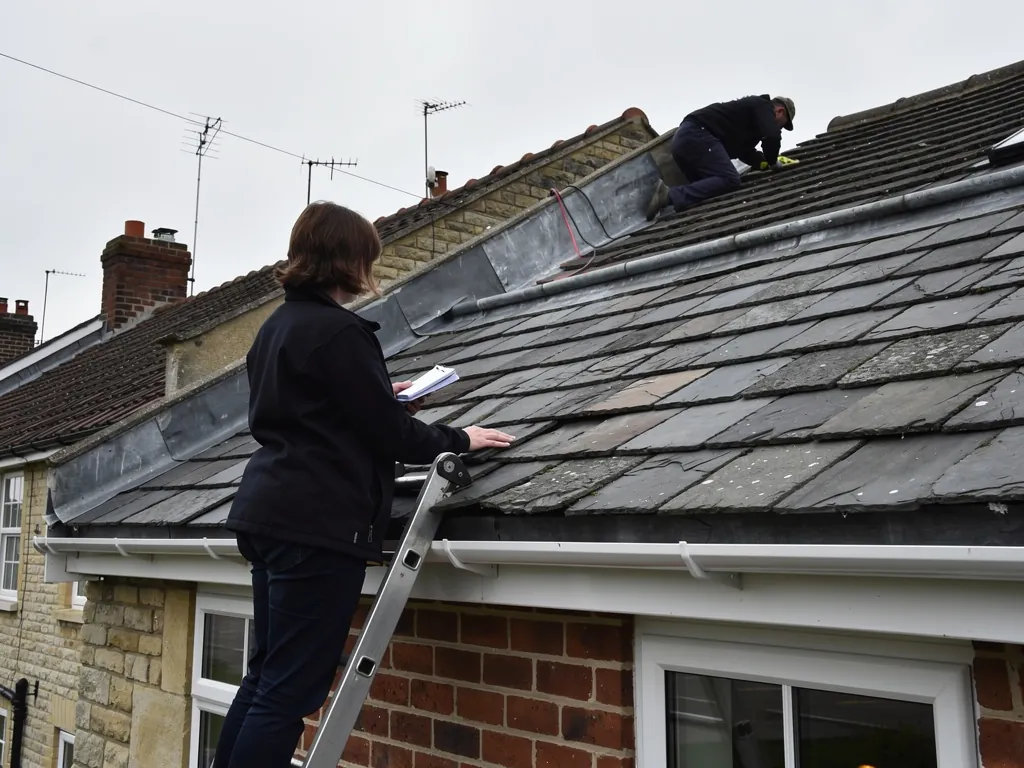
The headline ranges for UK roof inspections
MyBuilder's roof inspection price guide, updated on 21/08/2026, puts a typical inspection between £150 and £500. Within that band it separates three common types of inspection, and the split is the most useful part of the guide.
| Type of inspection | Typical range |
|---|---|
| Standard roof inspection | £150 to £250 |
| Drone survey | £200 to £400 |
| Thermal imaging survey | £300 to £500 |
The same guide adds that drone inspection generally starts at £150. Treat all of these as the middle of a national spread and not as a promise. A large or awkward roof, a distant location or a request for a long written report will push toward the top of a range, and a small, easily reached roof will sit lower.
Are these figures what Skyline charges?
No. They are published national ranges, quoted so you can see what the market looks like. Our own figure for your house follows the visit itself, set down in a written quote, and we price fairly. When you weigh up offers from anyone, ask whether VAT is in the number, since some published guides state prices without it.
A price range tells you roughly what to expect. It cannot tell you whether a particular offer includes a written report, photographs and a second look.
What sits behind a standard inspection price
A standard inspection is the baseline: someone looks over the roof, whether from the pavement, a ladder or on it, goes into the loft if there is one, and records what turns up. At the lower end of the range that may be a short visit with a few photographs and a verbal summary. At the upper end it should come with a written account of each slope, dated pictures of every finding, and a ranked list of what needs doing.
Time on site is the main variable, and most of it is looking, writing up and travelling. A simple semi-detached house with one clear slope each side and a reachable loft hatch takes less time than a terrace with a shared valley and a rear extension. A roof with several levels, a dormer and a chimney stack takes longer again.
Is a longer visit always better value?
Not automatically. A long visit that produces a thin report is poor value, and a short one with strong evidence can be excellent. What matters is that the survey answers your question. Our page on what a roof survey includes sets out what a decent record should contain, so you can judge any offer against it.
Where does a free visit fit in?
Some roofers will look at a roof without charging when you are considering work with them. That is a quote visit, which is a different product from a formal report. Our answer on free roof inspections explains the difference.
Drone survey prices and what you get for them
A drone survey sits higher than a standard inspection in MyBuilder's table, at £200 to £400, because the operator brings specialist equipment and spends time reviewing and editing images afterwards. The return is a broad set of photographs and video of the whole roof, including ridges and rear slopes that are hard to reach.
Whether that is worth paying for depends on the roof. On a tall building, a large roof or a fragile covering that should not be walked on, a drone saves risk and time. On a low, simple roof the extra cost may add little. A drone also cannot touch or lift anything, so a drone-only survey will not tell you whether slates are secure. Our guide to drone roof inspections and their limits goes through what the images can and cannot show.
Should I pay twice for a drone and a roof visit?
Ideally not. A survey that uses a drone for the overview and close access for the details can be priced as a single visit. If two firms are each doing half the job, you pay for two sets of travel and two reports, so ask whether the survey you are being offered already includes both.
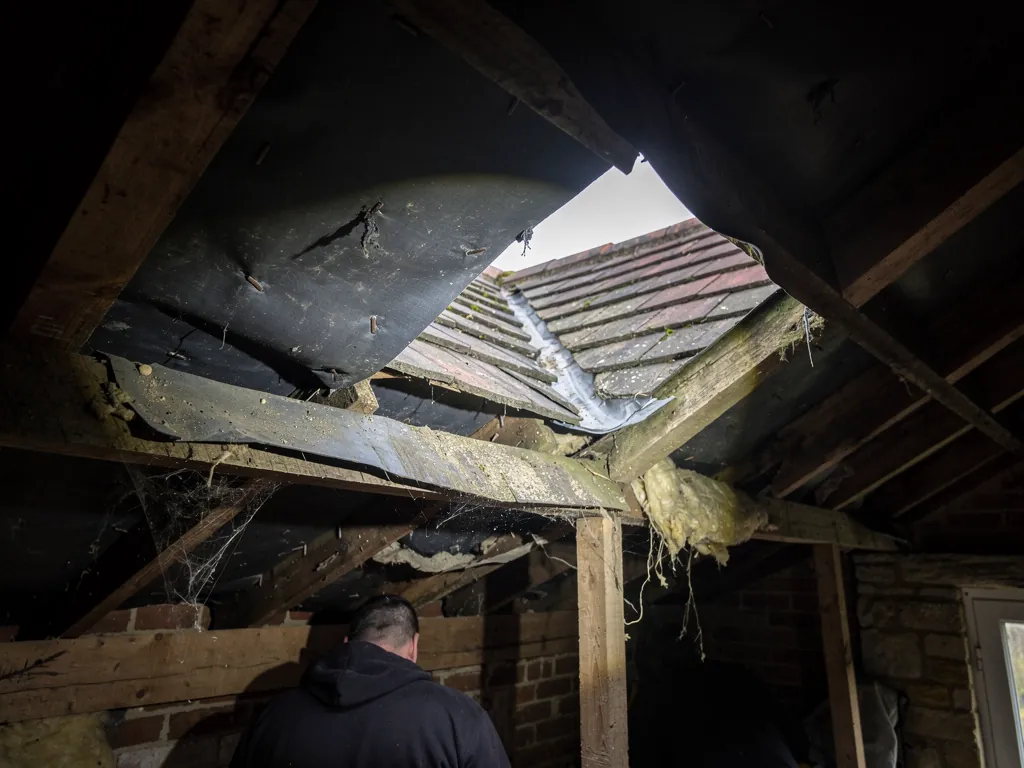
Thermal imaging: when the top of the range is justified
Thermal imaging surveys sit at the top of MyBuilder's range, at £300 to £500. A thermal camera records surface temperature, and on flat roofs in particular, differences in temperature can point to wet insulation beneath the covering, trapped moisture or missing insulation. The operator needs the right conditions, the right equipment and the training to read what the images show.
It is not a first-step purchase for most homeowners. If a pitched roof has a visible slipped slate, thermal imaging adds little that a close look would not. It makes sense where a leak cannot be traced by sight, where a flat roof covering looks sound but a ceiling below keeps getting damp, or where a larger building needs a check of insulation as part of a wider project. Our page on thermal imaging roof surveys sets out what the technique can and cannot prove.
Does a thermal image replace a hands-on check?
No. A hot or cold patch shows that something is different, but not what has caused it. A person still has to look, probe and, if necessary, open up a small area of covering to confirm. A thermal survey that stands alone and leaves you with a coloured picture and no explanation is expensive for what it delivers.
Factors that push a survey price higher or lower
Beyond the type of inspection, several practical factors change what a survey costs. None of them is mysterious, and a clear quote will let you see how they apply to your house.
- Size and complexity. More slopes, levels, valleys and details mean more time.
- Access. A roof that can be reached from a ladder is cheaper to inspect than one that needs a tower or platform. Tall buildings, steep pitches and narrow passages between houses all slow things down.
- Covering. Fragile roofs, such as old stone slate, asbestos cement or aged flat coverings, call for a gentler approach and sometimes for equipment that avoids walking on the surface.
- Report depth. A verbal summary costs less time than a written report with ranked findings and photographs matched to each point.
- Location and timing. Distance, travel time and a request for an early visit all play a part.
- Purpose. A report written for a lender, a legal dispute or a planned conversion may need more detail than a general check.
Re-roofing and major repairs are different jobs priced on their own terms, and our guide to what a new roof costs deals with that side. For the way a roof is sized for a price, see the short answer on how a roof is measured for a quote.
Weighing the cost against what a survey can save
A roof survey is cheap compared with most of the decisions it supports. Buying a house, planning a re-roof, deciding between a repair and a replacement, or dealing with a landlord's maintenance schedule all involve sums far larger than the survey itself. The question is whether the findings change what you do.
For a buyer, a roofer's report with photographs can show whether a flagged roof needs a patch or a replacement, and that difference can be worth negotiating over. For an owner with a leak, a survey that traces the cause can stop money going into repairs that do not hold. For someone planning work, a survey that records the existing covering and timbers lets the quote be written once, properly, instead of being revised when surprises turn up.
There is a second saving that people overlook: the cost of finding the same fault twice. A leak chased with three patches at a roof that needed one proper repair is money spent three times. A survey that identifies a failing valley, rather than the tile above the stain, puts the work in the right place the first time. Equally, a survey can tell you that a repair is all that is needed, which keeps a full re-roof off the table for years.
Is a survey worth paying for if I only suspect a problem?
Often, yes, especially if the roof is old, has had no inspection for a long time, or sits above rooms you care about. How long a gap between checks is sensible depends on the roof, and our short answer on how often a roof should be inspected covers the reasoning. A survey after a storm also gives you a dated record, which our guide to roof reports for insurance discusses, without any promise about how a claim will turn out.
Comparing offers and questions to put before booking
When two surveys are priced differently, the difference usually sits in what is delivered. Rather than choosing the lowest number, ask a handful of direct questions before you agree.
- Which method will be used: ground view, ladder, roof access, drone, pole camera, loft, or a mix?
- Will you receive dated pictures of your own roof?
- Is the result written, and does it rank the defects?
- Does it say what could not be seen?
- Does the number include VAT?
- If the method needs a tower or scaffold, is that covered by the price?
The last two get forgotten. A figure that omits VAT or access equipment looks lower than it really is. For any work we carry out afterwards, our workmanship is covered by a written 10-year guarantee, and the price is one total that follows the survey.
Can I get a price before anyone visits?
You can get a rough idea from national guides like the ones above, and a conversation about your roof helps narrow it. A firm figure for your own roof needs the visit. Ring 01793 626096, drop us a WhatsApp message or use the enquiry form, and mention the type of house, the covering if you know it, and what made you wonder. That is enough for us to say which method suits.