
A tenant who finds a brown patch on the bedroom ceiling does not own the roof, cannot scaffold it and has no reason to pay for it. For a house or flat let on a normal residential tenancy, the party that owns the building usually carries the duty to keep its structure and exterior in repair. That covers the roof covering, the chimney stack, flashings, gutters, fascias and the external walls and pipes.
The details depend on the tenancy agreement and on what kind of property it is, so this guide describes the general position rather than giving legal advice. If a dispute is developing, a solicitor, the council's housing team or a recognised tenant advice service can tell you where you stand. What we can add is the roofing side: how problems show up, how a repair is scoped, and how landlords with several properties keep costs predictable. A commercial let is a different arrangement, covered in our guide to commercial landlord roof repairs.
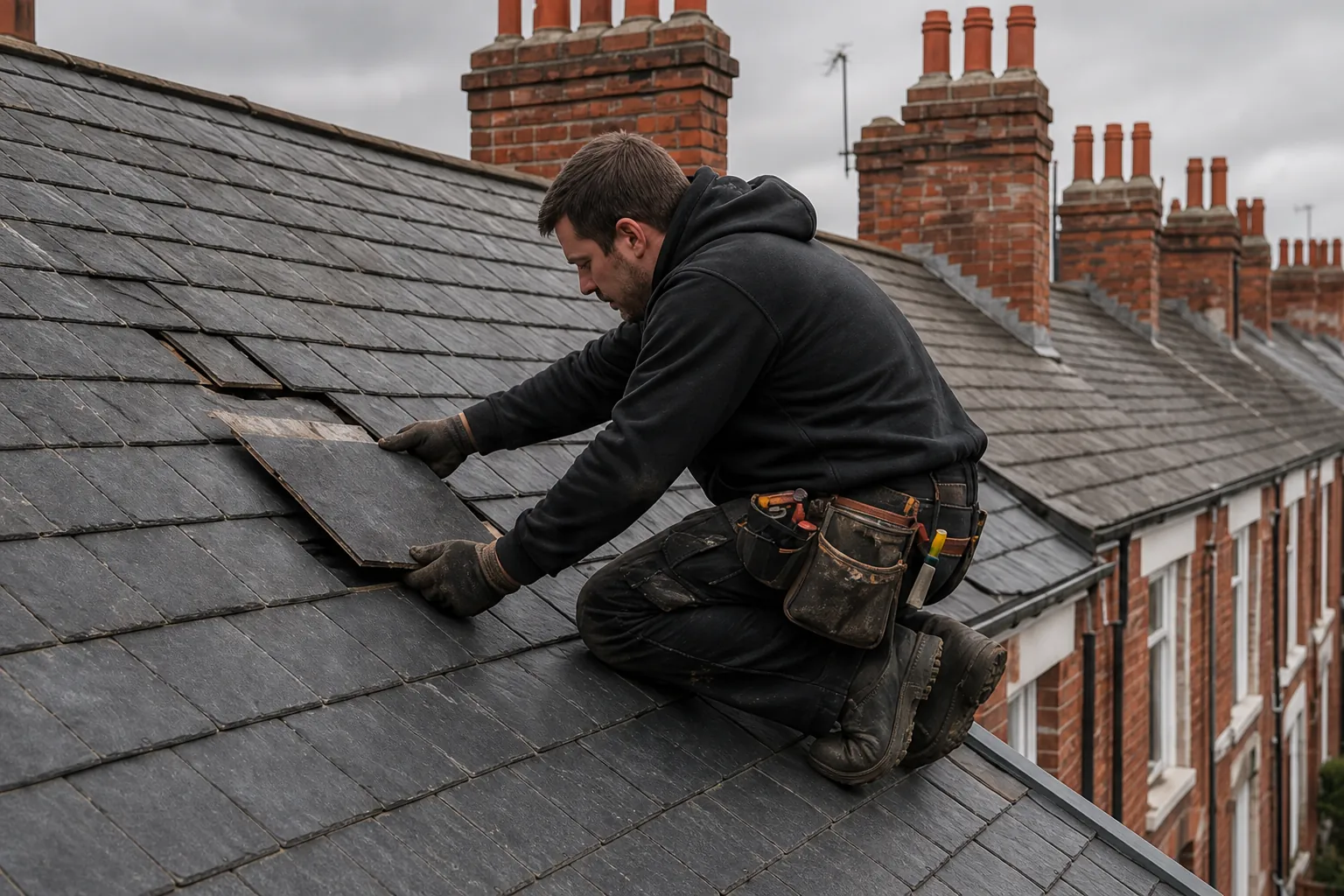
Who is responsible for the roof in a let house?
For most residential lets, section 11 of the Landlord and Tenant Act 1985 makes the landlord keep the structure and exterior in repair. In practical terms that means the things a tenant cannot reasonably be expected to service: slates or tiles, ridges and verges, lead flashings, valleys, flat roof coverings, chimney stacks, rainwater goods and the timbers that carry them. A tenant is normally responsible for looking after the home in a sensible, tenant-like way, such as telling the landlord about faults promptly and not causing damage.
Your own tenancy agreement matters. Most set out who handles what. If the wording is unclear, ask a solicitor before relying on it.
What about flats and shared buildings?
In a flat the roof is often shared, and the responsibility may sit with a freeholder or a management company rather than the individual landlord. The lease for the flat sets that out. A landlord letting a flat under a lease usually has to go through the managing party to get a roof repaired, and may pay a share of the cost through a service charge. Knowing who actually owns the roof saves weeks of correspondence.
Does the landlord pay for damage to a tenant's belongings?
That depends on the circumstances and on the tenant's own contents cover, and it is a question for a solicitor or an insurance adviser rather than a roofer. From the roofing side, a leak left alone only enlarges the damage and the disagreement.
What counts as the roof, and what does not
It helps to be specific, because "the roof" covers more than the visible tiles. A repair to the exterior generally includes the covering itself, the structure beneath it, the fittings at its edges and the drainage that serves it.
- Slates, tiles or the flat roof membrane, and the battens and underlay under them.
- Ridge, hip and verge fittings, and the fixings that hold them.
- Lead flashings, soakers and valley linings where roof meets wall or chimney.
- Chimney stacks, pots, flaunching and flues that serve the property.
- Gutters, downpipes, fascias, soffits and bargeboards.
- Roof windows and their flashings, if the house has any.
What a tenant looks after is different. Light bulbs, smoke alarm batteries and the garden are typically left to the tenant, depending on what the agreement says, while gutters count as part of the exterior. Redecorating a ceiling after a leak is usually the landlord's job once the roof is fixed, since the damage started outside the tenant's control.
What about the loft?
Loft insulation and ventilation affect how a roof behaves, and both belong to the building. A loft packed to the eaves with insulation and no air gap is a condensation problem waiting to happen, which can be mistaken for a leak. Our guide on wet loft insulation explains what to look for.
How tenants report a leak, and how landlords respond
A repair goes better when the report is clear. A tenant should tell the landlord or agent as soon as a stain appears, in writing so there is a record, with a date and a photograph. Useful details are where the stain is, when it started, which way the wind blew and whether it drips, spreads or bulges, and the weather it followed. A message saying the bedroom ceiling went brown after Tuesday's rain is more useful than "the roof is leaking".
The landlord's job is to act on the report within a reasonable time, which in practice means getting the cause identified quickly. Delay is expensive, because wet timber, plaster and insulation make a small repair larger. A temporary measure can stop things getting worse while a proper repair is arranged.
Should the landlord send a roofer or a handyman first?
Send someone who can check the roof properly, not only the room. A handyman who patches the ceiling and repaints leaves the cause in place, and the stain returns. The first visit should trace the entry point, using the steps in our guide on finding a roof leak, and should come with photographs you can pass to the tenant if asked.
Can the tenant stay in the property during the work?
Usually yes, with a little planning. Repairs from outside rarely disturb the household much, though scaffolding on the front elevation, ladders and noise do. Agree access times in advance and give at least 24 hours' notice in writing. A tidy roofer clears up daily and removes the waste when the job finishes.
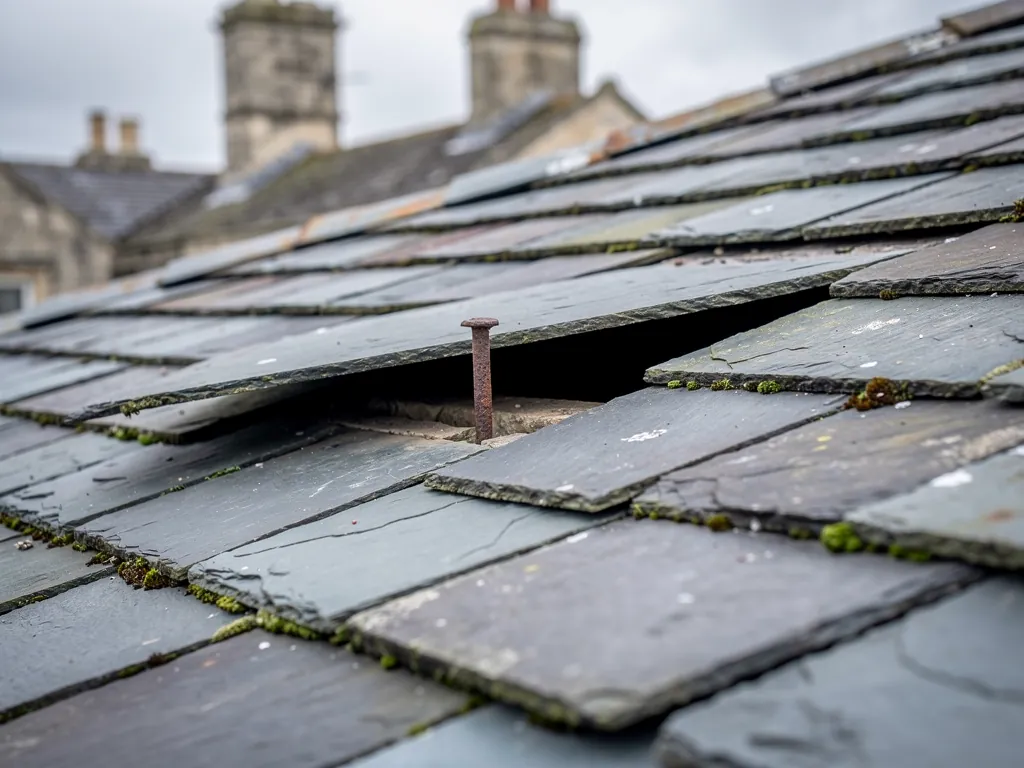
Telling a roof leak from condensation and mould
Damp in a let home often turns into an argument about whose fault it is. A landlord may blame the way the tenant lives; a tenant may blame the building. Both can be wrong, and the cure for each is quite different, so the question deserves a proper survey.
A roof leak tends to follow rain, creates stains with a tide-line edge and damages timbers and plaster in a particular spot. Condensation follows cold weather and indoor moisture, spreads as mottled mould in cold corners and behind furniture, and appears on cold external walls and in the loft. Both can be present at once, and a leak can make mould worse.
Whose job is the condensation?
It depends on the cause. If the house has no extractor in a bathroom, a blocked air path in the loft, or insulation that has trapped moisture in the roof, the fix is part of the building and sits with the landlord. If the property is sound and ventilated and the moisture comes from drying washing indoors with the windows shut, advice and cooperation are likelier to help than a repair.
Our guide on ceiling water stains separates the likely causes, and the page on condensation or leak adds the loft checks. A survey that names the cause removes the guesswork for both sides.
Planning repairs instead of reacting to leaks
The least costly roof repair is usually the one done before the ceiling stains. Landlords who walk the outside of each property every year, and again after a hard winter or a bad storm, catch slipped slates, loose ridge tiles and blocked gutters while they are still small.
A routine look takes little time. From the ground, check for slipped or missing coverings, gaps in the ridge, lifted lead, moss building up in valleys, sagging gutters and stains on the walls below the eaves. Between tenancies, when access is easy, go into the loft, check for daylight, damp timber and insulation, and test the hatch seal. A drone or roof survey is useful for older stock or where there is no history of the roof. See our guide to signs your roof needs repair for what to watch.
How do terraces change the plan?
Terraced streets share chimney stacks, party wall flashings and sometimes valleys, so trouble on one roof can spill onto the house next door, and the reverse. Coordinating with the next-door owner often cuts the cost of scaffolding for both. Our guide to terraced house roof repairs covers the common problems on those streets.
Is it worth keeping a roof record?
Yes. A simple file for each property with survey photographs, repair dates and what was done shows how the roof is ageing, and supports the choice between mending and renewing. It also helps if a mortgage lender, buyer or surveyor asks what has been done.
Quotes, scaffolding and what drives the cost
Roof repair prices vary widely with access, height and what the survey finds. Typical national figures give a rough idea only. MyBuilder's roof repair guide, updated on 21 August 2026, puts minor repairs at £100 to £300, moderate ones at £500 to £1,000 and major repairs at £2,500 or more. A specific let property needs its own written quote after a survey, because chimney stacks, tall elevations and steep pitches change the picture.
When weighing up quotes, ask whether VAT and the scaffold sit inside each price, because leaving them out can make two similar jobs look hundreds of pounds apart. Ask what the job covers and what it leaves out, and what is promised if the fault returns. Our page on roof repair cost explains the factors in more detail.
Can a landlord claim repairs as an expense?
Repairs to a let property are generally treated differently from improvements for tax purposes, but the rules are for an accountant or HMRC, not a roofer. Keep invoices and photographs either way.
Who deals with access and the tenant?
The landlord or agent arranges access and tells the tenant what is happening. We can work to the timing once access is agreed, and nothing is left behind afterwards.
Repair or replace: the portfolio view
A landlord with one house and a landlord with ten face the same question at different scales. When a roof has several faults, repairs add up, and each visit costs scaffolding time and tenant disruption. A single repair is the right call when the covering is healthy and the fault sits in one place. A bigger job becomes the better value when slates are slipping along every slope, flat roof felt is brittle, or timbers are decaying.
Lifespans are a guide, never a guarantee. Concrete tiles often last somewhere between 30 and 60 years, and well-installed natural slate a great deal longer, depending on exposure, workmanship and upkeep. A roof near the end of that range merits a survey before it begins to leak, so you can budget.
How do I plan the spend across several properties?
Order them by condition, not by when the tenancy ends. A roof that is failing needs attention ahead of one that is merely old. Survey reports with photographs let you rank the work and phase it, rather than facing several emergencies in the same wet month.
We aim to recommend only what cures the fault, set it out in the written quote sent once the survey is done, and back the work with a 10-year workmanship guarantee in writing. For the steps from enquiry to completion, see how a roof repair is carried out, and for the wider range of services, our roof repairs page.
If a let building is listed or in a conservation area, check with Swindon Borough Council's planning team before any change to its appearance, because plain like-for-like work seldom needs permission while protected buildings are treated more strictly.