Street of 1960s brick bungalows with concrete tile roofs

Roofers in Witney

Slipped slates, tired lead, worn ridges and failing flat roofs, dealt with across Witney, from the old streets beside the Windrush to the housing that has spread out around the town.

Witney's roofs, from Butter Cross to estate edge

Old roofs and chimney stacks on a market street
The old town around the Butter Cross

Witney grew as a market town beside the River Windrush, and the streets near the Butter Cross, built around 1600 with its clock added in 1683, still carry that age. The spire of St Mary the Virgin, rebuilt around 1243, stands over the roofs nearby. Buildings this old tend to have steep pitches, rafters that have moved over the centuries, and lead that has been patched many times. Chimney stacks on the High Street frontages are often shared between neighbours, so mending one can touch the next. The Blanket Hall on the High Street was built in 1721 for weighing and measuring blankets, much of the old core sits in the conservation area, and we plan work on these roofs around keeping original fabric wherever it can be saved.

Brick terrace roofs near a river
Cogges, the riverside lanes and the blanket-trade terraces

Witney is known for woollen blankets, a trade that ran from the Middle Ages until Early's, the largest maker, closed in 2002. The homes that grew up beside the Windrush and towards Cogges are a different job from the market core: smaller roofs, brick stacks sitting close to the ridge, and rear additions bolted on in later centuries. Slate and clay tile both turn up on terraces like these, along with the odd later covering put on after a repair. The usual faults are nail fatigue on old slate, cracked tiles over a lean-to, and flat-roofed kitchens that have outlived their first covering. Part of this older fabric lies inside the Witney and Cogges conservation area, designated in 1968, so check the boundary before planning changes.

Modern tiled roofs on a housing estate
Newer estates and the town's edges

Around the old core, Witney has spread outward with housing from many decades, and those roofs are a different proposition. Concrete interlocking tiles appear on many later houses, with dry-fix ridge systems on the newest builds and mortar-bedded ridges on older ones. The faults repeat from street to street: ridge and hip tiles with failed bedding, verges where the cement has cracked, valley flashings that have lifted, and garage or porch roofs that want attention before the house does. Matching tiles are easy to source on an estate, which keeps repairs small. We study the whole roof in the survey photographs before suggesting anything bigger than the fault needs. If a patch-up is the honest limit of what the extension needs, the written quote will describe just that.

From Swindon to the Windrush

Map showing Witney and central Swindon. 25 road miles north-east of central Swindon.

Distance
25 road miles north-east of central Swindon
Council
West Oxfordshire District Council
Conservation area
Witney and Cogges, designated in 1968
Setting
Market town on the River Windrush, a historic blanket-making centre
Council
West Oxfordshire District Council

Witney roof questions

Does the Witney and Cogges conservation area affect my roof?

Matching repairs seldom call for an application. Changing the material, a front slope or a chimney is worth raising with West Oxfordshire District Council before you commit.

Can you repair a chimney stack shared with next door in Witney?

Yes. We survey both sides of the stack, explain what is shared, and tell you early if a party wall conversation is needed before any work begins.

Why do old blanket-town terraces leak at the rear?

Additions behind older houses often meet the main roof through ageing flashings and low-pitched covers. Water tends to get in along that seam.

Q1

What roofs sit on Witney's old streets?

Terraced house roof stripped to rafters inside scaffolding
Roofer repointing a stone chimney stack above lead flashing

The short answer

Around the Butter Cross and the church, the roofs are old, steep and often listed or inside the conservation area. Beyond the core you meet brick terraces, interwar and later housing, and newer estates, each with its own recurring faults and its own sensible repair.

Stand near the Butter Cross and you can read several centuries of roofs in a single view. The cross dates from around 1600, the Blanket Hall from 1721 and the spire of St Mary the Virgin from the thirteenth century, and the houses between them were roofed and re-roofed as the town changed around them.

How do I tell how old my Witney roof is?

The pitch, the covering and the ridge detail give most of the answer. Steep roofs with small clay or stone-type coverings usually point to older work, while shallower pitches with large machine-made tiles belong to later building. The survey photographs let us tell you what you have, and whether the covering is original or a later swap.

Age alone is not a fault. A sound roof of any date can be kept going for years if its flashings, ridge and fixings are looked after, and renewing only the parts that have failed usually beats a new roof for value.

What goes wrong first on an older roof?

Rarely the main field of tiles. It is the details: lead split at a chimney, ridge bedding that has crumbled, a valley gutter packed with leaves, or a rear slope where an extension was added. Our roof repairs page describes how a leak is followed back to the spot where it enters, not the stain on the ceiling.

Does a High Street house need scaffolding for repairs?

Often, because tall frontages and shared stacks are awkward to reach safely from a ladder. Reach is a real cost driver here, so check whether any quote you are weighing includes VAT and scaffolding. A tower on a pavement frontage costs more than a ladder at the back.

On the older streets we also photograph the roof at the start and the finish, so you hold a record of what was found and what was done.


Q2

Should I repair slate on a Windrush-side terrace?

The answer

Usually, provided the slates themselves are sound. Natural slate has a very long life, and the fault we meet most is a rusted nail that lets single slates slide. Refixing and replacing the slipped ones normally costs far less than stripping the whole slope.

On the riverside and Cogges terraces, a slate roof that has started shedding slates is a regular call-out. The slates themselves are seldom the problem. The fixings behind them are.

What is nail sickness, and is it my cause?

Slates hang on nails, and across a hundred years an iron nail can corrode clean through. The slate stays up for a while, held by its neighbours, then drops in the next gale. Replacing a handful at a time buys a few years. When slipped slates show across a whole slope the nails have usually reached the end of their life, and re-slating with the good slates sorted and reused becomes the better answer.

Will a repair match the rest of the roof?

Slate varies in size, thickness and colour, so a fresh slate beside weathered ones can show. We match by size and tone, and use reclaimed slate where it suits the street. One slope can be re-slated alone where the others are sound, which keeps the job in proportion.

Our slate roofing page explains how we weigh a few replacement slates against re-laying a slope.

Is the roof worth keeping at all?

MyBuilder's slate guide, updated 21 August 2026, puts natural slate at 80 to 100 years or more when well fitted, so a roof that is moving is not necessarily one that is finished. The survey tells you which. Soft battens or shifted rafters under the slope would show up in the photographs.

Where only the rear slope or an extension is involved, that is where the work is concentrated, and the sound parts are left alone.

Our view

Renew the fixings and the failed slates first, and strip a slope only when the nails have gone across it.

Q3

Who deals with roof work in Witney?

Roofers on a slate roof along a limestone village street
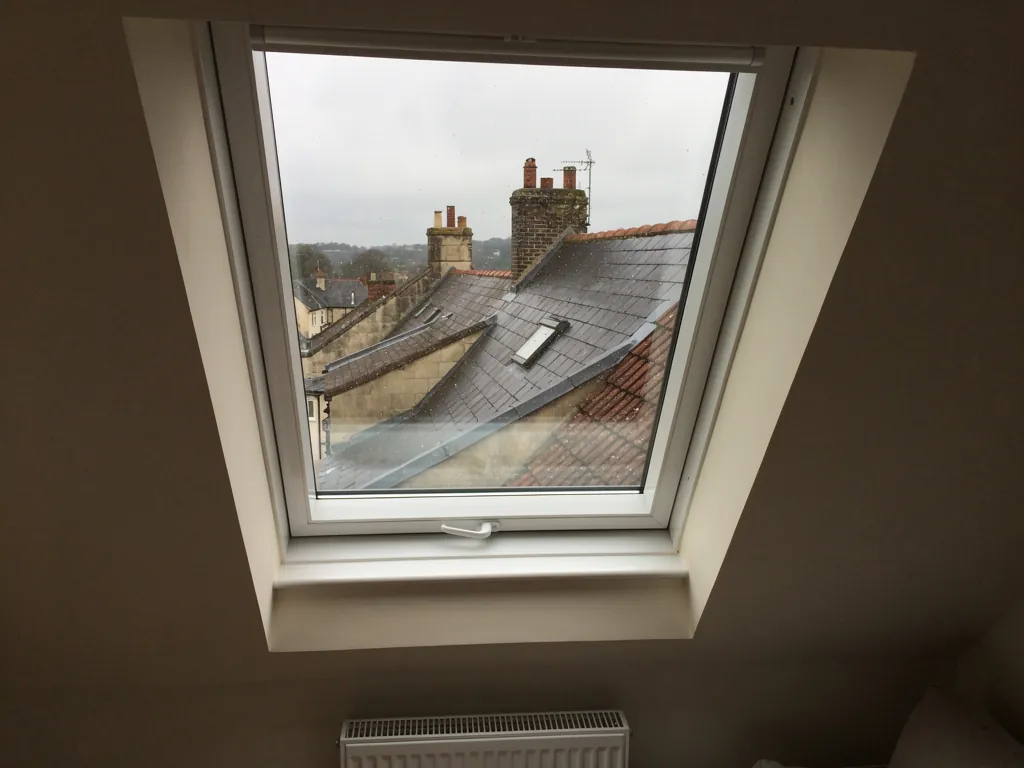
White roof window seen from inside a loft room

The short answer

Planning decisions in Witney sit with West Oxfordshire District Council. Roof work that is notifiable goes to a building control body: the council, or a registered building control approver. We tell you which rules touch your house and handle the Building Regulations notification where the work needs one.

Most repairs here need no permission at all. Swapping broken tiles, refixing slates and rebuilding a ridge line in matching materials are upkeep, not development. Three situations change that.

Does re-covering my Witney roof trigger approval?

The Planning Portal sets two limits. Stay under 25 per cent of the total building envelope and under 50 per cent of the roof, and approval is not normally required. Pass either limit and it is. A covering that adds 15 per cent or more to the weight triggers it as well. A re-roof of that size can also bring in a thermal upgrade under Part L.

What changes inside the conservation area?

Witney and Cogges was designated in 1968. Repairs that match leave the street as it was, but new roof windows, a different covering or altered chimneys deserve a conversation with West Oxfordshire District Council's planning team first. For roof windows, our roof window planning page sets out the rules.

What if my house is one of the listed buildings?

Several of Witney's best-known buildings are listed, and any work that alters their character needs listed building consent, roofing material included. We start from like for like in both material and fixing, and if that has to change you hear about it before the roof is priced.

Not sure whether yours is listed or inside the boundary? The council's maps will show it, and we can walk through them alongside you before the written quote arrives, so the question is settled before any money is committed. It is a short check that can save a long delay later.

MythAny roof work in a conservation area needs planning permission.

FactRepairs that match seldom need an application; the council examines alterations to the building's look.

Questions from around the Butter Cross

How would you get at a roof on a tight Witney frontage?

Access is the first thing the survey settles. On tight frontages that can mean a tower or full scaffold, a pavement licence, or working from a rear lane. Whatever access the job needs is reflected in the total price on the written quote, so nothing surprising turns up on the day. The pavement is kept clear and the site tidied at the end of each working day wherever we can.

Is a flat-roofed rear extension in Witney worth patching?

Sometimes. A small split or a lifted edge can be repaired properly, and that is the lightest touch that cures the trouble. Lifted laps, cracked seams and loose edge trims are all things a skilled repair can put right, and the extension keeps its existing covering for years longer. If the covering is blistered across its whole surface or the boards beneath are soft, a patch only delays the leak, and the photographs show why. The right answer depends on what the survey finds underneath the covering.

Do you work on houses near the Windrush where the ground is damp?

Yes. Roofs near the river are repaired like any other, but we look hard at gutters, downpipes and the base of chimney stacks, where water running down the building can pass for a roof leak. Finding the true source of the damp saves you paying for the wrong repair, and a quick look at the roof often rules it in or out within minutes of arriving on site.

Do you cover villages around Witney as well?

Yes. Witney sits within the 30 road miles we work to from Swindon, and villages on the roads around it are covered too. Phone 01793 626096, drop us a WhatsApp message, or send the enquiry form with your postcode, and you will hear back on whether we can get to you. Every place we cover is listed on the areas page.

Ask us about your roof

Tell us what’s happening and we’ll call you back.

  • Photos of what we find
  • A written quote
  • 10-year workmanship guarantee

Or call 01793 626096

Call Get a quote