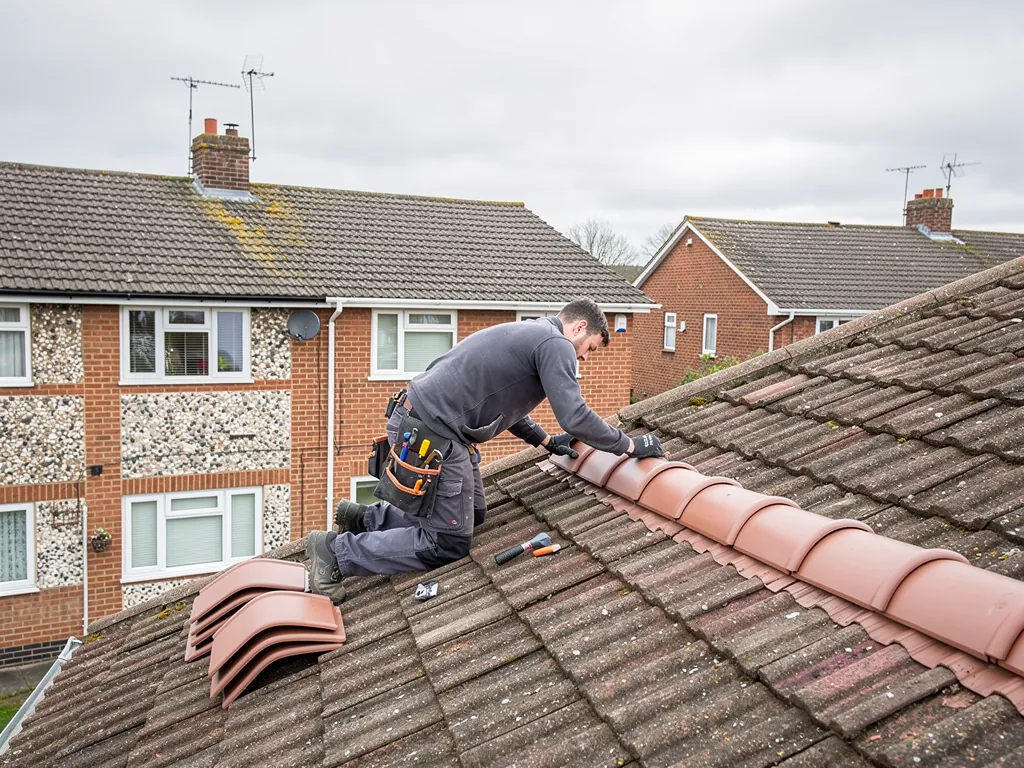
Clay has a reputation for a limited life, but the evidence is mixed. Marley quotes a BRE minimum life expectancy of 60 years for clay tiles under its environmental profiling scheme, while the Building Conservation Directory points to peg-tiled roofs that are centuries old and calls the 60-year figure an unreliable guide. In practice the covering is rarely the first part to give out, and a lifespan figure is a range, never a promise.
Q2.1Which part of a clay roof gives out first?
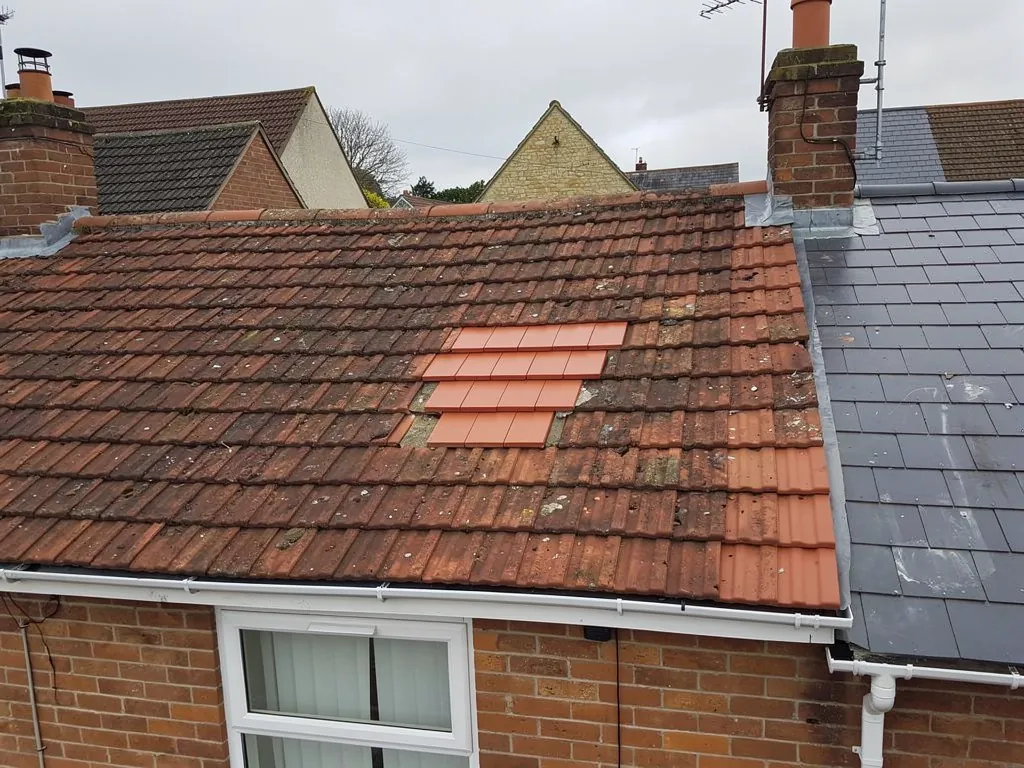
Nails rust, battens soften at the lap and underlay splits. When the roof is stripped, the tiles are often good enough to go back. Leaving them in place on a failing batten system, though, only delays the leak, so the decision comes from what the underside shows, not from the age of the tile. A look from the loft with a torch on a wet day tells us far more than any glance from the lane.
Q2.2Should replacement clay tiles be reclaimed or new?
Reclaimed clay tiles matched by colour and size keep a village roof looking settled. New handmade tiles are an alternative where reclaimed stock is short, and they weather in over a few seasons. We tell you which we have used and why, and you receive the written quote once the survey is done, not an estimate guessed at from the lane.
Q2.3When does a whole clay slope need replacing?
If a large share of the tiles are frost-damaged, laminating, or too thin to hold nibs, a full re-cover becomes the sensible choice. Our roof replacement page explains what that involves, from stripping to the final ridge, and where the 10-year workmanship guarantee in writing fits.
A roof that has been patched many times can also be in better shape than it looks. The test is how it behaves in a wet spell, and whether the timbers are dry.