Roofers on a slate roof along a limestone village street

Roofers in Sparsholt

Roof work for Sparsholt homes under the downs, from the cottages near Holy Cross church to the farm buildings, garages and newer houses beyond the old centre, in a parish the Wilts and Berks Canal once crossed.

Sparsholt's roofs, from church tower to canal bank

Village church tower above old roofs
Beside Holy Cross

Holy Cross church is Grade I listed, with a 12th-century nave, a 13th-century west tower and a transept that holds three rare 14th-century oak effigies. A village named in a charter of 963 has had a very long time to gather roofs of every age around its church. Houses nearby deserve slow, careful inspection: old timbers, patched coverings, hand-made fixings and lead that has been renewed more than once. We photograph each slope before any repair is priced, and the written quote is clear about what must be done now and what can be watched and left for another year or two without harm. Lead at the tower and the chimneys is looked at closely, since a failed joint there can run water down inside a wall for a long time before a stain appears.

Terrace of tiled cottages with chimney stacks
Homes inside the conservation area

Sparsholt's conservation area was recorded as designated on 9 July 1969, so the village has long been treated as a place where the look of a street matters. For a roofer that means attention to detail: tile colour and texture, the way a ridge sits, the height of a chimney stack, the profile of the gable edges. A repair that matches simply disappears into the street. One that does not, even though it keeps the rain out, can draw comment from the council and from neighbours, and we would rather get it right at the quoting stage than argue about it afterwards on the doorstep, with the neighbours watching.

Garage and outbuilding roofs under repair
Farm buildings, garages and newer homes

Beyond the old centre, Sparsholt has farm buildings, barn-style outbuildings, garages and homes from later decades. The Wilts and Berks Canal once ran through the parish, completed between 1805 and 1807 and formally abandoned in 1914. Low-pitched garage and extension roofs, flat porches and corrugated sheeting on outbuildings all appear in places like this, and each has its own weak points: upstands and edges on flat roofs, laps and fixings on sheeting. Sheeting on older outbuildings can contain asbestos cement, which needs careful handling, so a sample or a look at the labelling comes before any tool touches it, and we explain the options for removal in plain terms.

Out of Swindon, under the escarpment

Map showing Sparsholt and central Swindon. 15 road miles east of central Swindon.

Distance
15 road miles east of central Swindon
Council
Vale of White Horse District Council
Conservation area
Sparsholt, designated 9 July 1969
Setting
The foot of the Berkshire Downs escarpment, west of Wantage
Council
Vale of White Horse District Council

Sparsholt roof questions

Does Sparsholt's 1969 conservation area affect small roof repairs?

Usually not for matching repairs. A different covering, a chimney alteration or a roof window facing the street is worth raising first with Vale of White Horse District Council, whose planners decide such questions.

Is a house beside Holy Cross treated differently?

Only if the house itself is listed. The church roof follows the Church of England's own faculty route, whereas a listed house nearby needs listed building consent before anything alters its character.

Are roofs below the downs more exposed to wind?

Open ground at the foot of an escarpment can feel exposed, so fixings along the ridge, hips and gable edges deserve extra attention. Edge tiles that have lifted rank high on our checklist, along with the ridge.

Q1

What does a 1969 conservation area ask of a roofer?

Roofer repointing a stone chimney stack above lead flashing
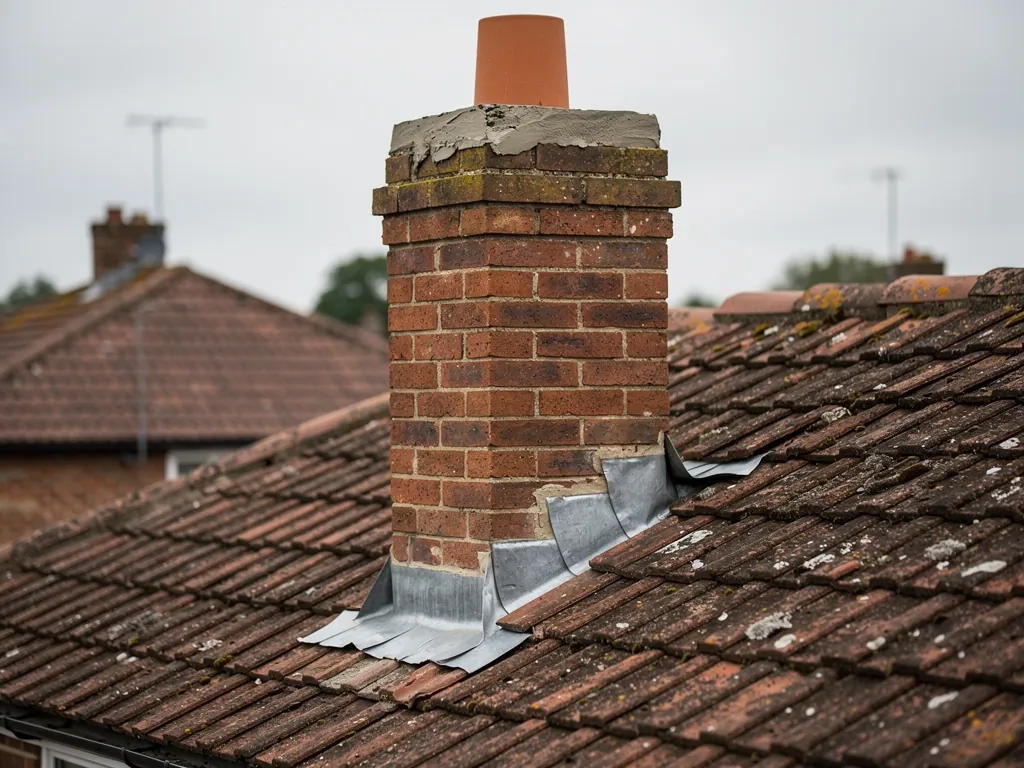
Brick chimney stack with new lead flashing on a clay tile roof

The short answer

It asks for care, not paperwork. A like-for-like repair in matching materials rarely needs an application, but swapping the covering, fitting a roof window or altering a chimney is something to raise with Vale of White Horse District Council first. We photograph the existing roof so any change is easy to explain.

A conservation area is a part of the district the council has decided is worth protecting for its character or appearance. Sparsholt's was designated in July 1969, so most of the village has lived with the idea for more than half a century. The practical effect on roof work is smaller than many owners fear, and it helps to separate what changes from what does not.

Which repairs leave the roof looking the same?

Putting slipped tiles back, patching worn lead flashing or re-seating the ridge with matching pieces counts as maintenance, and the roof looks unchanged afterwards. That sort of work seldom raises a planning question, the exceptions being listing and any direction that withdraws the right. The council's list of Article 4 directions shows none for Sparsholt, which would otherwise have taken that freedom away from owners in particular streets.

Which changes are worth a conversation first?

Swapping clay for concrete, adding a roof window to a street-facing slope or taking down a chimney stack can alter the look of the village, and those are the points where the council takes an interest. Our page on tiled roofs in conservation areas sets out how we approach them, and our roof repairs page shows how a small job is quoted.

Are listed buildings different again?

Should your house be listed, any change to its character needs consent first, whatever the conservation area says. The church is Grade I listed, and other buildings in the village may be too. The council can tell you for certain.

For a quick answer, send us a photograph of each slope and your address. We will say what we would want to examine before putting a figure on it.


Q2

Do roofs under the Berkshire Downs need stronger fixings?

The answer

The fixings matter most at the edges, where wind lifts a roof first. Sparsholt lies at the foot of an escarpment, so ridge, hip and gable-edge tiles deserve secure mechanical fixing, not mortar alone. A tested dry-fix system is often the tidiest way to achieve that.

Sparsholt sits at the foot of the Berkshire Downs escarpment, about three miles west of Wantage. The ground rises behind the village, and a roof facing open country can feel the wind more than one tucked into a terrace. Without measured wind speeds to hand, we can still describe where exposed roofs tend to fail first.

Where does wind get under a roof?

Along the crest of a roof sits the ridge. A hip is the sloping line where two slopes meet at an outer corner, and the verge is the finished edge at the gable. These are the places where wind gets under tiles. For many years they were bedded in mortar alone. BS 5534:2014 changed that: ridge and hip tiles now need a mechanical fixing in addition to any mortar, and mortar on its own is no longer enough.

Which fixing method suits the roof?

On a roof being re-covered, a dry-fix system tested to BS 8612:2018 replaces the mortar with clips, fixings and a ventilated ridge section. It is lighter, quicker and tidy. On an older building the look of a traditional mortar-bedded ridge may be what the owner wants, and in that case we add the fixings behind the mortar, so the roof looks as it always did. Our ridge, verge and dry-fix page explains both routes.

What should you check after a gale?

After strong wind, a quick look from the garden for tiles out of line, a sagging ridge or debris in the gutters can stop a small repair turning into a re-roof. If something looks wrong, we prioritise leaks and make a roof safe first, then plan the lasting repair once it is dry enough to work properly. A rushed repair in the wet is rarely the one that lasts.

Q3

Who checks a re-roof in Sparsholt?

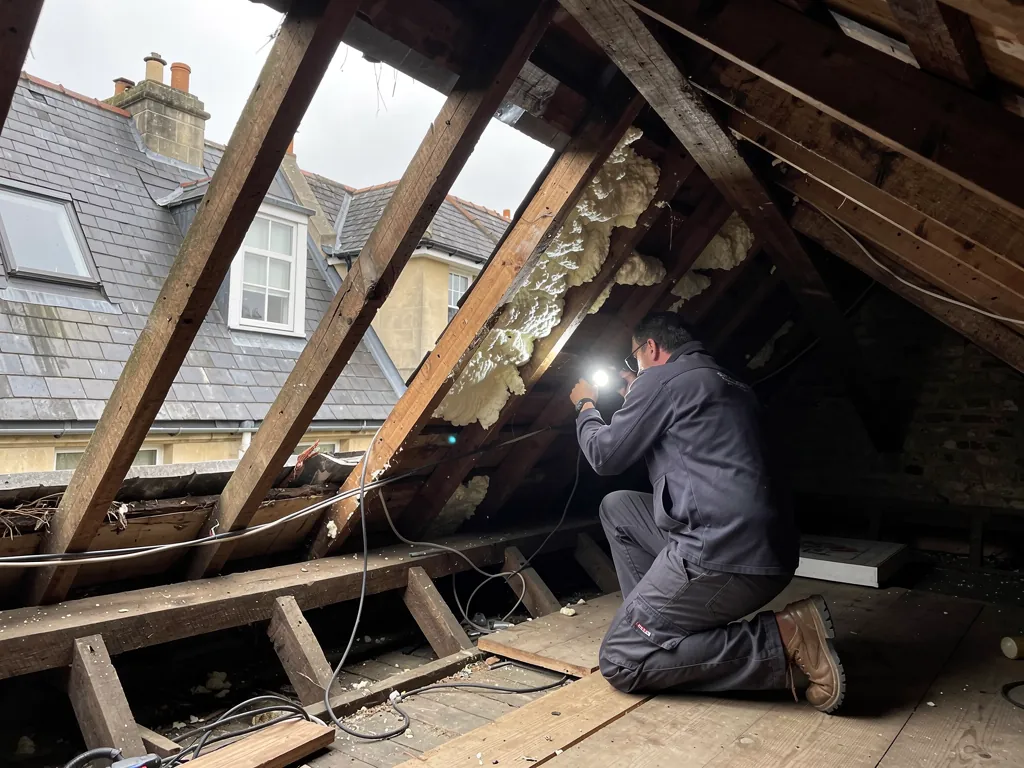
Surveyor checking spray foam on rafters with a torch
Rolled lead roof covering over a bay above white windows

The short answer

Building control comes from the shared Southvale service that Vale of White Horse District Council uses, or from a registered building control approver. Most repairs need no approval, but a large re-cover, or a heavier covering, can. Planning questions go to the district council. We explain which applies and look after the Building Regulations notification when the job requires one.

Roof work in Sparsholt falls under two separate systems: planning, which is about how a building looks, and building control, which is about whether the work is safe and efficient. People often mix them up, so it helps to take them in turn.

Who handles building control here?

Vale of White Horse District Council shares its building control with South Oxfordshire through a service called Southvale. The alternative is a registered building control approver, a private firm on the register since 6 April 2024. According to the Planning Portal, repairs and re-covering generally escape a building control application while under 25 per cent of the total building envelope and under 50 per cent of the roof is touched. Exceed either figure and approval is required, with the Part L energy rules perhaps calling for upgraded insulation too.

Does a heavier covering need approval?

A covering at least 15 per cent heavier than its predecessor needs approval too, because the timbers must be able to carry it. The wording in Approved Document A is "more than 15%". A move from clay or slate to concrete is the usual example, and we check the structure before suggesting it. The roof replacement page covers when a full re-cover makes sense.

What about planning and listing?

Matching re-roofs seldom need planning permission. Sparsholt has a conservation area, and listed buildings need consent for changes to their character. The district council can confirm what applies at a given address, and we take care of the building control paperwork wherever it is needed. Where something falls outside it, we tell you plainly, and where a point is for the council to decide, we say that too.

MythAny new roof covering needs planning permission.

FactLike-for-like re-roofing seldom does; the questions are listing, the conservation area and, separately, building control.

Questions from under the downs

Why are some Sparsholt roofs hard to match when a tile breaks?

Older tiles weather in colour and texture over decades, so a new one can sit out of place against its neighbours. We look for reclaimed tiles of similar size and age, and for a repair on a prominent slope we will sometimes take tiles from a hidden section of the same roof. That keeps the visible slope looking as it did, and the written quote says exactly which approach we propose.

Do you cover Wantage, Challow and the other villages near Sparsholt?

Yes. Wantage, Challow and the other places around the foot of the downs fall inside our 30 road miles from Swindon. The full list of places is on the areas page. If your village is not named, phone 01793 626096 or send a WhatsApp message and we will confirm quickly whether we can reach you.

Can sheet roofs on old farm outbuildings contain asbestos?

They can, particularly if the building dates from before 2000. Asbestos cement sheeting is handled carefully and kept intact where possible, and breaking it up changes the rules that apply. We check before work begins, explain what we find along with the route for removal and disposal, and never ask you to take any of it on trust.

What happens to the old canal route when a roof needs scaffolding?

Nothing special in most cases, but access is something we check at the survey. Scaffolding needs safe, level ground and sometimes a licence if it overhangs a public place. Properties along the former Wilts and Berks Canal line may have soft or narrow ground, so the written quote notes the access we expect to need, and whether anything has to be moved first. Soft ground can also affect where a scaffold tower is placed.

Ask us about your roof

Tell us what’s happening and we’ll call you back.

  • Photos of what we find
  • A written quote
  • 10-year workmanship guarantee

Or call 01793 626096

Call Get a quote