Wet slate and clay tile rooftops with chimney stacks after rain

Roofers in Kingston Lisle

Tile and slate repairs, chimneys, re-covering and flat roofs in Kingston Lisle, from the listed church and park below the Downs to the cottages and farm buildings along the village's spring line.

Kingston Lisle's roofs, from spring line to scarp

Old tiled roofs on a large country house
Church, park and the great house

Kingston Lisle's grandest buildings are both listed Grade II*: St John the Baptist's church, whose nave and chancel date from about 1200, and Kingston Lisle Park, a seventeenth-century house enlarged in the eighteenth and nineteenth centuries. A building altered across several centuries tends to carry roofs of several pitches and ages, with valleys, parapets and lead gutters wherever one phase meets the next. Those joints are where old roofs fail first. On a listed building the aim is to hold on to the original covering and timber wherever they can be saved, then renew the remainder in the same material and in the same pattern.

Thatched cottage with rendered walls
Cob walls and a thatched cottage

Church Cottage, listed at Grade II, dates from the late sixteenth century and was remodelled around 1900: a timber frame infilled with cob and wattle and rendered over, chalk rubble at the rear, and a thatched roof. Cob is earth mixed with straw, and chalk rubble is soft too. It copes with weather so long as it stays dry at the top and at the foot, so a gutter or roof edge that sheds water down the wall can do real harm. Thatching is a specialist craft in its own right, but the porches, outhouses and extensions around a thatched home often carry conventional coverings, and on those we take care that the rain they shed is led well away from the walls.

Clay tile roofs on village cottages
Village houses and farm buildings

A spring-line village grew where water broke out at the foot of the chalk, and its cottages, barns and later houses sit close together on the lanes beneath the Downs. Houses and farm buildings of this kind commonly carry pitched roofs in clay or concrete tile, slate or profiled sheet, with flat roofs on the extensions. Their usual faults are well known: tired ridge bedding, slipped verge tiles, cracked tiles, failing felt, and gutters that overflow because leaves from nearby trees have blocked them. A survey sorts those faults into the ones that can wait and the ones that cannot.

From Swindon to the Berkshire Downs escarpment

Map showing Kingston Lisle and central Swindon. 14 road miles east of central Swindon.

Distance
14 road miles east of central Swindon
Council
Vale of White Horse District Council
Conservation area
Kingston Lisle Conservation Area, Vale of White Horse
Setting
A spring-line village below Blowing Stone Hill on the Berkshire Downs escarpment

Kingston Lisle roofs: the questions that come up most

Can a listed house near Kingston Lisle Park be re-roofed?

Yes, but consent is needed where the work alters the building's character. Raise it with the Vale of White Horse conservation team before you order materials.

How do roofs cope with the exposure below Blowing Stone Hill?

The edges take the strain: ridges, verges and eaves. Their fixings matter more than anything else on an exposed roof, so we check those first.

Is a cob-infilled cottage at risk from run-off off a neighbouring tiled roof?

It can be. Cob and chalk soften if they stay wet, so gutters, downpipes and roof edges nearby must carry water well clear of the wall.

Q1

What kinds of roof stand under Blowing Stone Hill?

Brick and limestone cottages around a small village green
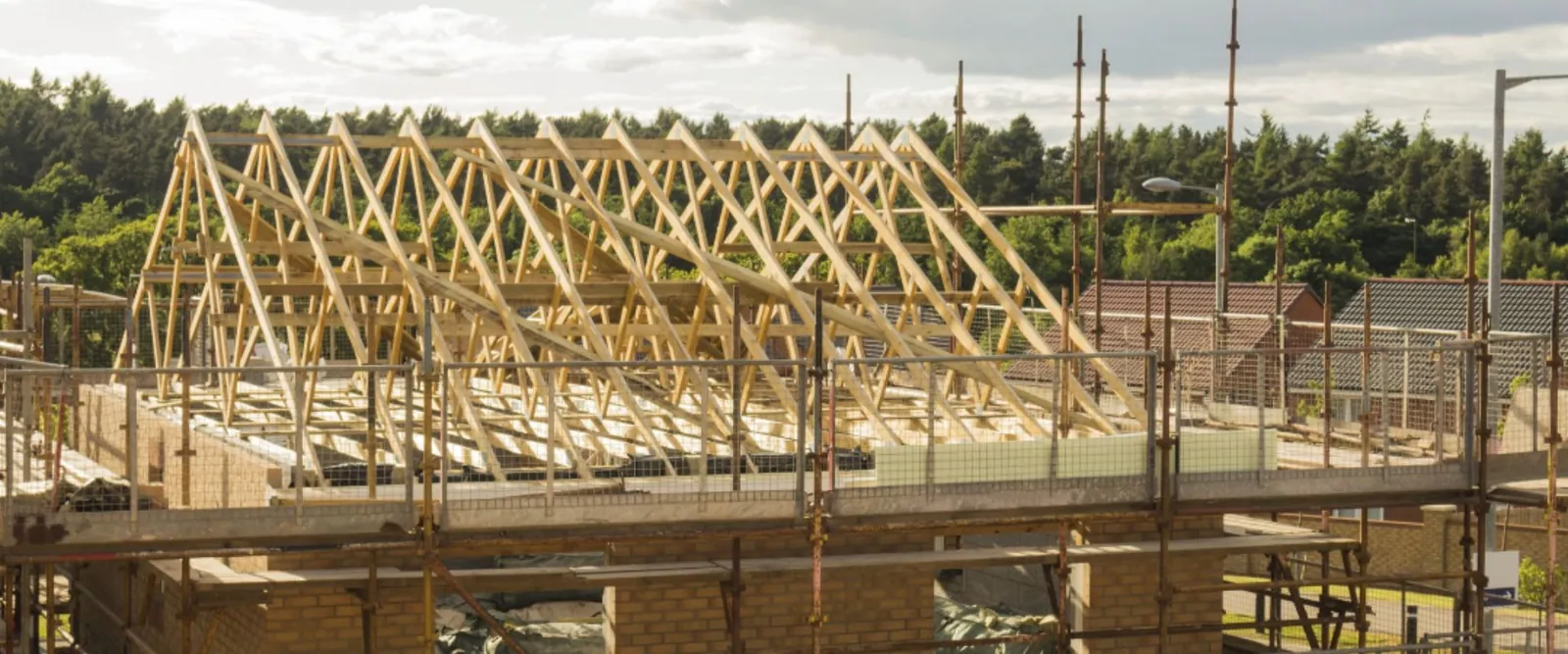
Timber roof trusses on a new brick house behind scaffolding

The short answer

A wide range. Kingston Lisle has a Grade II* church and house, a Grade II cottage with cob infill and thatch, and ordinary village houses and farm buildings in tile, slate and sheet. What they share is age: most have been repaired and altered more than once.

Kingston Lisle sits where the chalk of the Berkshire Downs escarpment meets the vale, with Rams Hill rising to 764 feet behind it and the Blowing Stone, a perforated sarsen, a short way south. It is a small parish, and its older buildings have been altered many times.

Why is a much-extended house harder to diagnose?

The park house was built in the seventeenth century and enlarged twice since. A house like that seldom has one simple roof. It has several, joined by valleys and gutters built at different dates by different hands. When a leak appears, finding the guilty junction takes patience, because water can run along a timber a long way from where it enters. We trace it with photographs of each slope and of the roof space, so the written quote deals with the real fault.

Do cottages and barns get the same care?

Cottages, outbuildings and barns call for the same method on a smaller scale. Our roof repairs page explains how we decide between a repair and a larger job, and we are happy to say plainly when the answer is a small one.

Does the scarp change how the wind hits a roof?

A village under a steep escarpment feels the weather differently from one in a sheltered fold. Wind arriving off the high ground meets ridges, verges and eaves first, and those are the parts of a roof where a weak fixing shows. After a blustery spell we would look at those edges before anything else, and on a roof that has never had its ridge fixed mechanically, it is where we usually start.

Why can neighbouring roofs behave differently?

The Wilts and Berks Canal section near the parish was finished between 1805 and 1807, and the Great Western Main Line of 1840 passes about 1.75 miles to the north. Buildings put up or re-roofed before and after those dates can carry different coverings, so we never assume that two neighbouring roofs will behave alike. Each gets its own inspection before it gets its own price.

Q2

How should a listed roof near the church be repaired?

The answer

With as much of the original covering and timber kept as its condition allows, and any replacement in the same material and method. A listed building's roof is part of its character, so a change of material needs consent. Repairs in matching materials normally do not.

A listed roof is made of the same slates, tiles, lead and timber as any other. What differs is the weight of the decisions, because the roof is such a large part of the character of the whole building.

Can most of the original roof stay?

When a roof leaks, the cause is usually a localised failure: a slipped tile, a rotted batten, a lead flashing that has split along a fold. These can be mended without stripping the whole slope. We would rather refix and patch with matching material than recommend a re-cover that the building does not need.

How are replacement tiles matched?

Where tiles must be replaced, they should match in size, colour and texture, because a wrong tile among old ones shows for years. Reclaimed tiles can help, but they need to come from a source that is not stripping another old building to supply them.

Who gives consent for a listed roof?

Vale of White Horse District Council grants or refuses consent for work touching a listed building's special interest. St John the Baptist, as a working Church of England church, goes through the diocesan faculty process instead. The council's Article 4 page lists one effective direction in the district, on Thames Street in Abingdon, so none alters what you can do to a roof in this village.

Our roof replacement page covers the point at which stripping a whole roof is justified, and what you are asked to approve first. A roof is scaffolded and photographed before any covering is lifted, so the record exists if anyone later asks what was there.

MythA listed building cannot have any roof work done at all.

FactRepairs in matching materials are routine; what needs consent is work that changes the building's character.

Q3

Who approves bigger roof work in Kingston Lisle?

Rolled lead roof covering over a bay above white windows
Torch showing a water-stained rafter beneath slates in a loft

The short answer

Planning sits with Vale of White Horse District Council, and its building control is the Southvale service run jointly with South Oxfordshire. A registered building control approver is the private alternative. A matching repair seldom needs either; a large re-covering, a heavier covering or a listed building will.

Most work on a Kingston Lisle roof needs no approval at all. The questions arrive when a job grows or when the building is special.

When does building control come in?

The Planning Portal puts the line for re-roofing at 25 per cent of the total building envelope and 50 per cent of the roof: re-covering kept beneath both lines normally needs no building control application, while one that goes over brings Building Regulations in, with a possible insulation upgrade. Moving to a markedly heavier covering, 15 per cent or more, brings approval in as well. The district's route is Southvale Building Control, shared with South Oxfordshire, with a registered building control approver as the private alternative. We tell you which suits the job, and if it is notifiable we send in the notification.

What does the conservation area change?

Kingston Lisle has a designated conservation area. Matching repairs leave a building looking as it did and rarely need an application. A change of covering, or new openings in a visible slope, is the kind of work the council examines. For roof windows in particular, our page on roof window planning explains the position.

What should you tell us first?

Four details save time: roughly when the house was built, what the roof is covered with, where the water shows inside, and whether the building is listed or sits within the conservation area. A mobile photograph of the ceiling stain and one of the roof from the lane are plenty. With those in hand we can say whether a quick repair is likely or whether the job looks bigger, and book the survey around your diary.

What happens before the scaffold goes up?

Send us a few photographs and the approximate age of the house. We will tell you what is likely to be involved. The survey confirms it, and photographs from your roof travel with the written price. Where the job turns out to be a repair, the quote says so in plain terms.

A quote sent without a survey is a guess, and we avoid guessing: the written price comes after the roof has been seen. Old farm buildings and roof spaces here can shelter bats or nesting birds, which are protected, so we check before disturbing one.


Our view

Speak to the council before any change of material, and keep matching repairs simple.

Roofing services in Kingston Lisle

Questions from under the Downs

Why do old roofs below the Downs lose tiles at the verges?

The verge is the sloping edge at a gable, and it is where wind lifts a covering most easily. If the tiles there rest on weathered mortar and nothing else, they lift and slip. We rebuild the edge with extra fixings, or with a dry-verge system where that suits the roof, and we check the barge boards beside it.

Can you mend an outhouse roof standing beside a thatched cottage?

Yes, on neighbouring tiled, slated and flat roofs. We watch where water leaves the roof edge, so gutters and downpipes carry it clear of cob and chalk walls, and we take care with any flue near thatch, because heat and sparks there are a matter for the thatcher and a competent chimney sweep.

Do you cover the farms and barns around Kingston Lisle?

Yes, farm buildings and houses around the village are within our area. A survey records the covering, the timbers and the access, and the written quote follows. Barn roofs in sheet, tile or slate are priced from what the survey finds, not from a standard rate, because condition varies so much.

Do chimneys on Kingston Lisle's old houses usually need new flashings?

Quite often. Lead around a chimney tires with age, and a stack that has stood for generations has usually been repointed more than once. We look at the lead, the pointing, the pots and the haunching together, because fixing one and leaving the others tends to bring the leak back within a few winters.

Ask us about your roof

Tell us what’s happening and we’ll call you back.

  • Photos of what we find
  • A written quote
  • 10-year workmanship guarantee

Or call 01793 626096

Call Get a quote