Street of 1960s brick bungalows with concrete tile roofs

Roofers in East Challow

Pitched roofs, flat extensions, farm buildings and chimneys in East Challow, a dairy-farming village on the Vale of White Horse clay, north of Letcombe Regis.

East Challow's roofs, from the brook to the church

Village church with stone slate and lead roofs
St Nicholas and the stone-slate tradition

The county history records that St Nicholas Church has rubble walls, a rough-cast north wall and stone-slate roofs, apart from a leaded roof over the aisle. Its west end and aisle were rebuilt in brick in the eighteenth century, the building was restored hard in 1858, and a low embattled tower was added in 1884. A church like this shows how a village roof has been patched, rebuilt and re-covered over generations, and older houses near it are likely to have the same history of mixed repairs. Stone slate, lead and brick junctions are all places water tests a roof first.

Farm building with a profiled sheet roof
Farmhouses and dairy buildings

The parish covers 1,657 acres, most of it permanent grass on Gault subsoil, and it is dairy land. Farms mean barns, milking parlours, storage buildings and farmhouses, and these roofs are a different job from a suburban semi: long spans, profiled sheets, big gutters and fixings that suffer from vibration and corrosion. Leaks in a farm building matter beyond the building itself, because wet feed and wet bedding spoil quickly. The survey covers sheets, laps, fixings, rooflights and the supporting purlins, and the written quote follows the photographs, with the work phased so that milking and feeding carry on.

Brick houses with a flat-roofed porch
Village homes and their extensions

Away from the farms, East Challow has the houses, bungalows, garages and rear extensions that any village collects over a century. Pitched tiled roofs on the houses fail in familiar ways, at ridge and hip bedding, valley linings and the lead around chimneys. Single-storey extensions and porches are often roofed flat or at a shallow pitch, and they leak at the upstands, the edge trims and the outlets, not across the middle of the deck. We look at each separately and say which can be repaired and which has run its course, so you do not pay for a whole new roof where a patch is enough.

From Swindon across the Vale

Map showing East Challow and central Swindon. 17 road miles east of central Swindon.

Distance
17 road miles east of central Swindon
Council
Vale of White Horse District Council
Setting
Dairy-farming village on Gault clay, with Letcombe Brook along the southern boundary
Conservation area
None listed for East Challow by Vale of White Horse District Council
Council
Vale of White Horse District Council

Plain answers for East Challow roofs

Does East Challow have a conservation area to worry about?

Not according to the Vale of White Horse list of designated areas. A listed building still has its own rules, so check with the council if yours might be one.

Does the Gault clay under the village affect roofs?

Indirectly. Clay ground moves with wet and dry seasons, and a house that moves can open cracks at chimneys, gable walls and extension joints where the roof meets them.

Is a dripping dairy-barn roof a patching job or a new-sheets job?

Either, depending on the sheets. Sound sheets with failing fixings or laps can be patched. Corroded or cracked sheets cannot, and are better replaced in sections, starting with the worst slopes.

Q1

What do roofs on the Vale clay need most?

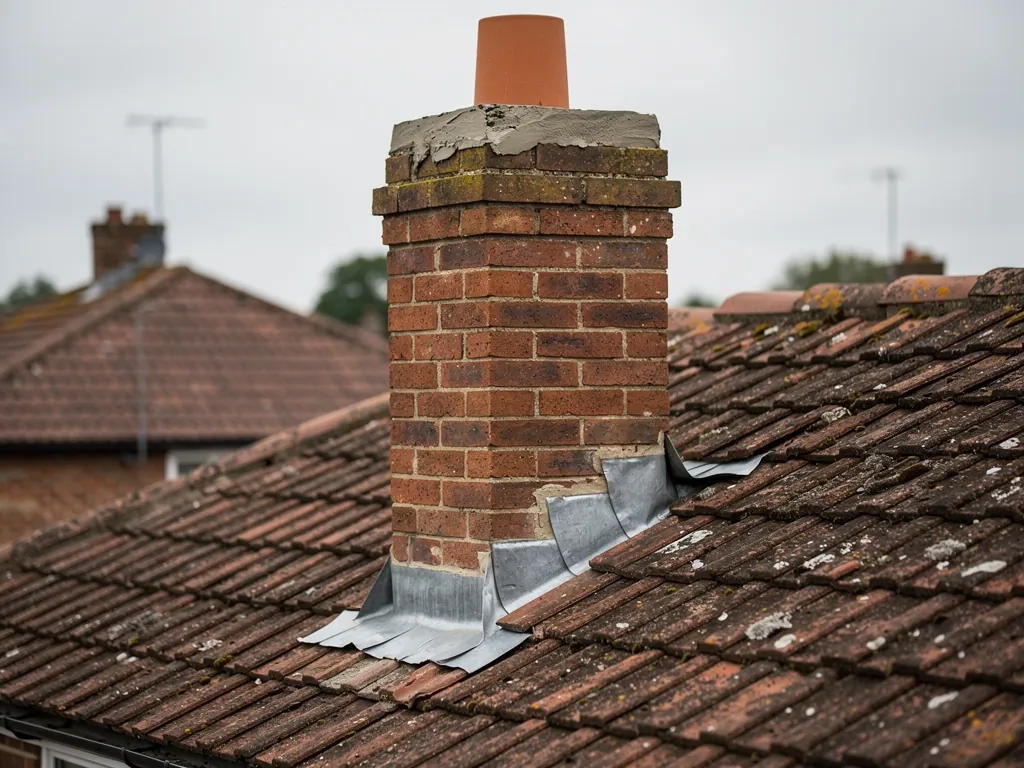
Weathered brick chimney stack with eroded joints and cracked pot
Brick chimney stack with new lead flashing on a clay tile roof

The short answer

Regular attention to the edges. On low-lying ground the weather is less of a test than the water, so clear gutters, sound flashings and dry roof timbers matter more than the covering. Roofs here fail first at the details where one surface meets another, and a small repair there heads off a big one.

East Challow lies on the Vale of White Horse, where the land falls from about 469 feet in the south to about 200 feet in the north, and Letcombe Brook forms the southern boundary of the parish. It is gentle country, quite open, and most of it is permanent grass on heavy clay. For a roofer, that adds up to a few simple priorities.

How do you keep the water moving?

Rain that falls on a roof has to get to the ground without lingering anywhere. Gutters with the wrong fall, outlets choked with moss and downpipes that discharge against a wall are the ordinary causes of damp patches inside. Where a garage or outbuilding drains into the same run as the house, a blockage at one end soaks both, and a gutter that sags between brackets holds a pool of water that rots the fascia behind it.

Why do joints open on clay ground?

Clay swells and shrinks with the seasons. A house or extension that moves a little will crack where different parts meet, usually at the corner where an extension joins the old wall or beside a chimney breast, and the lead flashing, mortar fillet or sealant that covered the joint tears first. Repairs that allow for a little movement, such as a properly formed lead flashing, last longer than a bead of mastic. Our roof repairs page explains the thinking.

How often should you look up?

Many of the roofs we are asked to look at have been trouble-free for years, until one small fault lets in water. A look from the ground after a storm, or a short photographic survey every few years, is how those faults get caught before they reach the ceiling. If you can see daylight in a loft, a stain on a bedroom ceiling or a gutter that overflows in every shower, the survey is worth booking sooner.

Q2

Should a flat-roofed extension in East Challow be repaired or replaced?

The answer

Repair it when the leak is local and the decking underneath is still dry and firm. Replace it when the covering has failed in several places, the deck is soft, or water is trapped in the layers. A survey that includes moisture checks and photographs tells you which side of the line your roof is on.

A flat roof on a kitchen, porch or garage extension is the part of a house that most often leaks, and the one where repair-versus-replace is hardest to guess from the ground. Water often turns up well away from its entry point, because it runs along the deck before it drips through a ceiling, so the stain on the ceiling rarely marks the fault itself.

When is a flat-roof repair enough?

A local failure at an edge trim, a split along an upstand or a blistered patch can be cut out and renewed, with the new section lapped into the old so water is shed, not trapped. If the deck below is dry, the repair can last for years. The flat-roofing materials we work with have typical lifespans of around 20 to 30 years for EPDM, with other coverings spanning a similar range, though workmanship and maintenance move those figures either way.

When is it time to replace?

If leaks have appeared in more than one place, the surface is crazed or lifting, or the deck beneath has gone soft and dark, a new covering is the sensible job. The fall also matters: a finished roof should drain, with a design fall of 1 in 40 so that a finished minimum of 1 in 80 is achieved, and ponding is a reason to look at the deck. See our flat roofing page for the options. We take the old covering away with the rest of the waste, and the new one carries our written 10-year workmanship guarantee.

How much might the new covering cost?

MyBuilder's national flat roof guide, updated 21 August 2026, gives bitumen felt at £70 to £100 per m² and EPDM at £90 to £130 per m². Access, deck repairs and size move that, so our written quote follows the survey.


Our view

Fix a local leak locally, but never lay a new covering over a wet deck.

Q3

Who deals with roof approvals in East Challow?

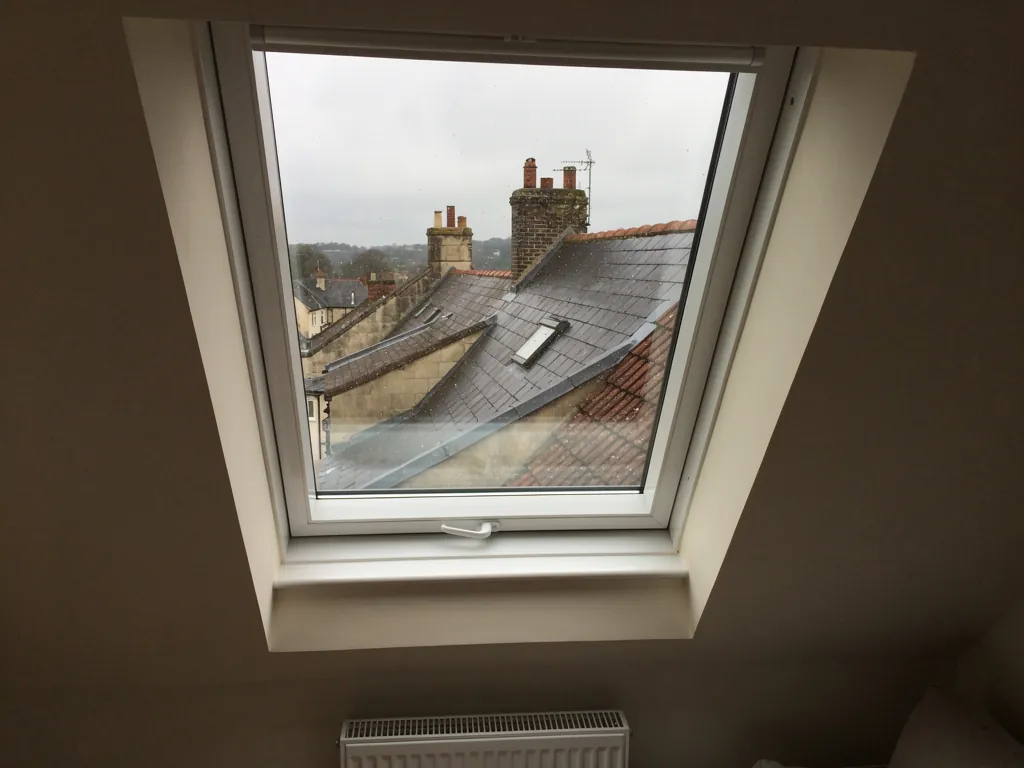
White roof window seen from inside a loft room
Rolled lead roof covering over a bay above white windows

The short answer

The district council handles planning, and the shared Southvale team looks after Building Regulations. The village is not on the council's conservation area list, so most repairs and like-for-like re-covering need no application. Listed buildings, and larger re-roofs, are the cases to check.

East Challow is a simpler place to plan roof work than many of its neighbours. The Vale of White Horse District Council's list of designated conservation areas does not include the village, so the extra checks that apply inside a conservation area do not arise here.

Is planning permission needed?

Putting back the same covering on a house does not usually need planning permission. Bigger changes to a roof's look, such as new windows or extra rooms in the loft, are decided by the council, and our skylights pages explain how that works. A listed building is a separate case: consent is needed for work affecting its character, roofing material included. A church in regular Church of England use, or held by one of a handful of other denominations, sits outside that system under the ecclesiastical exemption.

Does re-covering an East Challow roof need building control?

Southvale Building Control operates across South Oxfordshire and the Vale of White Horse. You will not normally need an application if less than 25 per cent of the building envelope and less than 50 per cent of the roof is affected. Beyond that, or with a covering 15 per cent heavier, approval applies, with the insulation possibly needing attention too. Should a job be notifiable, we deal with it through the council service or a registered building control approver.

What about farms and outbuildings?

Agricultural and commercial roofs have their own rules, which we check for each job. A large barn re-sheeted on the same frame is treated differently from a new building, and the weight of the new sheets is checked against the old. For farm buildings used to store feed or house animals, we also look at ventilation, because a roof that is sealed too tightly can cause condensation and drips of its own. Cladding, rooflights and ridge ventilation are all part of the conversation before a quote.

MythEvery village roof job needs a planning application.

FactA new covering in matching material seldom does, and East Challow has no conservation area to add to that.

Questions from the Vale

Why do flat extension roofs in East Challow leak at the edges?

Because edges take the stress. The covering is turned up the wall or over the trim, and any movement in the building pulls at that line. Sealant lets go, laps open and water finds its way beneath. A properly formed upstand and an edge trim fixed firmly to a sound deck are what keep it out.

Can you replace the sheets on a farm building without stopping milking?

Usually, if the work is planned around the herd. We agree which areas are worked on which days, keep the animals' routes clear and fence off the working area, with ladders and materials stored away from the cows between visits. The survey is where those decisions are made, so the programme suits the farm.

Do you cover the neighbouring villages near East Challow?

Yes. The village is well inside the ground we cover from Swindon, and so are Letcombe Regis, West Challow, Wantage and the settlements round them. The areas page lists the rest, and the enquiry form or WhatsApp reaches us just as quickly as a phone call.

My roof has stone slates on a church-style building. Can you repair them?

Yes, provided the stone is sound. Stone slate is mended by re-hanging and replacing only the pieces that have failed, using matching stone, laid in diminishing courses, with the original pattern kept. Where a listed building is involved, we confirm the approach with the council before work.

Ask us about your roof

Tell us what’s happening and we’ll call you back.

  • Photos of what we find
  • A written quote
  • 10-year workmanship guarantee

Or call 01793 626096

Call Get a quote