Brick and limestone cottages around a small village green

Roofers in Cold Ash

Ridge tiles, valleys, leaking flat sections and tired coverings on the houses of Cold Ash, a village strung along the high ground between the Pang and Kennet valleys.

Roofs on the Cold Ash ridge

Red brick church with a tiled roof
Around St Mark's

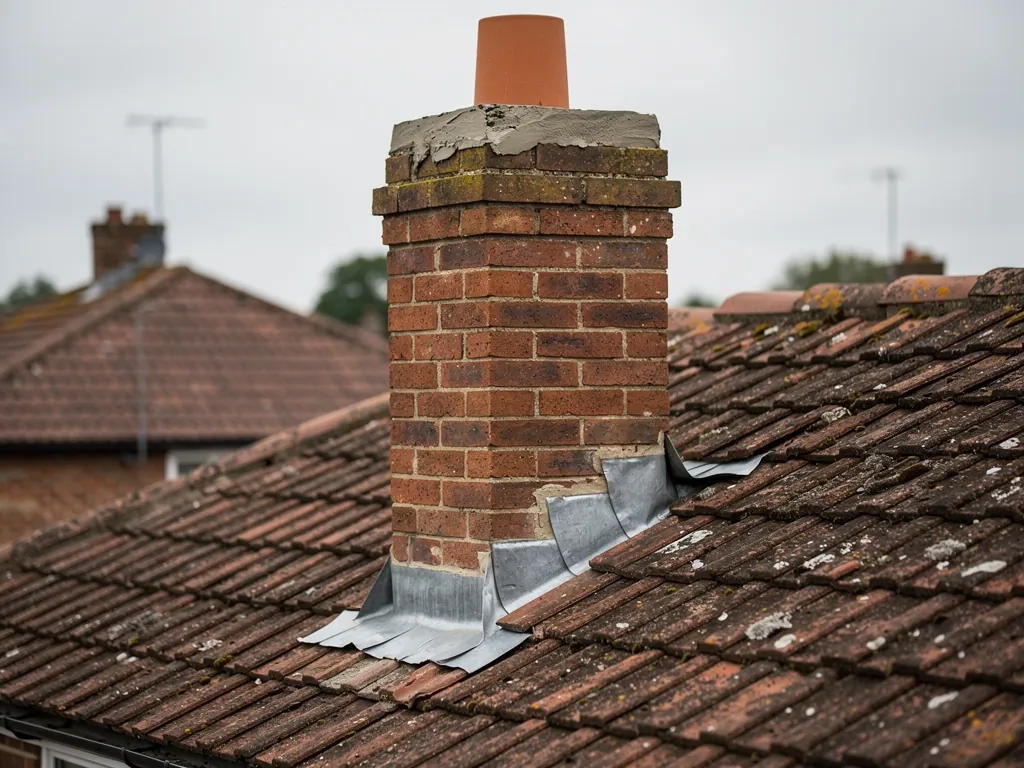
Cold Ash grew late. The land was open moorland and thinly settled before 1800, and the church of St Mark only went up in 1864, in red brick with stone dressings under tiled roofs, to a design by Charles Beazley. Victorian and Edwardian houses of that kind commonly carry steep pitches, decorative ridges and brick stacks of some height. Those stacks and the flashings round them are the first things we examine on a Victorian or Edwardian roof here, because they are where age and exposure combine on a site that stands well above the valleys.

Estate houses with interlocking tiles
The old hospital site and Sewell Close

A convalescent home and children's hospital opened on the ridge in 1886 and closed in 1964, and Sewell Close now stands on that ground. Later twentieth-century estates across the region often share a roof pattern: low to medium pitches, concrete interlocking tiles, cement-pointed verges and a ridge line originally bedded in mortar alone. After this many decades the bedding often cracks first, so loose ridge tiles and weeping verges are the work we expect to find, along with flat-roofed garages and porches that have outlived their felt.

Detached house with an extended roof
Hermitage Road, The Ridge and the common

The village runs along Hermitage Road and The Ridge at about 150 metres, with Cold Ash Common to one side, where troops once camped before the Second Battle of Newbury. Houses along that line range from cottages to large individual homes in generous plots, often with outbuildings, conservatories and double garages added later. Each addition brings its own roof junction. Tall trees nearby drop leaves and needles into valleys and gutters, so blocked outlets are as common a cause of damp here as any broken covering.

From Swindon to the high ground above Newbury

Map showing Cold Ash and central Swindon. 28 road miles east-south-east of central Swindon.

Distance
28 road miles east-south-east of central Swindon
Council
West Berkshire Council
Council
West Berkshire Council
Setting
Ridge-top village at about 150 m, 2.5 miles north-east of Newbury
National Landscape
North Wessex Downs reaches the northern and eastern parts of the village

Cold Ash roofs: the questions that come up

Are roofs on the Cold Ash ridge more exposed?

Generally yes, because the village sits well above the Pang and Kennet valleys. The ridge line, gable edges and eaves meet the weather before anything else, so that is where we put our attention.

Is part of Cold Ash inside the North Wessex Downs?

Parts to the north and east are, as the boundary skirts the village. West Berkshire Council can confirm where the boundary falls for your address, and that matters for dormers and cladding.

Can you reach Cold Ash from Swindon for a leak?

Yes, the village lies within our 30 road miles. Leaks get priority in our diary; we stop the water first and plan the lasting repair once we have seen the roof.

Q1

How old are the roofs along The Ridge in Cold Ash?

Roofer repointing a stone chimney stack above lead flashing
Brick chimney stack with new lead flashing on a clay tile roof

The short answer

Young by local standards. Cold Ash was moorland before 1800 and St Mark's dates from 1864, so most roofs here belong to the Victorian period or later. That means brick, tile and slate coverings with fixings, flashings and bedding that wear out on a predictable timetable.

Many villages in our area carry roofs from the seventeenth century. Cold Ash, settled late, has far fewer, and that changes what we look for. A house built after the church was consecrated has a roof of modest age, and the faults that appear are the ones that come from decades of weather, not centuries of patching.

What wears out first on a Victorian brick house?

The metal and the mortar, well before the covering. Lead flashings round a chimney stack stiffen and split. Mortar fillets at the abutments crumble. Nails that hold slates or tiles corrode and let individual pieces slip. We read a roof from the junctions inwards, because a sound covering with a failed flashing leaks just as surely as a broken one.

Does a twentieth-century estate roof behave differently?

It does. Interlocking concrete tiles are laid in a lighter pattern with less hand-cut detail, so faults are simpler and repairs quicker. The weak points are the ridge bedding, the cement at the verges and the felt beneath, which is hidden until a tile is lifted. Lifespans for concrete tile are often quoted at 30 to 60 years, and a roof in the upper half of that range deserves a proper look.

Brick stacks need attention from the outside too. Pointing that has gone soft lets water into the stack itself, and the stack then drains into the house at the chimney breast. Repointing and a new lead tray are usually enough to stop it.

Conservatories and extensions added to larger plots deserve a second look too. The junction where an extension roof meets the original wall depends on a lead flashing or a cavity tray, and both are easy to miss from the ground.

For repairs at any age, see roof repairs. When a whole slope has reached the end, the roof replacement page explains how we decide.

Whatever the fault turns out to be, the survey brings pictures of the roof itself, followed by a quote on paper.


Q2

Do roofs at 150 metres need stronger ridge fixings?

The answer

A roof on the spine of the ridge meets wind sooner than one in the valley, so ridge, hip and verge fixings repay attention. Since the 2014 revision of BS 5534, mortar by itself no longer carries the load: the tiles are also fixed mechanically, or a tested dry system is used.

Cold Ash stands at about 150 metres on a ridge that divides two valleys. The position tells the story. A roof high on a spine of ground meets weather before the roofs below, and the exposed edges, the ridge, the hips and the verges, show it first.

Why does mortar alone fall short?

Mortar is strong in compression and poor in tension. A gust that lifts a ridge tile pulls it away from its bed, and a cracked bed gives no resistance. After the 2014 revision of the standard, tiles are held down mechanically as well as bedded. On a 1960s or 1970s roof that was bedded before the change, that usually means re-fixing the ridge with clips, screws or a full dry system.

What is dry-fix, and does it suit every roof?

Dry-fix replaces wet mortar with fixed components that clip or screw down, and BS 8612 is the test specification for such systems. They suit most concrete and clay tile roofs and do not crack with frost or movement. On a few roofs with unusual tile profiles a mortar bed with added fixings looks better, and we say which suits yours.

Our ridge and verge dry-fix page covers the choices and what the work involves. A ridge sits high, so ask every firm whether its price covers scaffolding and VAT.

Hips, the sloping lines that run from ridge to eaves at a corner, carry the same risk as the ridge and are fixed the same way. When one hip tile has slipped, its neighbours have usually started to move as well.

Verges are the other exposed edge, at the gable wall where a slope stops, and a loose verge can let wind get under the first tiles of a whole slope.

MythFresh mortar on a ridge is all a high, windy roof needs.

FactBS 5534 expects the tiles on a ridge or hip to be fixed mechanically too, not simply bedded.

Q3

Does the North Wessex Downs edge change Cold Ash roofing?

Rolled lead roof covering over a bay above white windows
White roof window seen from inside a loft room

The short answer

Possibly, for some addresses. Parts of the village to the north and east lie inside the North Wessex Downs National Landscape, and West Berkshire Council decides planning. Like-for-like covering rarely needs consent; alterations that change the roof's shape are where the designation matters.

The North Wessex Downs became a National Landscape in November 2023, though the legal protection is that of an area of outstanding natural beauty, as before. The body that looks after it advises; it has no say over whether an application is approved. That job belongs to West Berkshire Council, so questions about your address go there.

Does re-covering a house inside the designation need an application?

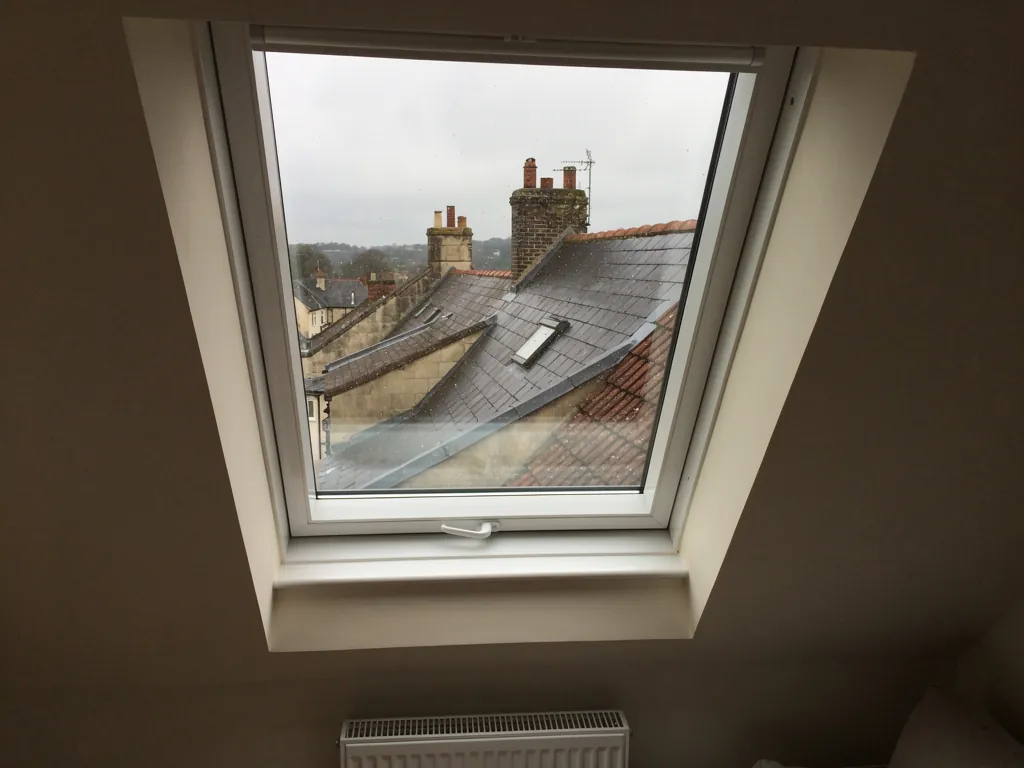
Not normally. Replacing a covering with the same one, or one that looks the same, is maintenance, and designation does not change that. What changes is the list of alterations that can be done without an application, and dormers and some cladding fall on the restricted side. For roof windows, read our roof window planning page before ordering anything.

Who deals with building control in Cold Ash?

Building Control Solutions serves West Berkshire Council's area; the alternative is a registered building control approver of your choosing. Our job is to explain whether your work is notifiable and to handle the notification when it is. Re-covering that touches 25 per cent or more of the building envelope, or 50 per cent or more of the roof, puts the work in notifiable territory, as does a covering 15 per cent or more heavier.

Is there a conservation area in the village?

Cold Ash has no conservation area of its own, and West Berkshire's planning officers will check any Cold Ash road for you. If your house is listed, which is unusual here, listed building consent applies before changing the roof covering.

Roof spaces can shelter bats and nesting birds, both protected; if we meet either, work pauses while we take advice.

Wherever your house stands, ask before you start. Nobody regrets a ten-minute call to the planning team.

Our view

Check your boundary with the council first; a straight swap of covering is seldom the sticking point.

Questions from the ridge above Newbury

Why would ridge tiles lift on a Cold Ash estate roof?

Because the bed beneath them was mortar alone, and mortar cracks and lets go after decades of movement and exposure. Once the bed has failed, a gust only has to lift the tile. We re-fix with mechanical fixings or a dry system so that the same fault does not return. The job normally includes checking the end tiles at each gable, where the first gust tends to get in.

Do overhanging trees near Hermitage Road cause roof damage?

Rarely by direct impact, but leaves, needles and moss collect in valleys and gutters and hold water against the roof edge. Blocked outlets then overflow behind the fascia. Clearing the gutters and checking the valleys each autumn prevents much of the damp we are called out for. Where a valley has silted up, we clear it by hand and check the liner beneath for splits.

Is a flat garage roof on a Cold Ash estate worth patching?

Sometimes. If the felt is cracked in one place and the boards below are dry and solid, a patch buys time. If the deck is soft or the surface is blistered across, renewing the covering is the sounder course. The flat roofing page explains the options.

What happens if the loft is damp after rain at Cold Ash?

We trace the water to its entry point before suggesting a repair, because the drip is rarely under the hole. Photographs of your roof show the finding, a written quote follows, and the repair we propose is the least that will keep a Cold Ash loft dry.

Ask us about your roof

Tell us what’s happening and we’ll call you back.

  • Photos of what we find
  • A written quote
  • 10-year workmanship guarantee

Or call 01793 626096

Call Get a quote