New-build brick and render estate houses with grey tile roofs

Roofers in Hermitage, Berkshire

Tiled-roof repairs, new coverings, chimney rebuilds and flat roofs in Hermitage, the railway-era village on the B4009 north-east of Newbury, inside the North Wessex Downs, from the brick villas near Holy Trinity to the newer streets around the old station.

Hermitage roofs, from brickworks to branch line

Brick villa with a clay-tiled roof
Brick villas and Holy Trinity

Hermitage was a chapelry in the south of Hampstead Norreys parish, described in the Victoria County History as a considerable village that had grown up recently, and it became its own ecclesiastical parish in 1840. Holy Trinity, built in 1835, is of brick with a chancel, nave, south porch and western bell-turret. The same record notes brick-works in the village and a number of villas recently built, so brick walls and clay tile or slate roofs are part of the village's make-up. On houses of this age the chimneys, valleys and lead flashings usually need attention before the main covering does.

Victorian bay window with a lead-lined roof
The station years and the Didcot line

The Great Western's Didcot to Newbury branch opened in April 1882 with a station at Hermitage, and the village grew around it. Railways brought Welsh slate and factory-made tile within easy reach of a brickmaking village, so terraces and semi-detached houses from this period may carry either. After well over a century, the typical faults are rusted nails letting slates slip, cracked tiles, ridge tiles on failing mortar and lead that has split at the chimney. Bay-window roofs and little porches of the same age are small, but their lead and valleys fail early and often go unnoticed until a ceiling stains.

Bungalow with a tiled hip roof and garage
Newer homes and the village edge

With about two thousand residents, Hermitage has also grown beyond its Victorian core. Later houses and bungalows sit around the older streets, with garages and kitchen extensions added on, and the coverings range from concrete or clay tile to felt and membrane on the low-pitched or flat parts. Their trouble spots are different from the Victorian houses: ridges and verges bedded on failing mortar, tired felt or membrane on the flat parts, and gutters carrying leaf litter from the trees around the village. Because the village sits inside the North Wessex Downs National Landscape, the choice of covering and any new roof windows deserve a little thought before work starts.

Hermitage, in the downland north-east of Newbury

Map showing Hermitage and central Swindon. 26 road miles east-south-east of central Swindon.

Distance
26 road miles east-south-east of central Swindon
Council
West Berkshire Council
Council
West Berkshire Council
National Landscape
North Wessex Downs
Railway
Didcot to Newbury branch, opened April 1882

Hermitage roof questions

Does the North Wessex Downs setting limit what roof I can fit in Hermitage?

Re-covering in matching material is normally unaffected. New roof windows and dormers are where the rules tighten, so ask West Berkshire Council first. The National Landscape body advises; the council decides.

Can you repair brick-villa roofs near Holy Trinity?

Yes. We find the real cause of the leak, whether lead, valley, chimney or tile, and repair that, keeping the covering already on the house wherever it is sound.

My Hermitage roof is slate from the station years. Is it worth saving?

Often. Slate commonly outlasts its nails and lead, so refixing and re-flashing beats replacing. A survey tells you whether yours has years left or has reached the end.

Q1

What do Hermitage's Victorian roofs need first?

Brick and limestone cottages around a small village green
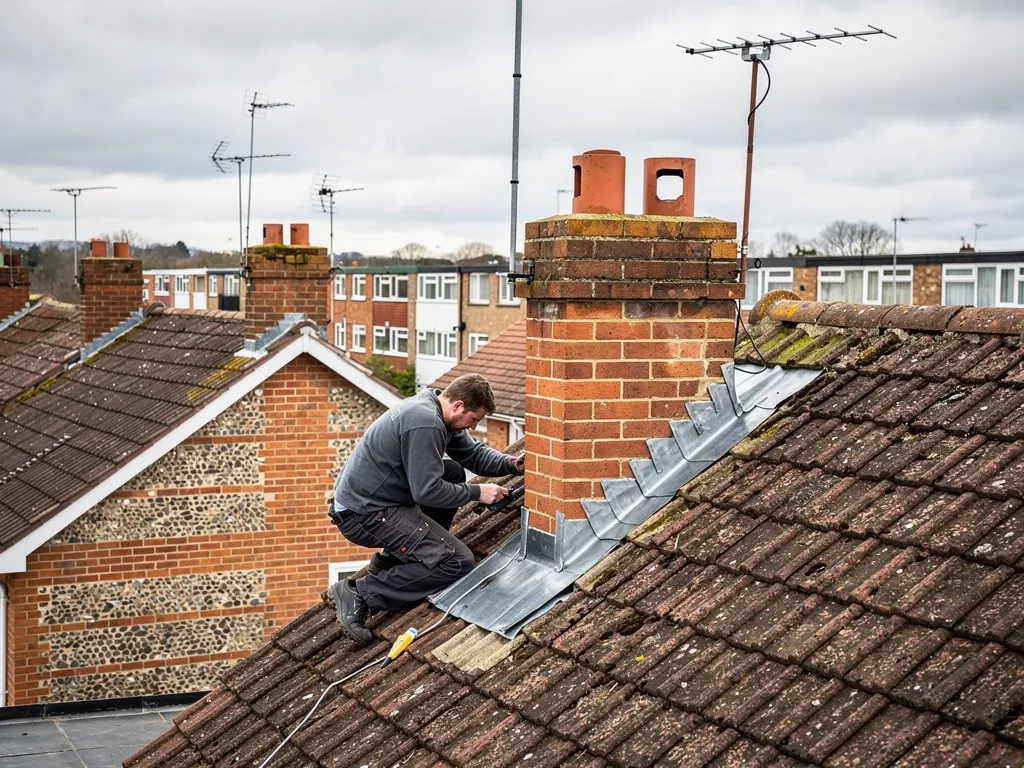
Roofer dressing stepped lead flashing around a brick chimney

The short answer

Usually the lead, the nails and the ridge. On houses from the railway and brickworks years, the tiles and slates seldom give up before everything around them. Flashings split, fixings rust and mortar crumbles, and mending those parts costs a fraction of a replacement. Checking the slopes from a ladder, then the underside from the loft, shows which route fits your house.

When the branch line opened in 1882, Hermitage was a young village, and a good number of its houses date from the decades that followed. They share a recognisable set of ailments.

Why does lead fail on a chimney?

Lead is soft and tough, but it moves with every change in temperature. Over decades it work-hardens and cracks, particularly where it is pinned at a chimney or tucked into a wall. The mortar holding the top edge into the brickwork also crumbles, so water slips behind it. A repair that replaces only the visible strip often fails again, so we strip back to sound brick, re-fix and re-dress the lead properly. Our chimney repairs page explains the full job.

Can slipped slates be put right without re-roofing the villa?

Usually, yes. A slate slips because its iron nail has rusted away, not because the slate itself has failed, so the cure is a fresh fixing or a clip, with the odd cracked slate replaced. Where slates are flaking away over an entire slope, or the battens beneath have gone soft, the roof is spent and better re-covered. Photographs from the survey separate the two cases, so nobody pays for a replacement where a repair would do. Small jobs, like a handful of slates and a new lead tray at a bay, are often finished in a single visit.

Sound original slate is reused on the same slope. When replacements are needed, we match them by size, tone and thickness and spread them across the slope, so the mend is hard to spot from the road. Ask us to explain any part of the survey you want to understand better; the photographs are there to be used.

A written quote comes after the survey, alongside pictures of your own roof.

Q2

Is brick-and-tile Hermitage a good fit for a new covering?

The answer

It can be, if the new covering suits the house. Clay tile looks right on brick, concrete tile is lighter on cost and widely used on later homes, and slate suits houses that always had it. The survey checks the structure can carry the weight, and we explain the choice before the quote is written.

Replacing a roof covering is a chance to correct earlier mistakes and to choose a material that fits the house. In a brick village like Hermitage, with brick-works recorded in the village, clay tile has an obvious claim, but it is not the only answer.

Clay, concrete or slate: which suits my house?

Clay tile weathers well and matches brick walls, which is why it appears on so many older village houses. Concrete interlocking tile is cheaper and quicker to lay and is the covering on many later homes. Natural slate suits houses that were built for it, and Welsh slate is quoted by cost guides at a century or more. Swapping one for another changes the look and the load, so we check the rafters and discuss the result first. Our pitched roofing page sets out what each involves.

What does a heavier covering mean?

The Planning Portal says a covering 15 per cent or more heavier needs Building Regulations approval, and Approved Document A says more than 15 per cent; either way, the rafters must be able to take it. West Berkshire is served by Building Control Solutions, and a registered building control approver is the alternative. Where the work is notifiable, we arrange the notification ourselves.

Choosing well is easier with photographs of the existing roof and a note of any neighbouring roofs you would like it to sit alongside. Send them with your enquiry and we will work them into the survey. Colour matters more than people expect, because roofs are read from the road, and a covering that is a shade too bright or too dark never quite settles in.

The quote names the covering, so there is no guessing about what you are getting.

Our view

Choose the covering the house was built for unless there is a clear reason to change it.

Q3

Does the National Landscape change roofing in Hermitage?

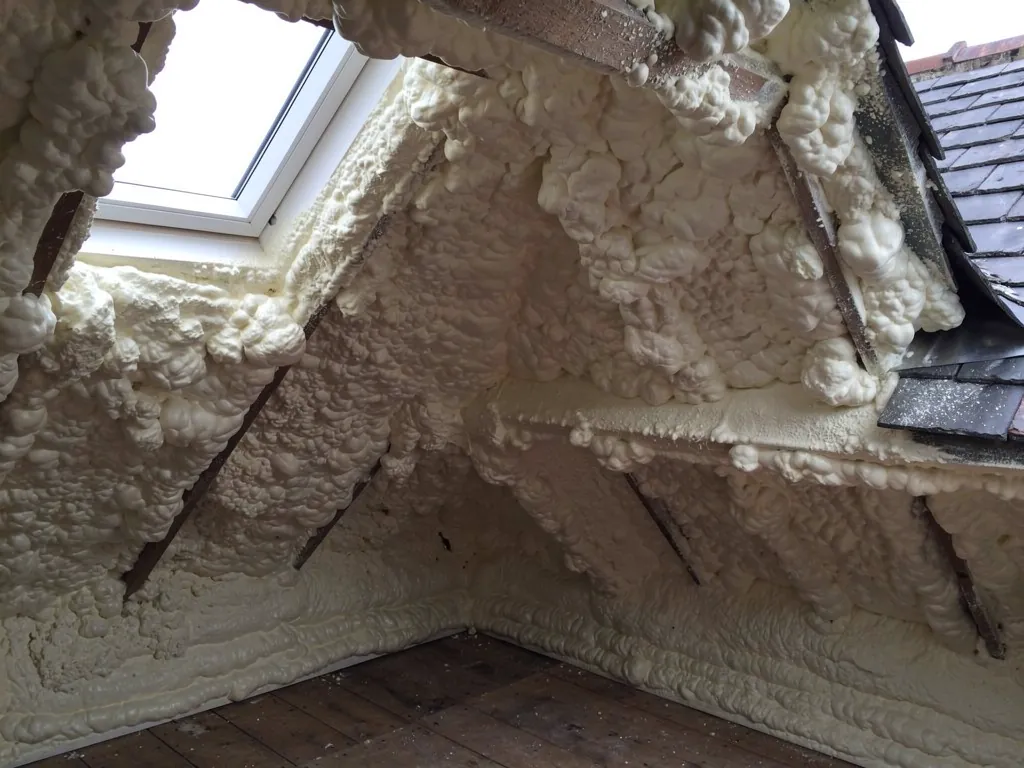
Loft thickly coated in white spray foam around a roof window
Long flat roof on a 1960s brick building being re-covered

The short answer

Only at the edges. Hermitage lies within the North Wessex Downs National Landscape, but the National Landscape body only advises, and planning decisions sit with West Berkshire Council. A matching re-roof is ordinary maintenance. New roof windows, dormers and listed buildings are where permission questions arise.

Hearing that you live in a protected landscape can make every roof job sound like an application waiting to happen. That is not how it works.

What is the National Landscape rule on roofs?

The North Wessex Downs is a National Landscape, the name used since 22 November 2023, though it is legally still an AONB. Its own team only advises on planning applications, and West Berkshire Council takes the decisions. A repair or a re-roof using the same materials is ordinary upkeep and needs no application. Roof windows and dormers are another matter: dormers are not permitted development on land like this, and roof windows come with conditions. Our skylights page explains what to check.

Is my house listed or in a conservation area?

Holy Trinity is the village's best-known building. Whether your own house is listed, or sits in one of the district's conservation areas, is something West Berkshire Council can confirm for your address, and the quote waits until you have its reply. Where a house is listed, consent covers any work altering its character, roofing material included. That is the one place where a repair becomes a conversation with the council.

What about wildlife?

The law protects roosting bats and nesting birds alike, so if either is sheltering in a loft or under the eaves, work pauses for advice. Old brick villas with gaps under the tiles and around the eaves are the kind of building where that can happen.

For a bigger re-roof, Building Regulations approval applies once the work reaches 25 per cent of the total building envelope or 50 per cent of the roof, and the notifying is our job, not yours.

MythLiving in a National Landscape means every roof job needs approval.

FactMatching repairs and re-roofs are maintenance; roof windows, dormers and listed buildings that put the council in the picture.

Roofing services in Hermitage

Questions from Hermitage and the B4009 villages

Why are there so many brick houses with clay-tile roofs in Hermitage?

Old records mention brick-works in the village, and the parish church, built in 1835, is itself of brick. A village making its own brick had good reason to build in it, and clay tile is the natural partner for brick walls. Slate arrived later with the railway, so a street may show both.

Can a Hermitage villa's leaning chimney stack be rebuilt?

Yes. We take the stack down to sound brick, rebuild it in matching brick and mortar, and fit new lead flashings and fresh flaunching at the pot. Removing the chimney breast indoors is a different job again. The job cannot go ahead without Building Regulations approval, and if the breast is shared with next door the neighbour must receive a party wall notice. We explain both before work is priced.

Is there a Primitive Methodist chapel roof you can look at?

The village records mention a Primitive Methodist chapel, and we do repair chapel and other small-church roofs. Whether consent is needed turns on the denomination and the building's status, so we ask who owns and manages it before pricing. A house gets a survey and written quote; so does a chapel.

Do you work in the other Downs villages around Hermitage?

Yes. The Downs villages around Hermitage sit inside our 30-mile reach of Swindon. Wherever the roof is, we survey it, photograph it and write the quote. If you are not sure whether you are in our area, send the postcode with your enquiry.

Ask us about your roof

Tell us what’s happening and we’ll call you back.

  • Photos of what we find
  • A written quote
  • 10-year workmanship guarantee

Or call 01793 626096

Call Get a quote