The short answer
Look from the ground for slipped or missing tiles, a dipping ridge line, stained brickwork below a valley or chimney, and moss thick enough to hold water. Inside, check the loft for daylight, damp timber and dark patches under the covering. Any of these deserves a closer survey.
A village with buildings from the seventeenth century and earlier carries roofs with a long history of patching. That is nothing to worry about. It simply means the first task is understanding what has been done before.
Q1.1What can I see from the lane?
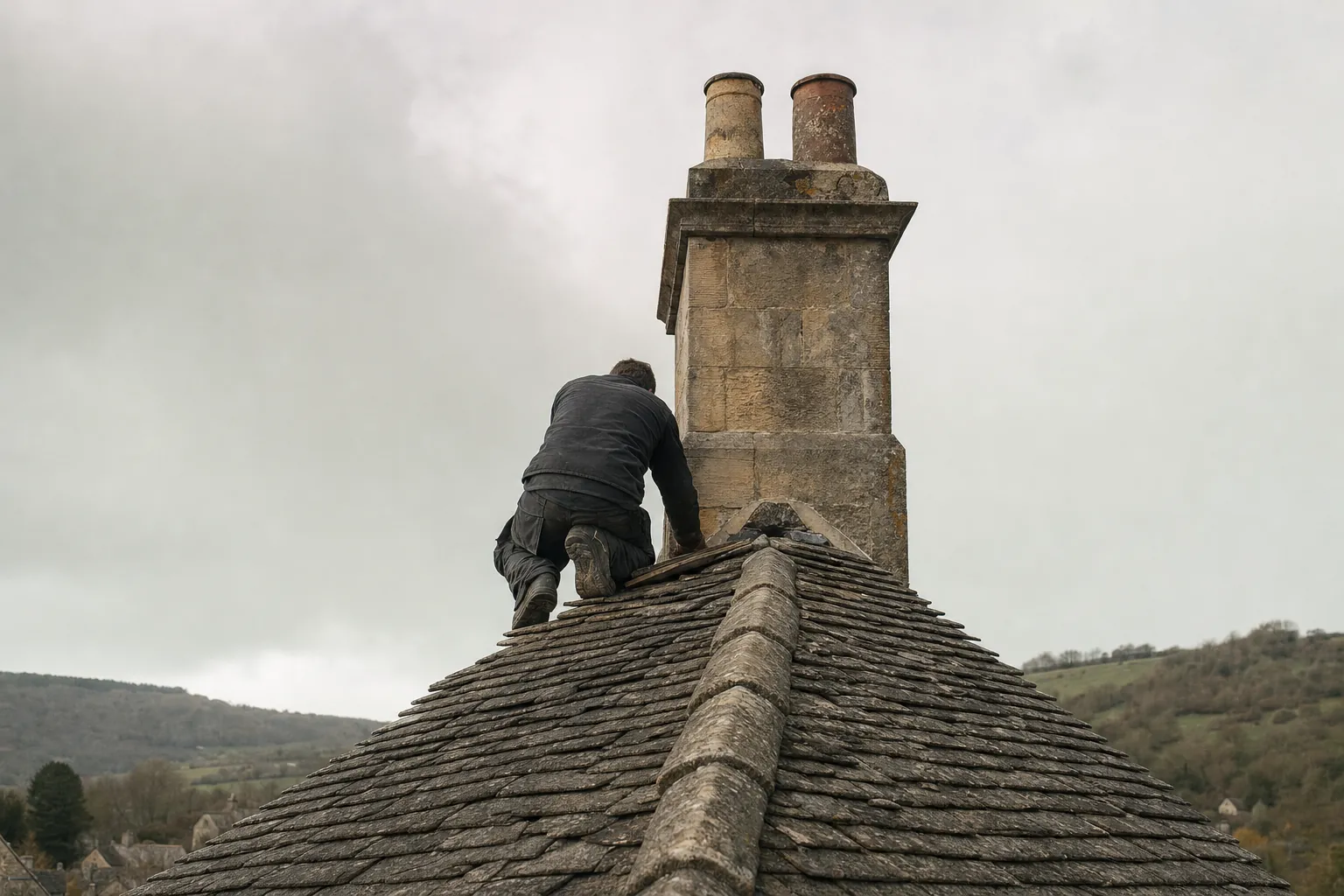
Stand back across the lane and sight along the ridge. A straight line is a good sign, while a dip suggests that a rafter, purlin or wall plate has moved. Look at the tiles for changes of shade, because odd patches mark earlier repairs. Then check the chimney for cracked pointing and the lead beside it for lifted edges.
Q1.2What does the loft show?
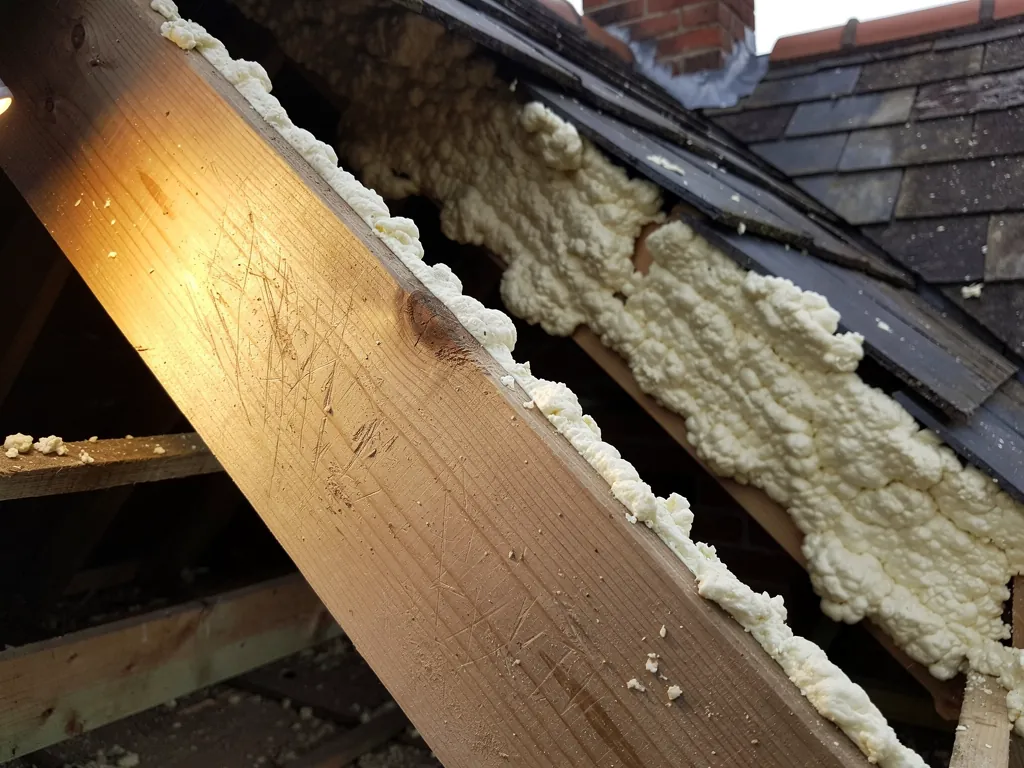
The loft often tells you more than the outside can, and it costs nothing to look. On a bright day, pinpricks of light mean gaps in the covering. Dark marks on the rafters and battens, or a musty smell, mean water has been coming in for some time. Insulation that is damp or flattened can also mark a leak directly above it.
If you have a torch, shine it along the underside of the roof near the eaves, where the wall plate sits. Soft timber there usually points to a slow, long-standing leak, often from a blocked or dripping gutter and not from the covering itself.
Q1.3What happens after a survey?
Our survey photographs your roof from above and close up, so you see what we see. We note the pitch, the condition of the battens where they can be reached, and every spot where water could be entering. The written quote follows. On an older building the answer is often a repair, and our roof repairs page explains how we weigh a repair against a new covering.