Row of stone cottages with steep stone slate roofs

Roofers in Shaw, Berkshire

Tiled roofs mended, chimneys sealed and flat roofs recovered in Shaw-cum-Donnington, from the cottages near the church and Shaw House to the family houses, garages and business units further south.

Shaw's roofs, from Elizabethan house to office roof

An old village roof beside a church
Around Shaw House and the church

The historic heart of the village is the pairing of Shaw House and the parish church, and the conservation area takes its name from both. Thomas Dolman, a cloth merchant, completed the house in 1581. It is Grade I listed, and its park and gardens carry a separate listing. A building of that rank is looked after by specialists, so the jobs that reach us nearby tend to be the neighbours: cottages, outbuildings, garden structures and older houses along the lanes. A roof this old has normally been mended more than once. Before anything is ordered, the task is to work out which repairs came when, and whether the rafters and battens underneath can still carry what goes back on top of them. Sometimes a single slope turns out to be a patchwork of three different decades.

Tiled family houses along a quiet road
Family houses of the last century

Beyond the historic core, Shaw also has homes put up in the twentieth century, and their roofs follow a pattern familiar all along the Newbury edge: clay or concrete tiles on softwood battens over a bitumen felt underlay that is frequently the first layer to give up. What goes wrong is predictable: tiles that have slid or split, ridge tiles resting on crumbled mortar, and chimney flashings that have pulled away from the brick. Porches, garages and single-storey rear extensions often carry shallow or flat roofs of their own, usually with a lead or felt flashing where they butt against the wall of the house. Those small roofs tend to need attention years before the main slope does, because felt and membrane age faster than clay.

A flat roof on a low commercial building
The south of the village and larger buildings

Vodafone's world headquarters stand in the south of the village, a reminder that Shaw is not only cottages and gardens. Offices, warehouses and workshop units belong to a different family of roofs: low-slope single-ply membranes, built-up felt, profiled metal sheets and long gutters carrying far more water than a house gutter ever sees. They fail in their own ways, through ponding, lifted laps and blocked outlets rather than slipped tiles. A business roof gets the same treatment as a house roof from us, with a survey, photographs and a written quote, and the most useful first look is nearly always at the outlets and the upstands, which are the short raised edges around a roof light, a parapet or the foot of a higher wall. If those details are sound, the large open areas rarely need much more than cleaning.

From Swindon to Shaw-cum-Donnington

Map showing Shaw, Berkshire and central Swindon. 28 road miles east-south-east of central Swindon.

Distance
28 road miles east-south-east of central Swindon
Council
West Berkshire Council
Council
West Berkshire Council
Conservation area
Shaw House and Church
Parish
Shaw-cum-Donnington, north of Newbury

Shaw roof questions

Does my house near Shaw House sit inside the conservation area?

Part of the village does. The area is named for the house and church, so ask West Berkshire Council for the boundary before changing anything that alters how your roof looks.

Can you recover a flat roof on a Shaw business unit?

Yes. Single-ply, felt and metal roofs on commercial buildings are part of our work, beginning with a close look at outlets, laps and upstands, then a written quote.

Why do Shaw's twentieth-century chimneys let rain in?

Usually the flashing. Cement fillets crack and thin lead lifts with age, so water slips down beside the stack. Renewing that seal often solves it without touching the tiles.

Q1

What does Shaw House mean for roofs nearby?

Torch showing a water-stained rafter beneath slates in a loft
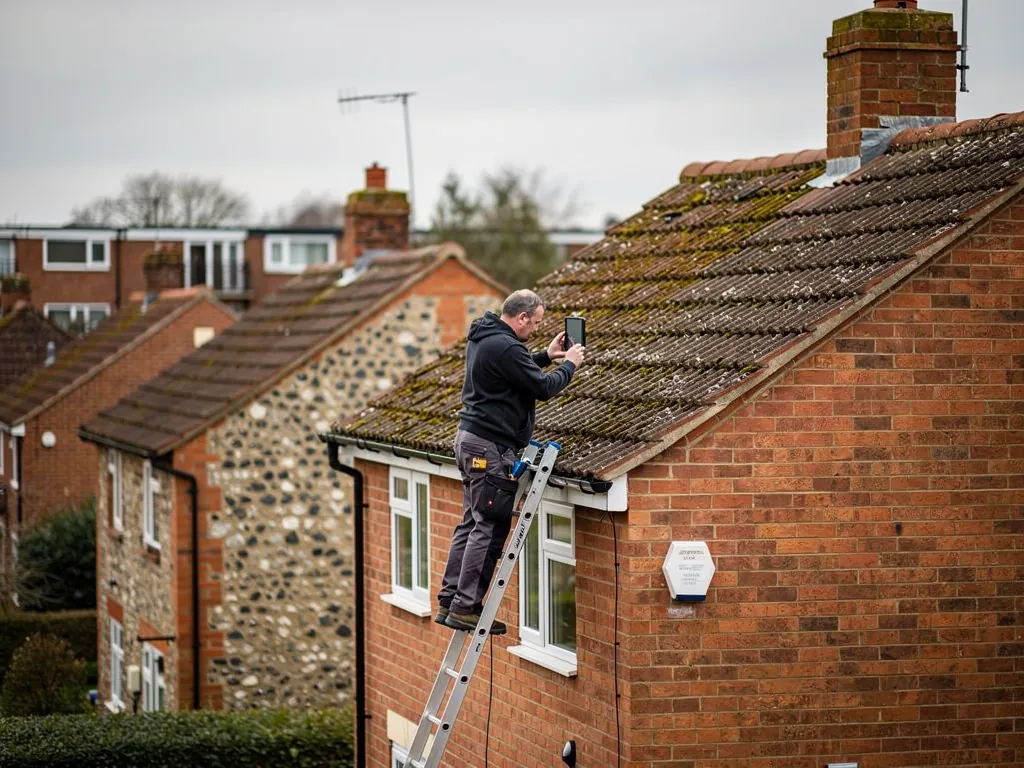
Roofer on a ladder photographing a mossy tiled roof

The short answer

Mostly it means care. Shaw House is Grade I listed and gives its name to a conservation area, so older buildings nearby may be listed or inside the boundary. Matching repairs usually carry on as maintenance, while changes to a roof's appearance deserve a call to West Berkshire Council first.

Shaw has a longer history than its modern reputation suggests. Thomas Dolman, a wealthy cloth merchant, completed Shaw House in 1581, and the building later stood at the centre of the fighting in the Second Battle of Newbury. The parish of Shaw-cum-Donnington has a single Church of England church, at Shaw, and the partly ruined Donnington Castle sits within its bounds. House and church together give the conservation area its name.

Does a conservation area stop me repairing my roof?

No. Putting back the same covering, laid the same way, is maintenance, and it does not usually involve a planning application. What the designation adds is scrutiny of alterations: a different material, a rebuilt chimney, new openings in a slope the street can see. Not sure whether your house falls inside the boundary? West Berkshire Council can confirm it, and we are glad to study the map with you before a price is discussed.

What changes if the house is listed?

A listed house cannot have its roof altered freely: anything that changes the look or fabric of the covering may need consent from the council, and the same applies to the ridge, the chimney and the verges. Our habit on any old building is to photograph what is there, say what has failed, and propose the smallest repair that works with the original materials. Our page on roof repairs explains how that choice between patching and re-covering gets made.

Roofs close to a house of this standing are seldom simple. Stacks may be shared or leaning slightly, rafters may be hand-sawn timber, and earlier owners may have mixed tiles from three different decades. Our survey photographs your own roof and shows what is really up there before a single tile is lifted. After that comes the written quote, built on what the pictures show.


Q2

How do I stop a chimney leaking on a Shaw house?

The answer

Find where the water enters before anything else. On houses from the village's later building decades, the culprit is usually the flashing or the mortar fillet around the stack, not the tiles. Renewing the flashing in lead often cures it, and we check the pots, flaunching and brickwork on the same visit.

A chimney is the most exposed corner of a roof. It stands clear of the ridge, takes weather from every direction, and meets the covering through a waterproof joint that has to flex with the building. On many Shaw houses that joint is a cement fillet, which cracks within a few decades, or a narrow lead flashing whose edges have lifted.

What are flashings and flaunching?

The flashing is a strip of lead let into the brickwork and bent over the tiles so that rain runs back onto the roof. Flaunching is the mortar crown on top of the stack, which beds the pots and sheds rain away from the flue opening. When either gives way, damp turns up on the chimney breast indoors, often a long way from the real gap. Our chimney repairs page walks through the usual failures.

Could repointing be enough?

Sometimes it is. Where bricks are sound and only the joints have weathered, repointing is the right fix and a rebuild would be wasted money. Where bricks have crumbled, or the stack has begun to lean, the job is bigger, and we tell you plainly. Opening up the rooms below by removing the breast itself is another question altogether. Building Regulations approval always applies, and where the breast is shared with next door, the Party Wall etc. Act asks for a notice to your neighbour.

Whichever applies, the visit ends with pictures of your own stack taken from above, so you can study the defect on a screen before agreeing to any spend. Nobody then has to argue about what was wrong.

Q3

Can you look after roofs on Shaw's business buildings?

Long flat roof on a 1960s brick building being re-covered
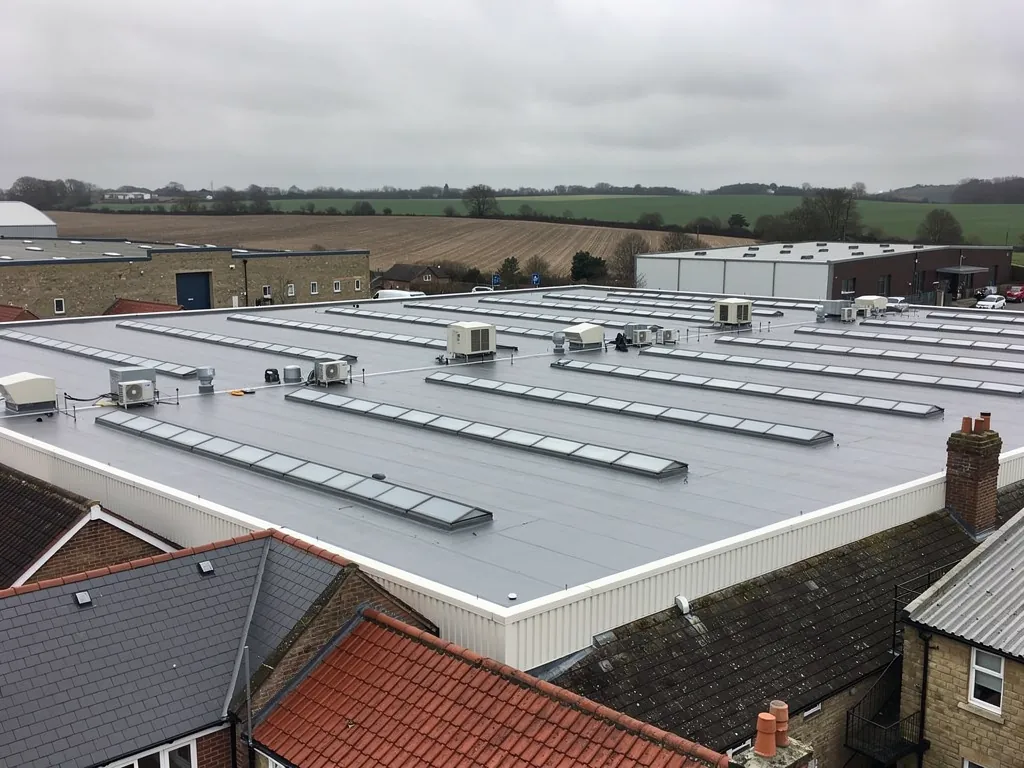
Warehouse flat roof with single-ply membrane and rooflights

The short answer

Yes. With a large company headquarters at its southern end, Shaw has commercial roofs as well as houses, and we survey, repair and replace flat and low-slope coverings on business premises. The visit covers outlets, laps, flashings and gutters, followed by a written quote with photographs.

A flat or low-slope commercial roof does not fail the way a tiled house roof does. Water sits where the fall is poor, laps in the membrane lift, outlets clog with leaves, and one small failure can drip onto equipment or stock a long way from the leak. Buildings of this kind are common near the south of Shaw, and their owners usually care more about continuity than about appearance.

What do you look at on a flat commercial roof?

We walk the surface, photograph every outlet, upstand and lap, and watch how water moves. Ponding after rain suggests the fall is shallow or the deck has dipped, which decides whether a repair or an overlay makes sense. Roof lights, plant bases and cable penetrations are often the true source of a leak, and they are small jobs when found early. Our commercial roofing page sets out how we approach business premises.

Is it repair or replacement?

That depends on what lies beneath the surface. Where the membrane is sound apart from a few worn details, repair is the sensible answer. Where the covering has aged across the whole roof, patching becomes an expensive habit. Replacing a flat roof's waterproof layer can also trigger a thermal upgrade under Part L, so insulation is raised at the start with your building control body, never as a surprise at the end.

For a business the practical questions are access, timing and keeping people dry while work goes on. Water coming in gets stopped and the roof made safe before any other conversation, and the order of works is then agreed with whoever manages the building. Where tenants share the premises, we plan scaffold and access around their working day as far as the building allows.

Our view

Cure the details that leak before recovering a whole flat roof.

Roofing services in Shaw, Berkshire

Questions from around Shaw House and the church

Do the cottages near Shaw church need special roofing methods?

They need care more than exotic tools. Older roofs often have timbers that have moved and a patched past with several kinds of tile mixed in. We survey first, work out what is original, and repair in matching materials wherever the character of the building depends on them. On a listed house, consent decisions rest with the council.

Who handles building control for a Shaw re-roof?

West Berkshire is served by Building Control Solutions, and a registered building control approver is the private route. Plenty of repairs need no application whatever. A larger re-cover, a much heavier covering or structural change can, and we explain which case applies and see to the notification when work is notifiable.

Does a house near Donnington Castle need different roof care?

Not as a rule. A private house roof is ordinary maintenance wherever it stands, and putting back matching materials leaves the view as it was. Should your home be listed, or stand within a conservation area, ask West Berkshire Council before altering its appearance; we will tell you precisely what we plan to use.

Why do Shaw garage and porch roofs fail before the main roof?

They are usually flat or shallow, and felt or membrane ages faster than clay tile. Water lingers in small hollows, edges lift, and the upstand beside a wall lets damp in. A fresh covering with proper falls and flashings often works out better than repeated patching. Rotten boards under the old felt are the main surprise, and we tell you before any extra work begins.

Ask us about your roof

Tell us what’s happening and we’ll call you back.

  • Photos of what we find
  • A written quote
  • 10-year workmanship guarantee

Or call 01793 626096

Call Get a quote