The short answer
The parish climbs from about 270 feet by the Pang Brook to over 500 feet in the north-west, so roofs higher up take more wind. Ridges, verges and gable ends feel it first, which is why their fixings matter more here than the age of the tiles.
The county history puts the parish on both sides of the Pang Brook, rising from about 270 feet to over 500 feet in the north-west, on chalky soil that is often capped with clay. You do not need a survey to see what that means for a roof: the higher the house sits, the less shelter it has from the west.
Q3.1Why do ridge and verge fixings matter on higher ground?
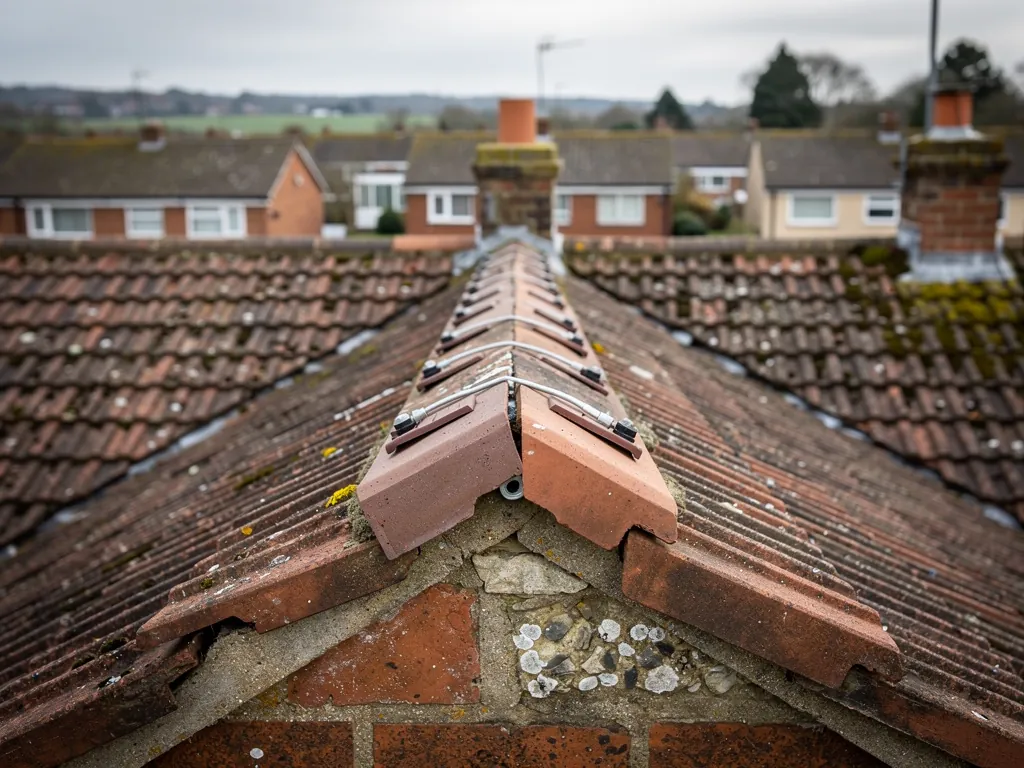
Ridge tiles, hip tiles and verge edges sit at the exposed rim of the roof, where wind gets under first. Under BS 5534:2014 a ridge or hip tile is held by mechanical fixings as well as bedding, because mortar on its own cannot be relied upon. On an older cottage the original bedding is often mortar only, so re-bedding a ridge with stainless clips and screws, or moving to a dry-fix ridge system tested to BS 8612, is a sensible upgrade. Our page on ridge, verge and dry-fix work explains the choices.
Q3.2Do the clay and chalk under the village matter to the roof?
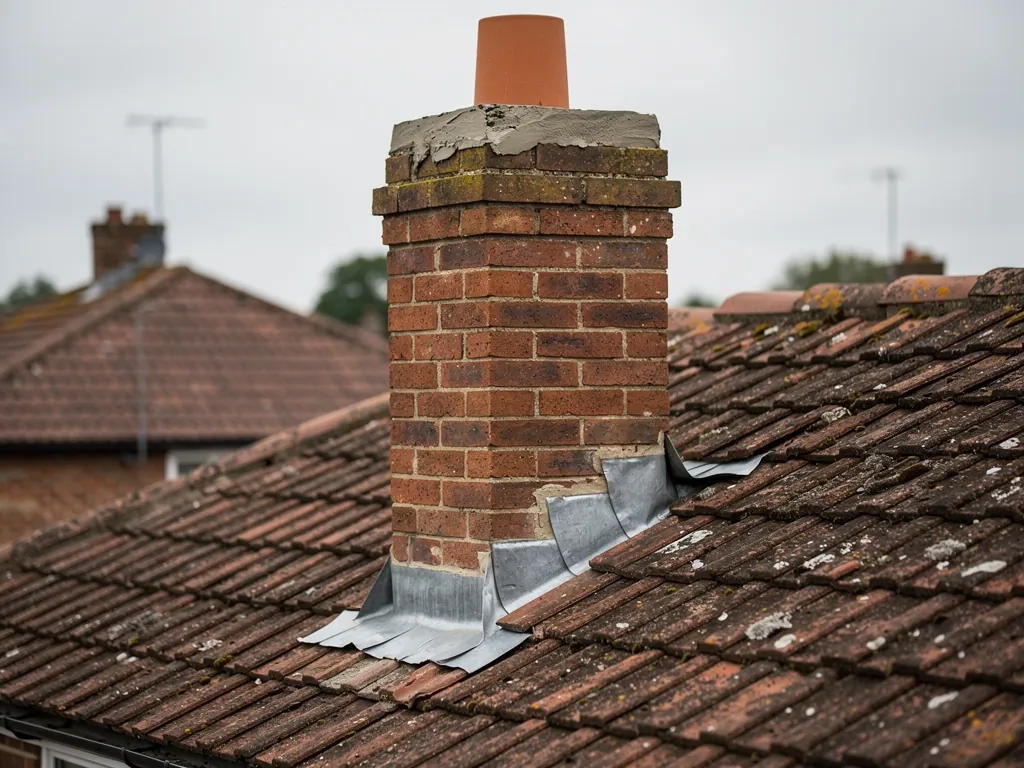
They matter to the walls more than to the covering. Ground that swells and shrinks with the seasons can shift old brickwork a little, and a hairline split in a gable wall or stack opens a path for water exactly where roof meets wall. When we find a stepped crack beside a stack, we tell you whether it looks old and settled or fresh, and whether a builder should look at the masonry before the roof is touched.
Gutters and downpipes deserve a look as well, since water spilling down a brick wall does as much harm as a missing tile. Outbuildings on the higher lanes, with lighter sheeting or older felt, are worth the same check, because a shed roof lifting in a gale can damage the cottage beside it.