Flat-roofed garages behind brick semi-detached houses

Roofers in East Ilsley

Loose tiles, leaking valleys, tired chimneys and worn stable roofs in East Ilsley, the downland village that built its name on sheep and racehorses, from the clustered centre by St Mary's to the yards on its edge.

East Ilsley's roofs, from sheep fair to stable yard

Village centre houses clustered around a church
The clustered centre by St Mary's

East Ilsley has a traditional clustered centre just east of the A34, and its church of St Mary is Grade I listed, partly Norman, with an Early English-style chancel and an embattled tower. The building was enlarged and repaired in 1845, a reminder that roofs here have been mended for generations. The village has its own conservation area, which means the look of the street counts as much as any single roof. On older buildings we expect varied coverings, uneven slopes, timber that has moved and chimney stacks whose lead has been replaced at some point in the last century or two. We photograph what is there, because a patch laid over an earlier patch is the usual cause of a second leak, then repair in matching materials and keep new work out of sight.

Older houses along a village street
Houses from the sheep fair years

A charter of 1620 formalised the East Ilsley sheep fair. In the nineteenth century it grew to be the second largest in the country after Smithfield, with 80,000 sheep penned each day at the chief fair on 1 August. A market town of that kind needed inns, yards and houses for the people who traded there, and buildings from those busy years often sit on the main streets today. Roofs of that age commonly show a long history of patching, with ridges re-bedded, valleys re-lined and eaves rebuilt. The survey looks for the layers of earlier work, because a repair that ignores them tends to fail beside the old one.

Timber-clad stable block with a pitched roof
Racehorse yards and outbuildings

Racehorses have been trained in East Ilsley for about 200 years, as an offshoot of nearby Lambourn, and where horses are trained there are yards, barns, tack rooms and boxes with roofs of their own. Outbuildings of this kind have long-spanned roofs with rooflights, ridge vents and gutters that must drain a very wide area in a storm. They suffer from slipped sheets, tired fixings and overflowing gutters long before the main house does. Newer homes on the village fringe wear differently: tile clips work loose, verges crack and fascias rot at their joints. Extensions often add flat sections, and those want their outlets cleared and their surface checked regularly.

From Swindon up onto the Berkshire Downs

Map showing East Ilsley and central Swindon. 30 road miles east of central Swindon.

Distance
30 road miles east of central Swindon
Council
West Berkshire Council
Conservation area
East Ilsley Conservation Area
Landscape
North Wessex Downs National Landscape
Council
West Berkshire Council

Short answers for East Ilsley roofs

Does East Ilsley's conservation area limit my roof repair?

Not when the repair restores what is there in matching materials. A new covering or an altered roofline is the kind of change West Berkshire Council looks at.

Can a stable or barn roof be mended while horses are in use?

Often. We split the job into sections, keep noise and dust away from the animals, and close up each area before we leave. The order of work is agreed with the yard at the survey.

Is a roof up on the downs more exposed?

Generally, yes. Open downland offers less shelter, so ridges, verges and eaves fixings matter more here, and a survey tests those fixings before anything else.

Q1

What roofs stand in East Ilsley's old centre?

Roofer repointing a stone chimney stack above lead flashing
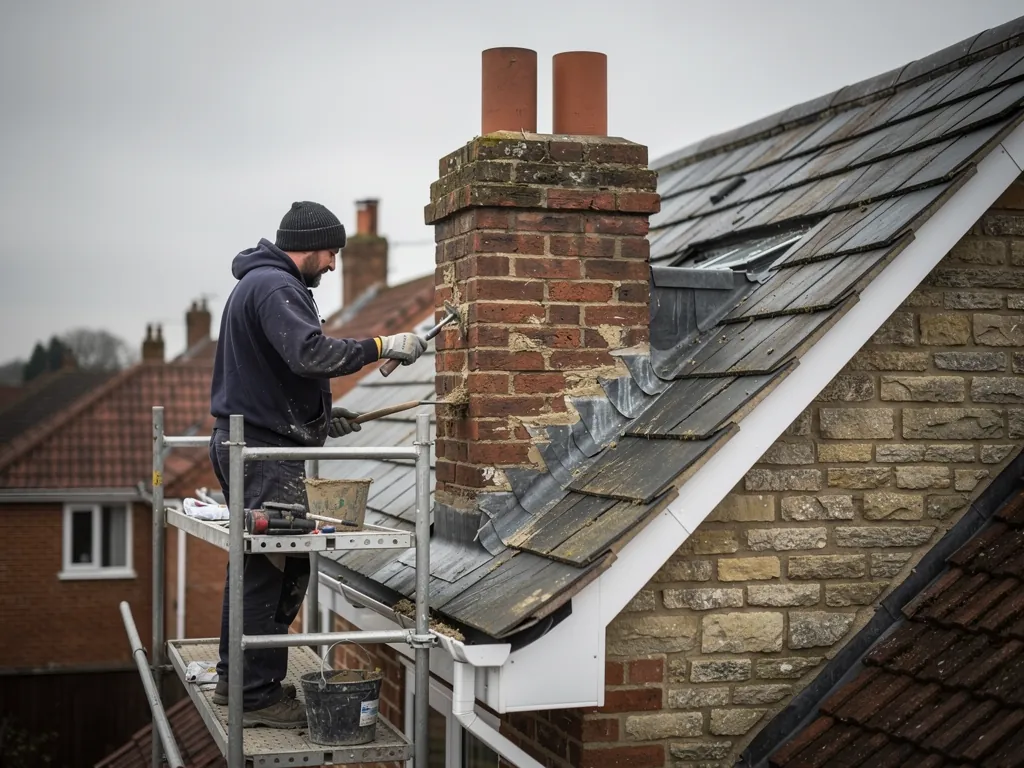
Roofer repointing a brick chimney stack from scaffolding

The short answer

Older buildings of mixed ages gather round St Mary's, a church listed Grade I that is partly Norman and was enlarged and repaired in 1845. The village has an East Ilsley Conservation Area, so we confirm what covers each roof on the survey and repair it in matching materials.

Walk through the middle of East Ilsley and you pass buildings from several centuries, drawn together by a church and a fair that once filled the streets with sheep. The roofs reflect that: no two are quite alike, and the sensible approach is to treat each one on its own terms.

Does a Grade I church next door change my repair?

The church is listed, but its neighbours are not automatically. For an ordinary house nearby, the question is the conservation area, not the church. Mending a roof in the materials it already has rarely needs an application at all. A change of covering, or a chimney altered where the street can see it, is where the council steps in, so we raise the question early and let you decide. The roof repairs page explains how we choose between a mend and a re-cover.

What do old chimney stacks near the church need?

More often than not, repointing, a new lead flashing or a fresh cap rather than a rebuild. A stack that leans or sheds bricks needs more, and we tell you which you have, with photographs. Our chimney repairs page covers the options.

Why does the loft matter on an old house?

Because the cause of a leak often shows there first. Dark staining on rafters, damp battens and daylight through the covering all point to the failure, and a roof that looks tidy from the road can still be wet underneath. We look from inside before we climb outside, and we show you what we see.

Survey photographs arrive alongside the written quote, which lets you look at the very faults we are talking about before you decide anything. A quote with no pictures behind it asks you to take a roofer's word for it, and we would rather you did not have to.


Q2

Do stable yards need a different kind of roofer?

The answer

They need a roofer who gives outbuildings the same care as the house, and who accepts that animals share the site. Long spans, rooflights, ridge ventilation and big gutters bring different faults, and horses on site add noise, dust and safety concerns. We survey the whole roof, work in sections and make each section weathertight before we leave.

A village that has trained racehorses for about 200 years is full of buildings that were never designed as houses. Their roofs are large and plain, they are exposed to the weather and they cover animals that need dry, well-aired space. The repair priorities are different.

What goes wrong on a large outbuilding roof?

Sheets slip, laps open, fixings corrode and rooflights leak where they meet the roof. Gutters overload in heavy rain because the roof they serve is so big, and valley gutters clog with leaves. Ventilation matters in a stable block, so we keep ridge vents and eaves gaps clear. A fix aimed at the actual failure point is usually better value than recovering the whole roof. Our commercial roofing page covers the larger jobs.

How is the work planned around horses?

By talking to the yard first. We agree which areas can be worked on and when, avoid the busiest hours of the day, and keep noise away from nervous animals wherever we can. Training horses follow a routine, and a roofer who respects it is easier to have on site. Debris is caught and removed so nothing falls where a horse could step on it. If part of the roof must be opened, it is closed again that day.

Could an older sheet roof contain asbestos?

It might. HSE guidance tells owners to treat any building constructed or refurbished before 2000 as containing asbestos until a check proves otherwise, and we raise this at the survey. Taking down intact asbestos cement sheets carefully is non-licensed work; smashing them changes the position and brings in notification duties.

For a yard manager, a written plan for the phasing helps everyone work to the same timetable.

Q3

How do the downs shape roof work here?

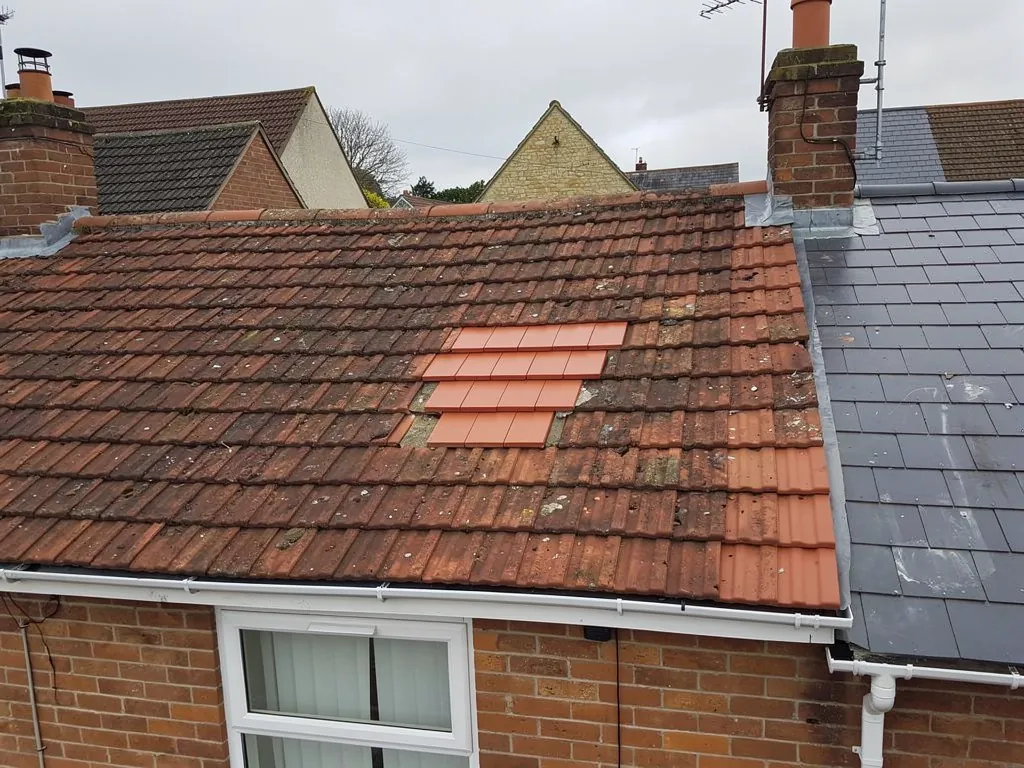
Patch of newly replaced clay tiles on a weathered terrace roof
Gloved hands fitting a weathered Cotswold stone slate

The short answer

East Ilsley lies in the North Wessex Downs National Landscape and has its own conservation area, with West Berkshire Council as the authority that decides planning. Putting a roof back as it was is seldom a planning matter; a switch of covering, a new opening in the slope or a listed building brings the council in. Landscape bodies only advise.

Open chalk country shapes how a roof is built and how it is regulated. The weather has fewer places to hide, and the layers of designation around the village mean that changes, though not repairs, get looked at more closely than they would in a modern estate.

Does the National Landscape alter how a roof is replaced?

Not where the work only restores what is there. On planning, the North Wessex Downs body gives advice, and West Berkshire Council takes the decision. The designation leaves like-for-like re-roofing and the Building Regulations as they were. If you are planning a window in the roof slope, our guide to roof window planning sets out what applies on land like this.

How exposed is a roof on the downs?

More exposed than one in a sheltered valley. Ridges, verges and hips meet the wind first, so their fixings earn the closest scrutiny. Under BS 5534:2014, a ridge or hip tile gets a mechanical fixing on top of its bedding, so we check clips and screws too. On every downland survey we test those fixings by hand where we can reach them.

Who handles Building Regulations here?

No building control application is normally needed for work under 25 per cent of the total building envelope and under 50 per cent of the roof. Once either limit is passed, approval applies. Building Control Solutions serves West Berkshire Council, and a registered building control approver is the alternative. We talk through which route suits the job, and we send the notification when one is needed.

Whoever you ask, find out whether the quote covers VAT and scaffolding before you compare totals.

On open downland

Spend the effort on fixings at ridge, verge and eaves, because the wind finds a weak one first.

Roofing services in East Ilsley

Questions from the village of the sheep fair

What goes wrong first on East Ilsley's older village roofs?

Usually the details rather than the main slope: lead flashings at chimneys, valleys that have silted up, ridges on tired mortar and eaves where timber has rotted. These are the places where water gets in. A survey photographs each one, so you see which repairs are needed and which can wait.

Will you repair a listed East Ilsley house or cottage roof?

Yes, using the materials and methods already there. A listed building cannot have its special character altered without consent, so we plan the approach with you in advance and suggest contacting West Berkshire Council if anything strays from like for like.

Do you work in Lambourn and the villages around East Ilsley?

Yes. East Ilsley is within the area we cover, and so are Lambourn and the villages close by on the downs. If a small place is borderline, the areas page names them all.

What follows the survey of my East Ilsley roof?

Expect pictures of your own slopes first, then a written quote. Our work carries a 10-year workmanship guarantee, in writing. We advise the smallest job that properly puts the fault right, and once the roof is complete the plot is cleared and the waste leaves with us. If a second, less urgent fault turns up, we tell you so you can plan for it.

Ask us about your roof

Tell us what’s happening and we’ll call you back.

  • Photos of what we find
  • A written quote
  • 10-year workmanship guarantee

Or call 01793 626096

Call Get a quote