Roofers on a buff brick estate house with grey tile roofs

Roofers in East Hendred

Clay tile, chimney lead and flat roofs get our attention in East Hendred, from the timber-framed and cob cottages beside the brook to the later houses spreading towards the Ridgeway.

East Hendred roofs beside the brook

Weathered red clay tiles on a village roof
Old red clay tile

The council's conservation area appraisal, adopted in 2008, names old red clay tile as the predominant roofing material in East Hendred. That fits a village of brick, timber frame and stone, where handmade clay tiles weather to a soft, uneven red that a modern machine-made tile struggles to copy. Old tiles are laid with a slight camber and wave, and a sound roof of this kind can look rough from the lane and still be perfectly watertight. The faults we meet are frost-spalled faces, tiles whose nibs have snapped so they slide, and moss packed into the gaps. Reusing as many of the original tiles as possible, and topping up with good reclaimed ones, keeps the roofscape the way the appraisal describes it.

Steep-pitched cottage roof with an eyebrow dormer
Thatch and the steep pitch

The appraisal also records that a number of the earliest cottages, farmhouses and barns are thatched, and that steep pitches and eyebrow dormers on other buildings show that more were once thatched. That history matters for anyone re-roofing a steep-pitched cottage today. Where a roof was thatched in the past and has since been tiled, the rafters are often light, the pitch is steeper than a standard tile needs, and the eaves and dormer details are unusual. We survey those structures before pricing a re-cover, because a slope designed for straw can behave very differently under clay. For a live thatched roof itself, ask a specialist thatcher; we work on the clay, slate and flat roofs around it.

Brick houses with tiled roofs in a village lane
Later houses and outbuildings

Beyond the historic core, East Hendred has the usual later layers: Victorian and Edwardian brick houses, estate-style homes from the twentieth century, farm buildings and converted barns. Their coverings are typically machine-made clay, concrete tile or slate, with flat or low-pitched roofs over extensions, porches and garages. The jobs here are ordinary roofing problems done with care: ridge and hip tiles that have lost their bedding, valleys that silt up under leaf litter, lead gone at the back of a chimney, felt roofs at the end of their life. In a conservation area, even these roofs sit in a setting the council cares about, so we match colour and texture to the neighbours.

A brook village under the chalk

Map showing East Hendred and central Swindon. 23 road miles east of central Swindon.

Distance
23 road miles east of central Swindon
Council
Vale of White Horse District Council
Conservation area
East Hendred, designated in 1968, with an appraisal adopted in 2008
Council
Vale of White Horse District Council
National Landscape
North Wessex Downs

Answers for East Hendred roof owners

Can East Hendred's old clay tiles be reused?

Often, yes. Tiles in good order are lifted, sorted and relaid, with reclaimed tiles of matching size and colour making up the shortfall.

Is a steep cottage roof harder to re-cover?

It takes more care, because light rafters and unusual eaves need checking first. A survey tells us what the structure can carry.

Does the conservation area limit what tiles I can use?

A change of material is something the council may want to see. Matching clay tile in the existing style is the safer route; check with Vale of White Horse first.

Q1

How are East Hendred's clay tile roofs repaired?

Brick and limestone cottages around a small village green
Roofers on a slate roof along a limestone village street

The short answer

By lifting what has failed and keeping what is sound. Cracked or sliding tiles are replaced one by one with matching old tiles, the batten and nail fixings beneath are checked, and the ridge is re-fixed. A full strip is saved for roofs where the timbers or underlay have also gone.

The village appraisal says old red clay tile is the predominant covering, and a good deal of the work we would do in East Hendred is care for that tile. The aim is a roof that lasts without losing the texture the street depends on.

How do you tell a sound old clay tile from a failing one?

A clay tile can be cracked, delaminated by frost, or simply have a broken nib, the small lug that hooks it over the batten. We tap and inspect each tile in a failing area. Good ones are kept back for reuse, and the rest give way with reclaimed tiles of similar age so the repair does not shout from the lane.

What lies under the tiles of an East Hendred cottage?

When a roof is old enough that the original covering went on without underlay, rain and snow can blow in between tiles. Battens, the small timbers each course of tiles hangs from, may have rotted along the eaves. Opening a slope shows what lies beneath, and we photograph it so you see the same thing. Where the condition allows, we add breathable underlay and new battens, then relay the same tiles. Our pitched roofing page describes how those layers fit together.

Does the ridge need more than mortar?

Along the top of the roof runs the ridge, and each external angle between slopes is a hip; both are finished with capping tiles. Mortar bedding alone was normal practice for generations. BS 5534 changed that in 2014, so a ridge re-bedded now is fixed mechanically as well. For the fixing options, see ridge, hip and verge work.

On a roof where only a few tiles have gone, a visit with the right matching tiles is often all that is needed, and that is the job we quote. Where the whole slope is tired, a full strip and relay with the tiles sorted is more honest than a patch that returns next winter.

Q2

Can a once-thatched cottage take clay tiles?

The answer

Often it can, but not without checking. A roof built for thatch usually has a steep pitch and lighter timbers than a tiled roof needs, so the rafters, wall plates and fixings must be assessed before any new covering is chosen. Tile weight and the cottage's own structure decide what is sensible.

East Hendred's appraisal makes a point that anyone owning an older cottage should hear: steep pitches and eyebrow dormers show that more roofs were thatched in the past than are today. If you own one of these buildings, your roof has already changed once.

Can the old rafters carry a clay covering?

A steep pitch sheds water well, but the frame beneath may have been designed for a lighter covering of reed or straw. Clay tiles, even good plain tiles, weigh noticeably more. Before recommending a re-cover we look at the rafters, the wall plates they sit on, and the walls themselves, which in this village can be cob or timber frame as well as brick and stone.

A covering that is much heavier than the one being removed brings the Building Regulations into play. Approved Document A says more than 15 per cent heavier needs approval, and the Planning Portal gives it as 15 per cent or more. We check the weights before suggesting a covering.

Why are eyebrow dormers so awkward in tile?

Eyebrow dormers have no hard corners: the roof rolls over the window in a gentle curve. They suit thatch beautifully and are awkward in tile, which needs specially cut or shaped pieces and careful lead work at the eaves. If your cottage has one, mention it as soon as you book, because it shapes how we plan the survey and what we bring.

For the roofing around a living thatch, such as a tiled extension or a slate outbuilding, our roof repairs team can help. Reed and straw work itself is a specialist trade that we leave to specialist thatchers.

If the cottage is listed, any change of covering needs consent first, and the council will want to know why.


Our view

Check the frame before choosing the covering, and let the timbers set the weight.

Q3

Who decides which East Hendred roof jobs need approval?

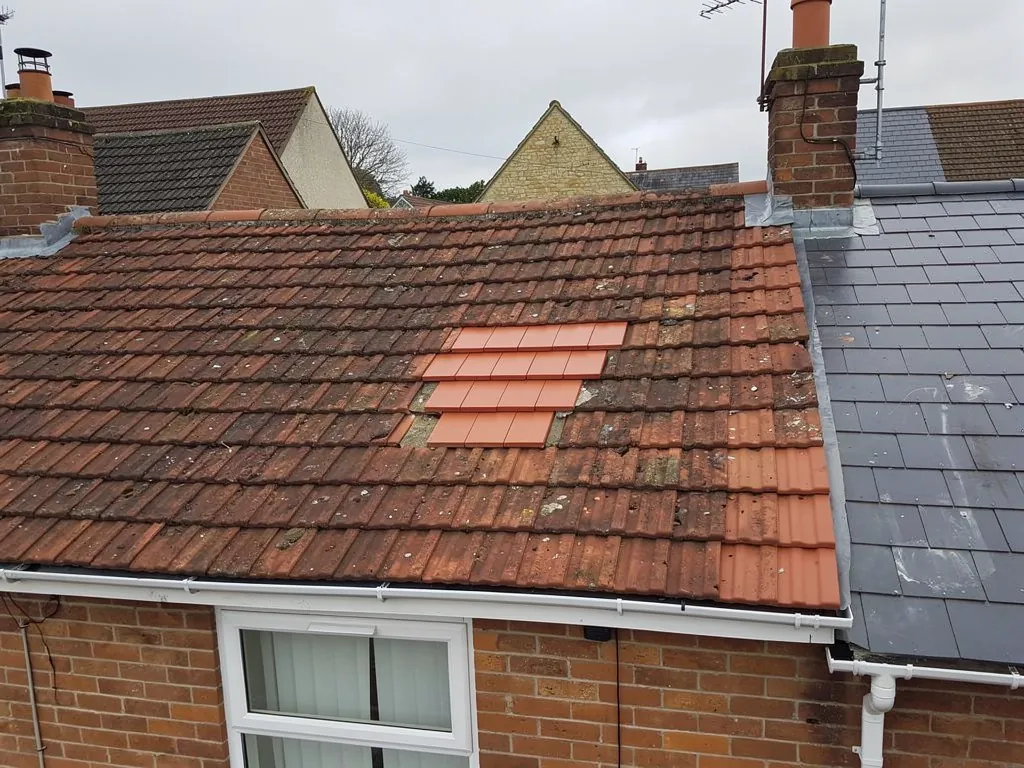
Patch of newly replaced clay tiles on a weathered terrace roof
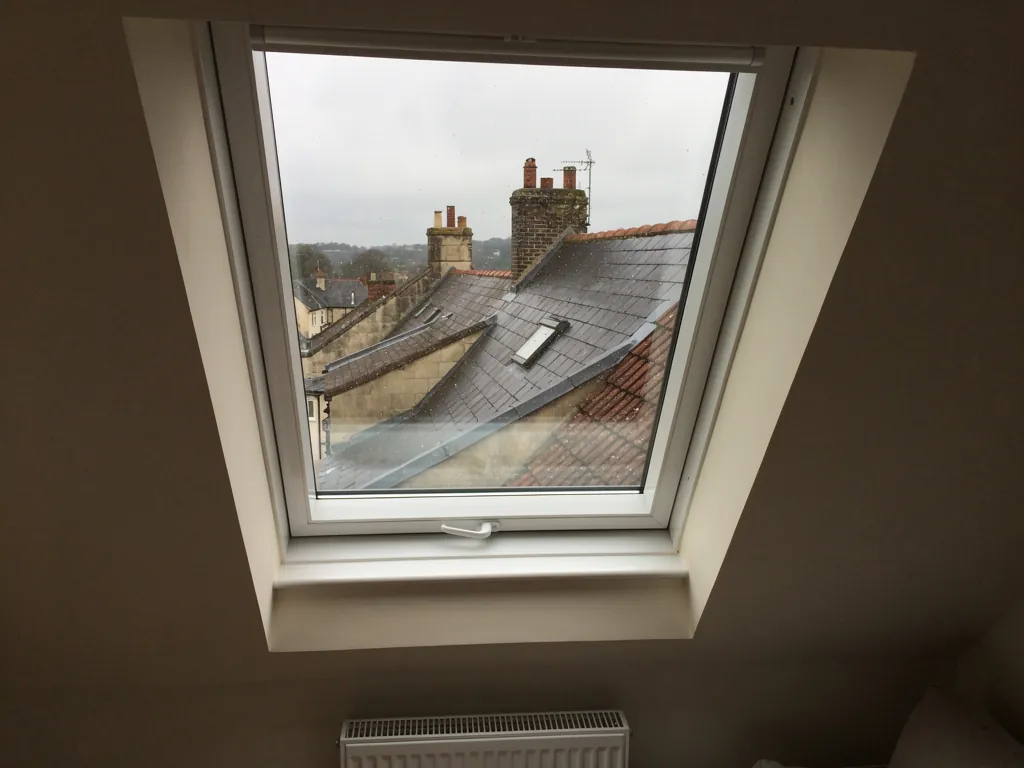
White roof window seen from inside a loft room

The short answer

Planning here sits with Vale of White Horse District Council, which runs building control in the Southvale partnership alongside South Oxfordshire. East Hendred is a conservation area inside the North Wessex Downs National Landscape, with planning decisions resting with the council rather than the landscape body.

East Hendred's conservation area was designated in 1968, and the council adopted an appraisal of it in 2008. The village also lies inside the North Wessex Downs National Landscape, a title adopted in November 2023 that sits on top of the older legal designation as an AONB.

What does the council decide about a conservation area roof?

Putting back the same covering is not usually something the council needs to approve. Changing from clay to another material, or changing how the roof reads from the street, is more likely to. The National Landscape partnership advises, but it is the district council that decides. If you are weighing roof windows or a dormer, our skylights page explains how planning treats them in places like this, and Vale of White Horse has the final word on your address.

Which building control team handles East Hendred?

The Southvale team pairs Vale of White Horse with South Oxfordshire. Re-roofing is often outside the regulations at a small scale. The Planning Portal sets the threshold at 25 per cent of the total building envelope and 50 per cent of the roof, and bigger jobs may need approval and an insulation upgrade. Should a job be notifiable, we explain what is needed and make the notification ourselves. Site clearance follows, and the 10-year workmanship guarantee is given in writing.

What about St Augustine's, St Mary's and listed houses?

The village has two churches, Church of England St Augustine's and the Roman Catholic St Mary's. Churches in use by those denominations fall under the ecclesiastical exemption rather than ordinary listed building consent, with the Church of England working through its faculty system. Houses are different. Hendred House, the manor, and Champs Chapel, a 15th-century former wayside chapel, are among the historic buildings here, and a listed building's character cannot be altered without listed building consent.

The exact boundary and listing status of your own house is worth confirming with the council before pricing.

MythThe National Landscape body has to approve any roof in the village.

FactThe landscape body only advises; Vale of White Horse District Council makes the planning decisions.

Under the Downs: what East Hendred owners ask

Why do East Hendred's tiled roofs have such a wavy line?

Handmade clay tiles are slightly uneven, and old oak timbers bow and settle over centuries, so the slope takes on gentle undulations. That is character, not necessarily a fault. We look for gaps, cracked tiles and failing battens rather than trying to make an old roof ruler-straight.

Can you match reclaimed clay tiles to my cottage roof?

Yes, by size, thickness, colour and texture. We try to use tiles from the same roof first, then reclaimed stock of matching age. Tiles taken from another building should come from a legitimate source, and we say where they have come from.

Do you work near the Ridgeway and the Downs?

Yes. East Hendred sits comfortably inside the ground we cover, as do the neighbouring Downs-edge villages. If your house is elsewhere in the parish or beside the Ridgeway, send us the postcode and we will tell you.

What is the lead on a chimney stack for, and how long does it last?

Lead flashings and soakers seal the angle where chimney meets roof. Lead often outlives the mortar pointing around it, so we check both. Sealant smeared over a failed flashing only hides the problem; a proper repair re-dresses the lead and re-pointing follows.

Ask us about your roof

Tell us what’s happening and we’ll call you back.

  • Photos of what we find
  • A written quote
  • 10-year workmanship guarantee

Or call 01793 626096

Call Get a quote