Flat-roofed garages behind brick semi-detached houses

Roofers in Sutton Courtenay

Tile roofs, brick chimneys, flat extensions and repairs in Sutton Courtenay, from the old houses along Church Street to the newer homes on the Thames-side edge of the village.

Sutton Courtenay's roofs, from Church Street to the riverside

Steep plain-tiled roofs on an old village street
Plain tiles where thatch once stood

The village character assessment of August 2019 finds timber framing, rubblestone, brick, render, plain tiles and thatch among its buildings, and notes that over time tile has replaced thatch as a roofing material. That history shows in the roofs. Plain tiles are small, laid in overlapping courses, and on many old houses they sit on the steep pitch that thatch needed. Steep slopes shed water well but put the ridge and verge where wind can reach them. Tiles of this kind age by the surface flaking and the nibs, the small lugs that hang each tile on its batten, breaking, so a roof that seems healthy from the lane can be admitting water on the inside face.

Patterned brick chimney on a tiled house
Brick, stone and decorative detail

The assessment records that brick replaced timber framing over the centuries, and that blue-grey bricks were used with red brick for decorative effect in several buildings. The rubblestone Church of All Saints, with its squat tower, stands among them, and the assessment counts nearly 50 designated heritage assets in the village. The Manor, the Abbey and a twelfth-century Norman hall are all named for their age. On brick houses the roof work is often at the edges: chimney stacks with patterned bands, parapet junctions, gable ends, and the lead that ties the masonry into the tiles. Repointing must suit the old brick, and lead needs the same care.

Brick homes and a rear kitchen extension
Riverside and newer homes

Sutton Courtenay sits on the south bank of the Thames, about two miles south of Abingdon, and was part of Berkshire until 1974. Houses near the river live with damp air, shade from mature trees and the moss that follows. Newer homes, garages, extensions and outbuildings fill the lanes beyond the historic centre, and these have their own regular faults: slipped tiles at the eaves, failed ridge bedding, and flat roofs over kitchens and conservatories where the membrane has split along a seam. A flat extension needs a sound deck beneath, laid to a fall that sends water to the gutter, and checking both is a first step on any survey we do here. Where a rear extension joins the main house, the abutment flashing is usually the first place water gets in.

Out from Swindon to the river

Map showing Sutton Courtenay and central Swindon. 27 road miles east-north-east of central Swindon.

Distance
27 road miles east-north-east of central Swindon
Council
Vale of White Horse District Council
Conservation area
Sutton Courtenay
Setting
Thames-side village south of Abingdon
Council
Vale of White Horse District Council

Roof answers for the Sutton Courtenay village homes

Does re-tiling in Sutton Courtenay's conservation area need consent?

Replacing like with like normally goes ahead. Planning officers at Vale of White Horse District Council should hear about a different covering or a listed house before any start date is fixed.

Why are so many old roofs here steeply pitched?

Thatch needs a steep slope to shed water, and where tile later replaced it the pitch often stayed. A steep roof sheds rain quickly and puts extra load on the ridge and verges.

Can you match the plain tiles on a Church Street house?

Generally, yes. Size, colour and surface decide the match, and reclaimed or new hand-made tiles are both options. We spread them across the slope so a repair does not show.

Q1

Which roofing materials define Sutton Courtenay's old houses?

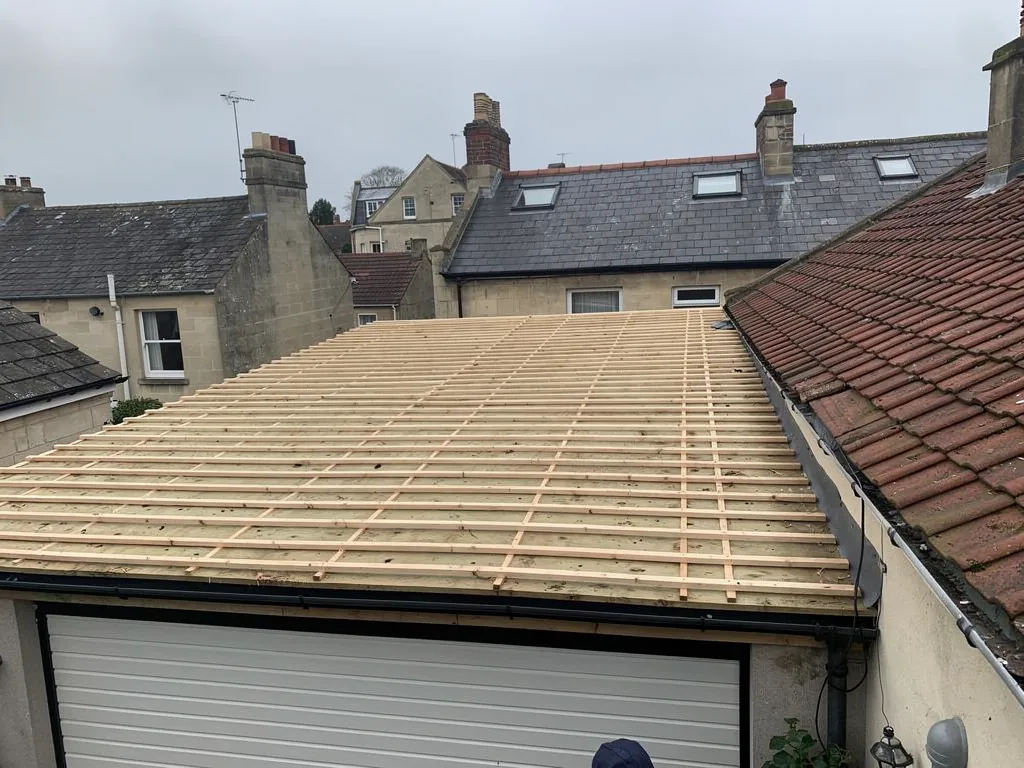
Garage roof stripped to new timber battens above the door
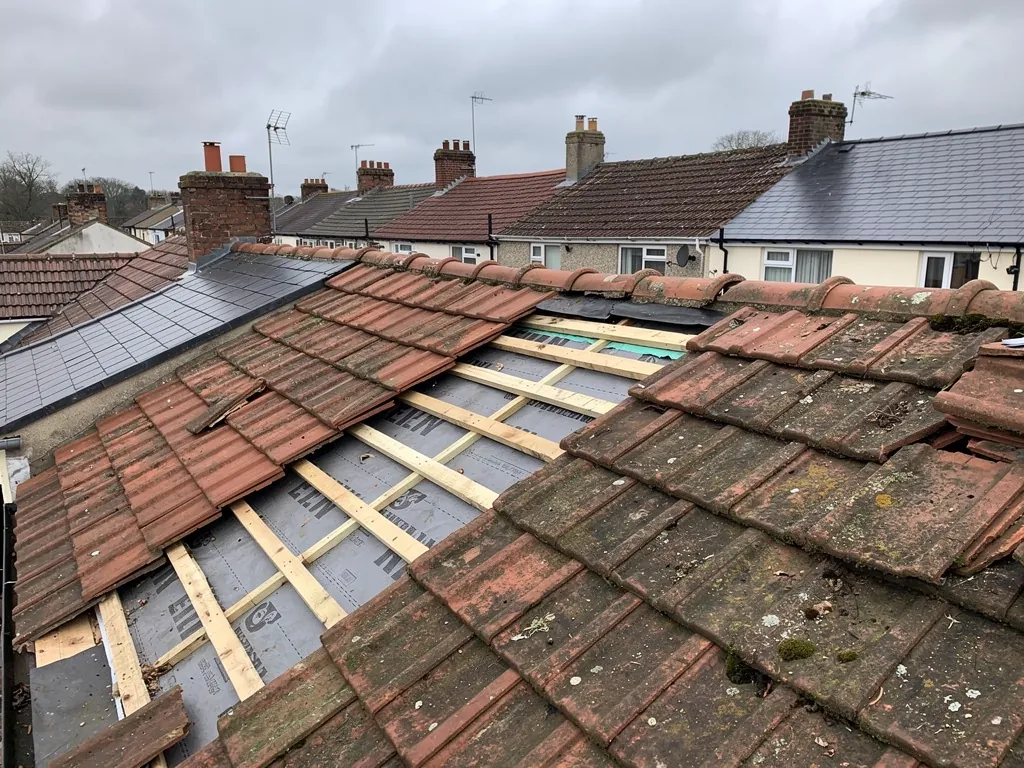
Clay tile roof opened to battens and membrane for repair

The short answer

Plain clay tiles, with thatch in the village's past. The character assessment lists plain tiles and thatch together and says tile replaced thatch over time. Many roofs are steep, small-tiled and double-lapped, which makes them durable but demanding to repair neatly.

Walk along Church Street with the assessment in mind and the layers of the village appear. Timber frames, rubblestone and brick walls carry roofs of plain tile, and in a few places the memory of thatch survives in the steepness of the slope.

Why are plain tiles laid in so many overlapping layers?

A plain tile is small and flat, so rain cannot be shed by one layer alone. Each course overlaps the two below it, which means water passes over at least two thicknesses before it reaches the batten. That double lap is what makes a plain-tiled roof so watertight and so heavy, and it is why repairs mean lifting the tiles above the fault to reach the one beneath.

Are the old tiles kept when a roof is stripped?

Sound ones can. We lift the tiles with care, sort them, discard any that are cracked, laminated or loose at the nib, and re-lay the best on the slope that faces the street. New hand-made tiles make up the numbers. Laying them again on fresh battens and underlay preserves the appearance of the roof, and where that does the job it avoids the cost of buying a whole new covering.

Does a steep pitch make a roof harder to repair?

It does. Access needs scaffold with a proper working platform, and the tiles have to be handled on a steep slope without sliding. We plan the scaffold at the survey. Our pitched roofing page describes how a full re-cover is organised from start to finish.

Beneath the tiles, the underlay and battens matter just as much as the covering. A roof laid before breathable membranes were common may have no underlay at all, and that is worth correcting whenever the tiles come off. Cold roof spaces also need ventilation at the eaves and ridge, so we check that nothing, from insulation to old paint, has blocked the airflow that keeps the timbers dry.


Layers of a plain-tiled roof and what usually fails
LayerIts jobWhat tends to fail
Plain tilesShed the rainFlaking faces and broken nibs
BattensHold each courseRot where leaks have run
UnderlaySecond line of defenceMissing, torn or perished
Ridge and hipsSeal the top and anglesLoose bedding and cracked joints
Q2

How are brick chimneys and gables repaired here?

The answer

With pointing and flashings that suit the old brick, and with lead renewed where it has split. Chimneys and gable ends take weather on every face, so they are often the first parts of a roof to leak. A narrow repair usually restores them.

Brick is the second great material in the assessment, and it brings decorative touches that the roof has to meet: stacks with patterned bands, blue-grey headers laid among the red, and gable ends that finish square against the slope.

What leaks at the foot of a brick chimney?

The joint between brick and tile is the weak point. A flashing of lead is folded into the brickwork and over the tiles, and the soaker beneath it is the hidden strip that carries water out onto the slope. If the pointing above the flashing crumbles, rain follows the brick down behind it. Re-cutting the joint and renewing the lead often cures it, and our chimney repairs page covers the rest of the work on a stack.

Can old brick be repointed without harm?

Yes, if the mortar is chosen for the brick. Old brick is often softer than the cement mortars used in the twentieth century, and a hard mortar can trap moisture and spall the brick face. We use a softer lime-based mortar on older work where the building calls for it, and we leave decorative bands alone unless they have failed.

What about the top of a gable end?

Where the tiles finish against a brick gable, the verge needs a secure edge or a coping that sheds water. Loose bedding allows tiles to lift. A fixed edge that does not depend on mortar is cheaper than the repairs a gale can cause.

A flue that has gone out of use still wants a ventilated cap. We look at that on the same visit, since a sealed, unvented flue can hold damp and leave brown staining on the chimney breast indoors.

Q3

Who signs off roof work in Sutton Courtenay?

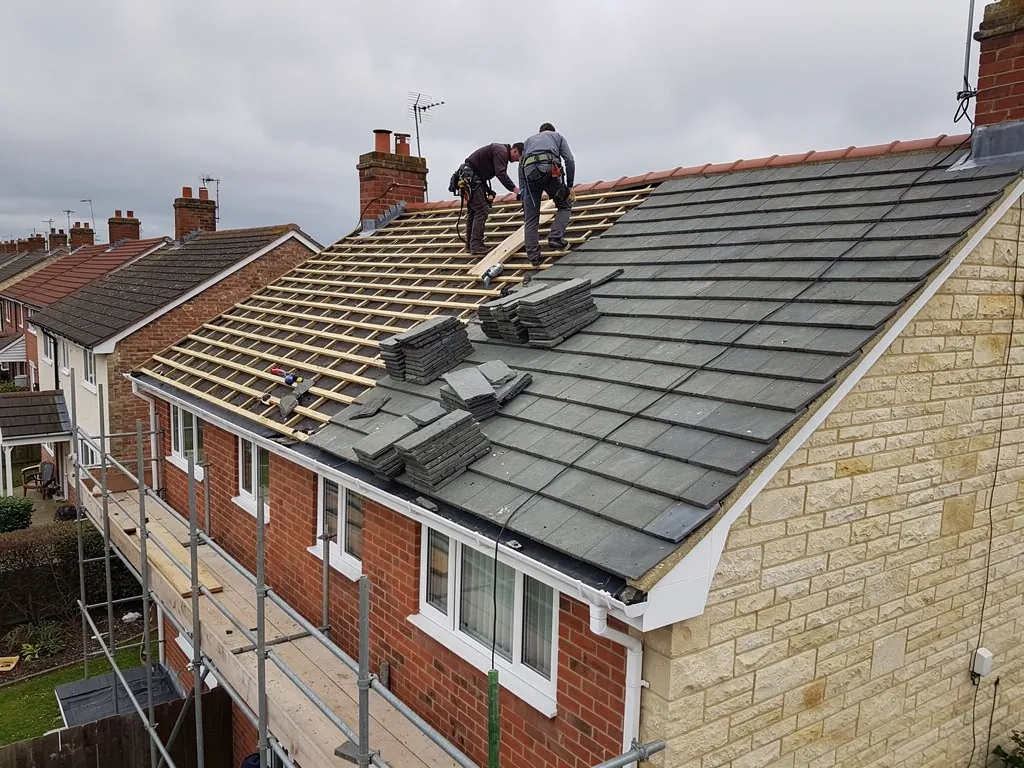
Two roofers fitting grey tiles on a part-battened house roof
Rolled lead roof covering over a bay above white windows

The short answer

Planning questions go to the Vale's district council, and the village is a conservation area. Building control runs through the shared Southvale service or a registered approver. Matching repairs usually pass without an application, while a different material, or a listed house, does not.

Sutton Courtenay sits within the Vale of White Horse, so the district council covers planning and the conservation area. Ordinary upkeep needs no sign-off, such as renewing a few tiles, repointing a stack or clearing a gutter. Three kinds of job do need thought.

Does the conservation area mean extra rules for a re-roof?

A conservation area exists to keep a place looking as it does. It does not freeze a roof. A matching re-roof, in the same plain tile and at the same pitch, is normally routine. Trading tile for another material, or altering what shows from the street, is where a planning officer starts asking questions. Ask before you commit.

Which Building Regulations rules apply to re-roofing?

Building control is not usually triggered if less than 25 per cent of the total building envelope and less than 50 per cent of the roof is involved. Past those limits, the work needs approval and an insulation upgrade under Part L may follow. Fitting a covering that weighs 15 per cent or more extra needs it as well. Southvale, the building control service the Vale shares with South Oxfordshire, handles applications, and a registered building control approver is an alternative. Notifiable work comes with a notification, which we file.

How do listed houses and the church fit in?

With nearly 50 designated heritage assets in the village, some roofs belong to listed buildings, and changes that affect their character need listed building consent. Church roofs follow an approvals route of their own. In both cases, we start from the same materials and fixings that are already there.

Unsure about your own house? The council keeps the answer, and a photograph of the roof gives us something to plan from.

MythA conservation area means the roof cannot be touched.

FactLike-for-like work proceeds in the ordinary way; officers take an interest when the roof's appearance changes.

Roofing services in Sutton Courtenay

Questions from the village lanes

My Sutton Courtenay house has a steep tiled roof. Does that cost more to repair?

Sometimes. Steep slopes need safer working platforms and slower handling of the tiles, and that can add to the access cost. Narrow lanes and parked cars in the older streets can also limit where a delivery lorry or scaffold lorry can stand. Pitch, height and approach are all recorded at the survey, and the quote we put in writing follows from them.

Can damp from the Thames affect my roof timbers?

Damp air and shade can, over time, keep battens and rafter ends wet, particularly under a roof that has no underlay or has a blocked eave. We check the timber when tiles are lifted, and replace only the sections that have gone soft. Good ventilation at the eaves does more to protect it than any treatment.

Do you repair barn and outbuilding roofs as well as houses?

Yes. Barns, garages and outbuildings are part of village life here, and many have older tiles, corrugated sheets or flat sections. They get the same survey and photographs, and we recommend whichever repair truly cures the leak, and no more.

How do you remove moss from old plain tiles without damaging them?

Gently. Dry moss is brushed off by hand, and heavy growth is softened before it is removed. A hard jet wash can strip the face of an old tile, so we check the condition of the tiles first and tell you if a few should be replaced.

Ask us about your roof

Tell us what’s happening and we’ll call you back.

  • Photos of what we find
  • A written quote
  • 10-year workmanship guarantee

Or call 01793 626096

Call Get a quote