The short answer
Mostly gentle attention. Clay tiles from the village's own brickworks tradition last a long time, but frost splits the faces, nibs snap, and ridge bedding and lead flashings wear out first. Fixing those parts, and swapping failed tiles for matching ones, keeps a Drayton roof looking right and often costs far less than starting again.
Clay tile roofs have been the village norm for generations, and the appraisal says so directly. Looking after them is mostly a matter of knowing where they fail.
Q1.1Why do clay tiles split and flake?
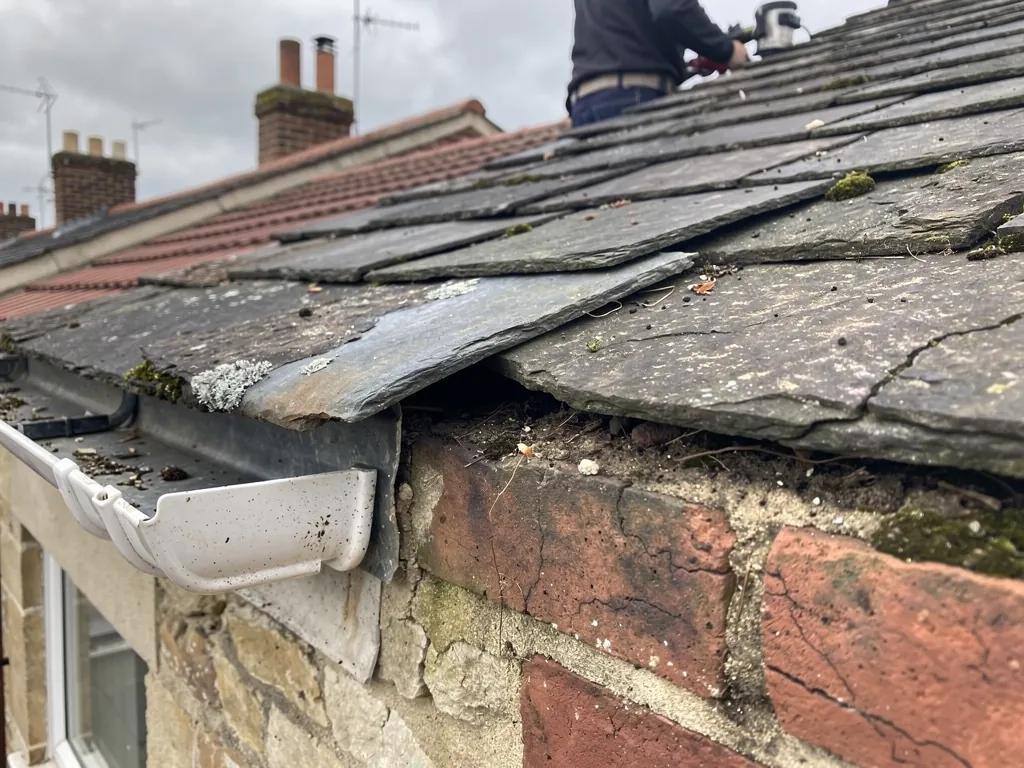
Clay absorbs a little water. In a hard frost that water expands, and the face of a tile can spall away, leaving a thin, pitted surface that gets worse each winter. A flaked tile can often be spotted from the ground by a change in colour, but the true state is only clear from the roof. We check whether the damage is a handful of tiles or the whole slope, because that decides between repair and re-covering. Cost guides give clay tiles a life of around 40 to 60 years, with older roofs lasting well beyond that when they are looked after.
Q1.2What goes wrong with the ridge and the lead?
Ridge tiles bedded on nothing but mortar work loose once the bedding shrinks and cracks, and in a flat, open Vale village the wind can find a loose ridge quickly. Lead flashings at a chimney or a wall tire as the metal flexes, and a split there lets water in even if every tile is sound. See our roof repairs page for how we approach these.
When a repair is warranted, we photograph the fault before and after, which leaves you a dated record of the work. The finished quote is written after the survey, not read over the phone.
Small jobs, such as replacing a dozen tiles and rebedding a ridge, are quick and sensible. If a dozen tiles and a ridge are all the roof needs, a dozen tiles and a ridge is the job we recommend, and the quote reflects that.