
If you own a house with spray foam under the roof, sooner or later someone will mention the RICS guide. A surveyor, a conveyancer, a mortgage adviser or a neighbour who has been through it will say that the chartered surveyors have written something on the subject. They have, and it is short, written for homeowners and worth reading in full. The guide carries the date March 2023, so it predates much of the lender news that followed.
This page takes the lines that matter most and sets each beside a plain explanation of what it means on a real roof. Quotation marks show the guide's own words. Anything outside them is our reading, from the point of view of a roofer who works under foam when it has to come out. You can read the original on the RICS website, and our spray foam insulation removal page covers the practical side.
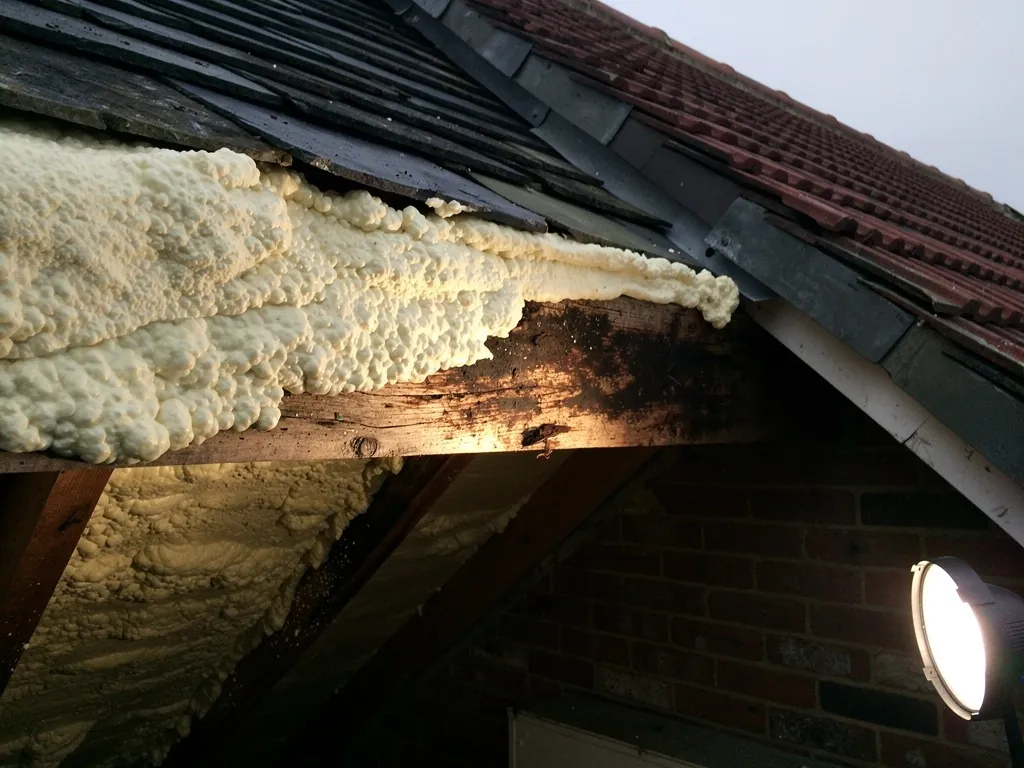
Who RICS are and why their guide gets quoted
RICS is the professional body for chartered surveyors. Its members carry out many of the home surveys and building surveys that buyers commission, and they value property for lenders. When RICS writes a consumer guide, it is describing the position that a surveyor is expected to understand when they climb into a loft. That is why the document tends to come up when a home with foam is surveyed or sold.
It helps to know what the guide is not. It is not a law, a Building Regulation or an instruction to remove foam. It does not say that every spray foam roof is faulty. It is a consumer guide that sets out what can go wrong, which questions to ask first and who to talk to. Reading it as a checklist rather than a verdict is the right frame.
When was the guide published?
The RICS pages themselves are undated, but trade press reported the launch of the guide on 3 March 2023, and the downloadable PDF carries March 2023 in its title. We therefore call it the March 2023 guide. Where the guide says something later events have moved on from, such as lender policy, we flag the change.
The warning about installation and condensation
The guide opens its case on a plain warning: badly fitted insulation can lead to dampness, and it names "uncontrolled condensation" as the example. That sentence is the root of nearly every concern that followed. A roof is a cold surface in winter, and the air in a house carries moisture from cooking, washing and breathing. When the two meet on the wrong side of a layer of insulation, water forms. In an open loft, it can drift away. Behind a sealed layer of foam it sits on the timber.
The guide goes on to say that before any foam is sprayed, a "qualified professional" needs to run the heat-loss sums and the condensation risk checks. That line is easy to skim past and it matters. It means the question of whether foam suits a given roof is meant to be answered on paper before the installer arrives, with numbers, not decided on the day by the person holding the spray gun.
If you never saw a condensation risk calculation for your roof, that does not prove a fault. It does mean nobody can say, from paperwork alone, whether the roof was assessed.
And if the foam is already up there?
It means the relevant question is what the roof is doing now. A dry set of rafters under foam, with no staining and no sign of a leak above, is a different case from one with damp patches on the felt or dark timber. Our guide to spray foam and roof condensation explains how we read those signs from the loft.
What the guide says about your lender and your insurer
Two lines in the guide are aimed at people who are thinking about having foam installed, but they apply just as well to anyone who already has it. The first reads: "Do check with your mortgage provider whether their lender policy allows the installation of such products." The second is the same sentence with "insurance provider" in place of the mortgage provider.
These lines are the reason foam has become a conveyancing issue. A lender is lending against the value of the building, and if foam can affect that value, some will ask about it. Reporting in November 2024 found that some lenders would refuse a loan on a foamed home while others judged each one individually. That position is dated and can change, so treat it as a snapshot and ask your own lender. Our page on spray foam insulation and mortgages goes into how the lender side tends to play out.
Does the RICS guide say my home is uninsurable?
No. It tells owners to ask their insurer whether the policy allows the product. The answer can differ between policies and between insurers, and it is a question about your own cover, not a general statement. If you are unsure, ask for the answer in writing so you have it on file.
Listed and protected buildings
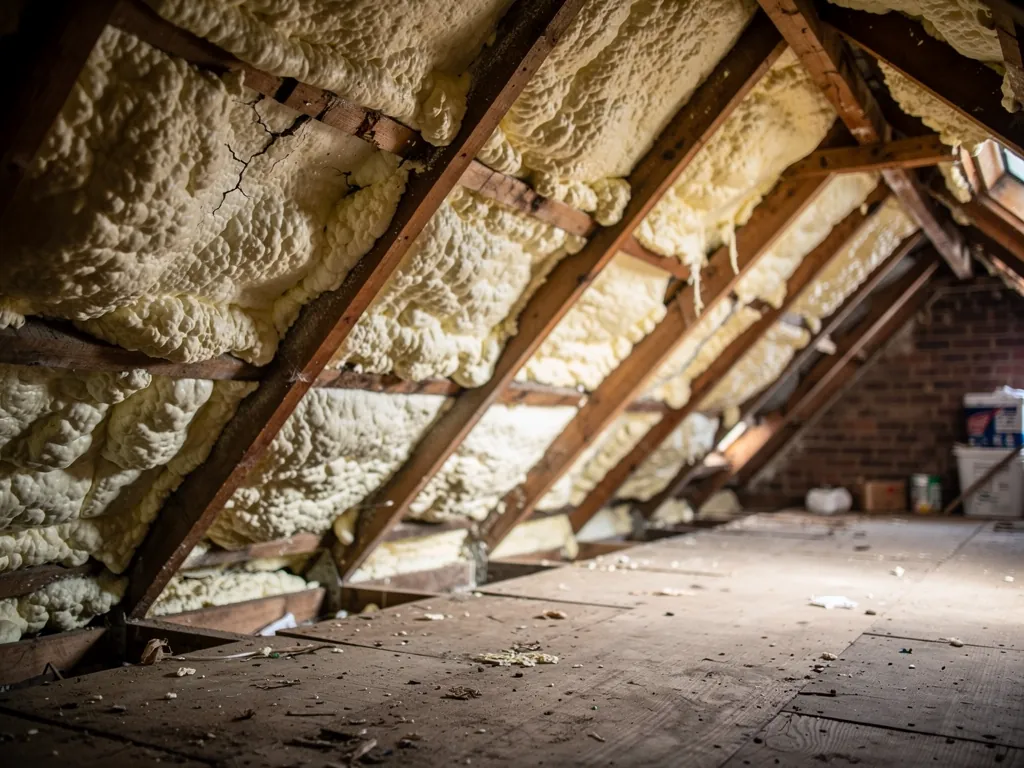
For older homes the guide is firmer. On foam in a listed home or any other protected structure, it says consent must come first. The guide's wording is "without prior consent", and those are the key words. A conservation area home is not necessarily covered by that line, but a listed house is, and so is any structure that is protected in some other way.
Listed building consent is a legal matter: altering a listed building without authority, in a way that changes its character, is an offence under the 1990 listed buildings legislation. Anyone who bought a listed property that already had foam in it, installed by a previous owner, may find the issue returning at the point of sale or when the local authority takes an interest.
What should I do if my listed house has foam in the roof?
Start with the conservation officer at the local authority, which for Swindon is the planning team at Swindon Borough Council. They can tell you whether consent was ever given and what they would expect to see. Our guide to spray foam in listed buildings sets out the consent route and the risks to old timber and stone.
Removal can also need consent, because taking out a material that was fitted without it still alters the building. We do not start work in a listed house until you tell us the consent position, and we would rather wait for the answer than create a second problem.
Removal, damage and the limits of what is possible
The guide is candid about removal. It says that "its removal could potentially damage the existing structure". That is true, and anyone who sells removal as if it were gentle and risk free is not describing the work. Foam grips timber, rafters can be scarred by tools, and the underside of slates or tiles can be marked or loosened as the foam is cut or scraped away.
What the line does not say is that removal is a bad idea. It says to weigh the benefits against the risk, which depends on the method and the roof. Hand tools, careful cutting and in some cases machine removal each have different consequences, and the result depends on the type of foam, how thickly it was sprayed and how long ago. Open-cell foam is usually softer and comes away with less force than closed-cell, which can be very hard and firmly stuck to the timber. Read about the work itself in how spray foam is removed.
Can removal be done in stages or only in part?
It can, in some roofs, and the choice is usually practical rather than ideal. If part of the roof is foam-free and dry, there may be no reason to disturb it. We assess the timbers first and put forward the least work that settles the matter. Sometimes that means leaving foam where it is doing no harm, and the written quote spells it out.
Cost and time follow from method and area: the national figures are on our spray foam removal cost page, and the timescale is covered in the answer on how long removal takes.
Valuation, surveys and the sale price
The line buyers and sellers quote most is about value. The guide calls the presence of foam "a factor" that "could affect" the surveyor's "professional opinion of value". The wording is careful, as RICS wording tends to be. It says could, not will. It says a factor, not the factor.
In practice that means a valuer who sees foam may ask for more information, may recommend a specialist inspection of the roof timbers or may adjust the valuation. The surveyor is protecting the lender and the buyer, and the report will often ask for evidence of the condition of the roof structure. A specialist roof inspection, with photographs of the timbers and a moisture reading, is the usual evidence. If you are about to put a house on the market, see our guide to selling a house with spray foam.
What do I do if my own surveyor flags foam?
Ask what they want to see. The surveyor may be satisfied by a roof inspection report on its own, or they may recommend removal, or a retention agreement with the lender. It is usually quicker to get the inspection done and send the report to everyone than to argue the point in correspondence.
Photographs and moisture readings from the loft turn a general worry into facts a surveyor can weigh. That is what we provide with an inspection, and, if work is needed, the written quote follows.
Using the guide well
The best use of the RICS guide is as a set of questions to put to the right people, in the right order. Ask the installer, if you can still reach them, for the condensation risk calculation. Ask your lender and insurer what their policy says. Ask your conveyancer whether the foam has been disclosed. Ask a roofer, rather than a salesperson, what the timbers look like.
Foam is not always a problem and it is not always a cure. Some roofs are dry, ventilated enough and in good order. Others have trapped water in them. The guide gives you reasons to find out which one you have and does not tell you in advance. We are happy to look. The 10-year workmanship guarantee that comes in writing applies to work we carry out, so there is paperwork you can hand to the next buyer.
A survey is the starting point: we photograph the roof space, take readings where the foam allows and write up what we find, then quote in writing for the smallest job that settles it. You can read the full text of the RICS guide on rics.org before we talk, and bring any questions it raises.