
Spray foam on the underside of a roof used to be a footnote on a survey. Now it can decide whether a sale goes through. Buyers are finding that a lender's valuer notices foam in the loft and the mortgage offer stalls, and owners who simply want to remortgage are discovering the same thing from the other side.
This page lays out what was reported about lender policies in November 2024, why that date matters, what a valuer actually looks at in a loft, and what you can do to make a foam roof easier to lend against. We fit and repair roofs. We do not arrange finance, so for lending advice you need a mortgage broker or adviser. Our part is the roof, set out within our spray foam insulation removal service: what the foam is, what state the timbers are in and what each option would involve.
What lenders were reported to say in November 2024
On 20 November 2024, Today's Conveyancer reported the results of a BBC investigation. In that account, five lenders were reported as turning down any home where foam has been fitted: TSB Bank, Skipton Building Society, Co-operative Bank, Principality and Aviva, which lends in the equity release market. A second group, Lloyds, Nationwide, Barclays, NatWest Group and Santander, were described as looking at each application on its own facts.
Notice what that does and does not tell you. It is a snapshot dated November 2024, and it names particular lenders while saying nothing about the rest. Policy documents change, and a lender may be stricter or looser today than it was then. Do not read the list as the position of every lender, or of any body that speaks for lenders collectively. It simply records who said what, and when.
A lender that assesses case by case is not saying yes. It is saying the answer depends on the foam, the roof and the evidence you can supply.
Why is that wording so cautious?
Because lenders are protecting their security, and a roof they cannot see into worries them. Lenders protect themselves first. A mortgage is secured on the house, and if the roof structure is damaged by trapped moisture, the security is worth less. Lenders that decline are removing a risk they cannot easily measure, and lenders that go case by case are asking for evidence so they can judge it. Both are reacting to the same uncertainty.
Why a valuer notices foam and what happens next
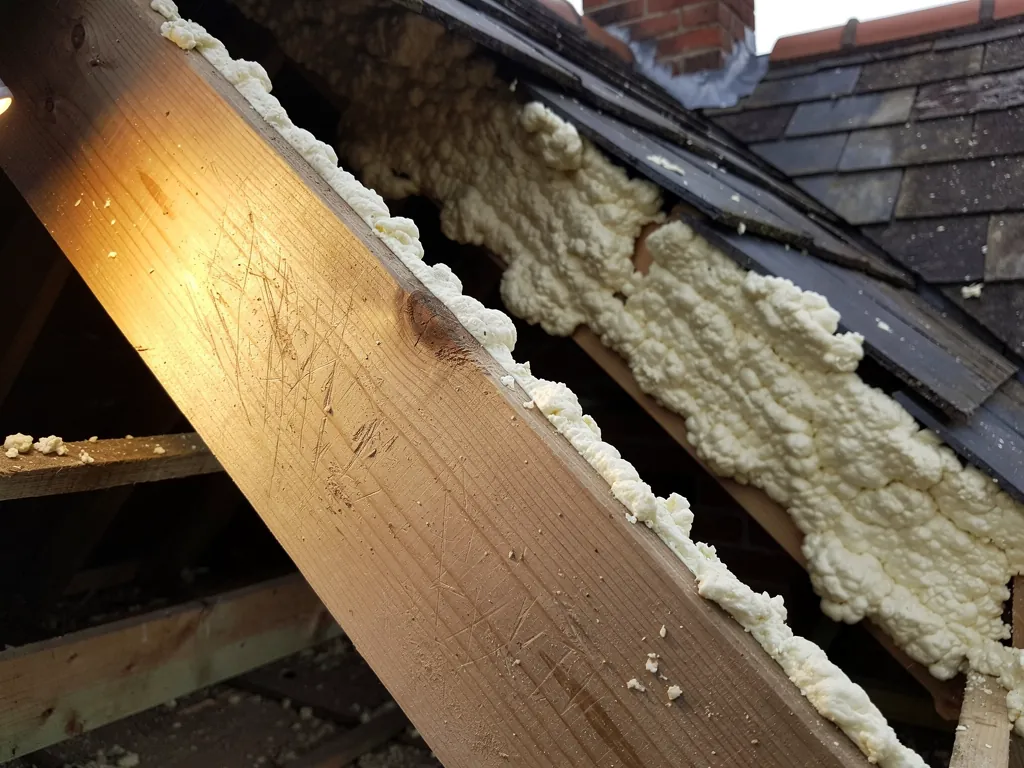
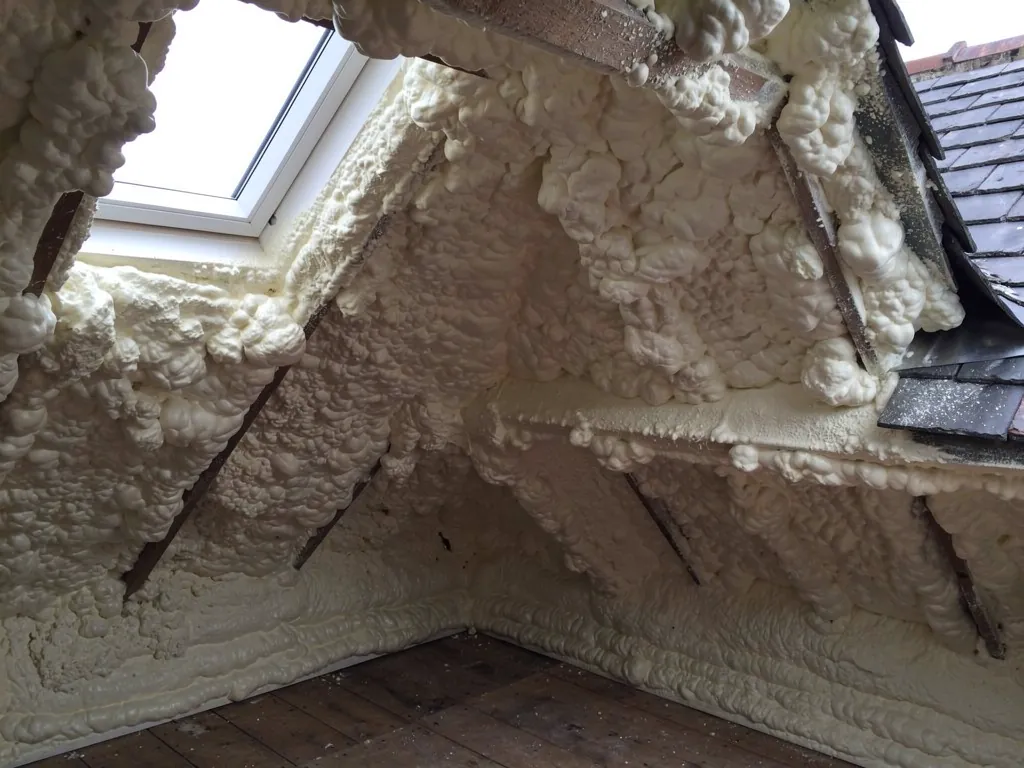
The lender sends a valuer, and the valuer's job is to report on whether the property is adequate security. They check the structure, the condition and anything that could make the house hard to sell. Most will glance into the loft if there is safe access. Foam is easy to spot: a pale or yellowish coating across the roof slopes from inside, often hiding the timbers entirely.
The RICS consumer guide, published in March 2023, warns that foam can sway a valuer's judgement of what a house is worth. It also urges owners to put a direct question to their own mortgage provider about foam. Act on that second point early, since the alternative is learning the answer once the valuation fee has gone.
What does the valuer do if they see foam?
Usually one of three things. They may note it and carry on if the lender's policy allows it. They may refer it back to the lender for a decision. Or they may recommend a specialist inspection, often of the timbers, before a figure can be confirmed. Any of these can add weeks, which matters when a chain depends on your sale date.
If you are in the middle of an application and foam has been flagged, our guide to the RICS spray foam guidance explains the wording you are likely to see in correspondence.
The type of foam changes the conversation
Lenders and surveyors do not treat all foam alike. The Energy Saving Trust's roof and loft advice rates open-cell foam as the safer choice for the timbers, which fits the way open-cell foam lets moisture pass through more readily. Closed-cell foam is denser and holds moisture against the timber if there is any. A valuer who sees open-cell foam on a dry roof may be less worried than one who sees thick closed-cell foam with stains in the loft.
That is general guidance, and it does not mean any lender has promised to accept open-cell foam. It does mean that knowing which kind you have gives you something to say, and when the clock is running on an offer, being able to answer a valuer's first question quickly is worth having. Find the installer's paperwork, look for a product name and ask whoever did the work to confirm the type in writing.
Our page on open-cell versus closed-cell foam helps you work out which you have, and what it implies for the rafters behind it.
What if the paperwork has gone missing?
Plenty of owners cannot. A survey of the loft can often identify the type from touch and appearance and record the thickness and condition. It does not replace an installer's certificate, but it gives you a dated, written record to show an adviser or valuer.
Evidence that helps an application
If your lender assesses foam case by case, the more evidence you can supply, the better your chances of an informed decision. What counts depends on the lender, but these are the items we are most often asked about:
- The installer's invoice, certificate or product data sheet, showing the foam type and the date.
- Any survey or calculation done before installation to check condensation risk.
- A recent report on the roof covering and timbers, with photographs and moisture readings.
- Records of repairs to the roof since the foam went in, so a valuer can see a leak was dealt with.
- Confirmation that your buildings insurer knows about the foam and will continue to cover the house.
A moisture reading is a snapshot of one day and one spot, so one reading cannot prove the roof is sound. A set of readings across several rafters, taken with photographs and a note of the weather, tells a better story. Our assessment guide describes what a proper visit covers, and what you can expect in the report.
How much does a report cost?
MyBuilder's guide to spray foam removal, updated on 21 August 2026, gives £100 to £200 as the typical national range for an assessment. For your own roof, a single written total arrives after we have been up and photographed everything.
When removal makes a mortgage possible
Sometimes the foam is the sticking point and nothing you can show will move a lender that declines such homes. If your buyer's lender is one of those, or if your own is, the only way forward may be to remove the foam and replace it with conventional insulation. That is a real job, with real disruption, and it needs to be weighed against the sale price and the timetable.
Removal is not instant. The foam has to be cut, scraped or peeled from the timbers and the covering, the waste bagged and taken away, and any damp or decayed wood dealt with. New insulation goes in afterwards. Our guide to the spray foam removal process walks through the stages and the order they happen in.
MyBuilder's guide, again from August 2026, puts removal at £20 to £50 per square metre with an average around £1,500, and lists repairs and new insulation at £500 to £3,000 and scaffold at £500 to £1,500. Those figures are a national yardstick. What a real roof costs depends on its size, access, foam thickness and the state of the timbers, and before you accept any figure, ask whether it includes VAT and scaffold.
Does removal guarantee a mortgage?
No. It removes one objection, and the lender still looks at the property and the borrower as a whole. What it gives you is a roof a valuer can assess in the ordinary way, with a written record of the work.
Why do-it-yourself removal can backfire on a sale
When a mortgage is at stake, the temptation is to scrape the foam off yourself over a weekend and move on. It rarely works out as hoped, and not only because it is slow. Foam bonds well to timber and slate, and stripping it by hand tends to leave residue, torn fibres and damaged underlay, none of which a valuer will accept as a finished job. You may also be working at height in a confined loft, with dust that is unpleasant to breathe.
There is a paperwork problem as well. A buyer's solicitor and valuer will ask who did the removal and whether the roof was checked afterwards. A written account from a roofer, with before and after photographs, answers that, and it can be handed straight to a broker, a solicitor or a valuer without further explanation. A weekend's work with no record does not, and the lender may treat the roof as if the foam were still there. Our guide to DIY spray foam removal lays out the practical problems in more detail.
If you do decide on removal, choose a firm that surveys first, photographs the bare timbers once the foam is off and puts its findings on paper for you. The record matters as much as the work.
Getting started before the application deadline
The best order of events is simple. Ask your broker or lender whether foam is acceptable and in what form. Gather the paperwork you have. Then get the loft looked at, so that the next conversation with a valuer or buyer starts from facts.
When you contact us, tell us the foam type if you know it, when it was fitted, whether the roof has leaked and when your deadline falls. We survey the roof, photograph the foam and timbers and send a written quote with the findings. Where the foam can stay, you will hear that from us. Where part of it has to come out, we name the part and give the reason, and the work stays no bigger than the defect demands.
For any job we complete, the workmanship guarantee runs to ten years and is issued on paper, with the waste cleared from site. Talk to us on 01793 626096 or WhatsApp, or send the form with a few loft photographs.