
Spray foam is sold as a way to seal a loft in one visit. The foam expands, bonds to the roof covering from below and to the rafters, and stops the draughts. That is also the root of the worry. A roof that used to breathe a little, and dry out through its gaps, can become a sealed skin with timber hidden behind it. If moisture is in there, or gets in later, it has nowhere to go.
This guide explains how condensation forms behind foam, what the surveyors' body and the Energy Saving Trust say about the risk, which signs are worth checking from the loft hatch, and what the next step looks like if you find one. It sits within our spray foam insulation removal service, and it describes risk rather than doom: plenty of foam installations sit quietly for years. The point is to know what to look for.
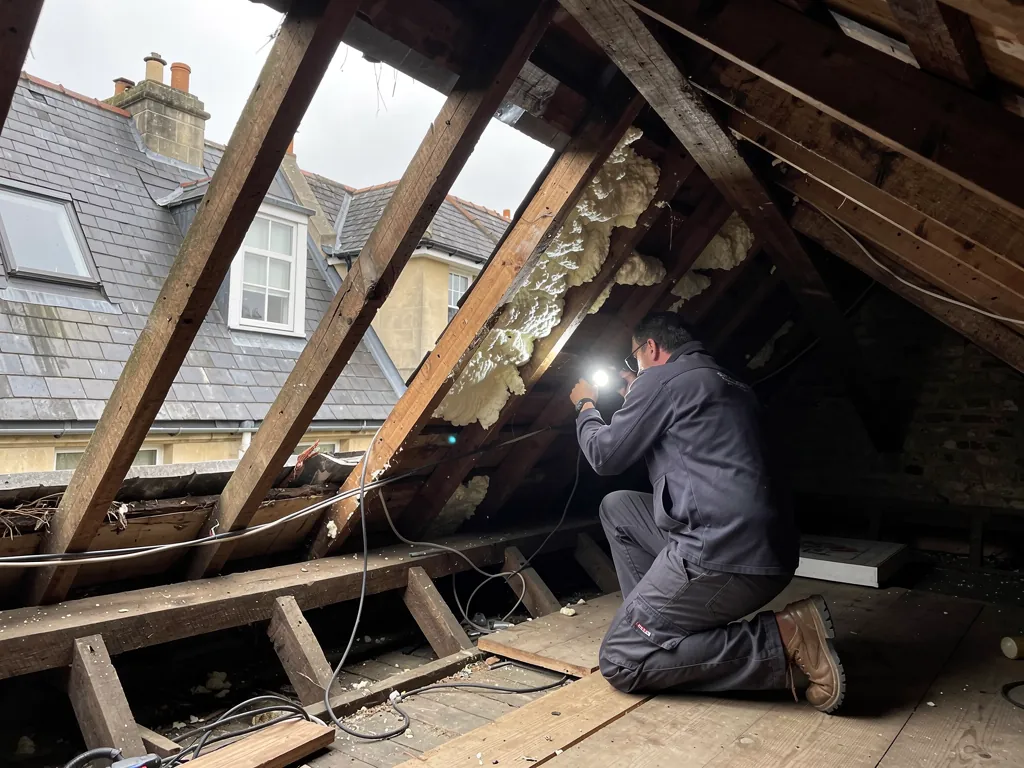
How warm, damp air ends up inside a roof
Everyday living puts moisture into the air. Cooking, bathing, drying laundry indoors and simply breathing all add water vapour, and warm air carries far more of it than cold air. That vapour drifts upwards through ceilings, round light fittings and through the loft hatch. In a traditional cold loft it reaches the chilled roof surface, and a ventilated gap lets it escape before it does harm.
Condensation happens when that warm, damp air meets a surface cold enough to make the water drop out. Think of the inside of a window on a winter morning. In a roof the cold surface can be the underlay, the reverse face of the slates or tiles, or a timber that is shaded from the heat of the house. Left alone, the film of water soaks into the rafters and battens, and over a few winters it can feed rot.
Why does foam change this?
Foam applied to the underside of the roof moves the insulation line up from the loft floor to the rafters. The loft space becomes part of the heated building, so more warm air reaches the roof structure. At the same time the foam covers the timber and seals the old ventilation paths. If the foam is vapour-resistant and the roof was already holding moisture, the water has no easy way out. The timber behind the foam can stay wet for long periods, and nobody sees it because the foam hides it.
None of this means foam always fails. It means the detailing matters: how the roof was built, how much moisture the house produces, which foam went in and how well it was applied.
What the RICS guide and the Energy Saving Trust say
The Royal Institution of Chartered Surveyors published a consumer guide on spray foam insulation in March 2023. It warns that badly fitted insulation can bring damp, with uncontrolled condensation among the results. It also says a qualified professional should run the thermal calculations and condensation risk checks before installation. If nobody did that for your foam, it is worth knowing, because that step is what would have shown whether the roof suited foam at all. The guide is on the RICS website.
The guide adds that foam in the roof can colour a valuer's view of what a home is worth. That matters when you sell, and our guide to selling a house with spray foam covers how that conversation tends to go.
What does the Energy Saving Trust add?
The Energy Saving Trust, in its roof and loft insulation advice, says that foam is sometimes offered as a cure for a failing roof without the fault being mended first, and that it advises against that. It adds that rafters and battens may decay where a leak or condensation persists, with the danger judged far lower for open-cell foam. Its page is at energysavingtrust.org.uk, and it was last updated in May 2026.
Read together, these two sources describe the same situation from different angles: moisture is the issue, the foam type affects the level of risk, and the checks belong at the start.
Open-cell and closed-cell foam behave differently
Spray foam comes in two broad types. Closed-cell foam is dense, with tiny sealed pockets of gas, and it resists the passage of water vapour. Open-cell foam has interconnected cells and a spongier feel, so vapour moves through it more freely. The Energy Saving Trust's view that the rot risk is much lower with open-cell foam fits that difference: an open-cell layer can let a damp rafter dry out, where a closed-cell layer can hold the moisture against the timber.
Neither is a guarantee. An open-cell foam over a roof that keeps leaking will still leave wet timber, and a closed-cell foam on a dry, well-built roof can sit happily. Our page on open-cell versus closed-cell foam goes through how to tell which one you have.
How can I find out which foam is in my loft?
Paperwork is the best route. A guarantee, an invoice or a data sheet from the installer should name the product. Without it, a firm squeeze with a gloved hand gives a clue: open-cell foam feels spongy and gives way, closed-cell foam feels hard and does not. A surveyor can confirm it during an assessment, which is the sensible route before anyone decides what to do.
Does thickness matter?
It does. A very thick layer of closed-cell foam on the rafters can leave the timber colder on its loft side than expected and the roof harder to dry. Thickness, product and the construction of the roof all work together, which is why a general rule is not much help for one particular loft.
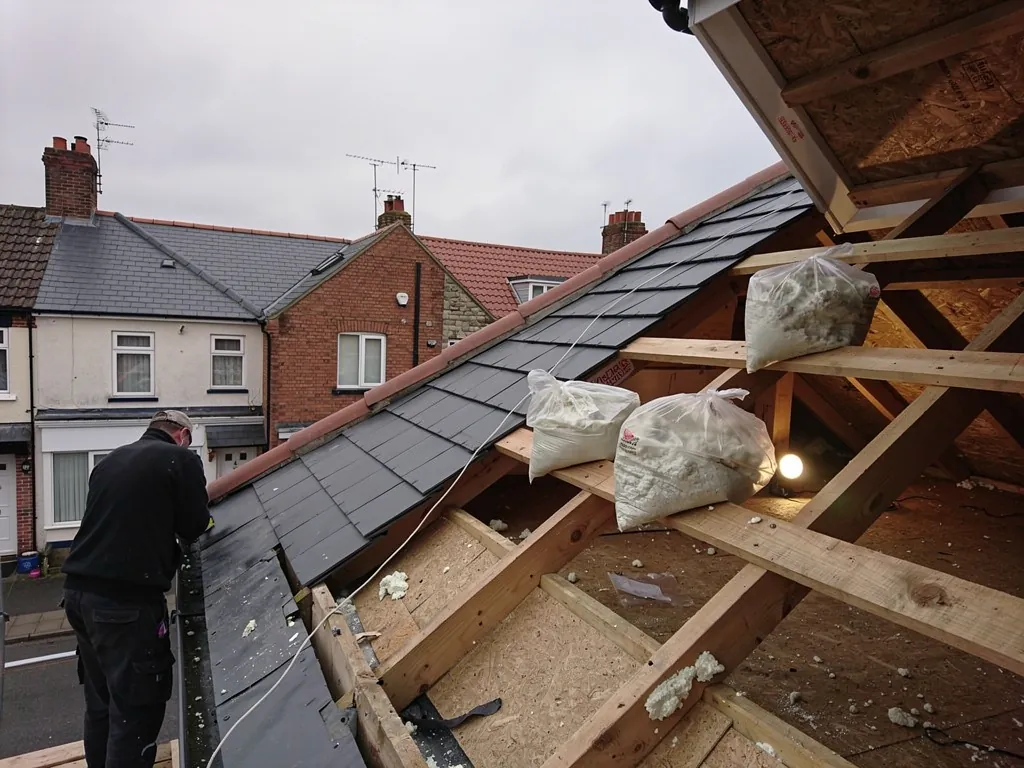
Signs worth checking from the loft hatch
You do not need to be a surveyor to spot the early signs. A torch, a dry afternoon and a firm footing on a safe part of the loft are enough to look. Keep to the joists or boards, and never step between them. If the loft is boarded over, or you are unsure about the ladder, leave this to a professional.
These are the things we look at first when someone asks us about condensation behind foam:
- Dark staining on the foam surface, or damp patches on any exposed rafters, ends of purlins or the wall plate.
- A musty, earthy smell when you open the hatch, particularly after a spell of cold, still weather.
- Rusty nail or staple heads showing at the foam edge, or rust streaks on any metal fixings.
- Water marks on the ceilings below that appear in cold, dry spells rather than after rain.
- Foam that has pulled away from the timber or split, leaving gaps where moisture can collect.
Damp that shows up in cold, dry weather points towards condensation. Damp that follows heavy rain points towards a leak. The difference tells us where to start.
Photographs help. Send a few clear pictures of the loft, the foam and any stains with a note of the date, and we can say whether a visit is worth booking. If a surveyor has already raised foam as an issue on your home, our guide to when a surveyor flags spray foam explains what the report wording means.
A hidden leak makes the problem worse
Foam is often applied beneath the slates or tiles and over the underlay. If a slate has slipped, a flashing has lifted or a ridge has loosened, rain gets in under the covering, and a normal loft would show it: a drip, a stain on a rafter, wet insulation on the floor. Foam covers that evidence. The water runs behind the foam, soaks the timber and has no clear path out.
This is why the Energy Saving Trust's warning about spraying a leaking roof matters. A leak that is not mended before foam goes on becomes a hidden, constant source of moisture. From the room below there may be nothing to see for a long time, then a brown stain on a ceiling or a soft patch where a rafter meets the wall.
Can a small leak really cause that much harm?
Timber that stays wet is the issue, not the volume of water. A trickle that soaks the same rafter for a season is enough to start decay, and the covering of foam keeps the timber from drying between storms. Our roof repairs page explains how we find and fix the cause of a leak, and with foam present that step comes before any decision about the insulation.
What if the foam sits under a flat or shallow roof?
Flat roofs and shallow pitches hold moisture more readily and dry more slowly, so the same foam carries more risk there. If your foam is under a flat roof or a garage roof, say so when you get in touch, as it changes what we look for.
How we check for trapped moisture
The first visit is an assessment, and it starts with questions. When was the foam installed, by whom, and was any report or calculation provided? Has the roof leaked since? Are there signs of damp inside the house? We then look at the foam, the roof covering from outside and the visible timbers from the loft.
Where we need numbers, a moisture meter reading on exposed timber gives a first indication of whether the wood is damp. Readings are only a guide, and a high one does not by itself prove rot. Where foam hides the timber, a surveyor may probe or cut a small inspection point to see behind it. A specialist timber surveyor is the right person to call in when rot is suspected, and we work alongside one when the job needs it. Our page on timber inspection under spray foam covers that step.
MyBuilder's spray foam removal cost guide, updated on 21 August 2026, puts an assessment at £100 to £200 as a typical national figure. What your own survey costs depends on access and how much of the roof needs looking at, and the figure we give you is a written quote that comes once the survey photographs are in.
The result of an assessment is not automatically a removal job. We would rather propose a modest repair that deals with the defect, and sometimes that means mending the leak, improving ventilation in the house and leaving the foam where it is.
What happens next if moisture is found
There are three realistic outcomes, and which one fits depends on what the assessment shows.
The first is that the foam is sound and the timber is dry. Then nothing needs to come out, though you may want a note on file for a future buyer. The second is a local fault: a leak at a flashing or valley has soaked one area. We repair the cause, deal with the wet or damaged section, and leave sound foam elsewhere. Our page on partial spray foam removal sets out when that is sensible.
The third is widespread dampness or decay behind the foam. Then removal, timber repair and re-insulation with a breathable build-up may be the right answer. Removal is slow, messy work and not a thing to take on lightly, but it is not a default. If you are planning to replace the insulation after foam comes out, re-insulating after spray foam explains the options.
Does a protected building change this?
Yes. Foam in a listed building raises consent questions on top of the moisture ones, and our guide to spray foam in listed buildings covers those. A written guarantee of ten years backs the workmanship on anything we do here.
If you want a second opinion on a loft you are unsure about, send us photographs or ring 01793 626096, and we can tell you whether a visit would be worth booking.