
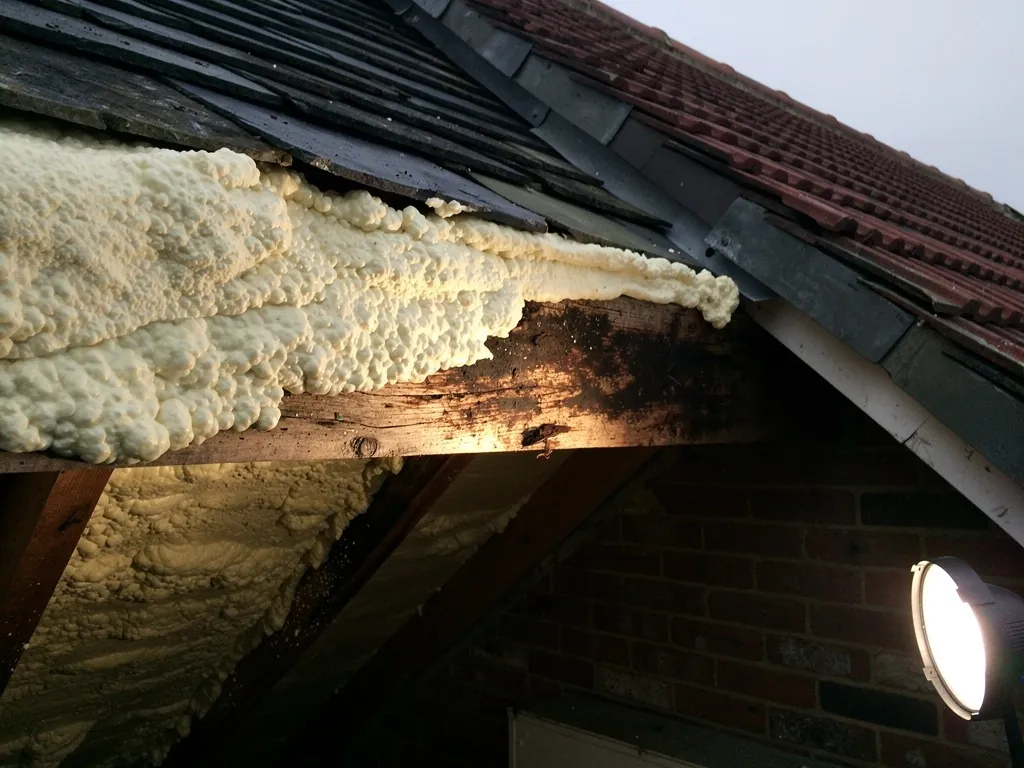
A rafter under a layer of spray foam cannot breathe, cannot be seen and cannot be tested. That is the whole problem. If water or condensation has been reaching the timber, the foam can hold it there, and by the time anything shows on a ceiling the damage may have been building for years. Equally, plenty of foamed roofs turn out to have sound timber beneath, and nobody should assume the worst without looking.
Energy Saving Trust advice, last updated on 8 May 2026, links timber rot with roofs that leak or collect condensation, and suggests open cell is the gentler option. The RICS consumer guide adds that poorly installed insulation can lead to dampness. This guide explains how rafters are inspected, what common findings mean and what is done about them. For the stripping work, see how spray foam is removed, and for the wider service, spray foam insulation removal.
Why the timbers need checking at all
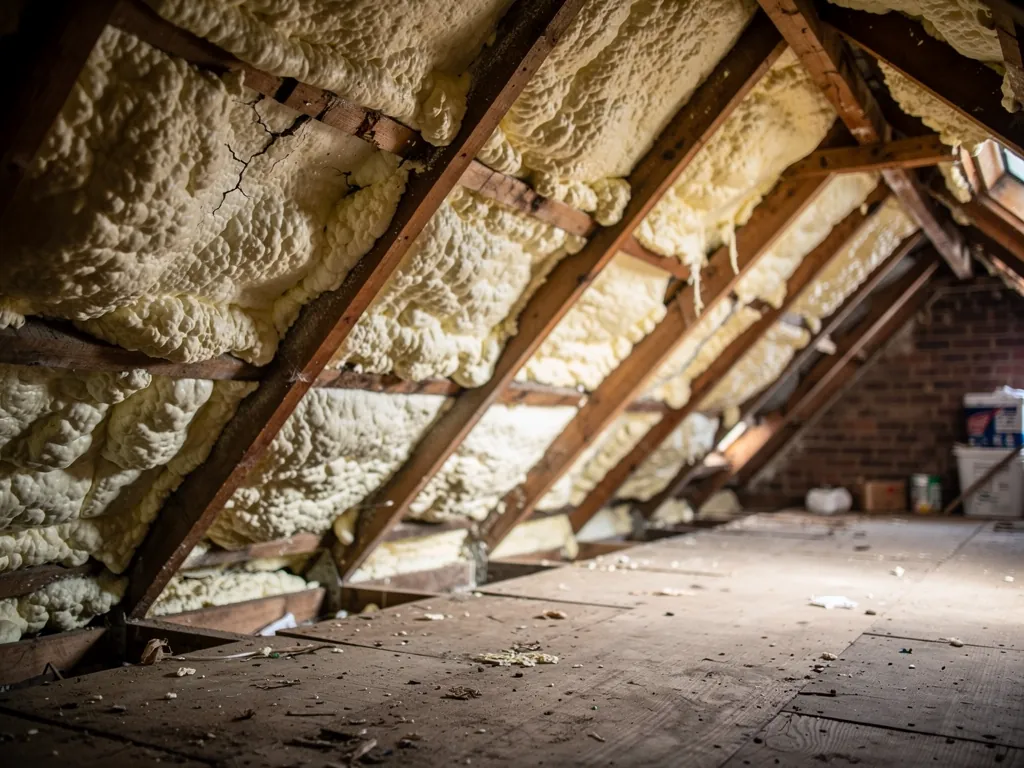
Wood in a roof is safe while it stays dry. Rot fungi need moisture that lingers in the timber, not an occasional damp spell, and they need it for long enough to establish. A well-ventilated roof lets timber dry out between wet periods. Foam that fills the space against the rafters, or seals the underside of the covering, can change that balance.
There are two ways it happens. The first is a leak: water gets in through a slipped slate, a failed flashing or a split in the underlay, and runs onto timber that is now coated in foam. Instead of dripping onto the loft floor where it would be spotted, it is trapped. The second is condensation, where warm moist air from the house reaches a cold surface inside the roof structure and turns to water. Our guide to spray foam and roof condensation explains how that comes about.
Does foam always cause damage?
No. Many foamed roofs are dry underneath, and a clear inspection is a common result. The point of checking is that nobody can tell from the loft side whether yours is one of them, and finding out costs little beside burying a problem under fresh insulation.
The age of the foam is another factor, and so is the weather the roof has been through. Foam that has been up for many winters has had longer to hold moisture against the wood than foam sprayed last year, though neither is a guarantee of damage or of safety.
Where we start: a visual look at the exposed wood
With the foam off, the first check is simply looking. Healthy timber is a fairly even colour, with a firm, slightly rough surface. Wood that has been wet shows dark staining, a patchy white or grey bloom or surface mould, especially at the lower ends of rafters near the eaves, where water collects.
Rot has recognisable signs. Wet rot tends to leave wood darkened and softened, often cracked across the grain into small cubes. Dry rot, much rarer in roofs, can give a dull, flaky look with cobweb-like strands. Neither should be diagnosed from a photograph or by guesswork, but both tell an inspector where to press harder.
Other areas are examined on the same visit: the underside of the battens, the wall plates the rafters sit on and the ends of purlins where they enter masonry. Nails that have rusted or stained the timber around them suggest moisture has been present. Small holes with powdery dust beside them point to wood-boring insects, a separate problem that needs its own treatment.
Light matters, so a bright lamp is held at a low angle across each timber, and a mirror on a handle helps with the faces that cannot be reached directly. Cobwebs, old nests and the dust of decades are brushed back where they hide detail, because a clean surface tells you more than a dirty one. Shallow cracks, tide marks and old repairs show up far better that way than under a ceiling bulb.
Probing and moisture readings
Looking only goes so far, so the next step is physical. A blunt probe, such as a bradawl or small screwdriver, is pressed into the wood at intervals. Sound timber resists and splinters only slightly; decayed timber gives way, crumbles or lifts in a long fibre. The test is done where staining suggests a problem and in places where water gathers regardless, such as the bottom third of each rafter and the junction with the wall plate.
A moisture meter then compares readings between rafters and along each one. A single reading means little on its own, because timber moisture shifts with the season and the temperature of the roof space. What matters is the pattern. Readings that run consistently higher near the eaves or beneath one slope point to a cause that can be traced, whether a leak above or condensation below.
What if the readings are high but the wood is firm?
Then the timber is damp but not decayed, which is the best moment to find out. The cause is put right, the roof is given time to dry and the wood is rechecked. Treating decay that has not happened would be an unneeded cost.
Are the middles of the rafters checked as well?
Yes, along their whole length, though less often do they show trouble. Mid-span damage usually comes from a leak above, such as a slipped tile directly over that spot, and it tends to appear as a single dark patch rather than a general softening. A run of readings taken at regular spacing makes any such patch stand out clearly against the timber around it.
Why probe the ends of the rafters?
Because water runs downhill. Moisture collects at the lowest point of a slope, so the eaves end is where trouble shows first and where a repair is hardest to hide. The photographs from this stage are attached to the written quote, so you are looking at the same timber we were.
Reading the pattern: leak, condensation or something else
Finding wet timber is only half the diagnosis, because the cure depends on the cause. The pattern of damage usually shows which one you have.
| What is found | What it usually points to |
|---|---|
| Staining in a line below a hip, valley or chimney | A leak at that detail, which the covering needs to answer |
| Damp across many rafters on a cold slope | Condensation from warm air reaching a cold surface |
| Wet ends at the eaves only | Overflowing gutters or a failed eaves detail |
| Rusted nails with dark staining around them | Long-term moisture, often from condensation on metal |
| Damp in one rafter bay only | A localised fault such as a cracked tile or flashing |
A leak is cured at the covering. Condensation is dealt with by reinsulating and ventilating the roof properly, not by treating the wood alone. Foam sprayed hard against the back of the covering may also have hidden a leak for years, so tiles or slates and the underlay are checked during the same inspection. Our answer on spray foam on the underside of tiles covers that case.
Sometimes the cause is both, and the history of the house helps. A loft conversion, a new bathroom without an extractor or a recent change to the heating can all add moisture to the air that rises into the roof, so we ask what has changed over the years before drawing a conclusion. A small leak that would have dried out in an open roof can combine with condensation under foam to keep a patch wet for months. Untangling the two is the point of the inspection.
What is done about what we find
Findings fall into rough bands, and the work follows them. Dry, firm wood means a clean-down, a ventilation check and fresh insulation, and nothing more. The quote then says exactly that.
If the surface is damp or lightly marked but sound, the cause is corrected and the wood is left to dry before insulation covers it again. Where decay affects a limited area, the soft wood may be cut back to sound timber and treated.
If a rafter has lost significant section, the options are to fix a new timber alongside it, known as sistering, or to replace the length. A damaged wall plate or purlin end is a bigger job and may involve temporary support while it is done. The target is a modest repair that returns the roof to a sound state, and we tell you when a repair is a precaution rather than a necessity.
Treatment chemicals are not a substitute for removing the moisture source. Wood that keeps getting wet will keep decaying whatever it has been sprayed with.
Will repairs add much to the total?
That depends entirely on how much is found. Where a handful of rafter ends are affected the work is modest; where whole slopes need attention it is not. The published ranges are set out in our spray foam removal cost guide.
Putting insulation back without repeating the problem
Once the timbers are sound, the roof is reinsulated, and the design is what stops the problem returning. Insulation that fills the rafter space tightly against the underlay, with no air gap and no way for moisture to escape, can set up the same conditions foam did. Whether a roof needs ventilation at the eaves, a vapour-resistant layer on the warm side or both depends on its construction and the type of underlay.
Our guide to reinsulating the loft after spray foam removal sets out the common routes. Whichever you choose, the order matters: dry timber first, then insulation, then a check on the airtightness of the ceiling below so warm air from the house does not find its way into the roof structure.
The kind of foam that was removed also shapes what you should expect from the wood underneath. Our guide on open cell and closed cell foam explains why rigid, sealed foam tends to hide more than the soft kind, and why that is a reason to look rather than a reason to fear.
Keep the inspection photographs once the job is done, filed with the quote and any invoices for repairs. Roof timbers are not something most people look at twice, and a record made while they were open is the only one you will ever have. A lender, buyer or surveyor who asks about the roof timbers can be shown what was found, which is far more persuasive than a verbal reassurance.