
When a roof claim is large, or the insurer wants a second pair of eyes, it may send a loss adjuster to the house. The title sounds formal and the visit can feel like an examination. In practice it is fact-finding. The adjuster wants to know what happened, when, what is damaged because of it and what it should cost to put right.
You will not meet one every time. Many smaller claims are settled on photographs and a repair estimate. But if a visit is booked, a little preparation changes how smoothly it goes. This guide covers what an adjuster usually checks on a roof, which evidence helps, how the cause of damage is judged, and where independent roofing advice fits. It is general information about roofs, not advice on your policy, and your insurer decides every claim. For active water, start with our immediate steps for a leaking roof, and see the wider emergency roof repairs section.
Who a loss adjuster is and why one visits
A loss adjuster investigates insurance claims. Most are appointed by the insurer, so they work for the company paying the claim, though they are expected to act fairly. Some policyholders can hire their own adjuster, but that is more usual on commercial or very large losses than on a house with a few missing tiles.
An insurer tends to send one when the damage is expensive, when the cause is unclear, or when the roof damage has caused a lot of knock-on harm indoors, such as soaked ceilings, ruined insulation and wet floors. A visit does not mean your claim is in trouble. It often means the figures are big enough to want a person on site.
What does the visit usually cover?
Questions first, then a walk round. The adjuster will ask when you noticed the problem, what the weather was doing, and whether the roof had ever leaked or been repaired before. Then they look at the damage inside and out, take their own photographs and measurements, and note anything that looks old or neglected as well as anything that looks new.
Can a roofer be there on the day?
Yes, and it is often sensible to have one who has already surveyed the roof. Someone who can describe the construction in plain terms means fewer misunderstandings about what everyone is looking at.
The questions an adjuster is trying to answer
Every roof claim comes down to a handful of questions, and they mirror the ones the Financial Ombudsman Service applies if a storm claim reaches dispute: was there genuinely a storm that day, is this the kind of harm storms produce, and did the weather do the main damage or would it probably have happened anyway?
The first is the event. Was there an insured event, such as a storm, a fallen tree, lightning or impact, on or near the date you give? Which? says many insurers lean on the ABI definition of a storm, which includes gusts of at least 55mph. That is an insurer's definition, so a gale that feels severe to you may or may not match it.
The second is the match between event and damage. A storm that lifts a ridge or throws a branch through tiles leaves a recognisable pattern. A stain that has built up on a ceiling over months does not look like a one-day event.
The third is the roof's condition beforehand. Policies commonly exclude gradual deterioration and wear and tear, so the adjuster looks for slipped slates, crumbling mortar, split felt and failed flashing that were there already.
What they check on the roof itself
An adjuster may inspect from a ladder or a drone, or rely on photographs and a roofer's report. They are not usually there to judge workmanship in detail, so what they note is the visible story of the damage.
What marks a sudden event?
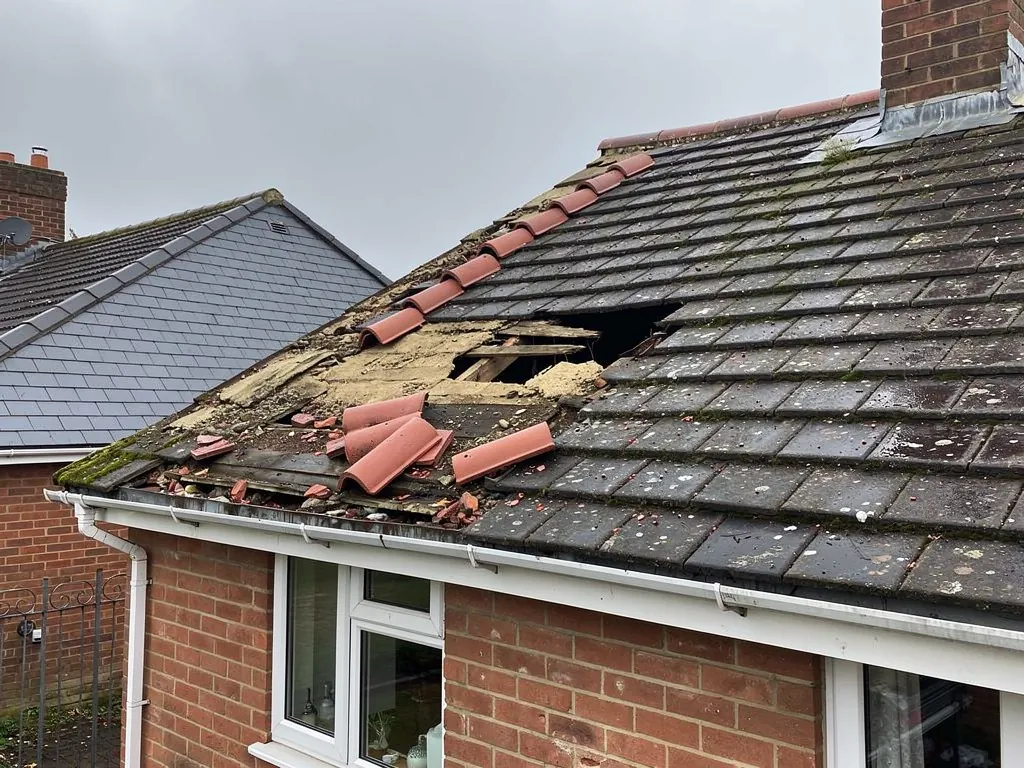
Fresh breaks look different from old ones. A tile cracked by a falling branch has clean, bright edges and often sits near debris. Slates blown off in a gust leave bright nail heads and an undisturbed gap. A lifted section of ridge often shows clean mortar faces where it was bedded. These marks point to a single recent event.
What marks long-term wear?
Thick cushions of moss, tiles with crumbling surfaces, rusted fixings, lead cracked along its bends, felt that has blistered and split, and mortar turned to sand all suggest slow decline. If those are widespread, an insurer may treat the claim as maintenance rather than damage, even if a storm happened to expose it.
What do they look for inside?
In the loft and at ceilings, the adjuster checks that the staining and wet timber match the damaged area outside. Water runs along rafters and ceiling boards before it drips, so the wet patch is often well away from the break. Survey photographs that connect the two show the route in a way a ceiling stain cannot.
Evidence that helps your case
Nobody can make a claim succeed or promise that one will pay. What you can do is make the facts easy to see. Evidence gathered early is far more useful than recollections weeks later, and it protects you whichever way the decision goes.
Photograph the damage before anything is moved or repaired, and keep every receipt. ABI advice issued for Storm Eunice in 2022 said to contact your insurer early, speak to them before arranging temporary emergency repairs, and keep receipts.
What should I gather before the visit?
- Dated photographs of the damage from the ground, from inside the loft if you can reach it safely, and of every marked ceiling or wall.
- A short written note of the date and time you noticed the problem, the weather, and what you did next.
- Receipts for temporary protection, drying equipment and anything else paid for to limit the damage.
- Invoices for earlier roof work, which show the roof was looked after.
- Your policy documents and the claim reference.
Should I tidy up first?
If a tile has shattered on the path, photograph it where it fell and keep the pieces if you can. Broken parts tell the adjuster what happened. Anything dangerous should be made safe, but photograph first and note what you moved. For more on pictures, see our guide to storm damage and insurance claims.
Temporary repairs while you wait for the visit
Adjusters rarely arrive on the day of the damage. It can be days or longer, and rain does not wait. Most policies expect reasonable steps to stop things getting worse, and the ABI advice above says to speak to your insurer first and then arrange temporary emergency repairs if needed.
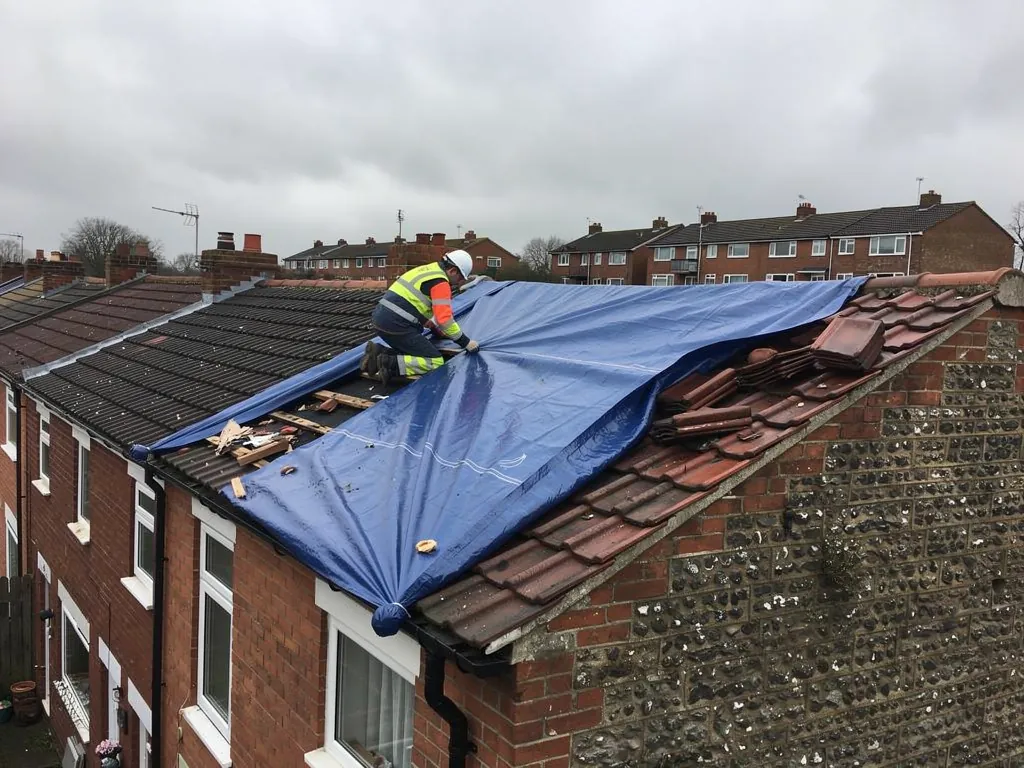
Reasonable means a small, proportionate job: a tarpaulin over a damaged slope, a few tiles pinned back, a temporary patch on a flat roof. A full re-cover is not an emergency step and should wait until the claim is agreed. If you are unsure, ask your insurer what it will accept before work begins.
What should a temporary repair record show?
When we make a roof safe, we photograph the damage before and after and write down what was done and where. That gives you a dated record for your insurer or adjuster showing that the damage was real, water was kept out, and the work stopped short of a permanent repair. Our guide to temporary roof repairs sets out what is sensible and what is not.
Leave the tarpaulin or temporary cover in place until the adjuster has seen the roof, unless they say otherwise. If it has to come off for a closer look, a roofer on site can lift and replace it so you are not doing it from a ladder.
Wear and tear, and the cause-of-damage argument
This is where claims most often become difficult. Which? warns that ordinary policies can leave out wear and tear, for instance rain getting in because a roof was poorly looked after. The Financial Ombudsman Service says insurers must show an exclusion applies, and that a complaint is unlikely to succeed where the roof was already in bad condition and the owner knew, or where the weather simply revealed a fault that was already there.
So the question is not whether a roof is old. A forty-year-old concrete tile roof can be sound, and a ten-year-old one can have been badly laid. What matters is whether the roof was fit beforehand and whether the event, not neglect, caused the damage.
Where does an independent roofer's view fit?
An adjuster assesses cause from experience and reports. A roofer who has been on the roof can describe the construction, what has failed and what the fixings look like. We do that by survey, photographing your roof as it stands. It is advice about the roof, useful alongside the claim, but it is not a ruling on the policy. Claims are not something we handle, and whether yours pays is not ours to say.
What will we put in writing?
What we can see: the covering, the damaged area, the likely mechanism and the repair needed. We do not speculate about dates we cannot verify, and we do not describe old failure as sudden damage. A fair record serves you better than an optimistic one, because an adjuster who finds a gap in the story will trust none of it.
Getting independent roofing advice and a repair quote
You can ask a roofer of your choice to look at the damage and quote for the repair, unless your policy says otherwise. Check the wording, or ask your insurer, whether it requires its own contractor or lets you choose. Some insurers manage repairs through a network, and others settle in cash against a quote.
What does the survey give me?
Photographs of the damaged areas and the covering around them, then a written quote following the survey. We recommend only as much work as cures the fault, so a modest fault gets a modest quote and a larger job is suggested only when a repair would not hold. If the adjuster questions the scope, you have a clear statement of why each part is needed.
What should I check on any quote I send?
- Does it say what is being repaired and where, in plain words?
- Are VAT and scaffolding included, and does the quote say so?
- Does it make clear which work was an emergency make-safe and which is the permanent repair?
- Are the photographs dated and clearly of your roof?
We give a written guarantee on workmanship for 10 years. It is a promise about our own work rather than an insurance product, so your insurer's decision is unaffected by it. To see what moves a price, read our guide to emergency roof repair costs.
After the visit: reports, offers and disagreements
The adjuster reports to the insurer, which decides what to offer. You may receive a scope of works, a cash figure, or a decision declining the claim in whole or part. Ask for the reasons in writing. If a figure looks low, a roofer's written quote for the same scope gives you something concrete to compare.
What if I disagree with the decision?
Complain to the insurer first. The ombudsman accepts complaints once eight weeks pass without a final reply, or sooner if the reply leaves you dissatisfied. Its storm damage guidance is the best summary of how such complaints are weighed.
How do I keep the roof protected meanwhile?
A dispute can take weeks and the roof still has to keep water out. Maintain the temporary cover, keep records of further spending, and if a second storm arrives, photograph again and tell the insurer promptly. Cold-weather damage has its own pattern, covered in our guide to snow damage to roofs, and a soaked house needs the steps in drying out after a leak.
When the permanent repair is agreed and done, we leave the site clear and remove the waste.