
A leak has two stages. First comes the water coming in, which a roofer deals with. Second comes the water left behind, which is slower, quieter and easier to get wrong. Plaster, plasterboard, mineral wool, joists and rafters all soak up water and give it back slowly. Paint over a ceiling that still holds moisture and the stain returns within weeks, often with a blister or a patch of mould.
This guide takes the rooms and materials in the order water usually reaches them: the ceiling, the loft insulation, the timbers, the wiring, and finally the walls and decoration. It assumes the source has been found and stopped. If it has not, begin with the roofing work under emergency roof repairs, because drying a room beneath an open roof is wasted effort.
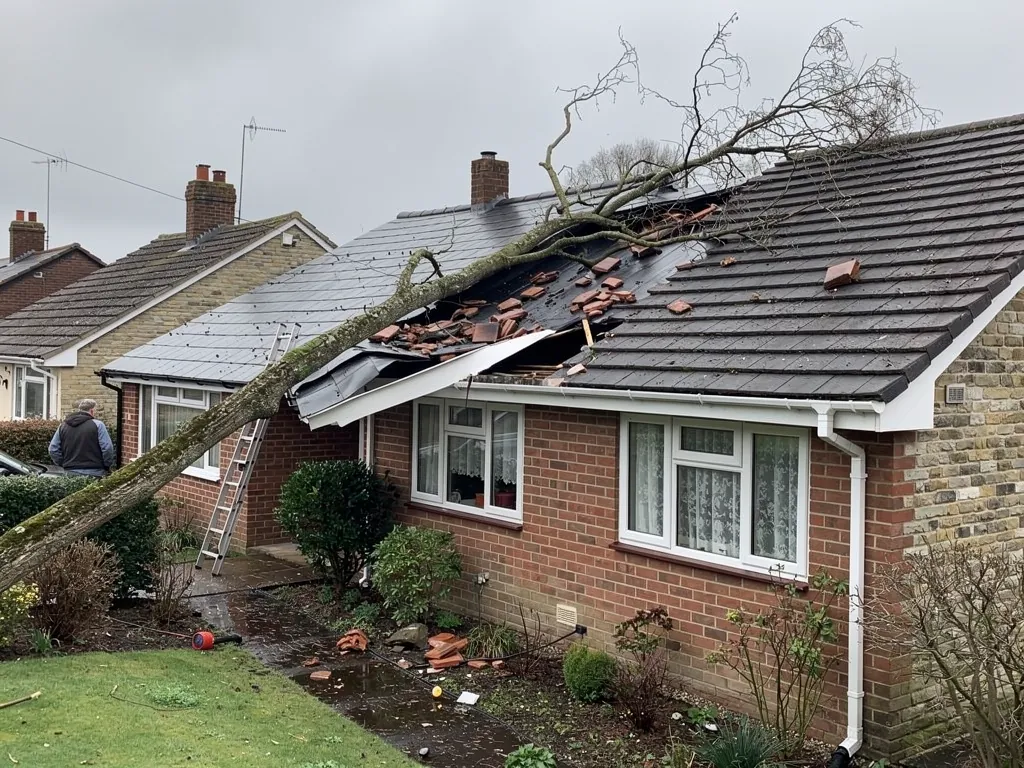
Stop the source before you start drying
Nothing dries while it is still being rewetted. Before you open windows or switch on a heater, be sure that the leak itself has been stopped, either by a permanent repair or by a temporary cover that a roofer has fitted. A bucket under a drip is a holding measure, not a fix.
It also pays to understand what kind of water you are dealing with. Rain that has run through a roof carries dust, soot, bird droppings and the dirt of the loft with it, which is why ceiling stains are brown and why a wet ceiling smells musty. Water from a gutter that overflowed behind the fascia soaks the top of a wall rather than the ceiling. Water from a flat roof can travel a long way sideways across the deck before it drops. Knowing which of these you had tells you where the damp has gone.
How do I know the leak has really stopped?
Wait for the next period of wet weather and check the same spots in the loft with a torch. Dry timbers and a dry underlay after rain are the best evidence. A roofer's survey photographs show the repaired area, and it is reasonable to ask for those pictures for your own file. Our guide to emergency roof repair cost explains how a temporary cover and a permanent repair are treated as two different pieces of work.
Wet ceilings: when to wait and when to act
A ceiling that is stained but firm can usually be dried in place. One that is bulging, sagging or dripping is heavy with water and may fall. If you see a bulge, keep people out from underneath it, move furniture away and put a bucket on a waterproof sheet below. Releasing trapped water from a bulge is something that goes wrong in unskilled hands, as a whole sheet of wet plaster can come down with it, so ask for help from a tradesperson who deals with ceilings.
Plasterboard that has been thoroughly soaked loses strength. The paper facing softens and the gypsum core crumbles. If the board has gone soft to the touch, or the joints are splitting, it is usually cheaper to cut it out and replace it than to dry it and hope. Lath and plaster ceilings, common in older Swindon houses, behave differently. They are heavy and the plaster keys onto timber laths, and water can loosen those keys so that lumps of plaster sag away from the laths even though the surface looks sound.
Can I dry a ceiling with a heater?
Gentle warmth helps, but aggressive heat does not. A fan heater pointed at a wet ceiling dries the surface fast, traps moisture behind it and can crack the plaster. Steady background warmth, open windows when it is dry outside and a dehumidifier running in the room give a slower and safer result.
Loft insulation after water ingress
Mineral wool, sheep's wool and blown insulation all behave differently when wet. Mineral wool laid between and over the joists soaks up water and sags, and while a lightly dampened section often recovers once dry, a heavily saturated one compresses and loses its insulating value. It also sits on the ceiling below and keeps feeding moisture into the plasterboard. Pull back a small area where the leak entered and look at the underside of the insulation as well as the top.
The practical test is weight and smell. If you can wring water out of a handful, or it smells of damp, it should come out and be replaced. If it is merely cool and slightly damp, it can be lifted, laid loose on the joists to dry out in a ventilated loft and put back later. Always wear gloves, a mask and eye protection when handling it, and bag wet insulation before carrying it through the house.
Should I replace all the insulation or only the wet patch?
Only the affected area, in most cases. Stopping at the wet boundary and laying new material to the same depth as the old restores the loft without paying for work that was never needed. That is the smaller-job approach we take with roofs, and it applies to insulation too. Where insulation has been squashed flat by a long leak, a roofer or an insulation installer can tell you whether it is worth keeping.
Before you refit, give the loft air. Open the loft hatch for a day or two when the weather allows, and check that the eaves are not blocked, because insulation pushed hard into the eaves can cut off the ventilation a cold roof needs. Our guide to snow damage on a roof covers a case where melt water soaks insulation from several places at once.
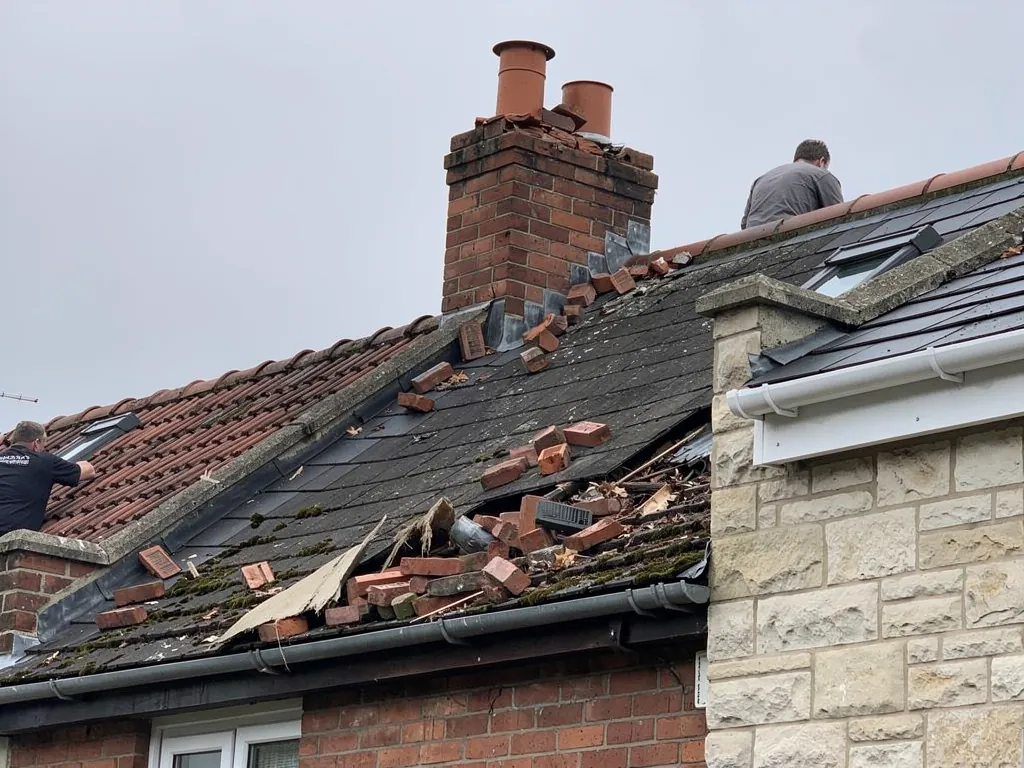
Timbers: what dampness does to rafters and joists
Softwood roof timbers can take a wetting. A joist that is soaked once and then dries thoroughly is normally fine. The trouble comes with repeated wetting, or with water that is trapped against timber with no way to evaporate, because that is what lets rot and wood-boring insects get going. The places to look are the ends of rafters where they meet the wall plate, the plate itself, the timbers around the chimney and any joist that sits directly under the leak.
A moisture meter is the right tool, and many roofers and damp surveyors carry one. The reading it gives matters less than the comparison: a joist that reads much higher than the same kind of timber a metre away is holding water. A screwdriver pressed into the wood is a rough second test. Sound timber resists the point. Rotten timber lets it sink in, and crumbles into cubes along the grain.
What if the timber looks dark but feels hard?
Dark staining is not always rot. Water leaves tide marks on timber that last years after the roof is mended. Old stains that feel hard, and that read dry on a meter, are a record of a past leak rather than a current problem. Take a photograph so you have a baseline, then check the same place after the next hard rain.
Do not treat timbers with a preservative while they are still wet. Dry them first, check them, and treat only if a surveyor advises it.
Wiring, light fittings and the consumer unit
Water finds electrics before you do. It runs along cables in the loft, drips into ceiling roses and collects in recessed light fittings, where it can sit unseen for days. A wet ceiling with a light fitting in it is a hazard, not an inconvenience.
If water has been near wiring, switch off the affected circuit at the consumer unit and leave it off. Do not use the switch for a wet room, do not touch a dripping fitting, and do not test whether a socket still works. Ask a registered electrician to check anything that was wet before it is turned back on. They will test the circuit and look at the cable, the connections and the fitting itself. Cables with damaged insulation, discoloured terminals or a persistent smell of burning need replacing, not drying.
Do downlights need special attention?
Yes. Recessed downlights sit in holes cut through the ceiling, and their transformers and connectors are often just above the plasterboard, where water pools. Take the fitting down only if you are sure the circuit is isolated, and let an electrician look at the wiring behind it. The detail of what to do when the leak and the wiring meet is in our guide to a leak near electrics.
Smoke and heat alarms fixed to a wet ceiling are worth checking as well. Moisture can set off a false alarm or, worse, cause a fault, so test each one once the ceiling is dry.
Ventilation, dehumidifiers and mould
Drying a building out is mostly a matter of moving damp air away and letting dry air in. A dehumidifier does this well in a closed room. Open a window, run the machine in the wet room with the door shut, and empty the tank regularly. Put towels or newspaper under any dripping plaster and replace them as they soak. In a cold month a dehumidifier does more good than heat alone, because warm damp air is easy to move on and cold damp air just condenses on the nearest surface.
Mould appears within days on materials that stay wet, particularly on paper-faced plasterboard, wallpaper, carpet and anything stored beneath the leak. Small patches wipe off with a mild detergent and warm water. Anything that keeps returning, covers a large area or sits in a bedroom where someone has a chest condition is best looked at properly. Throw out soaked carpet underlay, stored cardboard and soft furnishings that cannot be dried quickly.
How long does a ceiling take to dry?
No honest figure fits every house. It depends on how much water came in, the season, the ventilation and how thick the materials are. Use a moisture meter reading rather than a calendar, and look for the damp patch to stop spreading, then to fade at its edges, then to disappear. A stain that is still darker than the paint around it is usually still wet.
Before you repaint, and what to keep for your records
The temptation after a leak is to paint over the stain quickly. Resist it until two things are true: a moisture reading on the ceiling that matches the dry walls nearby, and no new growth of mould or fresh staining after a spell of wet weather. Stain-blocking primer helps to seal old brown marks, but it does nothing for damp that is still in the plaster, and it will blister if used too soon.
If the plasterboard has been cut out and replaced, allow new filler and skim to dry fully before painting. Fresh plaster needs a mist coat of thinned emulsion first, then the finishing coats. Lining paper and wallpaper that has been wetted usually has to come off, since adhesive breaks down and seams lift.
What should I keep if I might claim?
Photographs of the damage before any repair, dated notes of what you did, and receipts for drying equipment, replacement materials and any tradespeople. If an insurer sends a loss adjuster, our guide to loss adjusters and roof claims explains the role. Whether a policy responds depends on its wording and the cause, and nothing here should be read as a promise that a claim will succeed.
Lightning is another cause of unexpected damp, because a strike can crack a chimney or lift tiles that let water in a few days later. Our page on lightning damage to a roof covers what to look for.