
Winter in Wiltshire brings frost most years, and now and then snow settles properly. A well-built roof copes with both. The trouble starts where a roof was already marginal: a tile cracked a winter or two ago, a gutter sagging at a single bracket, a valley full of leaves, a flat roof that holds a puddle. Cold weather finds those places and makes them worse.
This guide explains how snow and ice actually damage a roof, which parts suffer first, what you can safely do while the cold lasts, and what to check once it breaks. It sticks to the roof and the water it carries. For the wider picture see our emergency roof repairs section. If a leak has already appeared, our guide on drying out after a leak covers the house, and the notes below cover the roof itself.
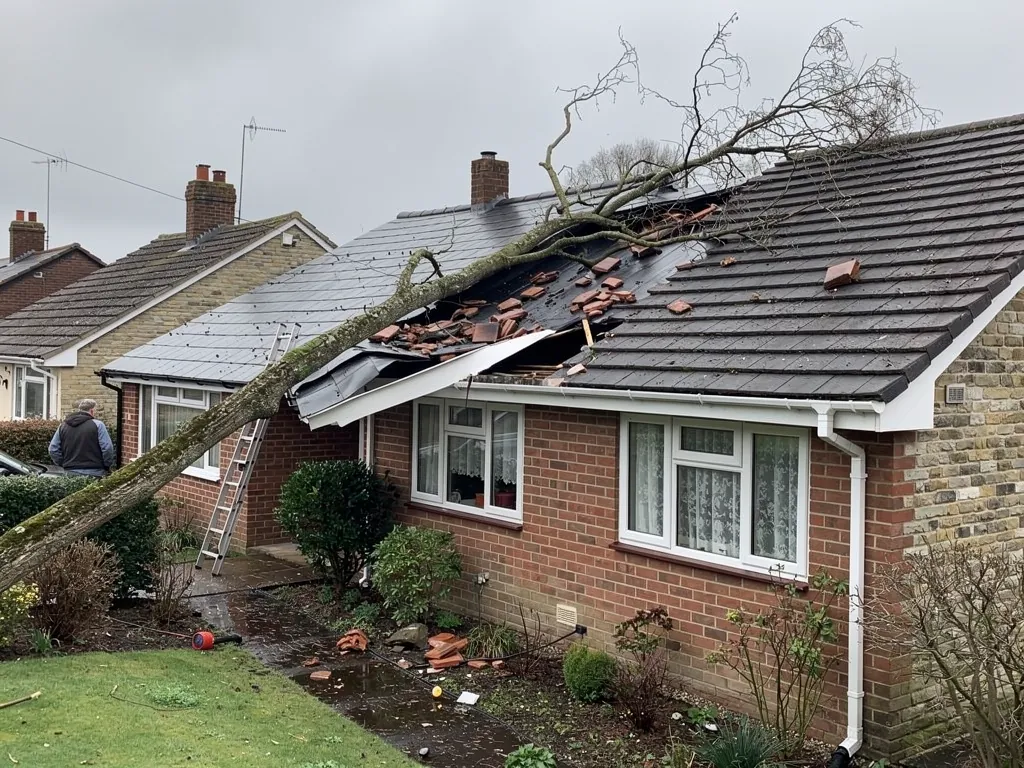
How snow load puts a roof under strain
Snow is heavier than it looks. Fresh powder is light, but snow that has been rained on, partly thawed and refrozen packs down into a dense layer that weighs far more for the same depth. A pitched roof is designed with that in mind and sheds much of it. The risk is greater where snow lies undisturbed: on low-pitched roofs, in valleys where two slopes deliver their loads to one channel, and on flat roofs.
Does snow collapse roofs in Britain?
Seldom, and well-built structures are not the concern. Where there are problems they usually involve older outbuildings, weak extension roofs or timbers that were already rotten or poorly supported. A roof deck that sags, creaks or shows a new dip across the ceiling after snowfall is telling you something is overloaded, and it needs a professional look rather than a bucket.
Why do valleys and lean-tos suffer more?
Because snow drifts and slides. A valley collects whatever lands on both slopes, and snow sliding from a high roof onto a lower lean-to or porch lands with a heavy, sudden load on structures built lighter. Flat roofs on garages and extensions hold snow where it falls, and as it melts the meltwater has little slope to carry it away, so it sits against the weakest part of the covering.
If your roof is a recent re-cover, the pitch, battens and fixings should already allow for ordinary snow. If it is an older patchwork of repairs, a survey can tell you where the weaker areas are before the next cold spell.
Ice in gutters, valleys and at the eaves
Many snow problems are water problems in disguise. When snow melts on a warmer part of the roof and the water runs down to a colder edge, it can refreeze at the gutter or along the eaves. The ice builds a dam, and the next melt has nowhere to go but back up under the lowest tiles.
What does ice do to guttering?
Gutters full of ice are heavy. A plastic gutter that was already sagging or poorly supported can pull away from the fascia, split at a joint or drop at the centre. Manufacturers' guidance says to space gutter supports at no more than 900mm apart, or no more than 600mm in areas of heavy snow, and to set the run with a slight slope to the downpipe. A run with a missing bracket or an old, brittle fixing is the most likely to give in a freeze. If the water is coming over the back of the gutter rather than through the roof, our guide to telling a gutter leak from a roof leak will help.
What about valleys?
A valley is the channel where two slopes meet. Debris in it holds water, and standing water freezes. Ice in a lead or GRP valley can lift a lapped joint, force water beneath the lining or split a weak seam. Clearing a valley is easiest before the winter, but it should be done from a safe position by someone who has the equipment to work at height.
Should I knock the ice off?
No. Hacking at ice with a spade or a hammer from a ladder damages gutters and tiles and risks a fall. Let it melt, and watch where the water goes while it does.
Frost-split tiles, slates and mortar
Freeze-thaw damage is the quiet side of cold weather. Materials take on a small amount of moisture, and when that moisture freezes it expands, widening any crack it sits in. One night does little. A winter of repeated freezing and thawing does a lot.
Which materials are affected?
Concrete and clay tiles with surface crazing or hairline cracks can break up as water freezes in them. Natural slate is dense and stands up well, but old slates can delaminate in layers along their grain, and nail sickness, where corroded fixings release slates one by one, is made worse by repeated freezing. Older mortar in ridges, verges and chimney stacks is porous and holds water, so a cold snap can blow off faces of mortar and open joints that were already tired. On traditional roofs in the Cotswold edge, stone slates were themselves made partly by frost: Cotswold District Council's guidance notes that Stonesfield slate is frost-split.
How do I spot it?
From the ground, with binoculars, look for tiles that have lost a corner or a face, slates sitting proud of their neighbours, and fragments lying in the gutter or across the drive. A scatter of small chips under a particular slope is a good clue about where to look.
Do not assume a roof is damaged just because you can see some moss or old marks. Look for fresh edges, new gaps and debris on the ground, which are the signs of a recent break.
A handful of cracked tiles is usually a repair. Widespread surface failure across a slope is a different conversation, and we say which it is at the survey.
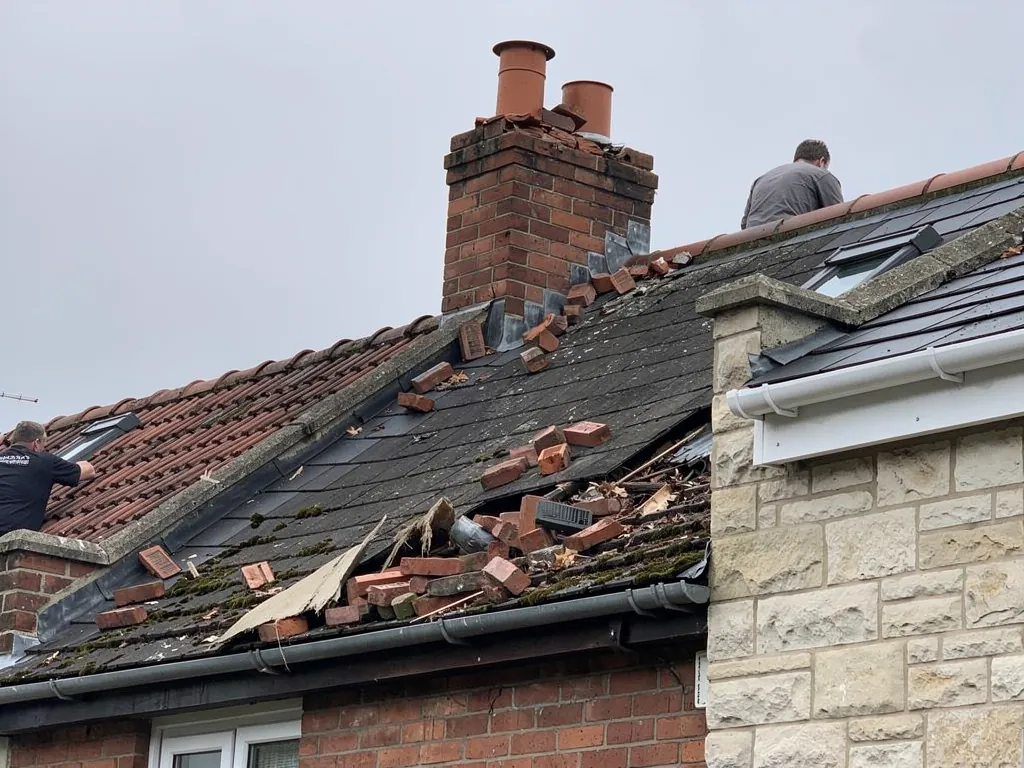
What you can safely do while the cold lasts
When the snow is lying, the safest course is usually to do less. Most of what could be done from the house, the ground or the loft is gentle and low risk. Almost everything on the roof is not.
Is it safe to clear snow from the roof?
Not from a ladder, and not by climbing up. Wet snow on a slope can slide as you move, and a cleared patch can hide ice beneath. Raking a roof from the ground with a long-handled roof rake is occasionally used for flat roofs and low extensions, but it can drag tiles and damage the covering, so use it only where you can stand clear of the snow that comes down. Nobody should stand under the eaves line, because snow can release in one sheet.
What can I do from inside?
Check the loft for drips, damp patches and any new light coming through. Keep the loft hatch closed and the house heated evenly, because warm air leaking into a cold loft melts snow from underneath and feeds ice at the eaves. Move stored items away from walls where water could run. Place buckets beneath any drip as you would for any other leak, and follow the order of actions in our guide to what to do if your roof is leaking.
What about the garden and driveway?
Park cars and move garden furniture away from the foot of steep slopes and garage roofs, where sliding snow can land with force. If tiles or slates have started to slide, keep the area under them clear and call a roofer.
Flat roofs and extension roofs in winter
Flat roofs deserve their own mention because they respond differently to snow. Snow sits on them where it falls, and as it melts the water has to drain through outlets and gutters that may be blocked or frozen. Where the covering already holds standing water, a freeze can crack felt, lift a seam or split a weak joint in a single ply membrane.
What goes wrong on a flat roof?
Ponding is the main culprit. Flat roofs are designed to drain, and guidance on finished falls puts the minimum at 1:80, with a design target of 1:40 to allow for tolerances. A roof laid close to level, or that has dropped since, holds water for days and is the first to suffer from freezing. The edges and upstands where the covering turns up against a wall are the other weak point, because that is where a crack lets meltwater straight into the structure.
Materials behave differently. Torch-on felt typically lasts 10 to 20 years according to Less, and an older felt that has already hardened is more likely to crack in a freeze. EPDM and GRP are generally more tolerant if the deck beneath is sound.
Should I clear snow from a flat roof?
Only if you can do so from the ground without stepping on the roof, and never with a metal shovel, which cuts felt and scratches membranes. If you think the roof is carrying a worrying load, say so when you call a roofer. Our guide to emergency flat roof leaks covers what a make-safe involves.
Checks to make once the thaw arrives
Thaw is when the damage shows itself. Water that was held as ice or snow starts to move, and any weak point will let it in. The first day or two of a thaw is the time to look carefully.
What should I check from the ground?
- Gutters and downpipes for sagging, splits or gaps at joints, and for water running down the wall.
- Tiles, slates and ridge for slipped, cracked or missing pieces, and for debris lying below.
- The area around chimneys, where flashings can lift and mortar can crumble after a freeze.
- Fascias and soffits for gaps and cracks where water could get behind them.
- Flat roofs for pools, bubbles, splits or ice still lying on the surface.
What should I check inside?
Look at the top-floor ceilings and the loft. New stains, a musty smell, damp insulation, or drips after the thaw all suggest water is getting in. A stain that looks dry now may only be dry because it has not rained since. Mark its edge with a pencil and look again after the next wet day, and photograph it with the date.
When should I call a roofer?
If you can see missing or broken coverings, if a gutter has pulled away, or if water is coming in. Describe what you can see and send photographs, and tell us if the roof has leaked before. Water is stopped first, then the permanent repair is explained and quoted in writing after the survey.
Repair, cost and the insurance question
Many snow and frost problems turn out to be small. A few replaced tiles, a refixed gutter section, a re-bedded ridge or a patched flat roof deals with most of what a cold spell causes. Our advice is the modest repair where a modest repair will hold, and we tell you if one would only be a stopgap.
What moves the cost is the access needed, the type of covering, the number of areas affected and whether scaffolding or a tower is needed at height. When comparing quotes, find out if the figure has any VAT or scaffolding folded into it. For typical national ranges and what drives them, see our guide to emergency roof repair costs.
Is snow damage covered by insurance?
That turns on your policy wording and the cause. Cover for snow, ice and frost varies, and policies commonly exclude wear and tear and gradual deterioration. The Financial Ombudsman Service asks if heavy snow caused the main harm or merely revealed a maintenance fault. Contact your insurer first, keep photographs and receipts, and read our guide to storm damage and insurance claims. We do not handle claims and cannot say whether yours will be paid.
Workmanship carries a written 10-year guarantee, and nothing is left behind on site when we finish. Keep the survey photographs with your records.