The short answer
Care and patience. Stonesfield slate is heavy, pegged to its battens and graded by size up the slope, so it is repaired stone by stone. The failures are usually in the pegs, battens and lead details rather than the slates, and a good survey from the loft will show which.
Look along the streets around the green and you can pick out the oldest roofs by their surface: thick, uneven, grey-brown stones, large near the gutter and small near the ridge. The conservation area appraisal says that many of the oldest buildings still have Stonesfield slate roofs laid in diminishing courses.
Q1.1How is a Stonesfield slate roof put together?
Cotswold District Council's stone slate guidance lists two oolitic limestones for these roofs, Forest Marble and Stonesfield Slate, and Stonesfield Slate is the one that was split by frost. A wooden peg holds every stone over its batten, with the biggest stones doubled up beside the gutter, and the smallest right at the top. That pattern is why these roofs shed water so well, and why a repair has to follow it.
Q1.2What usually goes wrong with one?
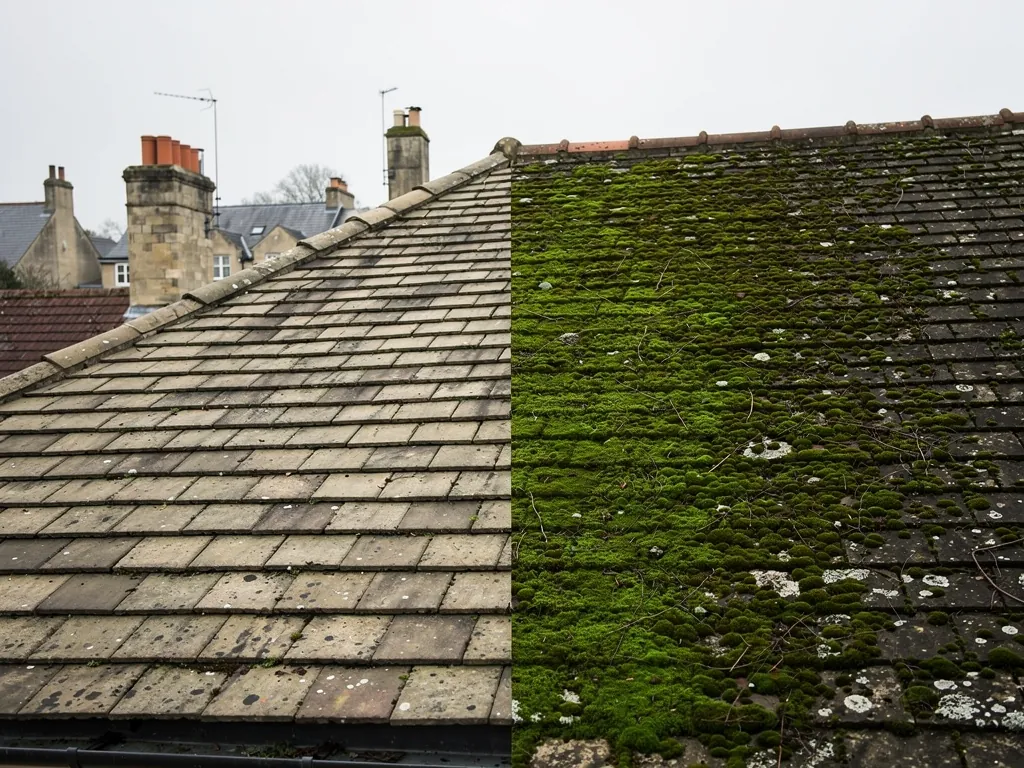
Pegs rot and stones slip. Moss packs into the joints between courses and keeps the timber behind it wet. Valleys and chimney flashings, usually lead, fatigue and crack. A roof can lose a few stones every winter without leaking, then leak badly the season a whole row of pegs gives way, so a loft inspection after a storm is worth the climb.
Q1.3Why repair the stones instead of replacing them?
The Cotswold stone slate guidance published by Cotswold District Council says that scraping the moss off a stone roof every year could double its life, and warns against swapping limestone for sandstone. We lift the affected stones, renew the pegs, replace rotten battens, and re-hang the stones in their courses. Our Cotswold stone roofing page sets out the method step by step.
Lead needs the same patience. Where a stack meets the stone slates, the flashing has to be dressed into the courses, not stuck over them, and that is a skilled job of folding and fitting. A properly fitted lead apron keeps the roof dry for decades.
Before a single stone is moved, the slope is photographed, so the finished roof can be checked against the one you started with. Stones that are cracked beyond use are set aside, and any replacement is matched in type, so limestone is never mixed with a different rock.