The short answer
The oldest roofs in South Hinksey sit around a Grade II* listed church that is thirteenth century with Norman origins, built of limestone rubble. Nobody can read a roof's covering or structure from the lane, so the survey records every slope with photographs before we say what the repair should be.
A village that appears in records from the late seventh century has seen a great many roofs come and go. The church is the building where the age is written down, and the houses around it share the same long habit of being patched, extended and patched again. The result is rarely tidy, and that is exactly why an old roof needs looking at closely before a price is given.
Q1.1Why does the age of the walls matter to a roofer?
Thick masonry like the limestone rubble of St Laurence's moves slowly and holds moisture for a long time. A roof that sits on walls like that needs its wall plates, eaves and abutments inspected, because water getting into the top of a rubble wall may show up as damp lower down the house. We look at where the roof meets the stonework before we look at the tiles.
Q1.2Does a worn roof beside the church have to come off completely?
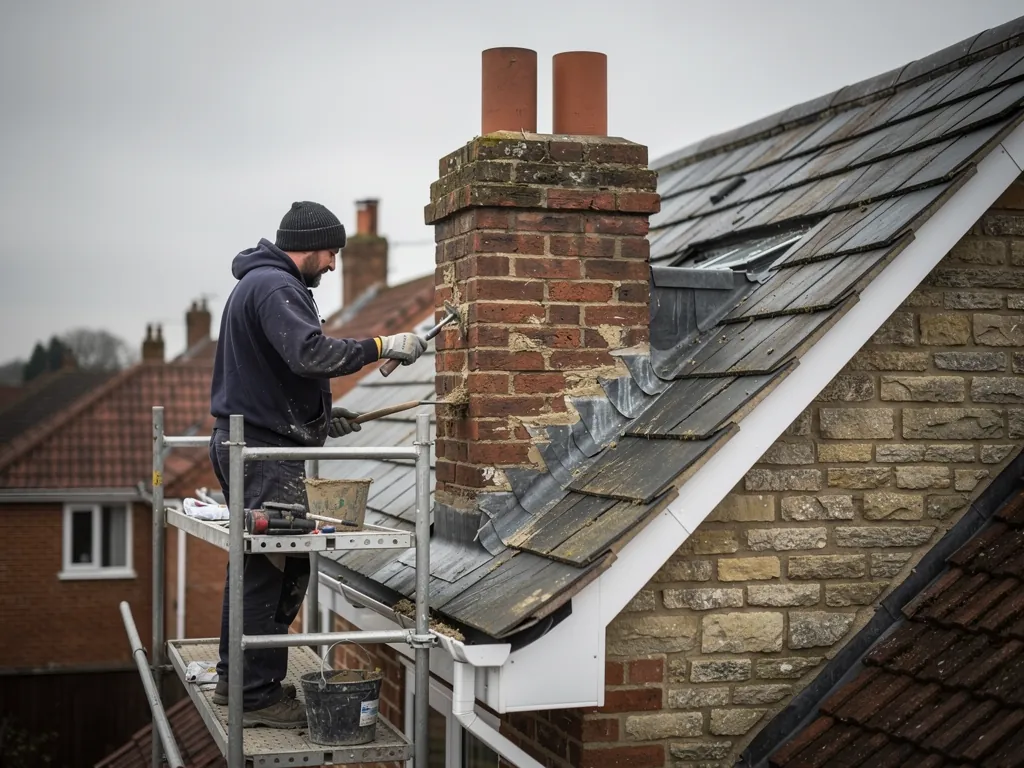
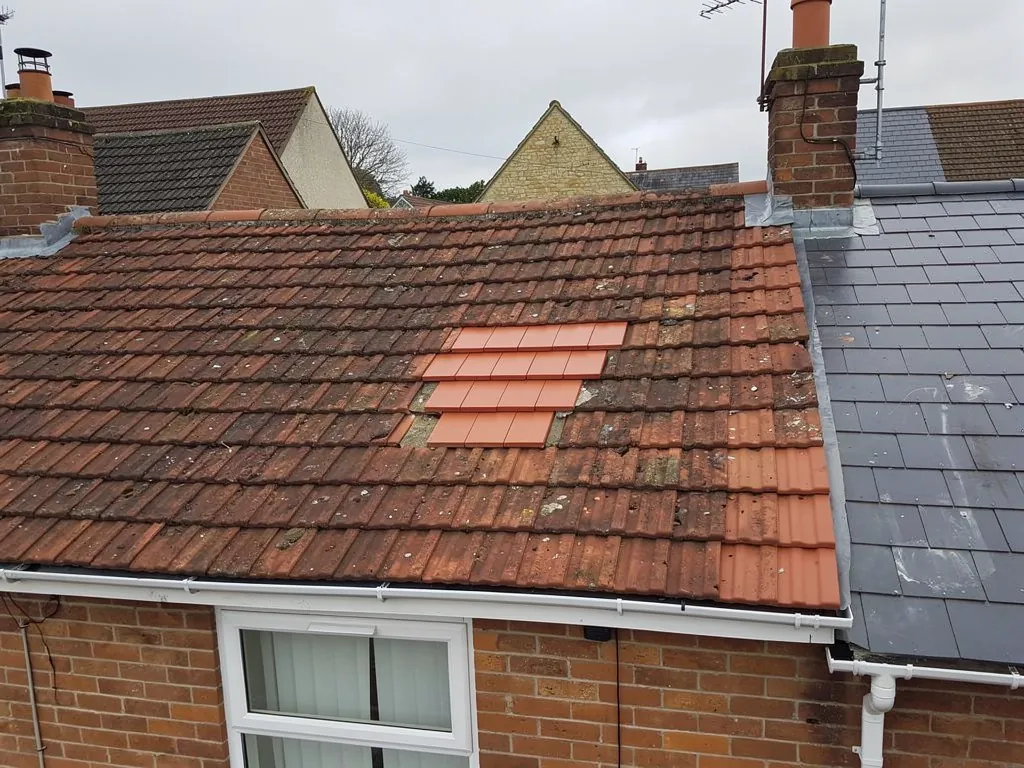
Rarely. A slipped or cracked tile can be swapped for a match, a failed hip or ridge refixed, and a lead flashing renewed at a chimney without disturbing the slope around it. Stripping is the right answer when battens, felt and fixings are all worn out at the same time, and then the better question is whether the existing covering can be sorted and re-laid. The roof repairs service page explains where we draw the line between mending a roof and covering it afresh.
Q1.3Would repairs be different if the house were a listed one?
A listed home cannot have its character altered without permission, and both the roofing material and the way it is laid come under that. We begin with like for like, put back as it came off. If you suspect your house might be listed, ask the district council to confirm in writing before any price is agreed, and we will go through the reply with you.
Where a chimney stack has leaned or lost its pointing, we deal with the stack and its flashing in the same visit, so the scaffold only goes up once.