The short answer
Patient diagnosis and as little disturbance as possible. Potterne's oldest buildings include a Grade I timber-framed house and a Grade I church, and roofs like those are repaired by tracing the real fault, keeping original materials, and avoiding any change that alters how the building looks.
The Bishops of Salisbury held Potterne, and Domesday records the estate with six mills. Two buildings stand out from that long history: Porch House, a timber-framed house of about 1480, and St Mary's church, a thirteenth-century building of rubble stone with ashlar on the upper tower. Both are listed at Grade I, the highest category.
Q1.1How do you read an old Potterne roof?
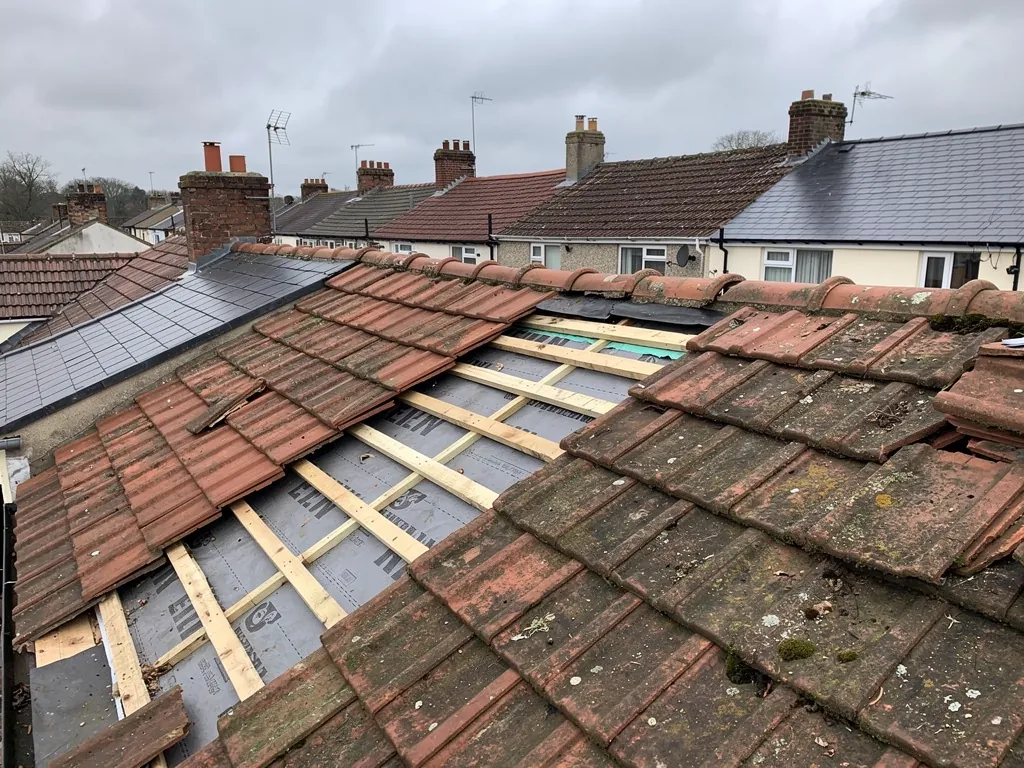
An old roof often looks worse than it is. Sagging lines, uneven courses and a patchwork of repairs are common on buildings that have stood for centuries, and they do not always mean the roof is failing. What matters is whether water gets through. We look for slipped tiles, open joints around chimneys, rotten battens and light showing through where it should not.
Q1.2How much of a Grade I-era roof can be kept?
On a historic building, new for old is the last resort. Tiles that are still good come off, get sorted by condition, and go back on. Rotten timber is replaced piece by piece rather than wholesale. Lead is renewed in a code that suits the detail, and the finished roof should look as though it has always been there. Our roof repairs page sets out when a repair is enough, and our lead roofing page covers the metal details.
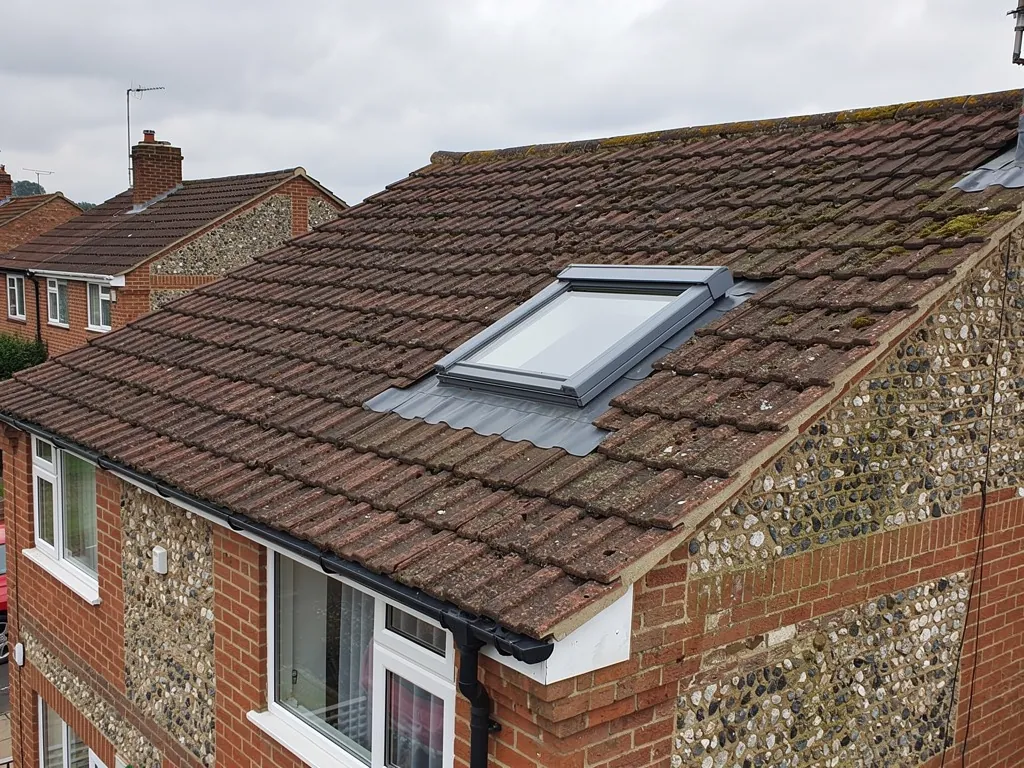
Everyday houses in the village get the same treatment on a smaller scale. A quick fix that hides a fault for one winter is not what we aim for. Instead we report the cause, show you photographs of the problem and put the cost of dealing with it into the written quote.
Roofs on older houses also ask for a different pace of work. Weather decides the order of things, scaffold has to go up where an old wall can bear it, and some repairs have to wait for dry conditions so that timber and mortar are not set back by a wet week. We plan each job around the building, and we say what the programme looks like when the quote arrives.
If your house is old, say so when you contact us, and mention anything you already know about its history. Details such as a previous owner's repair, a change of covering decades ago or a patched-in extension help us plan the survey before we arrive.