Row of stone cottages with steep stone slate roofs

Roofers in Figheldean

Pitched roofs, chimneys, lead and flat roofs in the Avon valley village at the edge of Salisbury Plain, from the flint church and old farm ranges to the twentieth-century homes built around the military land.

Figheldean's roofs, from thatch to estate

Thatched cottage beside a brick extension
Thatch and timber frame

The Victoria County History records timber, stone rubble and brick as the usual building materials in the parish, and notes that many of the surviving houses retain thatched roofs. Ablington has timber-framed thatched houses from the seventeenth century. Re-thatching is skilled work in its own right, and the straw itself is a thatcher's responsibility. Our part in these houses is everything around the thatch: chimney stacks and their lead, tiled or slated porches and extensions, outbuildings, gutters and the junctions where a thatched roof meets a different covering. Those junctions are where leaks often start, and a clear photograph of one saves a lot of guessing. Neighbouring roofs of different ages and materials meet there, each moving at its own rate through the seasons.

Flint and brick farm range with tiled roof
Flint, chalk and brick farm buildings

St Michael's church is built of flint rubble and ashlar, with a core from the early twelfth century and a west tower added later in that same century. Knighton Farm has ranges of brick and chalk, and the six riverside settlements of the parish, Figheldean, Ablington, Alton, Choulston, Knighton and Syrencot, each have older farm and mill buildings. Long ranges with low eaves and shallow pitches are typical of this kind of building, and they put particular demands on gutters, valleys and the fixings of whatever tile or slate has been laid on them.

Semi-detached houses with tiled roofs
Twentieth-century building around the camps

The War Department bought most of the parish around 1898. Netheravon airfield followed in 1912 and 1913, partly in the parish, and the Army Air Corps headquarters arrived there in 1966. A Roman Catholic church opened in Kerby Avenue around 1934, mainly for military personnel. Those years brought housing and buildings of their own, often with concrete or clay tiles, low-pitched extensions and flat-roofed garages. The roof faults on that housing are the familiar ones: failed ridge bedding, brittle felt under the tiles, cracked tiles, and flat roofs that are well past their best.

Avon valley, Plain above

Map showing Figheldean and central Swindon. 29 road miles south of central Swindon.

Distance
29 road miles south of central Swindon
Council
Wiltshire Council
Council
Wiltshire Council
Conservation area
Figheldean and Ablington
Setting
The River Avon valley on Upper Chalk, at the edge of Salisbury Plain

Figheldean roof questions

Do you work on houses that have thatch in Figheldean?

We work on everything around it: chimneys, lead, slated or tiled roofs, extensions, outbuildings and gutters. The thatch itself is a thatcher's job, and we point you to that trade.

Is the Avon valley village a conservation area?

Wiltshire Council has a Figheldean and Ablington conservation area. Before you alter how a roof looks, give the planning officers your address and tell them if the house is listed.

Who deals with the roof of an ex-service house here?

It depends on who owns it. Owner-occupiers deal with us directly, and the quote is addressed to them. If you rent, start with your landlord, and we can supply the survey photographs for them to read.

Q1

What kinds of roof line the Avon at Figheldean?

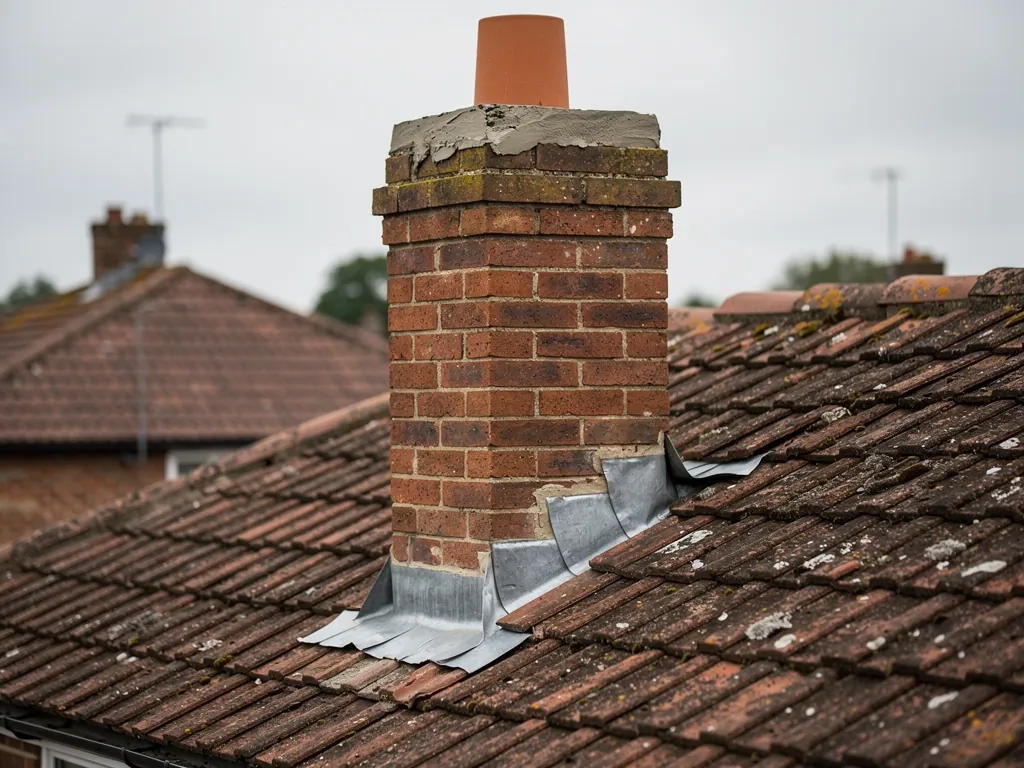
Brick chimney stack with new lead flashing on a clay tile roof
Weathered brick chimney stack with eroded joints and cracked pot

The short answer

A varied mix that follows the village's history: thatch on some older houses, clay tile and slate on farm ranges and cottages, and concrete or clay tile on twentieth-century housing. Flint, chalk and brick walls beneath them mean the roofs often sit on thick, soft masonry that needs gentle handling.

The settlements along this stretch of the Avon have grown up over a thousand years, and their buildings show it. Within a few hundred metres you can pass a church with a twelfth-century core, a seventeenth-century timber-framed cottage and a row of twentieth-century homes. Each wants a different eye.

Why does the wall material matter to the roof?

Flint, chalk and old brick are soft or irregular, so roof edges and chimney stacks bed into them differently from the way they do in modern blockwork. Verges and flashings have to be cut into the wall carefully, and the mortar used must suit the masonry. A hard, strong cement mix can crack soft brick and push water into the very joint it was meant to seal, which is why the choice of mortar is part of the roof repair and not an afterthought.

What can go wrong where thatch meets another roof?

The junction between a thatched roof and a tiled or slated one is a weak spot. Lead is dressed against the thatch edge, and as the thatch settles and is renewed, that lead can lift or tear. A leak there may look like a thatch fault when the real cause is the lead. We examine it and report what we find, so the right trade is called in. Our lead roofing page explains the codes and the methods.

How are low-pitched farm roofs treated?

Old farm ranges often have shallow pitches, because the buildings were roofed for what they stored and not for show. Whether a given tile or slate suits a low slope depends on its size and its headlap, the overlap between one course and the next, so we check the pitch before we promise any repair will last. Where a covering is wrong for the slope, adding more fixings will not cure it. Our pitched roofing page covers the choices.

Q2

Can you work beside thatch in Figheldean?

The answer

Yes, on the parts of the house that are not thatched. Chimney stacks, flashings, tiled extensions, outbuildings and rainwater goods are all within what we do. Work on the straw belongs to a thatcher, and if a fault turns out to lie there, we tell you whom to call.

A thatched house is rarely thatched all over. There is usually a chimney that rises through the ridge, an extension added in a later century, a porch, a store, and gutters on the lower roofs. Every one of those has a roof or a junction that needs ordinary maintenance, and they often get overlooked because the thatch takes the attention.

What makes a chimney through thatch so particular?

A stack that is sound, with good flaunching, a firm lead tray and clear flues, gives you far fewer worries than one that is cracked. We repoint, renew the lead and resecure the pots where needed, and we photograph the result so you can see it. A stack that stands in the open on a ridge takes rain from every direction, so the pointing and the lead are usually the first things to fail. Our chimney repairs page explains the choice between a repair and a rebuild.

What do you do when a leak could be thatch or lead?

We work inwards from the stain, checking the loft and then the roof outside, until we find where the water gets in. If the fault is in the thatch, we hand that to the right trade rather than guess. If it is in the lead, a gutter or a tile, we deal with it ourselves, and the survey photographs show you which it was.

Does scaffolding go against thatch?

It can be done safely with the right boards and padding, so the thatch is not crushed or snagged. We plan that at the survey, because scaffold is a real cost on a tall house and worth settling before the written quote is prepared.

Where a job spans both trades, we are happy to work around the thatcher's programme so that no roof is left open to the weather for longer than it must be.


Where we fit

Thatch belongs to the thatcher; every other roof and junction on the house is ours.

Q3

Does Figheldean's conservation area affect re-roofing?

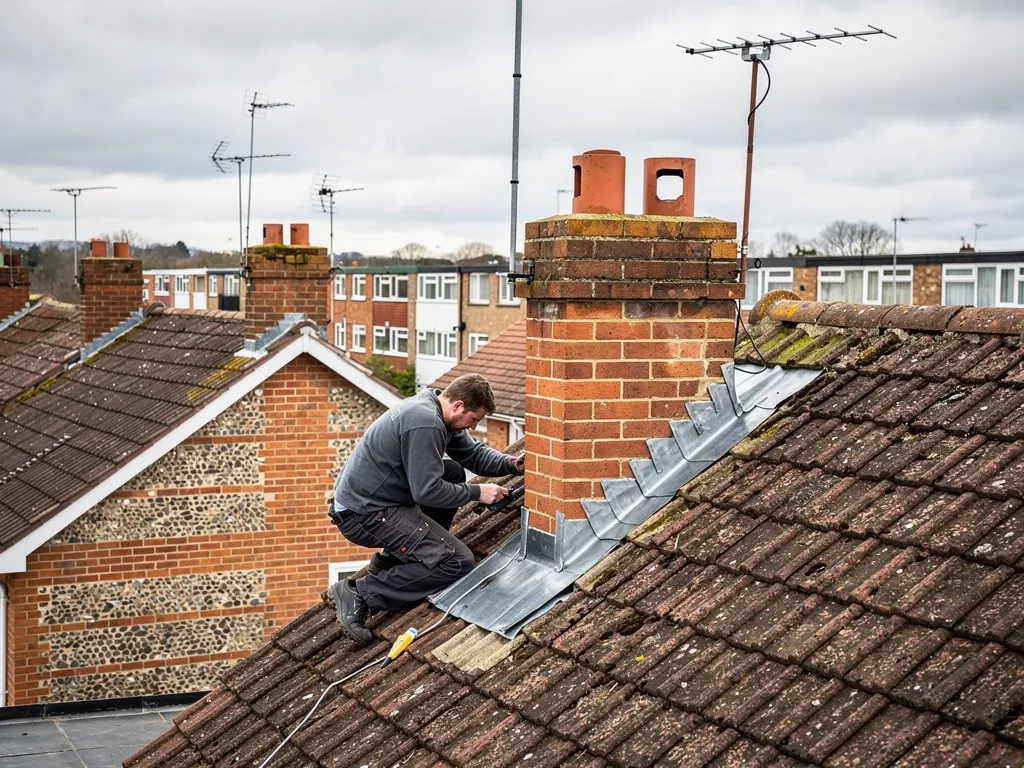
Roofer repointing a stone chimney stack above lead flashing
Roofer dressing stepped lead flashing around a brick chimney

The short answer

Only when the look of a roof changes. Wiltshire Council has a Figheldean and Ablington conservation area, and its planning team holds the boundary. A mend in the same materials seldom troubles the planners. A listed house, or a plan to change the covering, is the moment to talk to the council.

Conservation areas control change, not maintenance. A tile replaced with the same tile, a flashing renewed in lead and a gutter swapped like for like leave the street as it was. The question starts when something looks different afterwards, and that is when a conversation with the council pays off.

What counts as a visible change?

Swapping slate for tile, clay for concrete, or thatch for anything else would be a visible change. A taller chimney would qualify, and so would roof windows on the slope facing the lane. Speak to Wiltshire Council's planning team before committing to one of these. Our roof window planning page explains how to approach the question.

Is the church roof a matter for you?

St Michael's has an early twelfth-century core and was restored in 1858 to 1860. A church of this kind that is still a place of Church of England worship is covered by the ecclesiastical exemption, and its roofs go through the Church's faculty system. That is separate from the houses around it, which follow the ordinary rules. A cottage next to the churchyard is treated as any other house would be, unless it is itself listed.

When does re-roofing need building control?

On the Planning Portal's figures, building control approval is not normally required when under 25 per cent of the total building envelope and under 50 per cent of the roof is touched. It is required for a new covering that adds 15 per cent or more to the weight on the roof. Wiltshire Council's building control team, or a registered building control approver, deals with it. At the survey we explain which applies to you, and we file the notification where one is due.

MythA thatched village means every roof repair needs the council's permission.

FactMatching repairs do not; planning concerns itself with changes to how a roof looks.

Roofing services in Figheldean

Questions from the Avon valley lanes

Why do old mill and farm buildings by the Avon leak at their gutters?

Long, low roofs funnel a great deal of rain into a few gutters, and one blocked outlet or sagging run sends the overflow down the wall in a sheet. We clear and re-fix the gutters, check the fall to each outlet, and look at the wall behind for damp. Often the roof needs nothing more once the gutter is right, and then that is the job we quote. Tall farm ranges can need a tower or scaffold just to reach the gutter, and that goes in the quote too, along with VAT, so it is worth checking any figure you are given includes both.

Is a flint or chalk cottage wall safe under roof repairs?

Yes, if the mortar suits the wall and the work is done with care. Hard cement does harm to soft masonry, so we bed and point in a mix that suits the wall. Flashings are cut into the joints, not into the flint itself, wherever the wall allows it. Photographs before and after show what was done, and the written quote names the mortar and fixings so nothing is left to chance on the day.

Do you cover Ablington, Knighton and the other settlements along the river?

Yes. They sit well within our reach from Swindon, as do the rest of the Avon valley villages. To check a particular address, ring 01793 626096 or message us on WhatsApp, or look through the areas page, which names every place we reach.

Are flat roofs on former service houses worth repairing?

Often, if the deck underneath is dry and firm to walk on. A new EPDM or GRP covering, which is a rubber sheet or fibreglass, can be laid over a sound deck. A soft deck needs replacing first. Our 10-year workmanship guarantee, in writing, covers what we do, and the site is left clear.

Ask us about your roof

Tell us what’s happening and we’ll call you back.

  • Photos of what we find
  • A written quote
  • 10-year workmanship guarantee

Or call 01793 626096

Call Get a quote