Brick end-of-terrace gable beside a limestone house, slate roofs

Roofers in Enford

Slipped tiles, leaking valleys, moss-heavy slopes and tired outbuilding roofs in Enford and the hamlets strung along the upper Avon on the north-east edge of Salisbury Plain.

Enford's roofs, from church to valley floor

Cottage roofs along a chalk river valley
Nine settlements along the Avon

Enford is not one compact village but a parish of nine small settlements on both banks of the headwaters of the River Avon, in the north-east corner of Salisbury Plain. That layout shapes the roofing work. A cottage by the river sits low and often in shade, where slopes stay damp and moss builds up on the north-facing side. A house higher up the valley side catches more sun and more wind. Between them the same parish gives you very different roofs to look after, and the same repair does not suit them all. We read every slope against its own setting: its shade, its aspect and the trees beside it, before we propose anything.

Historic church roof beside a brick manor front
The church and the Priory

All Saints' church is Grade II* listed, with work from the twelfth century, a thirteenth-century chancel and fourteenth and fifteenth-century additions; its spire fell in 1817. Chisenbury Priory, also Grade II*, was built in the later seventeenth century and given a brick front in the eighteenth. Buildings at this level of listing carry strict expectations. Their roofs have been altered across the centuries, and any further change is judged against what is left of the original fabric. Most of the village's older houses will not be listed at this grade, yet the same care applies: keep what is sound, match what must be replaced, and record what comes off.

Concrete tiles and a flat garage roof
Twentieth-century homes and outbuildings

When Sir Edmund Antrobus sold the manor to the War Office in 1899, the parish began a long life alongside military land on the plain. Houses, bungalows and farm buildings from the twentieth century followed, and with them the roofs we meet most often away from the old core: machine-made tiles, felt-covered garages, flat-roofed extensions, and sheet-clad barns and sheds. Cement sheeting on a building from before 2000 should be treated as asbestos until tested, as the HSE advises, which changes how we plan the job. Concrete tile roofs of this period have their own faults, chiefly slipped tiles, split ridge bedding and gutters packed with leaf litter from the valley's trees.

Along the headwaters of the Avon

Map showing Enford and central Swindon. 26 road miles south of central Swindon.

Distance
26 road miles south of central Swindon
Council
Wiltshire Council
Council
Wiltshire Council
Conservation area
Enford Conservation Area, with an appraisal
Setting
A chalk river-valley village on the north-east edge of Salisbury Plain

Enford roof questions

Is moss on a valley-floor roof a real problem?

A thick mat of moss keeps tiles wet and, once it drops, clogs gutters and valley channels. Light growth is cosmetic, but we look at what lies beneath it before suggesting any clean.

Can you reach hamlets spread along the Avon?

Yes. Each cluster has its own lanes and access, so we note how a ladder, scaffold or van will get close before we quote.

Does All Saints' listing affect the houses around it?

Not directly. The listing covers the church, but neighbouring houses may be listed or in the conservation area in their own right, which Wiltshire Council can confirm.

Q1

What are Enford's roofs like along the river?

Blocked gutter full of leaves overflowing down a brick wall
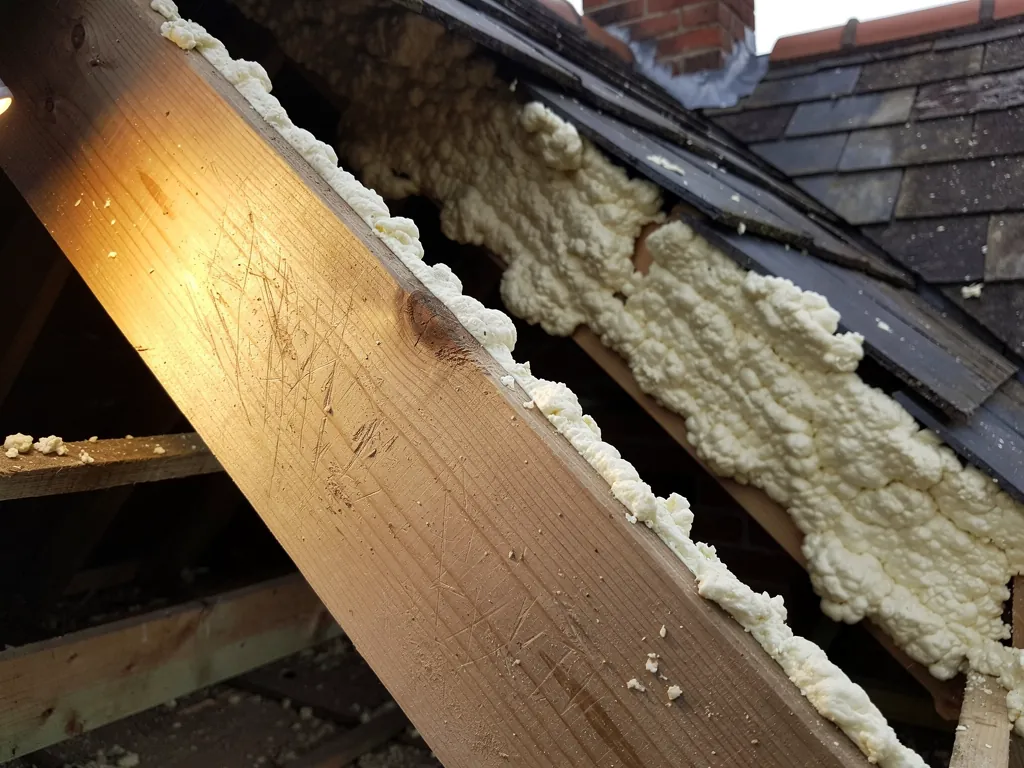
Scraped-back rafter beside thick spray foam under a slate roof

The short answer

They vary by where they stand. Low, shaded cottages by the Avon tend to grow moss and hold damp; houses higher up the valley side take more sun and wind. A repair that suits one slope can be wrong for its neighbour, so each roof is read from where it actually stands.

Drive up the valley and the settlements follow one another along the river, each a short walk from the next. The roofs change as you go. Some are low on the valley floor beneath trees, some sit on the slope above, and a few stand on their own by farm tracks.

Why does moss gather on some roofs and not others?

Moss needs shade and moisture, and a slope that faces north beside a stream and a stand of trees gives it both. It lifts the edges of tiles, packs the gaps between them and fills gutters when it falls. Scraping off the thick growth by hand is often kinder to old tiles than pressure washing, which can strip the surface from soft clay or damage joints. Our roof cleaning and moss removal page explains the choices.

Before any clean, we look under the moss. If tiles are crumbling or nail fixings have rusted, cleaning only reveals the problem, and a repair or a partial re-cover is the better route.

Does a sheltered roof still need checking?

Yes. Shelter from the wind does not stop a gutter overflowing or a valley blocking with leaves. The roofs most likely to leak quietly are those that look calm, because nobody notices a slow drip into a wall until the plaster darkens. A walk round after autumn leaf fall, and again after winter, catches most of these early.

Hedges, tall garden shrubs and the odd overhanging branch are part of life in a valley parish. They scratch at tiles in wind, drop twigs into gutters and keep the eaves damp, so trimming them back is often the least costly roof maintenance there is.

Where the valley road runs close to a roof edge or a neighbour's wall, access is the question. We plan the ladder or scaffold position at survey, so the price we give matches the actual job rather than a guess.

Q2

Does Enford's conservation area change my roof plans?

The answer

Possibly, but not for plain repairs. Enford has a conservation area with an appraisal, so a change in a roof's appearance deserves a conversation with Wiltshire Council first. Plain repairs that match the roof as it stands rarely need an application, and listed buildings follow their own consent rules.

People in conservation areas often assume every roof job needs a form. It does not. The question is whether the work changes the building's appearance, and a repair that matches what is there generally leaves it as it was.

What does the appraisal tell me?

Wiltshire Council holds an appraisal for the Enford Conservation Area. The appraisal sets out what the council prizes about the village's buildings and open spaces. Reading it before you plan a change is time well spent, and we will happily read it through with you.

Does listing at Enford cover barns and outbuildings too?

Barns, stables and garden buildings inside the grounds of a listed house can fall under the same listing, and so can a boundary wall. If you are not sure what is covered, the council can confirm it in writing before any work starts.

All Saints' and Chisenbury Priory are listed Grade II*, but smaller houses in the parish may be listed at lower grades, and a listing can include outbuildings. Alterations to a listed building's special interest call for listed building consent, and its roofing material can be part of that interest. All Saints' remains in worship as an Anglican parish church, so its roof work is dealt with by faculty rather than by the council.

When is Building Regulations approval needed?

Re-covering sits outside the building control application rules while it touches under 25 per cent of the total building envelope and under 50 per cent of the roof. Where a job crosses either line, Building Regulations approval is a must, and the work may bring a thermal upgrade to the roof with it. A covering 15 per cent or more heavier brings approval in as well. At survey we tell you where your job falls against those limits, and we deal with the Building Regulations notification where one is required, through Wiltshire Council's building control team or a registered building control approver.

MythLiving in a conservation area means a roof repair needs a planning application.

FactWork that matches the existing roof leaves the appearance alone; it is visible changes that the council looks at.

Q3

What drives repair costs on an older valley house?

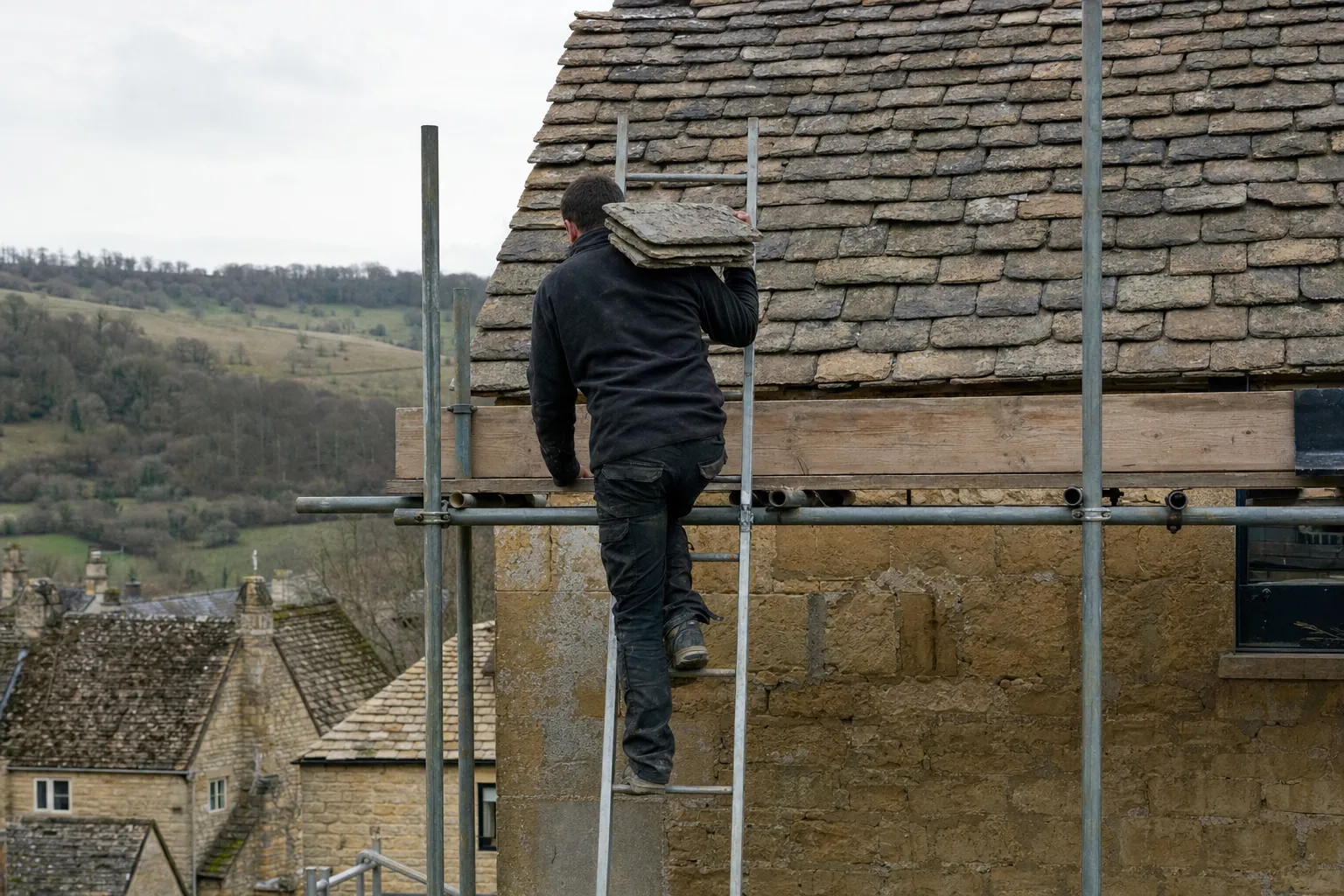
Roofer carrying stone slates up a ladder on scaffolding
Chimney stack taken down below roof level during removal

The short answer

Access, the type of covering, how much needs replacing and what the survey finds under it. National guides show a minor repair costing a few hundred pounds and a major one costing thousands, so the written quote after survey is the only reliable figure for your house.

People ask what a repair will cost before anyone has seen the roof, and we understand why. The honest position is that two roofs with the same-looking stain can need very different work, so the figures below are national guides, not our prices.

What do national guides say?

MyBuilder's roof repair guide, updated 21 August 2026, puts minor repairs at £100 to £300, moderate ones at £500 to £1,000 and major ones at £2,500 or more, with storm fixes between £500 and £1,500. For ridge work the same site shows £300 to £600 to re-bed or replace ridge tiles. Those are typical UK ranges. Your own figure arrives in writing after the survey, and our prices are good and fair.

What pushes a job towards the top?

Height and reach come first. A tall stack on a brick-fronted manor costs more to reach than a bungalow porch. Then the covering: handmade or reclaimed tiles take longer than machine-made ones. Then the cause: a fault with a hidden cause, like rotted battens under moss, means more work than a visible slipped tile. When you compare quotes from anyone, ask whether the total takes in VAT and scaffolding; between them they can shift the final total a good deal.

Is a cheaper fix ever right?

Sometimes the smallest job is the right one, and we recommend it. Perhaps only a handful of tiles need refixing, or a ridge needs fresh bedding, or one flashing needs renewing. We would only propose a bigger job when the survey photographs show the repair would not hold.

On a long lane with no room for a lorry, deliveries can mean carrying materials by hand or using a smaller vehicle with more trips. We raise this at survey so the plan, the programme and the quote all allow for it.

Our roof inspections and surveys page describes what the visit covers.

What it typically costs

  • Minor roof repair£100 to £300
  • Ridge tile re-bedding or replacement£300 to £600
  • Moderate roof repair£500 to £1,000
  • Storm damage fixes£500 to £1,500
Typical UK ranges from a national guide, not Skyline prices. The written quote follows the survey. MyBuilder price guides for roof repair and slate roofs, updated 21 August 2026.

Questions from along the upper Avon

Why do roofs in Enford's low-lying hamlets grow moss so quickly?

Shade and damp. A slope under trees beside the river dries slowly, and moss settles wherever water lingers. The fix is usually gentle cleaning plus cutting back what overhangs, not a new roof, but we look under the growth first because moss can hide worn tiles.

Is a re-roof on a house in the Enford Conservation Area allowed?

Usually, when it copies what is there. A repair that copies the roof as it stands rarely needs an application, and we explain the approach before starting. Anything that alters the roof's appearance is worth running past Wiltshire Council's planners, and the area appraisal shows what they care about.

My garage in the parish has cement sheet roofing. What happens first?

We assume asbestos if the building dates from before 2000, as HSE guidance says. HSE treats careful removal of cement sheet that is not broken up as non-licensed work, but breakage changes the rules, so we plan handling and disposal before we lay a hand on it.

Do you cover Netheravon, Upavon and the villages around Enford?

Yes. Netheravon, Upavon, Figheldean and Chisenbury all sit inside the 30-mile ring around Swindon. Call us or drop a WhatsApp line with your address, and we will confirm we reach you before a survey is booked.

Ask us about your roof

Tell us what’s happening and we’ll call you back.

  • Photos of what we find
  • A written quote
  • 10-year workmanship guarantee

Or call 01793 626096

Call Get a quote