The short answer
By a thatcher for the straw, and by a roofer for everything around it. The High Street has several eighteenth-century buildings, many thatched. Stacks, lead, gutters and the tiled or slated parts of those houses are the roofer's side of the job.
Several eighteenth-century buildings stand along Upavon's High Street, and many of them are thatched. That sets a shape for the village that most owners want to keep. It also divides the roof work between two trades, and it helps to know which one you need.
Q1.1What does the thatcher do?
Thatch is combed, patched and eventually re-coated by a thatcher, who brings the straw, the spars and the know-how to dress a ridge. We do not pretend to replace that craft. If a thatch is thin, mossed or sliding, a thatcher is the right call.
Q1.2What does a roofer do beside it?
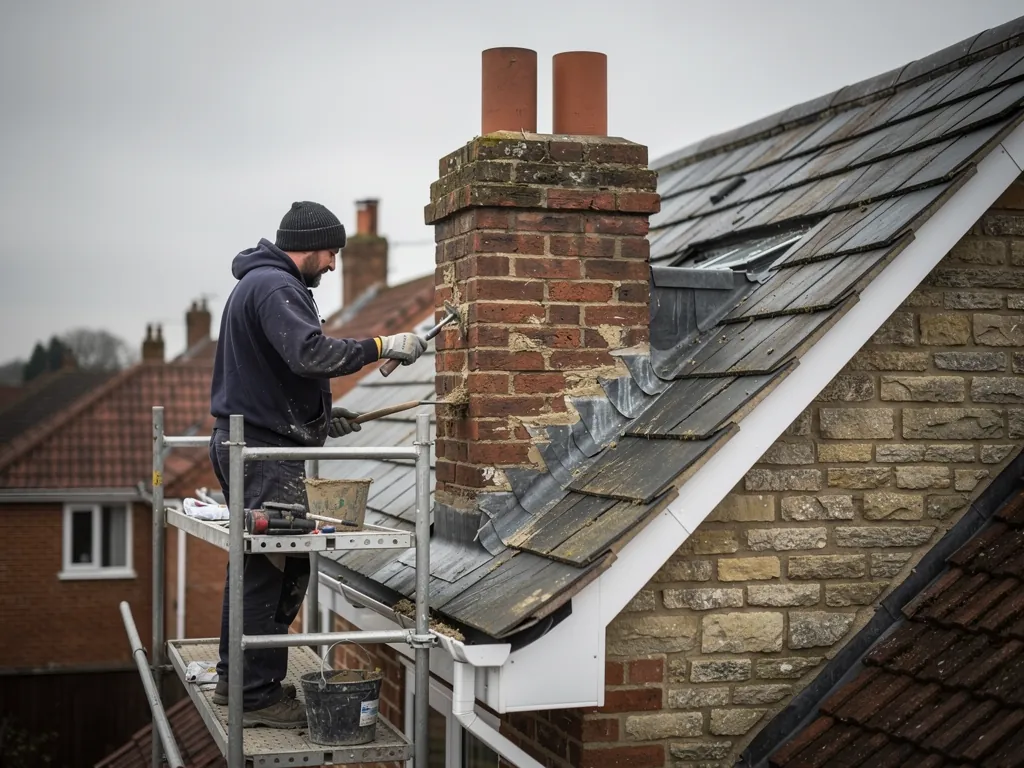
The chimney is the usual flashpoint. Water finds the gap where a brick stack passes through straw, and cracked pointing or a failed lead apron lets rain into the loft long before the thatch itself is at fault. Our chimney repairs page explains the work: repointing, flaunching, new flashings and, where needed, a rebuild above the roofline. A stack through thatch also needs a sound cap and liner, so smoke and sparks stay where they belong.
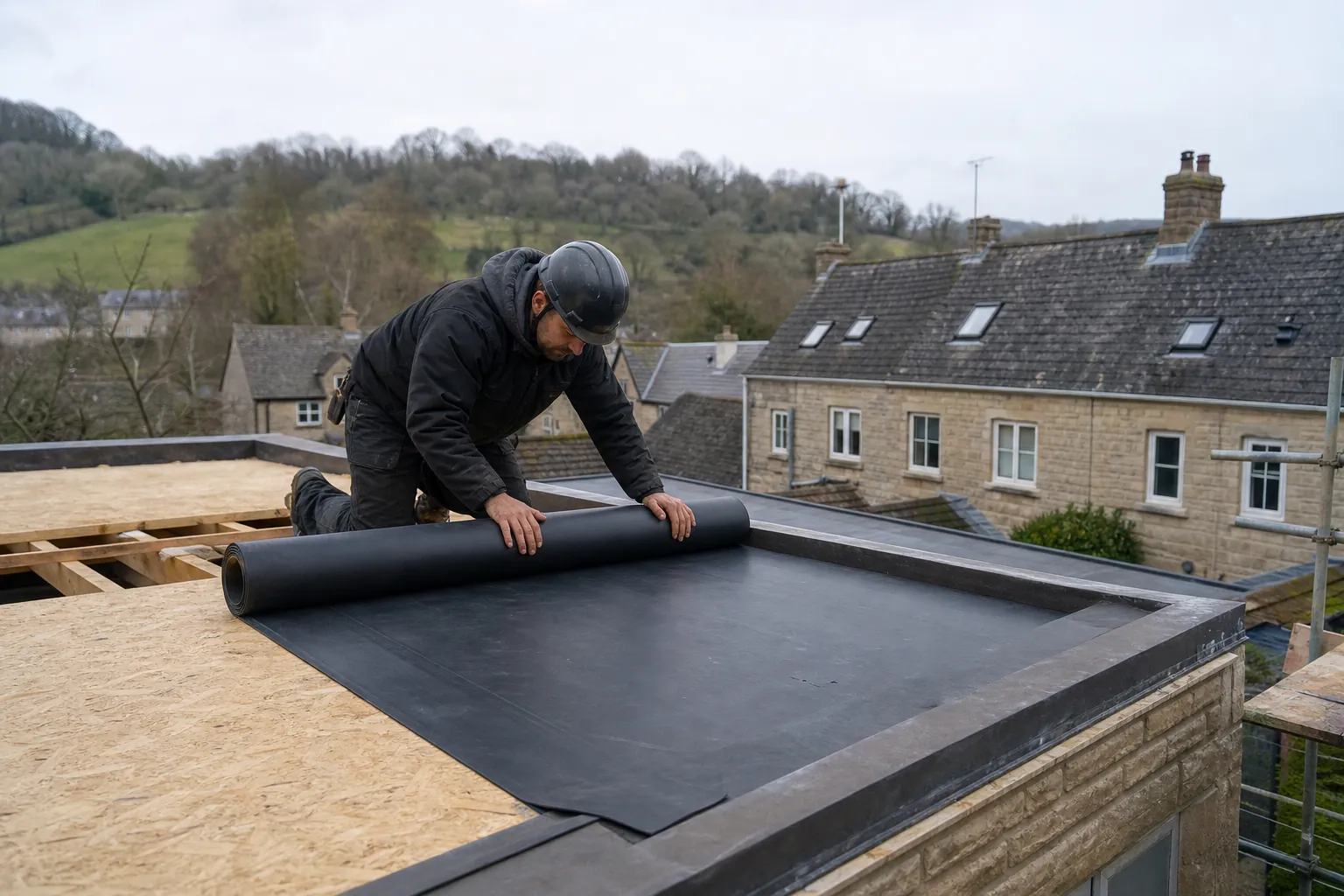
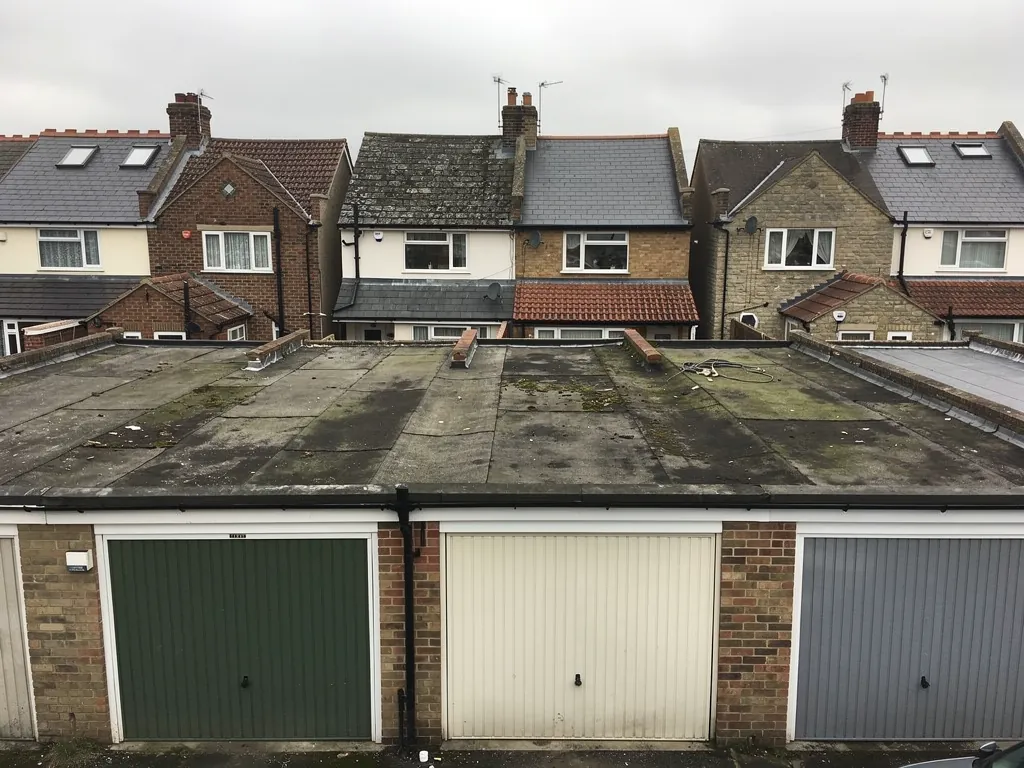
Outbuildings, porches and extensions beside a thatched house often carry plain tile, slate or a flat roof. These are straightforward jobs, done with sheeting spread over the straw below so nothing drops into it. Gutters at a low thatched eave need care as well, since a blocked run sends water straight down the wall.
When you ask us to look at a thatched house, tell us at the outset. We will plan scaffold, hot work and debris around the straw, and say plainly which parts are ours and which are for the thatcher. Often the best result comes from the two trades agreeing the order of work, so the stack is sound before the thatch is dressed around it.