The short answer
The oldest cottages are timber-framed and thatched, according to the county history, with chalk-block and brick houses from the eighteenth century and plainer pitched roofs on later homes. Each type of roof, and each type of wall below it, fails in its own way.
The whole parish lies on chalk, and the River Bourne, which often dries out, runs north to south through the middle of it. Chalk country shapes how the houses were built and how their roofs now behave.
Q1.1What happens where thatch meets masonry?
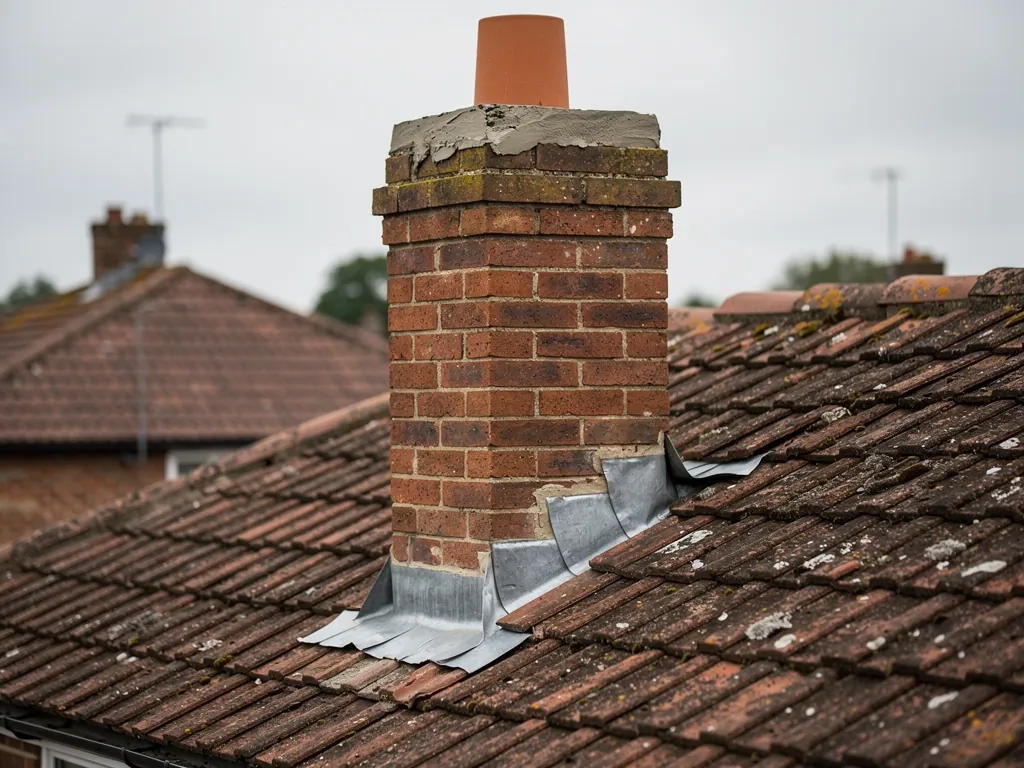
Where a house has thatch, the chimney is the weak link. Straw does not forgive a leaking flashing, and masonry stacks that have lost their mortar will let rain in beside it. We check the stack, the pots, the flaunching (the mortar cap in which the pots are bedded) and the lead flashing at the base. Your thatcher deals with the thatch and we deal with everything it touches.
Q1.2How do the tiled and slated roofs differ?
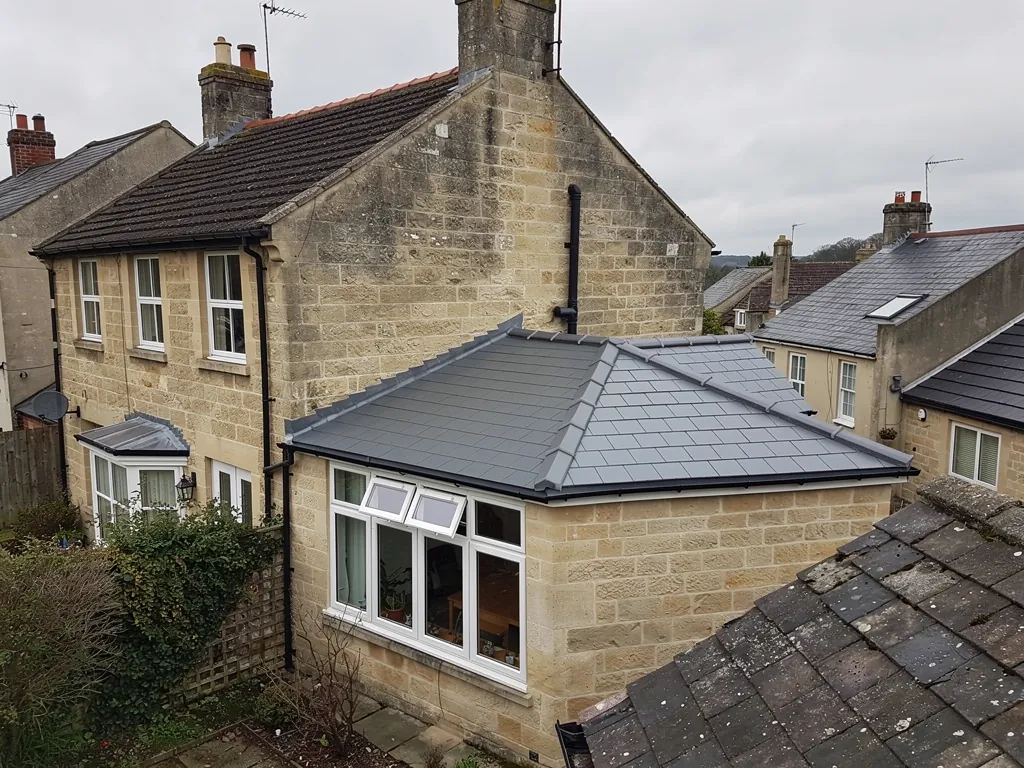
Where a house is not thatched, the covering may be tile or slate. Tiled roofs of any age need attention to the ridge, the verges and the underlay, which is the waterproof layer under the tiles. Slate roofs suffer from corroded nails. A survey tells us which problem you have, and we photograph each area so the written quote matches what is actually up there.
Our pitched roofing page explains the coverings and repairs for these roofs, and chimney repairs describes the stack work that so often starts a leak.
Rural properties often have more than one roof to think about. A barn conversion, a detached garage or a lean-to behind the main house will each have its own age, covering and problems, and it makes sense to survey them together so the work can be planned in a sensible order. A single visit with a ladder, a camera and a note of every fault is far cheaper in time than coming back three times for three roofs.
In a village of this size, most of the roofwork comes down to straightforward things done properly: a ridge that is fixed rather than just bedded, a gutter that carries water away from a soft chalk wall, a valley relined before it leaks. Those jobs are small, and they are the ones that save the larger bills.