Victorian brick terrace street with slate roofs and chimneys

Roofers in Colerne

Roofing for Colerne, from the 18th-century houses rebuilt after the 1774 fire to the former service housing on the old RAF station, on the hill above the Box valley.

Colerne's roofs, from the church to the camp

Old stone houses clustered beside a hilltop church
The village around St John the Baptist

The church at the top of the village, St John the Baptist, dates from the early 13th century and gained its 15th-century tower and aisles later; it was listed Grade I in 1960. Daubenys, a longhouse on the High Street built about 1400, is listed Grade II*, and the Manor House bears the date 1689. Around them stand houses of many ages, and some carry protection of one sort or another. Roofs here call for patient work and the right materials. Before pricing anything we establish what the building is, how its covering was laid and what the council expects of it.

Eighteenth-century houses with steep pitched roofs
Houses rebuilt after the 1774 fire

A large fire in 1774 led to rebuilding, so the village is full of 18th-century houses. Georgian roofs are often steeper than modern ones, carried on hand-cut timbers that have shifted with age, and the coverings have usually been repaired or re-laid more than once. That history shows as uneven slopes, patches of different tile or stone, and stacks rebuilt in whatever mortar was to hand. On houses this age we do not force a straight line onto a crooked roof; we repair to the building as it now stands, and tell you what we found and where.

Matching service houses with tiled roofs in a row
RAF Colerne and later housing

RAF Colerne was built from 1939 and closed in 1976, after which the site became Azimghur Barracks. Service housing of that kind was built in matching groups, so faults repeat from one house to the next: ridge beds that have let go, tired flashings at chimneys and party walls, and garage or store roofs of uncertain age. Newer homes elsewhere in the village have their own weak points, usually around flat porch roofs, valleys and dry-fix components. Each roof is read by its own details and not by the street it stands in, and a nearby house that fared well tells us little about yours.

From Swindon to the Box valley

Map showing Colerne and central Swindon. 27 road miles west-south-west of central Swindon.

Distance
27 road miles west-south-west of central Swindon
Council
Wiltshire Council
Council
Wiltshire Council
Conservation area
Colerne Conservation Area
Landscape
Cotswolds National Landscape

Colerne roof answers

Does Colerne's conservation area complicate a re-roof?

Seldom, if the same covering goes back. A different material or a new look is another matter, and Wiltshire Council is the place to raise it before you commit.

Can a stone roof near Daubenys be repaired rather than replaced?

Frequently. Stones slip because the pegs and battens fail first, so refixing and re-laying normally keeps both the covering and the character.

Why do hilltop roofs above the Box valley lose tiles?

On a hill the wind meets ridges and verges head-on. Old mortar beds crack with time, so mechanical fixing is the usual cure.

Q1

Is my Colerne roof stone, tile or slate?

Brick and limestone cottages around a small village green
Roofers on a slate roof along a limestone village street

The short answer

Look from the lane and then in the loft. Stone roofs have thick, uneven courses that shrink towards the ridge. Clay and concrete tiles are regular and thin. Slate is flat and fine-grained. An old village can hold all three, and the right repair depends entirely on which one you have.

Colerne's economy in the 14th century rested on sheep, cloth and stone quarrying, and the village has been rebuilt and extended ever since. Over that time roofs get re-covered and patched, often with something that does not quite match what was there. Telling them apart is the first job of any survey.

How do I recognise a stone slate roof?

A Cotswold District Council guide to stone slate roofing, published in April 2000, places the tradition between Chipping Campden in the north and a point near Bath in the south, and Colerne lies close to that southern end. In these roofs the courses diminish up the slope, large stones along the eaves and small ones near the crest, so the surface looks rough and uneven by design. The guide adds that people in the south of that district say stone tile where northerners say stone slate.

Is it worth keeping the original covering?

Usually. The same guide reckons that a Cotswold roof given regular maintenance can easily last 100 years, and possibly far longer. We read that as traditional practice, not a promise. Trouble normally starts with the pegs and battens beneath the stone, so the stone itself frequently outlasts its fixings. Our Cotswold stone roofing page explains how we strip, sort and re-lay.

What if it is a plain tile or slate roof?

The approach changes. Tiles and slates are lighter and more regular, so a repair can be quicker and more local, and the work can often be confined to the damaged area. We still check the surrounding courses, because one failure frequently has neighbours. Slipped slates are refixed, broken tiles replaced, and ridges refixed. Our slate roofing page covers the detail.

Send a few photographs and we will give you our first view of what you have, which the survey then confirms or corrects.

Telling the coverings apart
CoveringHow it looks
Stone slateThick, uneven stones, larger at the eaves
Clay tileRegular, with a warm, slightly mottled colour
Concrete tileUniform and flat, often interlocking
Natural slateThin, dark and fine-grained
Q2

What can I do about a Georgian roof that sags?

The answer

A gentle sag is often the roof's age showing, not a fault. The timbers have settled and the courses have moved with them. What matters is whether the movement is still happening, whether water gets in, and whether the structure beneath is sound. A survey in the loft answers all three.

Houses rebuilt after the 1774 fire have had over two centuries to settle. Their roofs are rarely straight, and trying to make them so does more harm than good. Walls lean, wall plates bow and rafters twist a little, and the covering follows all of it.

When is a sag a problem?

When it is new, or getting worse. A sag that has been there for decades is usually stable. Fresh cracks in the plaster below, doors that stick and a ridge that has dropped since last year are signs of movement that needs a structural opinion. From the loft we examine rafters, purlins and wall plates, photographing each as we go. A purlin is the horizontal timber that helps carry the rafters between the ridge and the wall.

Can the covering be lifted and re-laid?

Often. On an old roof we prefer to take a slope off carefully, sort what can be reused, repair or add timbers and put the covering back in order. Each slate, tile or stone goes back in the same part of the slope where possible. That keeps the look and character of the building. Where tiles are missing or damaged, matching replacements are sourced rather than mixing in something that stands out for years.

Will the weight of the covering change?

It can. A covering more than 15 per cent heavier needs approval under Approved Document A, and Wiltshire Council's building control team or a registered building control approver deals with that. We work out the load before we recommend a material, and put the result in the quote.

If you think a roof has moved, do not wait for a storm. Photographs of the ceilings and the ridge line, taken from the same spot each month, give us a useful record, and they help you see whether a crack is growing or has simply stayed put.


Our view

Repair to the shape the building has settled into, not the shape a drawing would prefer.

Q3

Which consents apply to roof work in Colerne?

Long flat roof on a 1960s brick building being re-covered
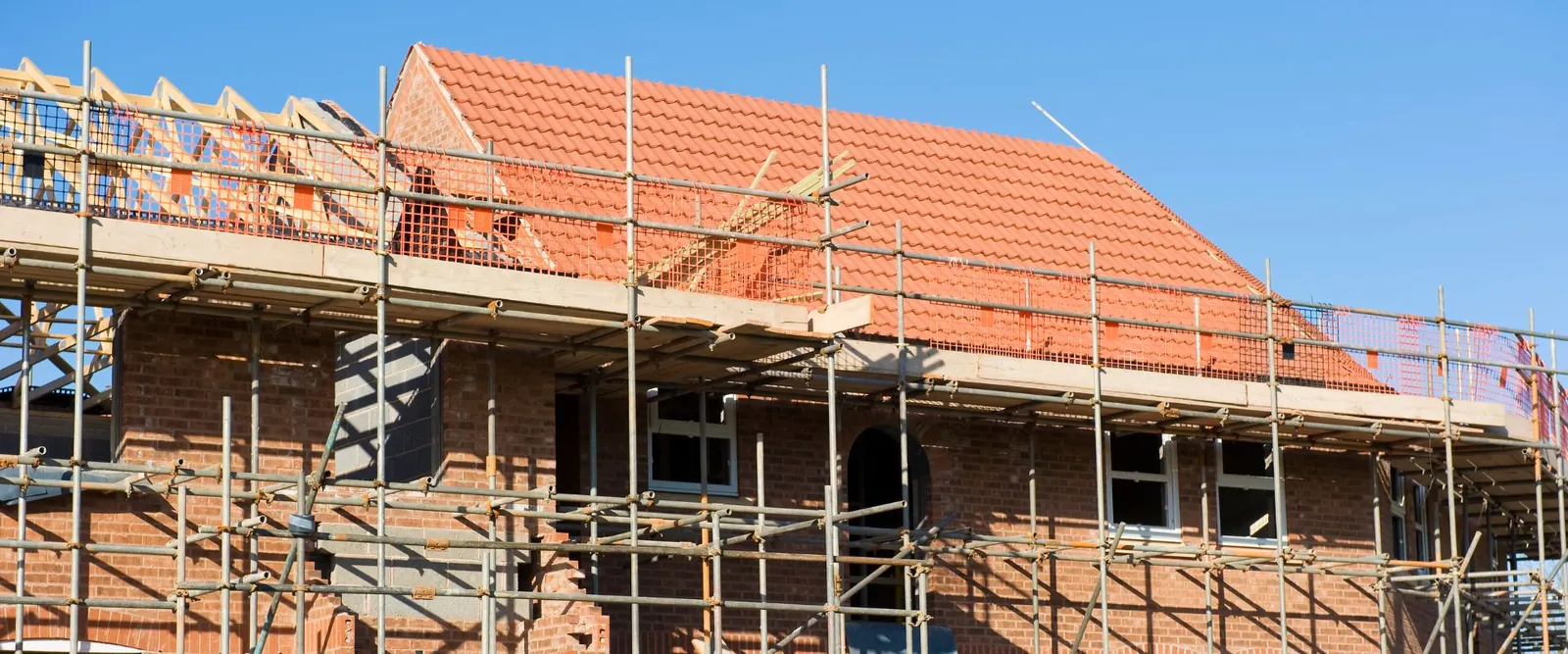
New brick house with a red tiled roof inside scaffolding

The short answer

A matching repair or re-cover normally needs no application, conservation area or not. Swapping the material, fitting roof windows or altering a listed building is different. Wiltshire Council takes the decision and the landscape body only advises, so if in any doubt, get the council's reply before work is priced.

Colerne sits inside a conservation area, in the Cotswolds National Landscape, with a Grade I church and several listed houses. That sounds restrictive, but day to day, most roof work carries on as ordinary maintenance.

How does Colerne's conservation area affect roof work?

The same covering going back seldom needs planning permission, and being in a conservation area does not alter that. A change of material or alterations to chimneys may. Roof windows have their own rules, which our skylights page explains. Take the council's view on any of these in writing, so that you and the roofer are working from the same answer.

What about listed buildings?

Daubenys and the church are listed, and so are other houses in the village. If your home is listed, changes to its special character need the council's listed building consent, roof covering included. St John the Baptist is an Anglican church in worship use, so the ecclesiastical exemption applies and its changes go through the faculty system. For your own house, Wiltshire Council can confirm whether it is listed.

Who handles building control?

Where under 25 per cent of the total building envelope and under 50 per cent of the roof is involved, building control approval is not normally needed. Larger jobs need it, and an insulation upgrade may come with them. Wiltshire Council's building control team, or a registered building control approver, deals with the application, and if the job is notifiable we send the notification ourselves.

The landscape body gives views, while Wiltshire Council gives answers. Remember the difference when you weigh up a change.

MythA conservation area means any roof work needs planning permission.

FactMatching repairs rarely need an application; it is changes in appearance that the council weighs up. Even a change of tile colour or roof line can be enough to bring a house to the council's attention.

Questions from the hill above the Box valley

Why are Colerne's older roofs not all the same material?

The village has been rebuilt and repaired across centuries, from a quarrying and cloth economy in the 14th century to the houses put up after the 1774 fire and the later RAF station. Each period favoured different materials, and repairs added more. We identify yours before suggesting a fix.

Will you take on a house close to the Grade I church?

Yes, as long as we know whether your own house is listed and whether it sits in the conservation area. Living near a Grade I church does not make a house listed, but it can mean the council takes a closer interest in what goes on the roof. We check with you first, then work in matching materials. If listed building consent applies, we explain what the council needs before any covering is ordered.

Do you cover Colerne, Box and Corsham from Swindon?

Colerne is inside our 30 road miles, and nearby villages may be too. Give us a postcode and a photograph or two of the problem and we can tell you how to book a survey. Check the areas page or send the postcode by WhatsApp. Leaks and storm damage come first: the water is stopped, then the lasting repair is planned.

My ridge looks uneven on an old Colerne cottage. Does it need rebuilding?

Not necessarily. Old ridges often settle with the roof, and a gentle wave is part of the character. We check that the ridge pieces are secure and watertight, add mechanical fixings where needed and leave the shape alone, since a gentle wave rarely harms anything.

Ask us about your roof

Tell us what’s happening and we’ll call you back.

  • Photos of what we find
  • A written quote
  • 10-year workmanship guarantee

Or call 01793 626096

Call Get a quote