The survey, not the street name, tells us whether a Charlbury roof is stone slate, and we never assume it from the look of a doorway. When one is, we work from traditional practice described in Cotswold District Council's technical guidance, which dates from 2000 and is a useful guide to how these roofs behave.
Q2.1How does a stone slate roof go together?
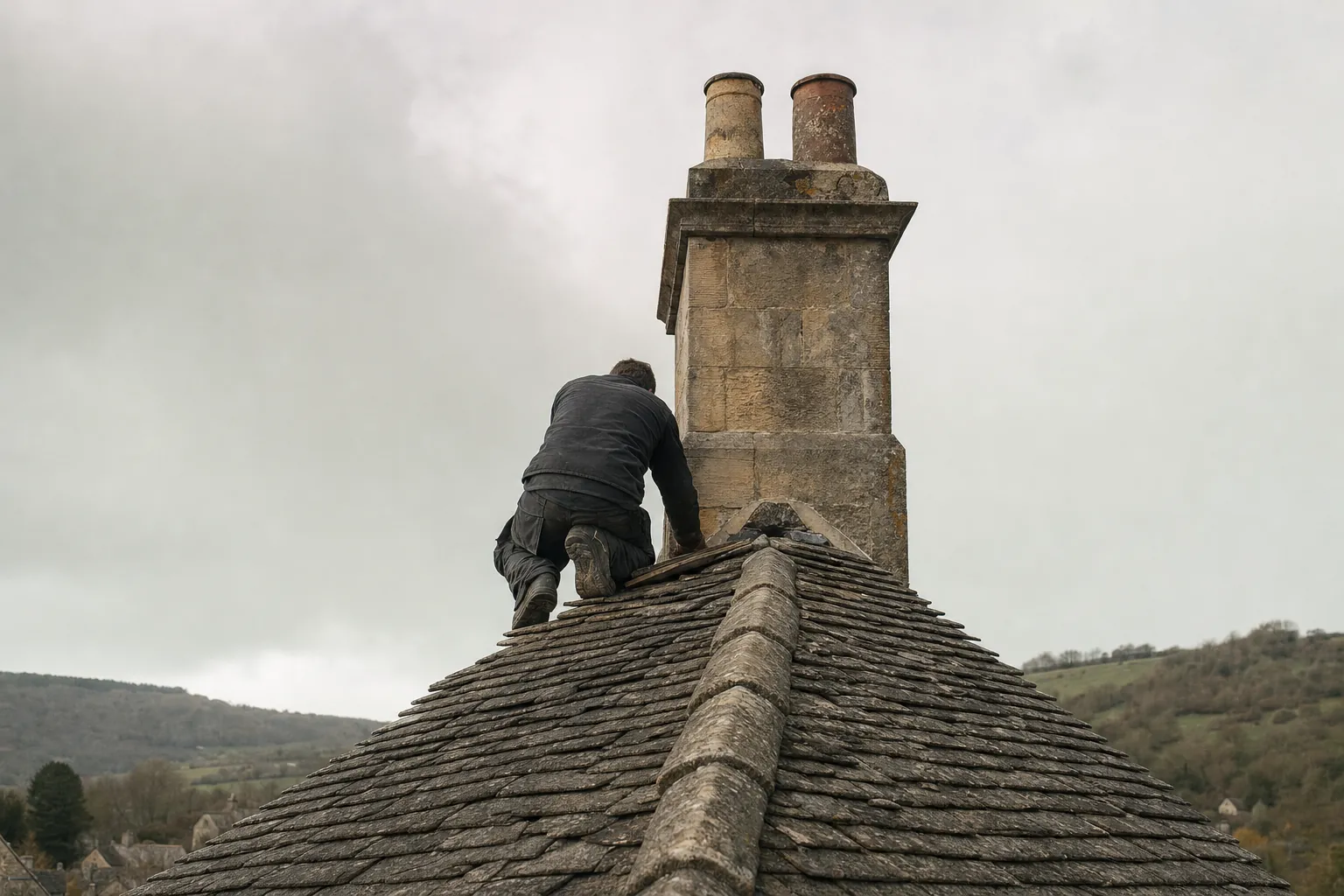
The stone splits into plenty of small slates and only a few large ones, so the biggest stones run along the bottom edge while the smallest finish the top, in courses that diminish as they climb. Each stone is pegged to its batten with a wooden pin passing through a hole drilled near its upper end. Valleys can be swept, built from specially cut slates curving gently round the corner, which takes more skill than a lead valley and suits a traditional roof better.
Q2.2Why does weight matter so much?
According to the guidance, 10 square metres of stone slate weighs about 1,000 kg, so the rafters and walls beneath must be sound before anything is relaid. Kept in good order, such a roof can serve for generations, and the guidance suggests that scraping one clean each year could double its life. Sourcing matters too: stripping slates from another building to repair yours can leave that building bare, so we tell you where replacement stone comes from.
Q2.3Could concrete tiles replace stone slate?
It would be a structural and a planning question. On a listed house or inside a conservation area the council may well object, and a roof built for stone has a frame designed around a particular weight. Our usual advice is to keep the stone and renew what carries it.