Roofers on a slate roof along a limestone village street

Roofers in Ascott-under-Wychwood

Leaks fixed, slopes re-covered, chimneys rebuilt and flat roofs renewed in Ascott-under-Wychwood, from the old stone lanes around Holy Trinity to the Victorian school and station streets and the newer homes in the Evenlode valley.

Roofs between Holy Trinity and the Evenlode

Weathered stone roofs beside a church
The castle and church end

The oldest part of Ascott-under-Wychwood gathers around two very early buildings. Ascott d'Oilly Castle was built about 1129 to 1150, with a stone tower added in the 13th century, and the manor house now occupies the bailey. Holy Trinity dates from about 1200 and was restored in 1857 to 1859 under G E Street; it is grade II* listed. Roofs with this kind of standing are mended slowly and deliberately: matching material, matching fixings, and as little disturbance as the fault allows. Steep pitches, stone details at the verges and old lead in the gutters and valleys all belong to the job here, and each is examined before a price is written.

Victorian slate roof and brick chimney stack
The Victorian school and station streets

The Oxford, Worcester and Wolverhampton Railway opened Ascott-under-Wychwood station in 1845, and the village school, designed by Clapton Rolfe, followed in 1871. Railways made it far easier to carry slate and machine-made clay tile into country villages, so buildings from these decades often wear one or the other. A hundred and fifty years on, the faults are predictable: nails rusted through so slates slip, lead flashings split at chimneys, cracked valley linings and ridges still bedded on mortar alone. A school-sized roof or a run of cottages is best repaired in one planned visit, rather than one slipped slate at a time.

Tiled house with a flat-roof extension
Later homes, outbuildings and extensions

Beyond the church and the castle site, the village broadens into later houses, converted outbuildings, garages, porches and rear extensions. Newer pitched roofs usually carry concrete or clay tiles on timber battens over a membrane, and their troubles differ from the old stone and slate: loosened ridge tiles, slipped tiles at the verge, and moss gathering on shaded slopes under trees. Flat and low-pitched roofs on kitchens, garages and outbuildings are common too, and they give up at joints, upstands and outlets long before the main roof does. Variety like this calls for the repair to be matched to the building, not applied from a single standard recipe.

From Swindon up the Evenlode valley

Map showing Ascott-under-Wychwood and central Swindon. 26 road miles north-north-east of central Swindon.

Distance
26 road miles north-north-east of central Swindon
Council
West Oxfordshire District Council
Local authority
West Oxfordshire District Council
Conservation area
None: the village is not a designated conservation area
Railway
Ascott-under-Wychwood station, opened 1845, on the Cotswold Line

Ascott-under-Wychwood roof questions

Is Holy Trinity's grade II* listing a concern for neighbouring roofs?

Only when your own home is listed or falls under a specific direction. Ask the district council to confirm the position before work is priced, and we will follow what it says.

Can you repair a Victorian slate roof near the old station?

Yes. We refix or replace failed slates, renew tired lead at the chimney and sort the ridge, choosing slates that match the existing ones for size and colour.

Do Evenlode valley village roofs need different treatment from town roofs?

The materials are often older and the buildings less regular, so every roof gets its own survey. Trees and damp valley air also mean moss, blocked gutters and wet fascias need checking while we are up there.

Q1

How do you repair a roof near Ascott's church?

Roofer repointing a stone chimney stack above lead flashing
Weathered brick chimney stack with eroded joints and cracked pot

The short answer

Begin with what is already there. For a roof close to Holy Trinity or the castle site, we photograph it, trace the real fault, and propose the narrowest repair in matching materials. A listed building needs the council's agreement before anything that alters its character, and we explain that before the quote is written.

Holy Trinity is grade II* listed, and the buildings around the castle site and the manor house have stood for centuries. Roofs in that corner of Ascott-under-Wychwood are not handled like a standard estate house. The first job is to understand what is up there, and that means getting on the roof with a camera before anyone talks about materials or cost.

What do you check on an old stone roof first?

We look at the covering, the timbers and the junctions together. On a traditional stone roof the stones are heavy, the courses shrink towards the ridge, and the fixings behind them age faster than the stone. A leak is frequently a rotted peg, a soft batten or a failed valley rather than a broken stone, so renewing the fixings can save the covering. On slate or tile roofs of the same period, we check nail corrosion, cracked pieces, the state of the lead and whether an earlier repair went in with the wrong size or colour of slate.

Chimneys earn their own inspection. Old stacks take weather on all four faces, and the flashing where they meet the roof is one of the first places water finds its way in. Our chimney repairs page describes what a repair involves.

When does a repair need the council's say?

Matching repairs on an unlisted house seldom call for any permission. Listed building consent is required for roof work that changes a protected house's character, and swapping the covering counts. Unsure whether yours is protected? West Oxfordshire District Council keeps the answer, and we hold the price until you have it. Where the roof is both listed and old, we propose reusing the existing covering wherever it is sound, and we explain which parts cannot be saved and why.

The survey produces photographs of your own roof, a written quote, and a plain note of what is repair and what is replacement.


Q2

Is a Victorian roof in Ascott worth keeping?

The answer

Usually, if the structure is sound. Victorian slate and clay tile can outlive several owners, and the pieces tend to outlast the nails, lead and ridge bedding that hold them. Mending those weak points often costs well under a new roof and keeps the look of the street, though a survey decides which route fits yours.

The station arrived in 1845 and the school in 1871, and houses from those railway years still stand among the older stone buildings. These roofs are now a century and a half old, and the question is what has worn out and what has not.

Which parts of a slate roof fail first?

Rarely the slates themselves. Iron nails rust through, which lets a sound-looking slate drift out of line. Lead flashings split where the metal has flexed with the heat, and the mortar under ridge tiles crumbles. A close look from the ladder tells these faults apart from true old age, where slates are flaking across a whole slope. Cost guides quote natural slate at 80 to 100 years or more, which is why refixing so often beats replacing. Our slate roofing page covers the detail.

When is a full re-roof the right call?

When battens and rafters have rotted across large areas, when the covering has failed everywhere rather than in patches, or when a slope has moved enough that patching will not hold. At that point stripping and re-covering works out cheaper over the building's life than repeated call-outs. Where the old slates are sound, they are sorted and reused, and any shortfall is made up with matching slate.

Under the Building Regulations rules, a re-roof that touches under 25 per cent of the total building envelope and under 50 per cent of the roof usually goes ahead without an application. Go past either limit and approval applies, which we arrange.

Our view

Renew the nails, lead and ridge bedding first, and strip the roof only when the structure underneath has gone.

Q3

Does Ascott-under-Wychwood need planning for a re-roof?

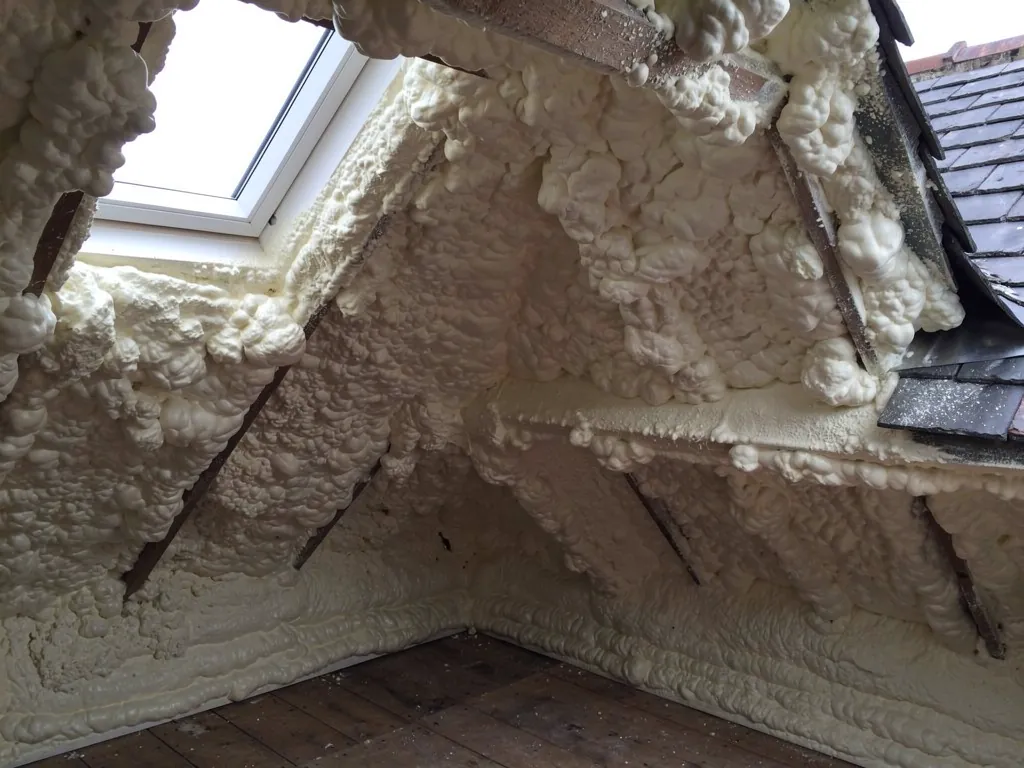
Loft thickly coated in white spray foam around a roof window
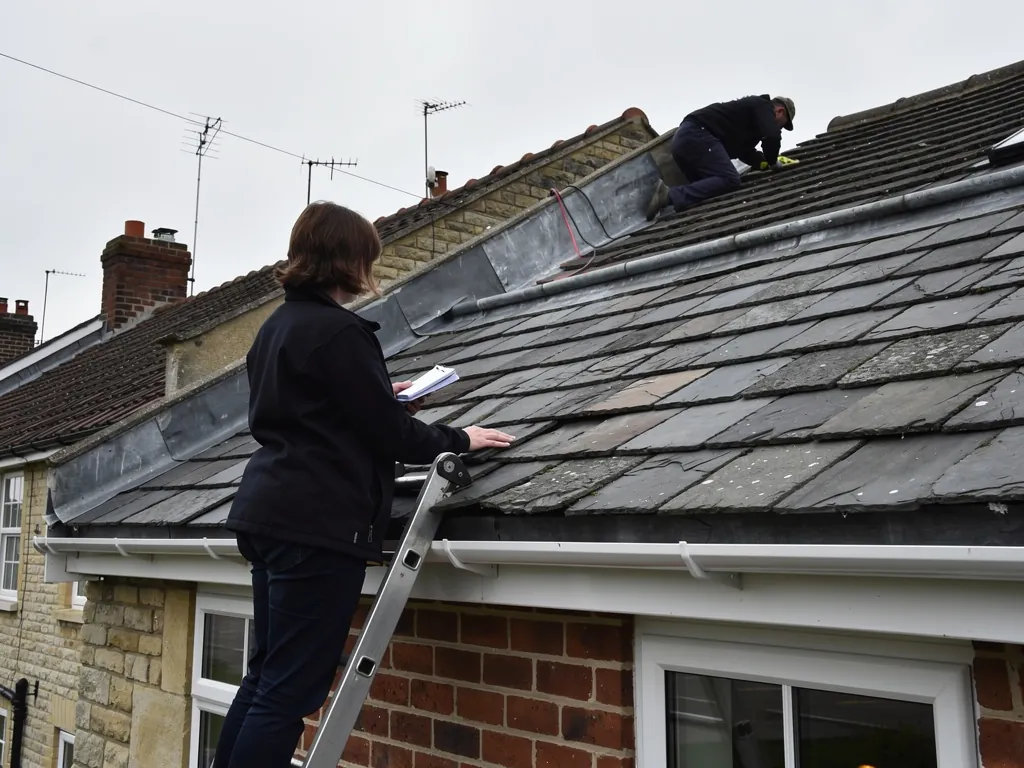
Surveyor on a ladder checking slates with a notebook

The short answer

Usually not. The council's conservation area maps do not list the village, and replacing like with like seldom calls for a planning application. Listed buildings are the exception, and so is any Article 4 direction, which the council can confirm. Building Regulations bite once a re-roof passes set limits, and we explain where they fall.

The bulk of what we do here is plain maintenance: replacing a cracked tile, refixing a slate, repairing a valley. None of that brings in the planning system. A few situations do change the picture.

What if my house is listed?

Ascott-under-Wychwood has historic buildings, with the grade II* church the best known. If your home is listed, an alteration touching its character needs listed building consent, roofing material included. We begin with the same covering, fixed as it was originally, and talk through any departure before it happens. The district council's conservation team can confirm what is on the list.

Does living in the Cotswolds National Landscape change anything?

The village is within the Cotswolds National Landscape, the name used since 22 November 2023 for what is legally still an AONB. The body behind it advises, while the planning decisions rest with West Oxfordshire District Council. New roof windows and dormers are the usual place where this matters, and our skylights page sets out how to check before ordering.

When does an Ascott under Wychwood roof job need Building Regulations sign-off?

At 25 per cent of the total building envelope or 50 per cent of the roof, Building Regulations approval applies and the loft insulation could need upgrading as part of the job. The Planning Portal adds that a covering 15 per cent or more heavier brings in approval too. Either a registered building control approver or the council can deal with it, and notifiable jobs are notified by us.

If you plan anything beyond a straight repair, a short enquiry to West Oxfordshire District Council's planners before ordering materials settles the position for your address.

MythBecause the village has a listed church, every roof in it needs planning permission.

FactOnly listed buildings and properties covered by a direction need special consent; a repair in matching materials elsewhere does not.

Roofing services in Ascott-under-Wychwood

Questions from the lanes below Wychwood

Can you mend stone slates around the castle bailey and manor house?

Yes, in matching stone and method. The aim is to locate the failed peg, batten or valley rather than strip the slope, and reclaimed stone goes back only where it originally came from. A survey with pictures of the roof comes first, then the written price.

Do you take on larger buildings like the 1871 school?

Yes, on houses and on larger buildings. A big slate or tile roof is surveyed in sections so a repair plan can be written in one go, and access such as scaffold is allowed for in the quote. Where a building is shared or publicly used, we agree access and safety arrangements with whoever manages it.

Is moss under the trees by the Evenlode a problem for my roof?

It can be. Moss holds water against tiles and slates, blocks gutters and lifts edges over time. Gentle removal and cleared gutters are often all that is required, and we tell you when the covering underneath is sound. Heavy brushing or pressure on old or soft tiles can do harm, so the method depends on the roof.

Are ridge tiles in Ascott fixed with mortar alone?

On older work, often. BS 5534 was revised in 2014 and stopped relying on mortar alone, so a re-bedded ridge is fixed mechanically as well, or replaced with a tested dry-fix system. We explain which suits the tile you have. A valley-side house takes wind across the ridge, and a loose one lets rain straight into the loft.

Ask us about your roof

Tell us what’s happening and we’ll call you back.

  • Photos of what we find
  • A written quote
  • 10-year workmanship guarantee

Or call 01793 626096

Call Get a quote