Brick and limestone cottages around a small village green

Roofers in Chadlington

Chadlington is an Evenlode valley village of five separate neighbourhoods, and each has its own blend of old cottages, Victorian houses and later homes. We repair, replace and maintain roofs across every one of them.

Chadlington's roofs, from Brook End to West End

Cottages along a village lane
Five neighbourhoods, five street patterns

Chadlington is made up of Brook End, Green End, Mill End, East End and West End, so a roof survey here can mean moving between very different streets in one morning. Houses beside a green sit differently from those along a brook or a mill lane, with their own roof shapes, chimney positions and boundary walls. We treat each address on its merits, because a village laid out like this rarely offers one roof to match another. The loft, the gutters and the junctions with neighbouring walls tell us more than the street name does. After we have been up and inside, the written quote comes with photos of whatever is wrong with your particular roof, which lets you judge our proposal for yourself before a date is fixed.

An old church tower above a roofline
Old roofs near St Nicholas

St Nicholas, the parish church, began as a Norman building, gained its 13th-century Early English aisles and received a bell tower early in the 14th century. Chadlington appears to have headed its own hundred before and after the Conquest, and two separate estates existed here by Domesday Book in 1086, so the village has deep roots. Houses close to the church can be centuries old, and their roofs will have needed attention many times over. Where an old roof carries a mixture of materials from different eras of repair, we first work out what lies underneath, then decide how much can be saved. Keeping sound original timber and covering is nearly always better than stripping a roof that still has years left in it.

A tall pitched roof on a large house
Victorian houses and the chapel conversion

The Parsonage, now Chadlington House, was designed by William Wilkinson and built in 1863, and the Baptist chapel of 1840 is now a private house. Buildings like these raise their own roofing questions: wide spans, steeper pitches, valleys where two ranges meet, and conversions that may have altered the roof structure. Where an old chapel has become a home, covering, insulation and ventilation have to work together, since a roof made for a cold building can trap damp once the space is heated. We look at how the roof was adapted and whether the original features survive. Rooflights, flues and extra chimneys added during a conversion are common weak points, so those are checked closely, along with the lead that surrounds them.

Out from Swindon to Chadlington

Map showing Chadlington and central Swindon. 29 road miles north-north-east of central Swindon.

Distance
29 road miles north-north-east of central Swindon
Council
West Oxfordshire District Council
Local authority
West Oxfordshire District Council
Designated landscape
Cotswolds National Landscape
Setting
Evenlode valley, about 3 miles south of Chipping Norton

Chadlington roof questions

Does the Cotswolds National Landscape change how I re-roof?

Planning decisions stay with West Oxfordshire District Council, which can weigh the landscape. Like-for-like repairs are routine. Swapping the material or adding new roof windows is worth raising with the planners early, ahead of any pricing, and we can point you to the right team.

Is Chadlington inside a conservation area?

The council's conservation area maps do not list Chadlington among their 51 areas. Whether your own house is listed is a different matter, which the planning officers can settle, so a quick enquiry is worthwhile before any change to the roofing material is planned.

Can a converted chapel roof be repaired safely?

Yes. We check how the roof was adapted for living, then deal with covering, ventilation and insulation as one system instead of three separate patches, and photograph what is behind each layer so you can see it.

Q1

Which warning signs show on a Chadlington cottage roof?

Torch showing a water-stained rafter beneath slates in a loft
Lead-lined valley gutter between two slate roof slopes

The short answer

Look for slipped, cracked or missing pieces, a ridge line that sags, stains on the ceilings below, and gutters that overflow or grow moss. Any of these deserves a survey. Early repairs on an old cottage are small and quick to carry out, and waiting usually makes the repair larger, the damage wider and the access harder.

Old cottages in the Evenlode valley have been repaired by generations of owners, and the roofs show it. Signs that a roof needs attention are rarely dramatic. They begin as a stain, a drip after a storm, or a tile on the path.

Which signs matter most?

A sagging ridge suggests timbers under strain, and that wants checking from the loft hatch too, not only from the lane. Slipped pieces along a slope point to failing fixings. A stain on a ceiling, or a damp mark at the side of a chimney breast, mean a flashing, a valley or a covering has let water through. Plant growth in a gutter means water is being sent somewhere it should not go.

Can I check my own roof safely?

From the ground, yes. Binoculars and a calm morning show most of what a ladder would, without the risk. Look for gaps in the lines of the tiles, shine a torch around the loft after rain, and look for any chink of light that has no business being there. Please do not climb an old roof yourself, since these roofs are often more fragile than they look.

What happens at the survey?

We go over the roof outside and in, photograph each fault, and write a quote that matches what we found. If a repair cures the problem, that is the job we recommend, and our roof inspections and surveys page explains the process in full.

If water is coming in now, say so when you ring. Leaks and storm damage are what we deal with first, and the first visit to a leaking roof is about stopping the water, with bigger plans left until afterwards. On a cottage, one tidy repair done early often saves a far bigger job later, because water that gets into old timbers and walls does its damage quietly. We would rather fix a small fault properly now than return to a large one.


Q2

Can an old chapel roof work as a family home?

The answer

Yes, if covering, insulation and ventilation are planned together. A roof that suited a cold, open chapel can trap moisture once the building is heated and lived in. The cure is usually better airflow and correctly placed insulation, not a heavier covering.

Chadlington's Baptist chapel of 1840 is now a private house. Chapels tend to have broad roofs with long single spans, and they were never built to be warm. Living in one asks the roof to do something it was not designed for, and that is where most of the trouble starts. Heating a building for the first time changes how moisture moves through every layer of it.

Why does a converted roof turn damp?

Warm, moist air from kitchens and bathrooms rises into the roof space. If insulation blocks the airflow, that air condenses on cold timbers and underlay, and the damp appears as staining, mould or soft battens. The cure is a ventilated roof void or a carefully designed warm-roof build-up, not simply more insulation.

What should the survey cover?

We look at what was added during the conversion: the layers under the covering, how air moves through the void, the condition of the rafters, and the junctions with gables and chimneys. If the insulation or covering has been replaced since, we check that it suits the structure it sits on.

What about the covering itself?

Which covering is right turns on the building's age, its pitch and what the planners will accept. Our pitched roofing page lists the options and what we ask before suggesting one. Work on a chapel that is now a home follows the same Building Regulations and planning rules as any other house, with listed building consent added if the building carries a listing.

A clean, ventilated roof protects the timbers, and in a lived-in building that matters as much as the weather outside. Where we find rot early, replacing a few battens or rafter ends is far kinder than waiting until a whole section has to come off. We show you the timber in a photograph and say how far the problem extends, so the decision is yours and based on what is really there.

MythA damp converted roof just needs more insulation.

FactMore insulation without airflow can make condensation worse; the roof has to breathe as well.

Q3

Do Chadlington's neighbourhoods need different roofing plans?

Roofers on a slate roof along a limestone village street
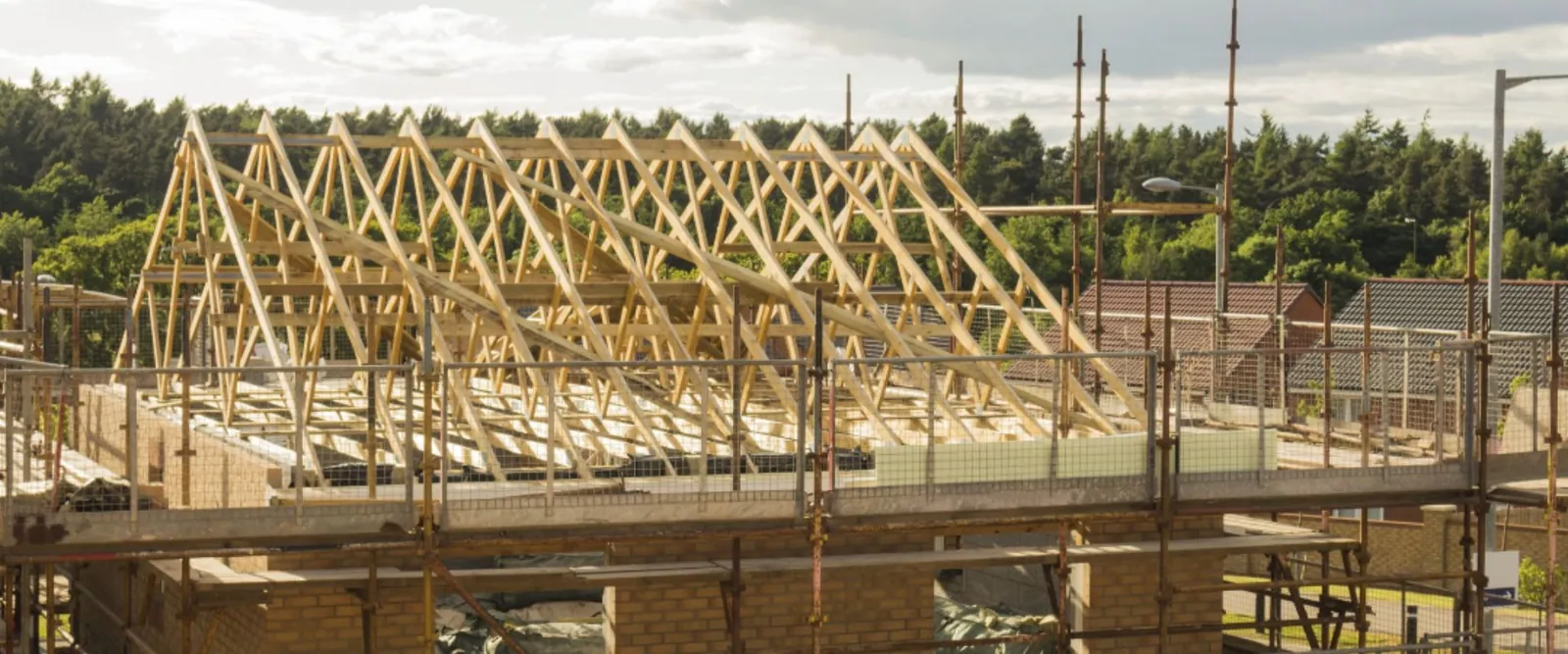
Timber roof trusses on a new brick house behind scaffolding

The short answer

Not different rules, but different details. Narrow lanes affect deliveries, a green or brook affects access and drainage, and older houses affect the method. We plan each job at the survey, including where the scaffolding stands, where materials will be stored, how skips are positioned, and how your neighbours are affected.

Chadlington's five neighbourhoods share a village but not a street plan. Reaching a house in Mill End may be nothing like reaching one in West End, and a roof job depends on getting scaffolding, materials and a skip to the right place at the right time. A careful plan at the start prevents blocked lanes and wasted days.

How does access change the job?

Narrow lanes can limit the size of a lorry, and a green may limit where a skip can stand. Boundary walls, trees and neighbouring roofs all affect where the scaffold goes. We plan this at the survey and tell you what the access means for the programme, so neither you nor the neighbours meet a surprise.

Does the National Landscape matter?

Chadlington lies in the Cotswolds National Landscape, the name in use since 22 November 2023 for what remains in law an area of outstanding natural beauty. Decisions on planning rest with the council, while the National Landscape body only gives advice. Roof windows and changes of material are the usual points of discussion, and our skylights page covers the planning rules.

Who handles building control here?

West Oxfordshire District Council is the local authority. On a bigger re-roof, building control may come from the council itself or from a registered building control approver. Whichever route applies, we tell you which it is, and we send the notification whenever the job is notifiable.

Once we finish, nothing is left behind: the waste leaves with us and the lane looks as it did before. If a delivery has to block the road for a short while, we agree the timing with you first so neighbours are warned.

Planning point

Settle access and consent at the survey, before a scaffold is booked.

Questions from around St Nicholas and the green

Do roofs beside Chadlington's brook need extra drainage checks?

They deserve a close look at gutters, downpipes and the foot of the walls below, because water has more places to go wrong near a brook or a mill lane. Outlets, joints and the ground beneath are checked at every survey, and anything blocked, cracked or leaking is photographed. A free-running gutter system protects the roof edge, the fascia and the masonry together, which is why it comes early in our checks.

My house is near St Nicholas. Is it likely to be listed?

Possibly, but asking is the only dependable way to find out. The district council holds the list of protected buildings, and asking it before a roof is priced is sensible. If it is, work that alters its character needs consent, while a repair in matching materials is usually straightforward. We can talk the options through before you contact the council.

Can you work on Victorian houses like Chadlington House?

Yes. Victorian roofs have wide spans, steep pitches and valleys that each need their own approach. We survey the whole roof, photograph each fault and recommend a repair or replacement only where the survey supports it. Lead flashings, chimneys and gutters are looked at as carefully as the covering.

Do you cover the villages along the Evenlode from Chadlington?

Yes. Chadlington is inside our working area from Swindon, and so are the villages strung along the Evenlode valley. If you would like to be certain, give us your postcode on the phone or on WhatsApp, or look at the areas page, which names every place we cover near Chipping Norton.

Ask us about your roof

Tell us what’s happening and we’ll call you back.

  • Photos of what we find
  • A written quote
  • 10-year workmanship guarantee

Or call 01793 626096

Call Get a quote