Finches Farm barn shows what Baydon's older buildings are like: flint walls with a thatched roof, plain, practical and centuries old. Few of us own a building quite like it, but plenty of Baydon owners look after outbuildings, stables, garages and converted barns in the same spirit, and the same sensible rules apply.
Q2.1Can the failed part simply be repaired?
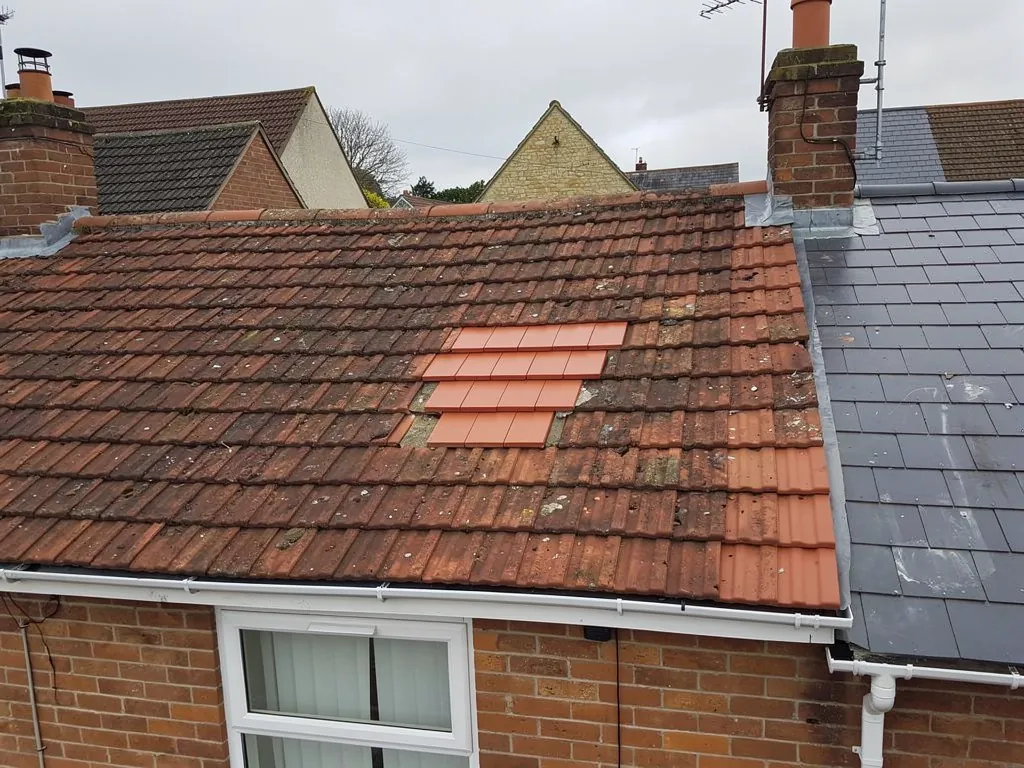
A farm building has a simple roof, and a simple roof is quick to read. A leak is nearly always a local failure, such as a slipped tile, a split flashing or a lifted sheet, and the cure is local. The first question is whether the timber underneath is still sound. If it is, we repair the covering and carry on. If the timber has softened, we replace what is soft and no more. Replacing a whole slope to cure one leak is the wrong answer, and it costs far more.
Q2.2When has the covering reached the end?
Sometimes a whole slope has run out of life. Tiles go porous, battens split at the nails and the underlay tears. That is the point to talk about a new covering. Because this is downland, we look hard at the fixings, and the roof is re-covered with every tile secured to suit the exposure. Our roof repairs page explains where a patch stops being enough.
Q2.3Does a converted barn change the job?
A barn that has become a home needs its roof to do more than keep rain out. Insulation, ventilation and sometimes a change of use all sit behind a re-roof, and Building Regulations may follow. We explain what is triggered before you commit, and the notification is ours to handle when the work falls under them.