
The fascia is the board running along the foot of the roof, facing outwards, and it carries the gutter brackets. The soffit is the board tucked underneath the overhang, closing the gap between the roof edge and the wall. At a gable end the same job is done by the bargeboard. Together they are the roofline, and each of them can be timber, uPVC or covered in aluminium.
Homeowners usually ask us one thing first: should the new boards be uPVC or timber? The honest answer depends on the age of the house and how much painting you want to take on, more than on the price of the board. This guide sets the materials side by side on lifespan, upkeep, appearance and fit with older buildings. For the money side see our guide to what fascia and soffit work costs, and for the bigger picture start with how the roofline fits together.
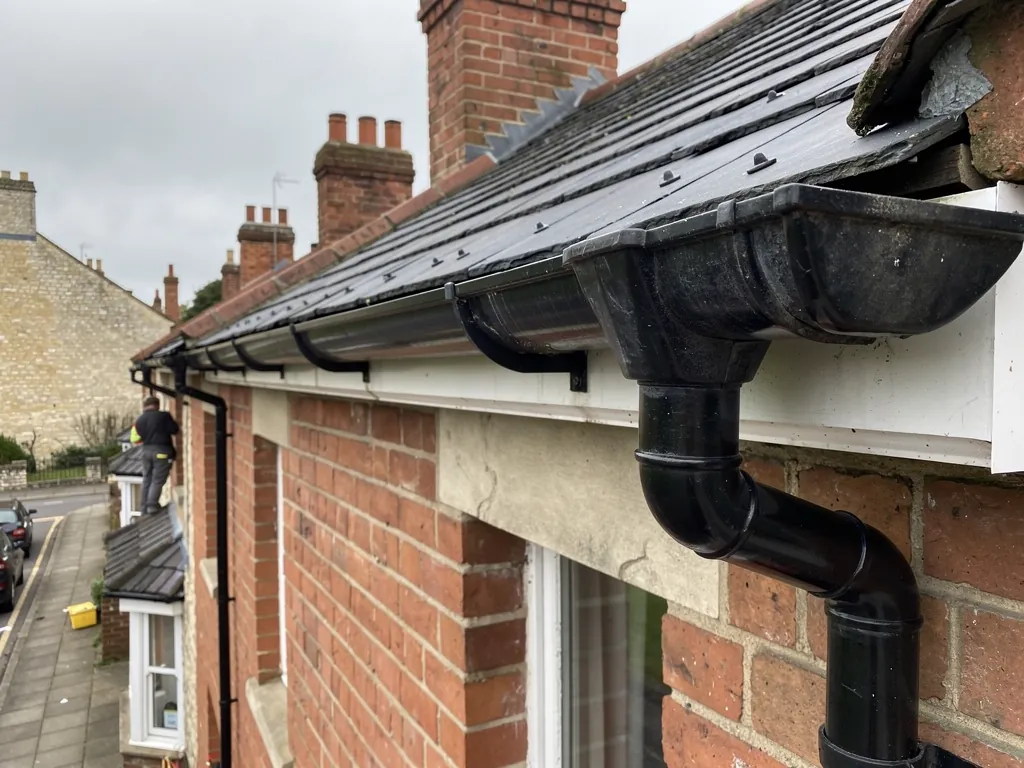
Timber fascias and soffits
Timber was the only choice for centuries, and it still is the right one for some buildings. A softwood fascia is cut from a plank, primed, undercoated and given two coats of gloss or a microporous paint. Hardwood is dearer and holds its shape better, though in practice most replacement timber boards on houses are good-quality softwood.
The strengths are easy to list. Timber can be planed to any profile, so a moulded board that matches the one on the neighbouring house is a joiner's job, not a catalogue order. It takes any colour. It can be repaired in place: a rotten foot can be cut out and a new length spliced in, which is something no plastic board allows. And it ages in a way that conservation officers accept.
The weakness is upkeep. Paint is the only thing protecting the wood from rain, and the boards sit directly under the gutter, which is the part of the house that gets wettest when something goes wrong. A paint film that cracks lets water into the end grain, and rot starts at the joints and at the back of the board where nobody looks. Fascias that have been painted every few years often stay sound for a very long time. Boards that were last painted when the house was bought tend to be soft when we press a screwdriver into them.
Where timber rots first
The usual places are the lower edge of the board, the butt joints between lengths, and the spot behind a leaking gutter joint or a downpipe connection. If those areas are sound, the rest probably is too.
uPVC: where it earns its place and where it lets you down
uPVC fascias are hollow or solid plastic boards that come in white, black, brown, grey and woodgrain foils. They arrive pre-finished, they do not rot and they never need a paint brush. That is the whole case for them, and for a 1980s or 1990s estate house with plain square-edged boards it is a strong one.
Price guides give a range. MyBuilder's guide, updated in August 2026, suggests a look at the roofline every five years, and puts a typical replacement interval at 10 to 20 years, which moves with the material and the exposure. A retailer of uPVC boards, Plastic Centre, quotes between 20 and 40 years for its own product. Those two figures disagree, and the retailer has an interest, so treat the lower end as the safer planning figure and the higher end as what a well-fitted board can reach.
The weak points are practical rather than dramatic. White uPVC yellows and chalks in strong sun, and cheap boards go first. Boards expand and contract with temperature, so joints and trims need a small allowance or they buckle and gape. Dark foils absorb more heat and move more. A plastic board cannot be spliced, so a damaged length is replaced, and the replacement may not match the colour of the old boards around it.
The rafter feet underneath
A uPVC board is fixed over whatever is behind it. If the rafter ends beneath an old timber fascia are rotten, new plastic simply hides the problem. We look at the rafter feet whenever the old boards come off, and tell you what we find.
Aluminium, capping and other covers
Aluminium appears on rooflines in two ways. One is a formed aluminium fascia and soffit set, usually powder-coated. The other is capping: thin aluminium or uPVC sheet bent over the face of an existing timber fascia and soffit. It is a way of getting a maintenance-free face without taking the old boards down. We cover when it makes sense in our guide to fascia capping.
Aluminium does not rot or rust and holds a colour for a long time, but it dents if a ladder is dragged across it, and it costs more than uPVC. Capping has one condition that matters more than the others: the timber underneath must be sound. Covering a board that is already soft just closes it in, where damp can keep working on it unseen. Where the boards are wet or crumbling, we recommend replacing instead.
Fibre cement and composite boards
You may be offered fibre cement or composite boards. They resist rot, take paint and hold a crisp edge, but they are heavier to fit and cut, and fewer joiners work with them. We would only suggest one where a customer specifically wants a painted finish with less upkeep than timber.
What goes under the boards
Whatever the fascia is made from, the gutter hangs from it. Heavy cast iron wants a stout fascia and close bracket spacing. Plastic gutters are light and forgiving. Our guide to gutter materials covers that side of the choice.
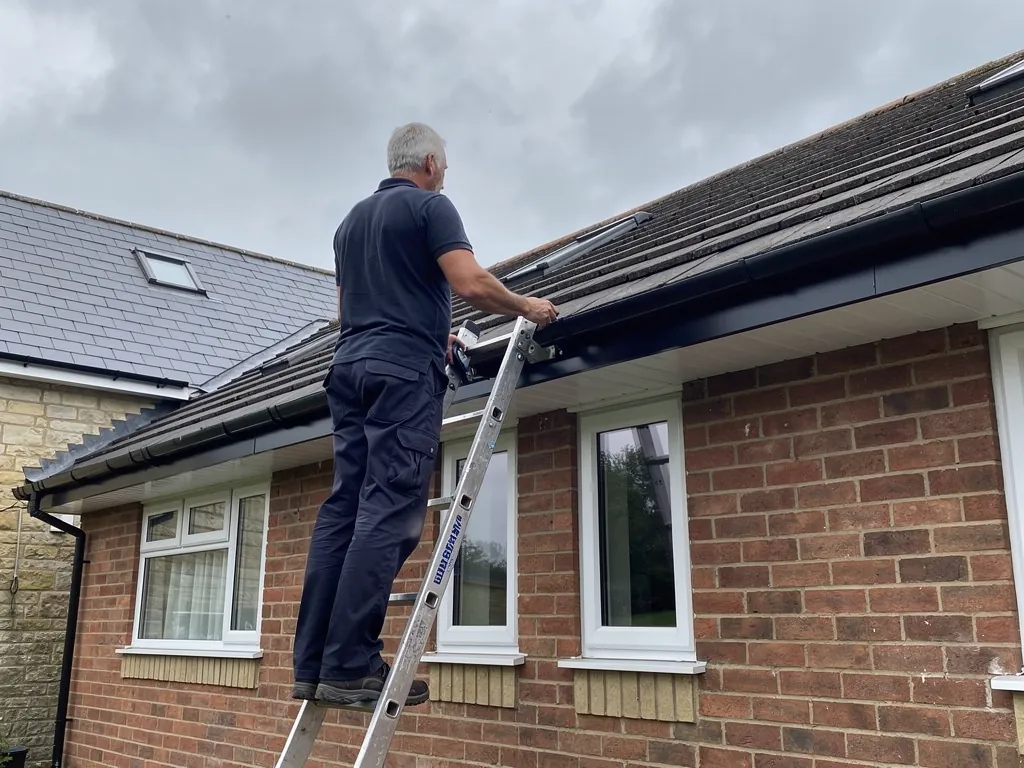
Life, upkeep and looks side by side
Lifespans below are typical ranges taken from the price guides above and general trade experience, not promises. Read the upkeep column against how much time you want to spend on ladders and paint tins.
| Material | Typical life | Upkeep | Looks |
|---|---|---|---|
| Timber | Depends on the paint regime | Repaint every few years; check ends and joints | Any profile and colour; looks right on older houses |
| uPVC | 10 to 20 years (MyBuilder); 20 to 40 years (retailer) | Wash down once or twice a year | Plain boards in a handful of colours |
| Aluminium | Long when sound; denting is the main risk | Wash down; no painting | Crisp, slim edges; powder-coat colours |
| Capping over timber | Tied to the timber underneath | Wash down; check the timber when work is done nearby | Looks like uPVC or aluminium |
Notice what the table does not say: that any one of these is simply better. A well-kept timber fascia outlasts a poorly fitted plastic one, and a plastic one outlasts a timber board that has been neglected for fifteen years.
Ventilation and the soffit board
One more thing separates a good soffit job from a poor one. Many roofs breathe through the soffit, either through a vented board or a plastic strip fitted along the eaves, and that air movement keeps the roof timbers and the loft dry. A solid soffit board put up where a vented one used to be can leave the loft damper than before. Whichever material you choose, tell us if you have ever had condensation or a musty smell in the roof space, and we will specify the ventilation to suit. Vent sizes and strip types are covered in soffit ventilation.
Older houses, conservation areas and listed buildings
Most of Swindon's housing is not protected, and on those houses the choice is yours. Older streets are different. The Victorian railway terraces, the Old Town and many village centres around Swindon have details that matter to how the street looks: deep eaves, moulded boards, exposed rafter feet.
Swindon Borough Council lists 27 conservation areas on its website, and notes Article 4 directions for Bishopstone and the Railway Village. An Article 4 direction withdraws permitted development rights, so work that would normally need no application can need one. In the Railway Village the direction, adopted in 1980, covers alterations to the exterior of the houses. Most of the cottages there are listed, and the council's own leaflet says listed building consent is usually required. Changing a fascia from timber to plastic on a listed house can be an alteration affecting its character, so it needs the council's say-so first.
If you live in a conservation area, in a listed building, or under an Article 4 direction, check with the planning and conservation team at Swindon Borough Council, or the district council for your village, before you order boards. On the survey visit we say which material we would fit and give the reasoning, then point out where consent could come into it. Like-for-like repair in the same material is the lowest-risk route, and it is often the best-looking one too.
If your house has an unusual profile, send us a close photograph of the board's end. A joiner can often match it, which keeps the old character and avoids a plastic board that looks wrong beside your neighbours.
A word on soffits and asbestos
On older houses the soffit may not be timber or plastic at all. Boards of asbestos insulating material were used under eaves, and the Health and Safety Executive lists external soffits among the likely spots. Looking at one tells you little, because it resembles modern boards. For anything built or refurbished before 2000 the HSE's position is to presume asbestos until shown otherwise.
That does not mean every old soffit is a hazard. Undisturbed board in good condition is not an emergency. It does mean that nobody should drill, snap or scrape a pre-2000 soffit board on a hunch. The HSE treats most removal of insulating board as higher-risk work with its own strict rules, so where we suspect the material, we stop and say so. A sample can be tested before any removal is planned. Our page on asbestos soffits goes through what happens next.
Fibre cement boards fitted later are a different product and are sometimes called by similar names, so it is worth asking what is actually up there before you or anyone else picks up a tool.
Choosing for your house
A few plain rules cover most Swindon roofs.
- A 1980s to 2000s estate house with plain boards: uPVC is sensible and usually the lowest effort over the years. Pick a colour that matches the window frames.
- A Victorian or Edwardian terrace with moulded boards or visible rafter feet: timber, or timber repairs, usually fits best, and may be required if the street is protected.
- Timber that is sound but tired: repair and repaint before assuming replacement. Capping can follow if you want a low-upkeep face.
- A garage or extension with a flat roof edge: the fascia often holds the trim for the roof covering, so the material choice follows the roof system. See roofline work on protected buildings if the property is in a protected area.
Whichever you choose, ask for a written quote that names the material, says whether VAT and scaffolding are included, and says what will be done if rotten rafter ends turn up. Our written quote arrives after a survey that includes photographs of your own roofline, and the finished work carries a 10-year workmanship guarantee in writing. We carry the old boards off and sweep up before we go. The whole range of roofline work sits under gutters, soffits and fascias.