Street of 1960s brick bungalows with concrete tile roofs

Roofers in Market Lavington

Leaks, loose tiles, tired chimneys and failing porch roofs in Market Lavington, from the medieval streets around St Mary's to the newer houses spreading along the foot of the plain.

Market Lavington's roofs, from manor to close

Old market street with tiled gables
The medieval market street

Market Lavington began as a planned town in the thirteenth century, and a charter of 1254 allowed a weekly market that ran for roughly six hundred years. The street plan around it still reads that way. The Old House, a fourteenth-century manor with roughcast stone walls and some brick, is Grade I listed, and so is St Mary's church. Roofs on buildings this old have been recovered several times, so the outside may rest on timbers from different centuries. Repair here means finding the smallest intervention that stops the water, and checking early whether listed building consent is in play before anyone orders materials or books scaffolding.

Brick stack and flashing on a Victorian house
Victorian brick and stone dressings

In 1865 the architect Ewan Christian, who had restored St Mary's the year before, designed the Victorian manor in red brick with blue brick patterning and stone dressings. Houses built in that confident style tend to share a set of roofing details: tall brick stacks, lead flashings at the foot of each stack, valley gutters between gables, and decorative eaves and verges that hide how much water they carry. These are the places where we usually find a leak starting. The covering may be perfectly sound while a worn flashing or a blocked valley sends water into the wall below it, so we trace the fault instead of assuming the slope is to blame.

Concrete tiled bungalow roof beside a garage
Newer homes at the foot of the plain

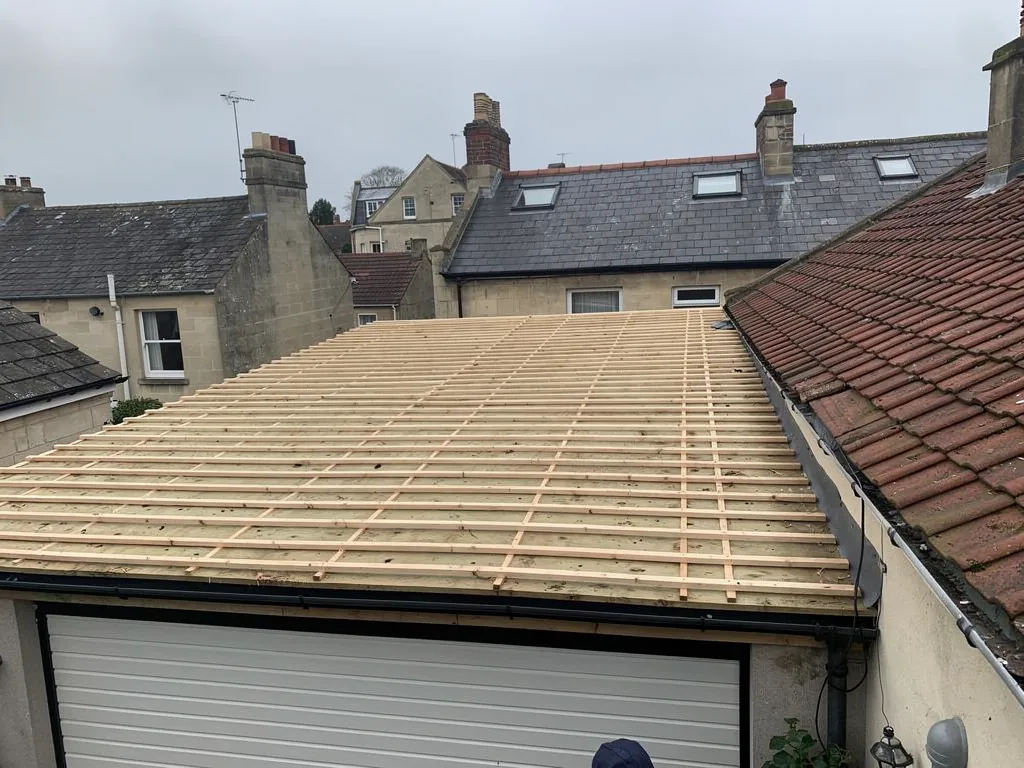
Market Lavington is a large village where Salisbury Plain begins to rise, about five miles south of Devizes, and over the last century it has grown well beyond its medieval core. Newer houses, bungalows and garages on those later streets generally carry machine-made tiles, while the fixings and underlay beneath them wear out at their own pace. Ridges and verges on open ground feel the wind first. Flat and shallow roofs over porches, garages and rear extensions usually wear out sooner than the main slopes. We look at those smaller roofs on the same visit, because a bedroom ceiling stain often begins on the porch below it.

Below the scarp, south of Devizes

Map showing Market Lavington and central Swindon. 25 road miles south-south-west of central Swindon.

Distance
25 road miles south-south-west of central Swindon
Council
Wiltshire Council
Council
Wiltshire Council
Conservation area
Market Lavington has a conservation area
Setting
A large village under the scarp of Salisbury Plain

Market Lavington roofing, asked and answered

Can a house beside St Mary's churchyard be re-roofed?

Yes. Properties close to the church may be listed or sit in a protected area, so we ask Wiltshire Council before pricing any change to how a roof looks.

Are roughcast stone walls a problem for a new roof?

Not by themselves. Old stone walls are soft and uneven, so flashings and verges are cut and dressed to suit the wall rather than forced into a straight line.

Will the scarp edge wind loosen my ridge tiles?

It can on an open site. Ridge and verge fixings get the closest look from us, and bedding that has gone loose is re-fixed mechanically.

Q1

What sits on Market Lavington's older roofs?

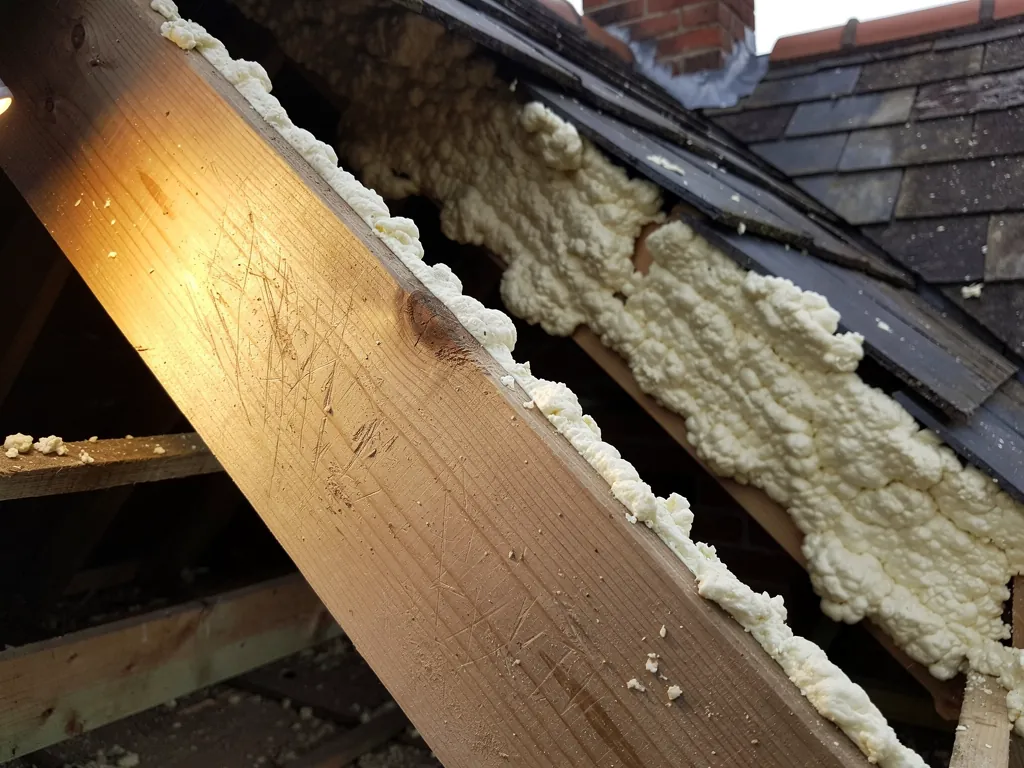
Scraped-back rafter beside thick spray foam under a slate roof
Garage roof stripped to new timber battens above the door

The short answer

Roofs in the old centre have been recovered many times, so a single street can show tiles, slate and patched repairs side by side. The oldest buildings, such as the fourteenth-century Old House, rest on heavy timbers, and any work begins with a look at what holds the covering up.

Walk the lanes around the church and the age of the place is plain. The market charter dates from 1254, the parish church is of the late thirteenth century, and the Old House is a fourteenth-century manor that Historic England describes as the only example in Wiltshire of its double-aisled open hall. Buildings of this age rarely wear the roof they were born with.

Why do the roofs on one street not match?

Because each roof has its own repair history. A slope may have been stripped and re-laid in one century, patched in the next and given a new ridge by a later owner. Different tiles, different nails and different bedding end up on one slope, and each ages at its own pace. Our survey photographs mark every join, so you can see for yourself where the weak points are.

On timber-framed or heavy-walled buildings we also check the roof structure under the covering. A roof that has held for centuries can still have a rotted wall plate or a sagging rafter foot, and fixing the covering without dealing with those only buys a short respite.

How much of an old roof can stay?

As much as is sound. Tiles in good condition are sorted, kept and laid again; battens and fixings that have failed are renewed. Stripping a whole roof when one section would do is the bigger job, and we do not recommend it unless the survey shows the entire slope is tired. The written quote says which approach we propose and why.

Our roof repairs page explains where a repair ends and a re-cover begins, and what we look for in an old roof before deciding.

If a roof has a history of leaks that return after each repair, the cause usually lies beyond the covering: a failed gutter, a damp wall, or a flashing that was never properly dressed. We would rather find that cause than patch the symptom a third time.

Q2

Who decides on roof work near St Mary's?

The answer

It depends on the building. A listed house needs consent before anything that alters its character is touched. An unlisted house may sit in a conservation area with its own rules. Wiltshire Council can say which applies, and the church itself follows a separate faculty route.

Much of the roofing done in Market Lavington needs no permission whatever. Replacing cracked tiles or refixing slipped ones with the same kind counts as upkeep. A few situations change that, and it is better to know about them before a quote is signed.

Is my house listed?

The Old House and St Mary's are both Grade I, which is the highest grade, but listing runs through the village at lower grades too. Changing what makes a listed house special calls for listed building consent, and the roofing material can be part of what makes it special. The council keeps the list and can tell you the grade of your house. We ask the question at the first visit, and where it applies we plan around the existing covering rather than a new one.

St Mary's itself is in use as a Church of England church, which puts it under the ecclesiastical exemption: changes go through the faculty system, not the council. That route is for the church, not for the houses around it.

What about the conservation area?

Market Lavington has a conservation area covering its historic centre, and Wiltshire Council's planners can confirm whether your road lies within it. Inside the boundary, repairs that match the existing roof seldom need an application, while a change of covering or a visible alteration may.

When does Building Regulations approval apply?

Two limits from the Planning Portal decide whether re-covering needs a building control application: under 25 per cent of the total building envelope and under 50 per cent of the roof affected. Beyond either, approval is required and the roof may need better insulation. A covering at least 15 per cent heavier needs approval as well. We explain which of these applies to your job and handle the Building Regulations notification where one is due, through Wiltshire Council's building control team or a registered building control approver.

MythA Grade I church in the village means every roof nearby needs consent.

FactConsent follows the building itself: a listed house needs listed building consent, and an unlisted neighbour is checked against any conservation area.

Q3

Which faults hit a brick and tile house here?

Weathered brick chimney stack with eroded joints and cracked pot
Roofer repointing a stone chimney stack above lead flashing

The short answer

Leaks on Victorian and later brick houses usually start at the joins, not in the middle of the slope: flashings at the stack, loose ridge tiles, a blocked valley or a failed porch roof. Finding which one it is takes a proper look, and the cure is often smaller than people expect.

When a stain appears on a ceiling, the instinct is to blame the tiles. Often the covering is fine, and the water is getting in where two parts of the building meet. The Victorian manor of 1865, with its tall brick stacks and patterned walls, shows the sort of detail that tends to need attention.

What goes wrong around a chimney stack?

Flashing is lead dressed over the joint between stack and slope. Over time it lifts, cracks or loses its pointing, and rain runs behind it. The mortar joints of the stack weather too. Repointing, fresh lead and sometimes new flaunching, the sloping mortar that holds the pots at the top of the stack, cure most of these leaks without touching the roof covering.

Do ridge tiles need replacing when they loosen?

Not necessarily. The 2014 revision of BS 5534 stopped treating mortar alone as enough to hold ridge and hip tiles, so mechanical fixings go in as well. If the tiles are sound but the bedding has failed, we can lift, re-bed and fix them again, or fit a dry-fix system that has passed the BS 8612 tests. Our ridge, verge and dry-fix page sets out the choice. The verge, where the covering finishes at a gable end, is the part that takes the wind first.

Why do porch and garage roofs fail first?

They are often flat or low-pitched, and a flat roof has a shorter working life than a pitched one. The covering splits, water ponds on it, and the fault shows up in the room beneath. A small roof like this is frequently better recovered than patched, and the survey report spells it out.

The pitched roofing page covers the main roof in more detail.

Common leak points on a village brick house
WhereLikely causeUsual fix
Chimney stackLifted flashing, worn pointingNew lead, repointing
RidgeFailed beddingRe-bed and fix mechanically
ValleyBlocked or split liningClear and re-line
Porch roofSplit flat coveringPatch or re-cover

Questions from the village below the scarp

Why do roofs near Market Lavington's church look so patched?

Buildings that have stood since the thirteenth and fourteenth centuries have been repaired over and over, and each repair used what was to hand. A patchwork of tiles is a sign of age, not neglect. We sort what is sound from what is not and aim to keep as much of the earlier covering as the survey allows.

Is a listed house in Market Lavington repairable without a new covering?

Often, yes. Repairs that copy what is already there rarely need consent, while changes to how the building looks and feels do. We settle the method with you before the first tile moves and suggest a call to Wiltshire Council if the plan shifts.

Does the open ground south of Market Lavington make roofs more exposed?

On the southern side the village meets the foot of the plain, so exposed gables and ridges can catch the wind. That is why ridge, hip and verge fixings get our attention first, and why a roof with failing bedding is better re-fixed than left.

Do you work in Easterton, West Lavington and the villages nearby?

Yes. Easterton, West Lavington, Urchfont and Great Cheverell all lie inside our 30-mile reach from Swindon. Ring or send a WhatsApp message giving your postcode, and we will check your address against the map before booking a survey.

Ask us about your roof

Tell us what’s happening and we’ll call you back.

  • Photos of what we find
  • A written quote
  • 10-year workmanship guarantee

Or call 01793 626096

Call Get a quote