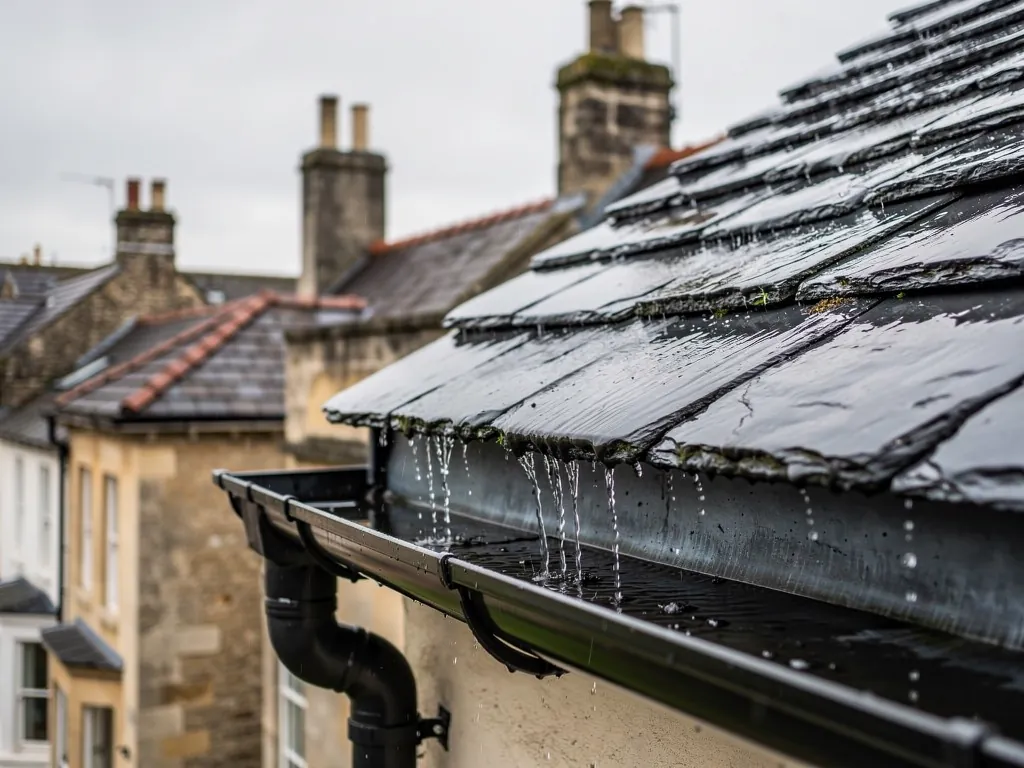
The Wilts & Berks Canal reached Longcot in 1805, and Longcot Wharf, the wharf nearest to Faringdon, helped the village grow in the early nineteenth century. The canal was formally abandoned by Act of Parliament in 1914, but the cottages it helped to fill remain.
Q2.1Why are the walls older than the roof?
Brick or stone walls can last for centuries. A roof covering does not, and everything under it ages at its own pace. Battens may be renewed once every century or so, nails rust through much sooner, and underlay, where there is any, may be a mid-twentieth-century addition. A roof that looks uniform from the road can contain parts from three different periods.
Q2.2What does the loft show about the roof?
The underside tells the truth. Daylight between tiles, dark staining on rafters and battens, rusted nail tips and sagging between purlins all say more than the view from the garden. We photograph them from inside and out, and the quote refers to those photographs.
Q2.3Repair, re-batten or re-roof: which one?
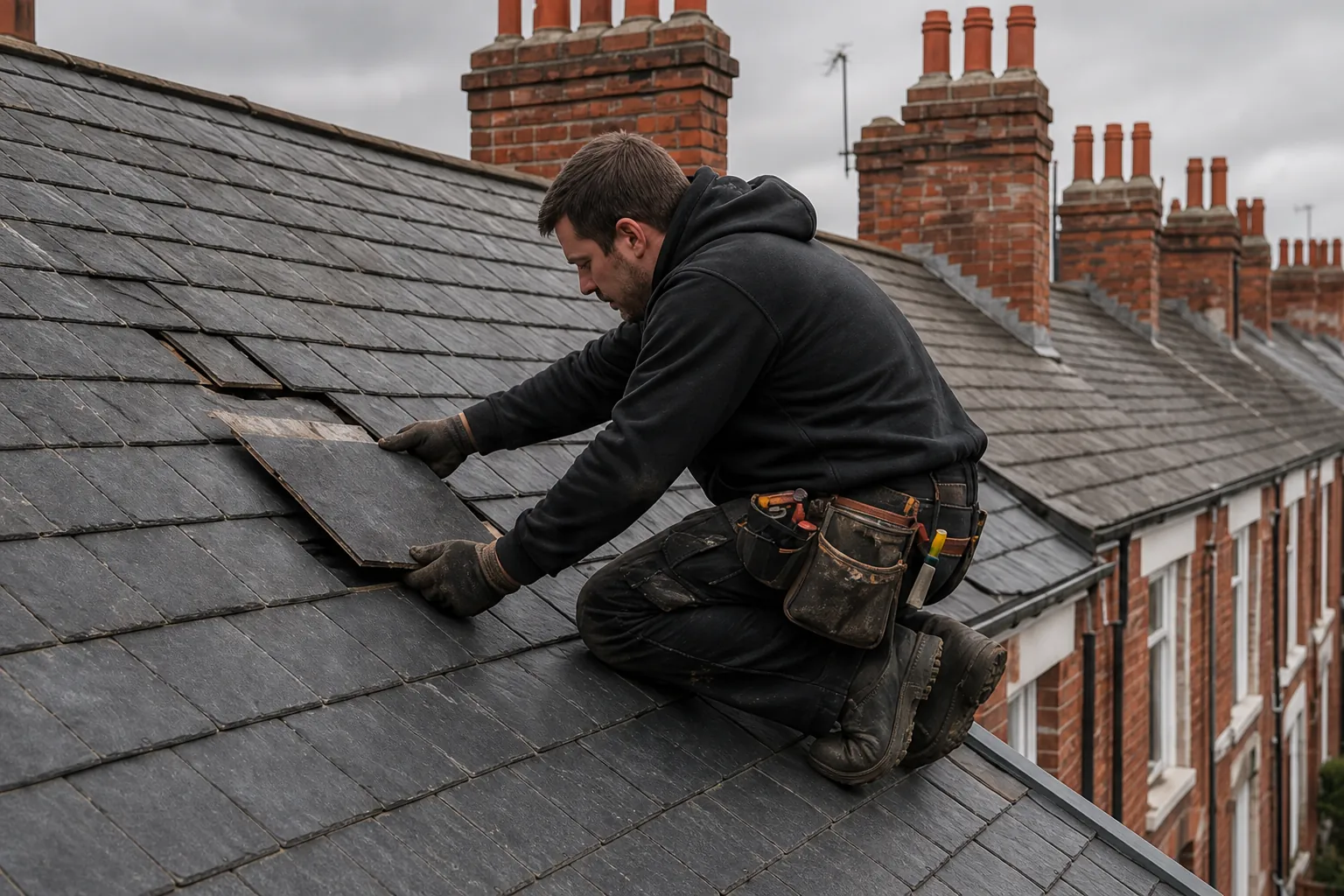
Where the tiles hold up and the battens are tired, the answer is to lift, re-batten and re-lay. Where the tiles are crumbling or cracked right across the slope, only a new covering will do the job. Our roof replacement page sets out how we weigh one against the other. A chimney that has been altered over the years also needs a look, and our chimney repairs page shows what is involved.
Do not assume an old cottage needs a new roof, and do not assume it can go on as it is. The survey decides.