Roofers on a buff brick estate house with grey tile roofs

Roofers in Hurstbourne Tarrant

Tiled and slated houses, chimney stacks and outbuilding roofs looked after in Hurstbourne Tarrant and Ibthorpe, where a conservation area and a National Landscape both shape the work.

Hurstbourne Tarrant's roofs, from nunnery land to downland lanes

Old tiled cottages along a village lane
The old village and its conservation area

The Tarrant in the village's name dates from 1226, when the manor was given to the Cistercian Tarrant nunnery, so people have been keeping roofs over their heads here for a very long time. The council has designated a conservation area called Hurstbourne Tarrant and Ibthorpe. We never assume which cottages lie inside its line, because the boundary has to be checked address by address. A house that has stood for centuries tends to wear a patchwork: a replaced slope here, a mortar fillet there, a flashing from a different decade. Sorting sound work from hopeful work means looking closely at the battens, the underlay and the lead before deciding what stays.

Large period house roof with several chimney stacks
Hurstbourne House and the big roofs

Hurstbourne House is a Grade II listed country house of the late seventeenth century, standing on the edge of the village. Roofs on houses of that stamp are large, with several pitches, hidden gutters, a cluster of chimney stacks and leadwork that has had several rounds of repair. Nothing on such a roof is easy to get at, and most repairs call for scaffold or a tower. Smaller period houses elsewhere in the parish share the same troubles in miniature: heavy old timbers, lime mortar in the stacks, and a covering that a conservation officer expects to see matched whenever any of it is replaced.

Garage, barn and extension roofs on a farm lane
Ibthorpe, outbuildings and newer homes

The civil parish also includes the village of Ibthorpe, so the roofs we visit are scattered across two settlements and the lanes joining them. Further out, the parish has later houses in concrete or clay tile, garages and extensions with flat roofs, and working buildings such as barns, stables and workshops under profiled sheets or felt. We approach every one the same way: the ridge first, then the valleys, then each flashing, then the gutters. A building with trees close behind it fills its gutters with leaves and grows moss on its shaded slope, which is why drainage gets checked at every visit and not only when a downpipe is overflowing.

From Swindon into the North Wessex Downs

Map showing Hurstbourne Tarrant and central Swindon. 28 road miles south-east of central Swindon.

Distance
28 road miles south-east of central Swindon
Council
Test Valley Borough Council
Conservation area
Hurstbourne Tarrant and Ibthorpe
Landscape
North Wessex Downs National Landscape
Council
Test Valley Borough Council, Hampshire

Hurstbourne Tarrant roofs, answered before you commit

Does the Hurstbourne Tarrant and Ibthorpe conservation area stop me re-tiling?

Not by itself. A roof recovered in matching material is rarely something that needs an application to the planning team, but speak to Test Valley Borough Council first if you intend any change to the material or the look of the roof.

Does the downland setting make planning for a new roof stricter?

It raises the level of scrutiny on changes to appearance, not on like-for-like repairs. The partnership for the area gives advice, and the borough council makes the decision.

Is the roof on an old farm building worth saving?

Frequently. Sound rafters and purlins are worth keeping, and a fresh covering over them usually costs far less than a rebuild. We assess the timbers before recommending anything.

Q1

What does National Landscape status mean for my roof?

Rolled lead roof covering over a bay above white windows
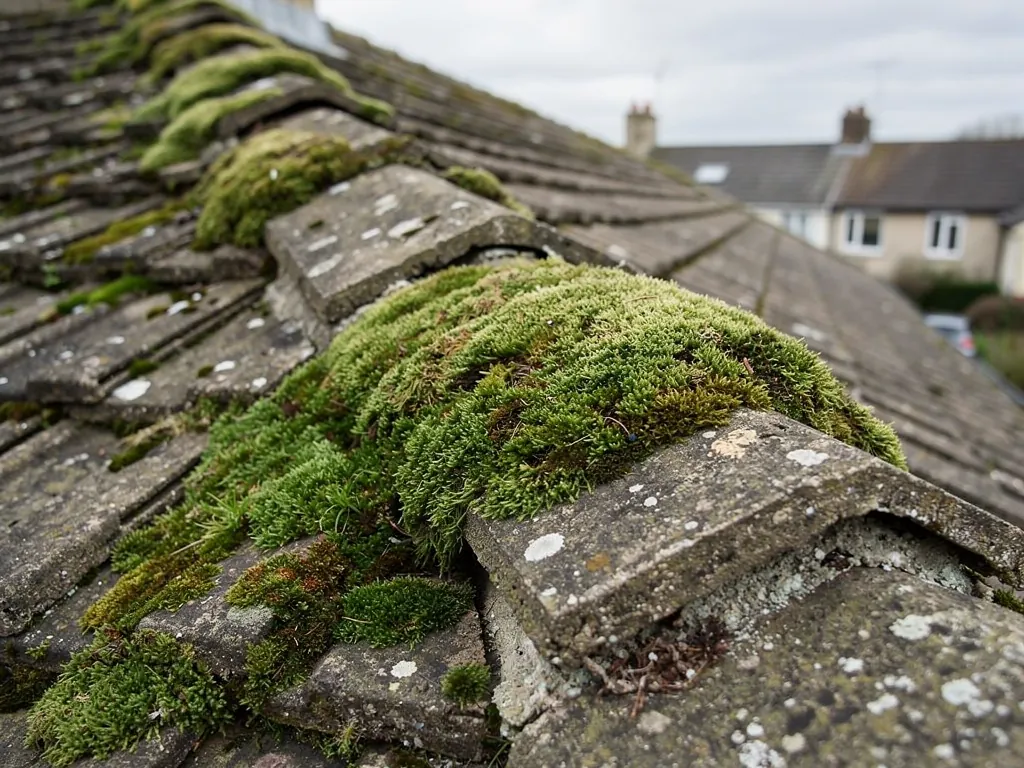
Thick moss growing over ridge and concrete roof tiles

The short answer

Less than most people fear. Re-roofing like for like carries on as normal, and the National Landscape partnership only advises. Test Valley Borough Council decides planning questions, and a few permitted development rights, such as dormer additions, are restricted on land with this status.

Hurstbourne Tarrant lies within the North Wessex Downs, a designation known as a National Landscape since 22 November 2023. The change was one of name: the formal status as an Area of Outstanding Natural Beauty, and the legal protections attached to it, stayed exactly as they were.

Who actually makes roof decisions in the Downs?

The council does. The North Wessex Downs partnership describes itself as an advisory body with no statutory planning powers, leaving the primary planning role with the local planning authority. For this village that authority is Test Valley Borough Council, so a question about a particular application goes to its planning team and not to the landscape body.

Does the conservation area add anything on top?

It adds attention to appearance. Hurstbourne Tarrant and Ibthorpe is a designated conservation area, so a change that alters how a roof looks is examined more closely. Matching material laid the way the old covering was laid is the quietest route. Moving from clay to concrete, or from natural slate to a lighter substitute, is worth raising with the council's planners before any contract is signed.

Where do roof windows and dormers fit in?

Land in a conservation area or a National Landscape is treated differently from ordinary residential land, and certain rights are narrower. Rather than repeat the detail here, we keep it on our roof window planning page, so you can read the rules once and then ask the council about your own address.

None of this obstructs ordinary maintenance. Putting back slipped tiles, replacing a worn flashing or setting a ridge afresh are the same jobs in the Downs as anywhere else, and they do not normally need an application. What the setting changes is the care taken over matching: colour, texture and size of tile all get checked against the neighbours before an order is placed.

MythThe National Landscape board has to approve every roof job in the Downs.

FactThe partnership only advises; the planning authority makes the decisions.

Q2

What should the owner of a listed country house roof expect?

The answer

Slow, careful work, with consent wherever the roof's character is affected. Hurstbourne House is Grade II listed, and roofs of that standing are repaired in matching materials, using methods the building already shows. Expect a survey, a photographic record of the present roof and a written quote before anything starts.

Hurstbourne House, a late seventeenth-century Grade II listed country house, shows what a big old roof asks of anyone who looks after it. You need not own a house on that scale for the lessons to apply; they hold for any listed or period building in the parish, down to a modest cottage with one tall stack.

Why do big roofs fail at their junctions, not their middle?

Because the joints are where different materials meet. A valley gutter carries the run-off from two slopes at once. A parapet gutter lies behind a wall. A chimney stack wears a collar of lead around each face. Every one of those junctions depends on lead being dressed correctly and fixings staying sound, and each has a shorter working life than the tile beside it. Well-dressed lead can serve for generations, yet later patches seldom match that record.

How do you check old timber from inside the loft?

Armed with a torch and a bradawl, we hunt for dark staining, soft patches and daylight at the laps. A soft rafter foot or a damp wall plate points to a leak that has run for years. The covering outside can look tidy while the damage sits underneath, down at the eaves.

Does it matter who does the lead?

Yes, because the work depends on correct thickness, careful joints and the right fixings. Sheet lead is graded by code, and Code 4 is the usual general choice for flashings. Our lead roofing page explains the codes.

Anything beyond like-for-like repair is talked through with you first, and with the council if it affects the building's look, before a start date is offered. Photographs taken before work begins also give the council something to compare against if consent is needed.

Q3

What does a Hurstbourne roof survey involve?

Roofer repointing a stone chimney stack above lead flashing
Lead-lined valley gutter between two slate roof slopes

The short answer

A visit to look over every slope, flashing, gutter and chimney, with a written quote to follow, illustrated by photographs of your own roof. Distance is rarely the issue across the parish; what shapes the survey is access, and whether a ladder, tower or drone is the right way up.

With the parish spread across Hurstbourne Tarrant, Ibthorpe and the lanes in between, we plan each survey around the building and not the postcode. A downland village house, a barn and a listed manor each ask for a different approach, and the way in is the first decision.

What happens on the day itself?

We walk the ground first and look up at the ridges, the chimneys and the valleys. Then we get above them, by ladder, tower or drone depending on the pitch and the height, and photograph each fault we find. Upstairs we search the loft for chinks of daylight, wet timber and the state of the underlay, which is the sheet laid under the battens as a second line of defence. Every picture is attached to the written quote, so each point can be followed on screen.

Is a drone better than a ladder?

Sometimes. A drone reaches a high stack without scaffold and keeps weight off a fragile covering, but it cannot tap a slate, lift a tile or prod a soft batten. For most pitched roofs a ladder or tower still gives the fuller picture, and for a very tall stack the drone fills the gaps. Access shapes the job more than distance does: a tower on a soft verge, a gate too narrow for a lorry or a stack rising out of a valley all change how the work is planned.

What do national guides say about inspection prices?

The figures below come from MyBuilder, updated 21 August 2026, and are typical across the country, not prices for this parish. The quote we write afterwards prices the job on your roof, not these national bands.

Our roof inspections and surveys page shows what each type of survey records.

What it typically costs

  • Standard survey£150 to £250
  • Drone survey£200 to £400
  • Thermal survey£300 to £500
Typical ranges quoted nationally for inspections, which say nothing about any particular house. MyBuilder roof inspection cost guide, updated 21 August 2026.

Roofing services in Hurstbourne Tarrant

Questions from the lanes of the parish

What gives way first on a tiled Hurstbourne Tarrant house?

The edges and junctions. Ridge bedding, verge cement and lead flashings tend to give up before the main field of tiles does. A slipped tile near the top or a stained wall beside a chimney are the usual early signs, and each can be put right without opening the rest of the roof. Once we have looked, a written quote follows, and our ten-year workmanship guarantee stands behind the finished job.

Can you reach a house at the end of a long Ibthorpe track?

Yes. Narrow lanes and long drives are normal in this part of Hampshire. Tell us about the approach, any gates or weight limits, and where a tower or skip could stand, and the survey and the work are planned around them.

Must someone be in during the survey?

Not necessarily. If the roof can be reached from outside, we only need to get into the garden and, ideally, the loft hatch. Photographs and the written quote are then sent to you to look over.

Do you work on farm and estate buildings around Ibthorpe?

Yes. Barns, stables and workshops are ordinary roofing jobs: sheet and felt coverings, rotten purlins and gutters that have sagged off their brackets. We look at the structure first and say plainly which parts are worth keeping.

Ask us about your roof

Tell us what’s happening and we’ll call you back.

  • Photos of what we find
  • A written quote
  • 10-year workmanship guarantee

Or call 01793 626096

Call Get a quote