Roofers on a slate roof along a limestone village street

Roofers in Appleshaw

Slate, tile, felt and lead for Appleshaw, a small Hampshire parish tucked against the Wiltshire border: the 1836 church and its Victorian neighbours, the cottages near the lane, and the garages and sheds behind them.

Appleshaw's roofs, from church slate to garage felt

Slate roof on a plain Victorian building
The church, chapel and school

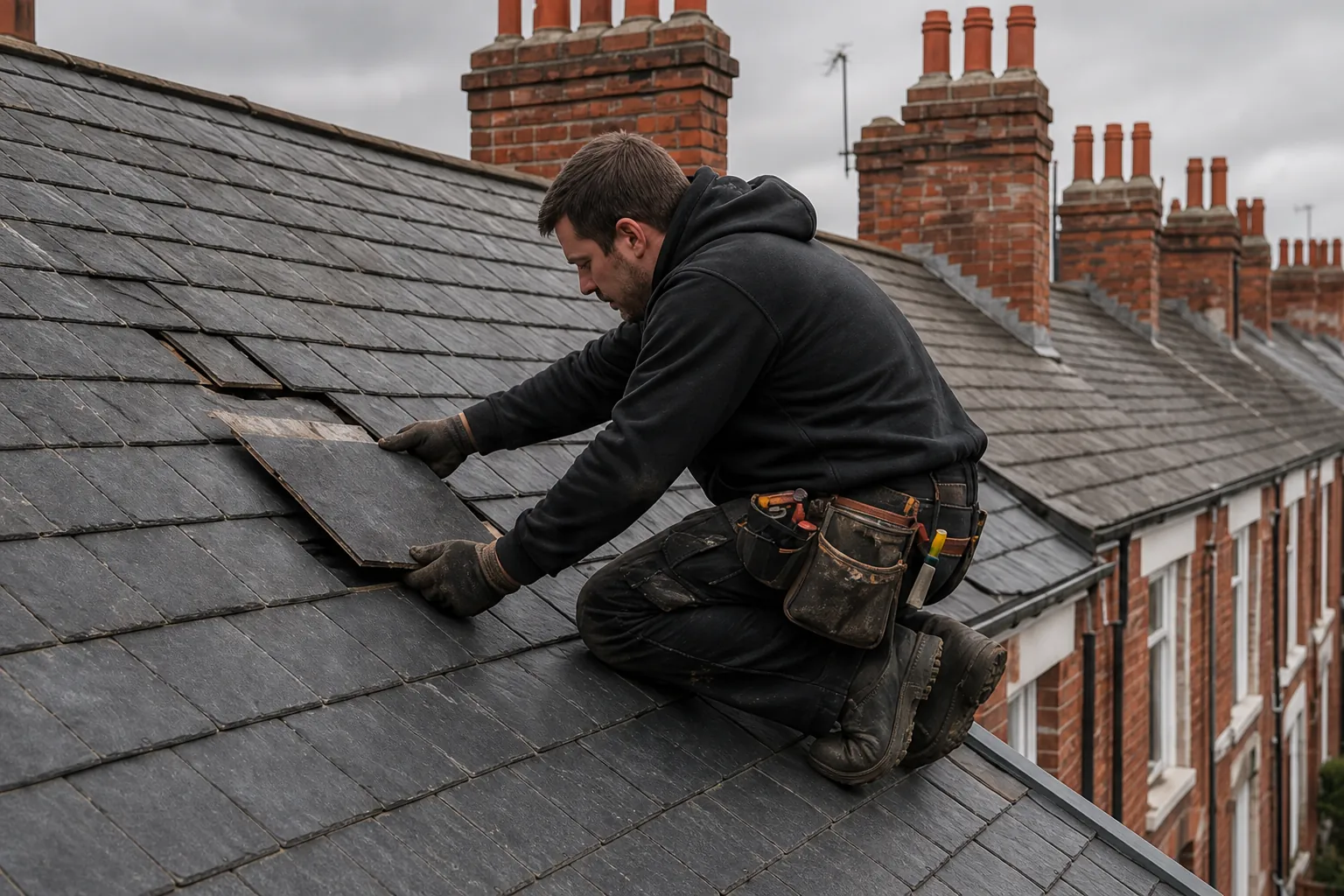
Appleshaw's parish church was built in 1836, and the 1911 county history describes it as extremely plain, with rough-cast walls and slate roofs. A Primitive Methodist chapel followed in 1869 and the school in 1870, so the village's public buildings are Victorian work, roofed the way that period understood. Iron nails were the standard fixing, and iron corrodes. Lead worked into the joint between roof and masonry splits after many winters, and ridges set only in mortar loosen. On plain buildings with long unbroken slopes, a patchy repair is visible from the road, so replacement slate is matched for size, thickness and colour before any old slate is lifted.

Village cottages with tiled pitched roofs
Houses inside the conservation area

Test Valley Borough Council's records include an Appleshaw conservation area. The parish covers only 713 acres, a size that keeps everything close, so old cottages, farmhouses and newer infill sit shoulder to shoulder, and one roof is often seen from the lane and from several gardens at once. That makes the finish matter. The eye follows the ridge, the eaves and the gable edge, and a repair in a different tile or an untidy verge (the sloping edge of a roof at a gable end) shows. Before changing the material on a house near the village centre, ask the council what applies to your address.

Flat-roofed garage and low outbuilding
Garages, barns and later additions

A parish with farmland on its edges collects roofs that never feature in a conservation appraisal: garages, workshops, sheds, converted barns and single-storey extensions. Many carry shallow coverings on timber decks, such as bitumen felt, a single sheet of EPDM rubber, or a fibreglass laminate known as GRP, and none of them ages the way tile does. Ponding after rain, split seams and choked outlets are the usual culprits. Corrugated sheets on older outbuildings may be asbestos cement, so the sensible rule is to assume nothing, touch nothing and have the material identified, because breaking the sheets up is what releases fibres into the air.

From Swindon to the Hampshire border

Map showing Appleshaw and central Swindon. 30 road miles south-south-east of central Swindon.

Distance
30 road miles south-south-east of central Swindon
Council
Test Valley Borough Council
Council
Test Valley Borough Council
Conservation area
Appleshaw, on the council's record
Setting
A small chalk-subsoil parish on the Hampshire and Wiltshire border

Appleshaw roof questions

Does my Appleshaw address fall within the conservation area?

Test Valley Borough Council's record includes an Appleshaw conservation area. Where its edge runs is shown on the council's map, so confirm your address with the planning team before a roof changes appearance.

Can an old slate roof on a village building be patched?

Often, yes. If the slate is healthy and just the fixing has rusted, refixing and swapping the odd cracked piece is the smaller job. The survey photographs show which case you have.

Will the survey cover my garage and outbuildings too?

Yes, if you ask. Garage, workshop and extension roofs fail differently from the house, so each one is photographed during the survey, and the written quote prices whichever you choose, one roof or all of them.

Q1

How does a slate roof like Appleshaw church's age?

Roofer refixing a slipped slate on a terraced house roof
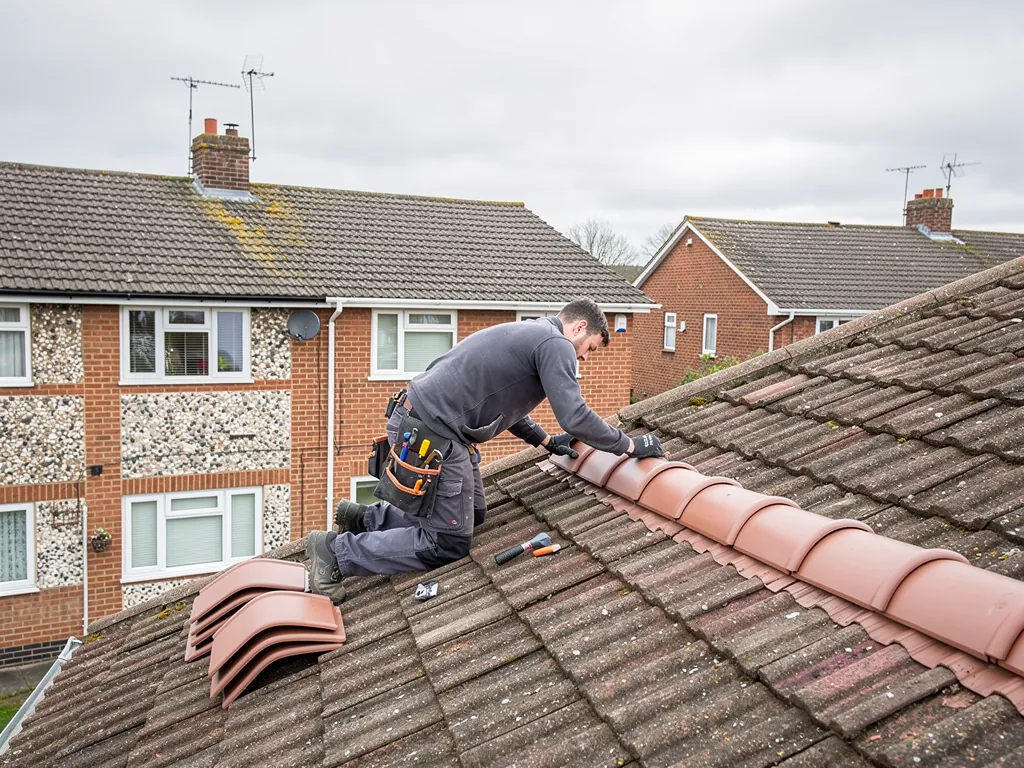
Roofer fixing new red ridge tiles along a concrete tile roof

The short answer

Slowly, then all at once. Welsh slate itself can outlast several generations, but the iron nails, lead edging and mortar-bedded ridges that hold it together wear out sooner. A sound slate on a rusted nail needs refixing, not replacing, so the fixings are the first thing we examine, and the photographs show you what we found.

Appleshaw's church dates from 1836, and the 1911 county history records slate roofs over rough-cast walls. A roof of that age is a useful lesson, because the stone barely changes with time while everything around it does.

Why do slates slip when none are broken?

The cause is almost always the nail, and it is the least visible part of the roof. Early slates hung on iron, and iron rusts until the shank thins and the slate sags down a few millimetres, then slides. Owners notice a gap, a dark stain on a ceiling, or a slate on the path. Putting the same slate back on the same type of nail only repeats the failure, so refixing uses stainless or copper fixings, with clips where a slate needs extra grip in a gust.

What gives out at the edges of the roof?

Where slopes meet a wall or a chimney, sheets of lead are worked into the joint to keep water out. Lead moves with every temperature swing, and eventually it cracks along the folds. A soaker is a small lead piece slipped under each course of slate at such a junction, and soakers fail too, often unseen. The ridge along the top was traditionally set in mortar alone. Since BS 5534:2014, a ridge set in mortar and nothing else no longer meets the standard, so one re-set today is pinned as well as bedded.

Can a church or chapel roof be worked on from the ground?

Rarely. Tall walls and long slopes mean a tower or scaffold, and the access plan is settled before the quote is written, because it shapes both the safety of the job and the cost.

Our slate roofing page goes into sizes and lifespans, and roof repairs sets out the point at which a patch stops being enough.

On a roof like this we climb every slope, photograph each defect and hand you the pictures with the quote, so you can see which slates are finished and which have only lost their fixings.


Q2

Do Appleshaw's conservation area rules affect my roof?

The answer

Where the roof's looks stay the same, usually not. Re-covering in the original material seldom needs planning permission, but a different material, a new roofline or a listing can change that. Test Valley Borough Council makes the decision, so put any unusual plan to its planning team first, with photographs and the covering you have in mind.

Appleshaw is on Test Valley Borough Council's record as a conservation area. Its boundary is drawn on the council's map, so ask the council directly instead of trusting a memory of where the line runs.

When does a re-roof need permission?

Putting back the very material that came off rarely counts as development, since the building looks unchanged afterwards and the street scene has not shifted by an inch. Two things alter that: a listing on the house, or an Article 4 direction withdrawing the usual rights in your street. A call to the planning team settles whether either touches your house. Roof windows have their own rules, which our roof window planning guide sets out.

Where do the Building Regulations come in?

Planning and building control are different systems. By the Planning Portal's test, a building control application is generally unnecessary below two limits: under 25 per cent of the total building envelope and under 50 per cent of the roof. Pass either one, or pick a covering that adds 15 per cent or more to the roof's weight, and approval is needed, with the insulation sometimes brought up to a newer standard as well. Approval comes from a registered building control approver or from the council. Our part, when a job is notifiable, is to explain the steps and file the notice.

Does a listed Appleshaw house change the roofing approach?

Listed status is a separate matter again. A listed house has special interest in law, and changing that interest, including what covers the roof, needs listed building consent first. Matching what is already there is nearly always the starting point, and we settle the approach with you before the first tile or slate comes off.

MythBeing near the village centre means paperwork for every slipped tile.

FactMatched repairs rarely need one. The council looks at a change in appearance, and a listed house follows its own consent rules.

Q3

Which covering suits an Appleshaw garage or barn?

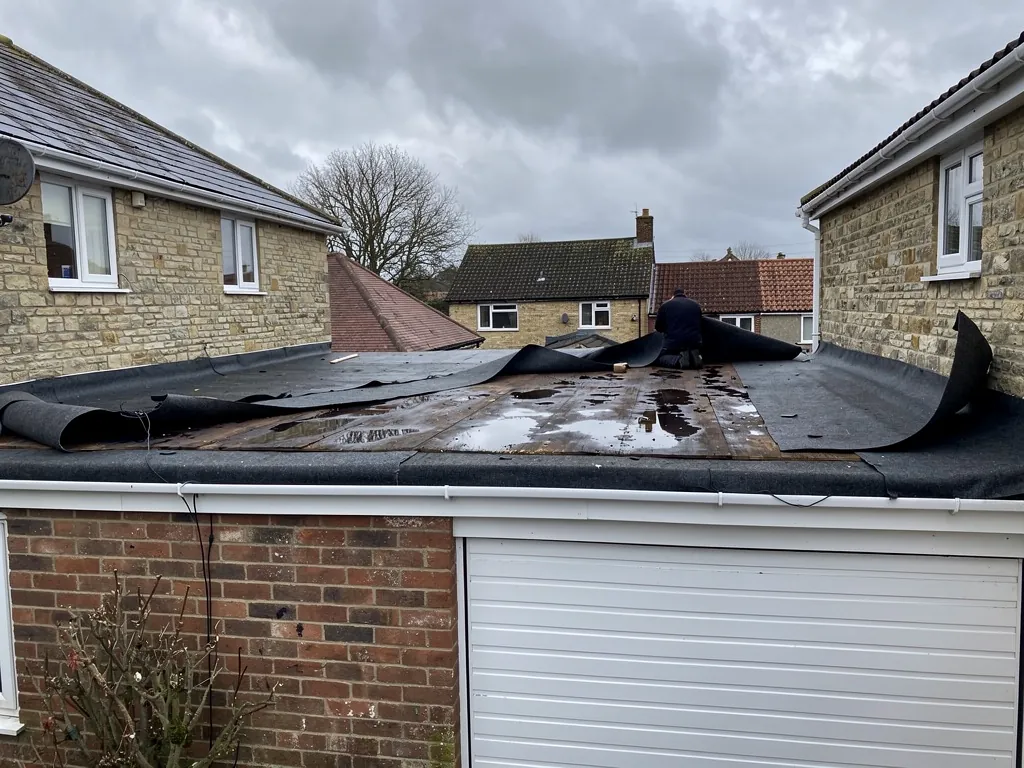
Wind-torn membrane peeled back from a wet flat garage roof
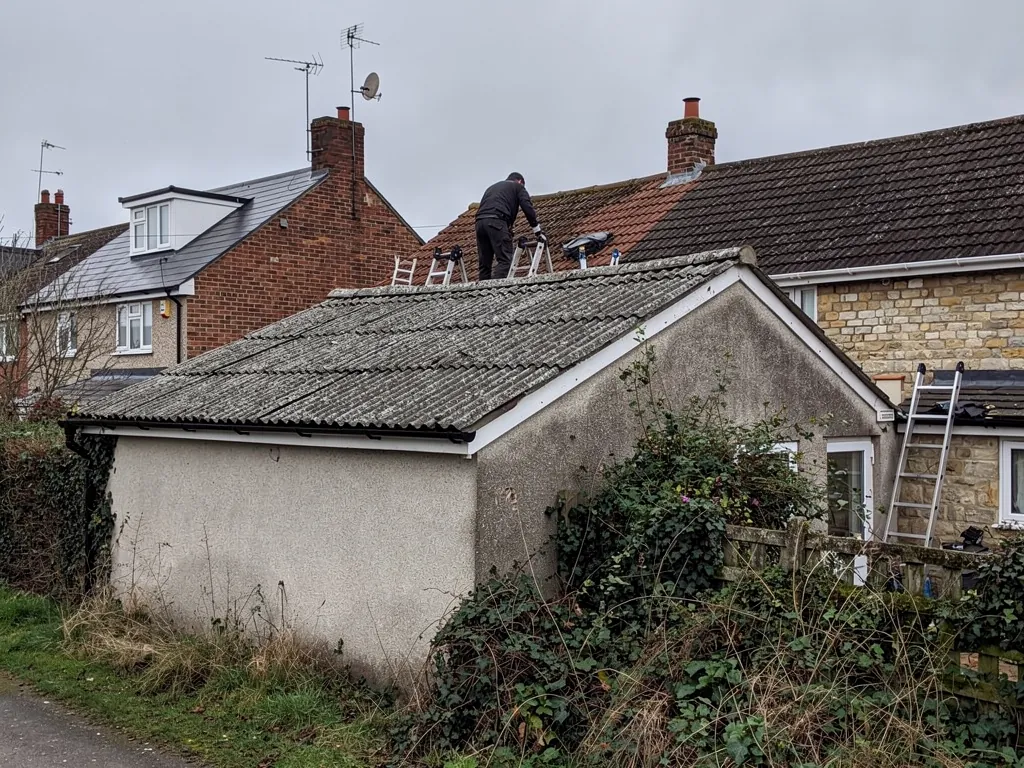
Old corrugated sheet roof on a rendered garage beside houses

The short answer

The pitch and age of the building decide it. A steep garage can take tiles or slates, a shallow or flat roof wants a membrane such as EPDM or GRP, and any old corrugated sheet should be identified for asbestos before a tool goes near it.

Village properties often arrive with outbuildings altered more than once. A garage gains a lean-to, a workshop swaps timber for block, a barn becomes a home. Each needs a covering that suits the structure under it, not the one that happens to be on the van.

Can tiles go on a shallow garage roof?

Tile makers publish a minimum slope for each product, and many garage roofs sit below it, particularly lean-to additions built against a boundary wall. Laid too flat, tiles let wind-driven rain creep back up under the laps. Our pitched roofing page explains how pitch and covering are matched. Under the limit, a membrane is the better choice.

Is a flat garage roof worth repairing?

If the deck is dry and the fault is local, patching a split seam or resealing an upstand makes sense. If the boards have gone soft after years of slow leaks, a new membrane over fresh decking is the straighter call. The flat roofing page sets out the options.

What if the old roof is corrugated sheet?

Asbestos cement was widely used on outbuildings before 2000, and HSE advice is to assume it is present in older buildings until tested. Lifting whole, undamaged sheets with care is non-licensed work, but breaking them up changes the rules and the risk. Do not drill, scrub or jet-wash them. Tell us when you book, and tell us if the garage was built before 2000, and we plan the job around what is likely to be up there.

The survey photographs show how each outbuilding roof is made, and the written quote follows.

Outbuilding rule

Choose the covering by pitch, and have any old sheet identified before anyone touches it.

Roofing services in Appleshaw

Appleshaw questions, from church to garage

Why would a slate roof leak when the slates look intact?

Slates can look perfect from the lane and still hang by a rusted nail, or let water past a cracked lead apron beside a chimney. Leaks tend to start where one part of a roof meets another, not out on an open slope, so the survey checks edges, valleys and abutments before anything else and the photographs show you each spot.

Do you work on the roofs of chapels, halls and school buildings?

Yes, on community and commercial buildings as well as houses. Those roofs often have long slopes, parapet gutters (box gutters set behind a low wall) and lead details that need proper access equipment, so we plan the access first, photograph the roof and give a written quote after the survey.

Can an older ridge in Appleshaw be re-bedded without scaffolding the house?

Sometimes, depending on height and what sits below it. A ridge on a low outbuilding may need only a tower, while a two-storey house needs edge protection. The access is explained before work starts, and when you compare quotes it is sensible to ask each firm whether scaffolding and VAT are included.

Do you reach the parishes either side of the county boundary?

Yes. Appleshaw lies within thirty road miles of our base in Swindon, and parishes on both the Hampshire and the Wiltshire side of the boundary are included. A look at the list on our areas page settles any doubt about your address, and the enquiry form or a phone call confirms it.

Ask us about your roof

Tell us what’s happening and we’ll call you back.

  • Photos of what we find
  • A written quote
  • 10-year workmanship guarantee

Or call 01793 626096

Call Get a quote