The short answer
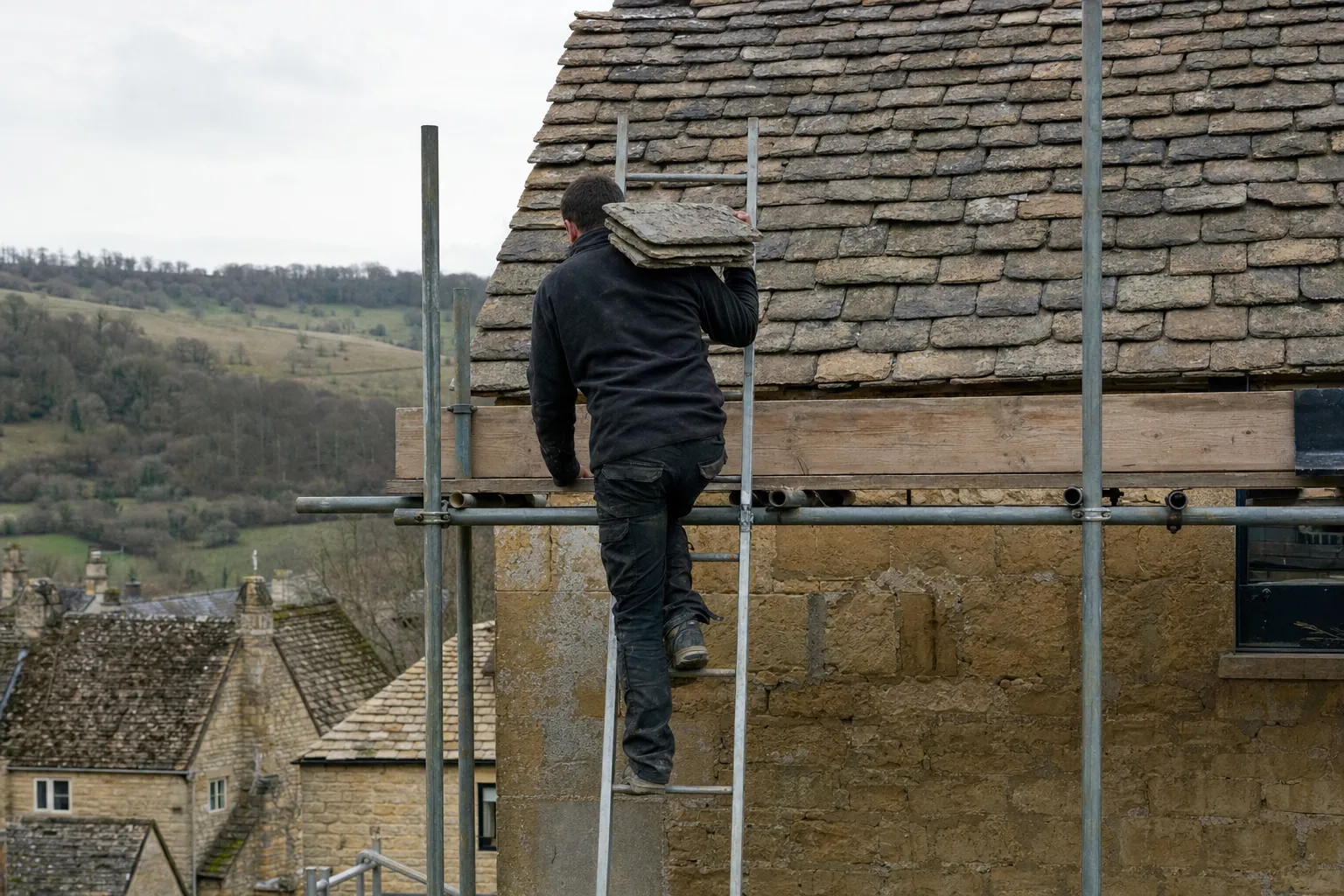
The village shows a real mix: thatch on some farmhouses, brick-fronted houses and cottages with sarsen walling. A repair should respect whatever the building already has. For tile and slate, that means matching size, colour and fixing method, and avoiding anything heavier or brighter than the roof beside it.
Avebury grew slowly, and its roofs show it. Different centuries sit side by side along the same lane. The county history notes sarsen in the walling of centre-village cottages, a thatched farmhouse at Westbrook, and an eighteenth-century chequered brick front at Bannings. Nobody built to a single pattern, so a roofer here has to read each house on its own terms.
Q1.1How is a clay tile roof repaired here?
Handmade-look clay tiles suit the older cottages, and the repair task is usually to renew slipped or frost-damaged tiles and to re-bed the ridge. Clay tiles can last a long time when they are fixed well. Where the pitch is steep and the battens are sound, there is rarely a reason to strip a whole slope for a few failures. Frost is the usual culprit: water that gets into a tired tile freezes, expands and flakes the face away, so we look at the tiles along the lower courses, where water sits longest.
Q1.2What goes wrong with natural slate?
Slate on a later cottage or a Victorian addition is thin, light and laid in regular courses. Trouble comes from rusted nails and cracked slates at the eaves rather than from the slate itself, and a slipped slate can often be secured again with a fresh copper or stainless fixing, with a small strip of lead called a tingle holding it in place. Our slate roofing page explains how a slate repair is carried out and when a whole slope has to be re-slated.
Q1.3What about the roofs beside thatch?
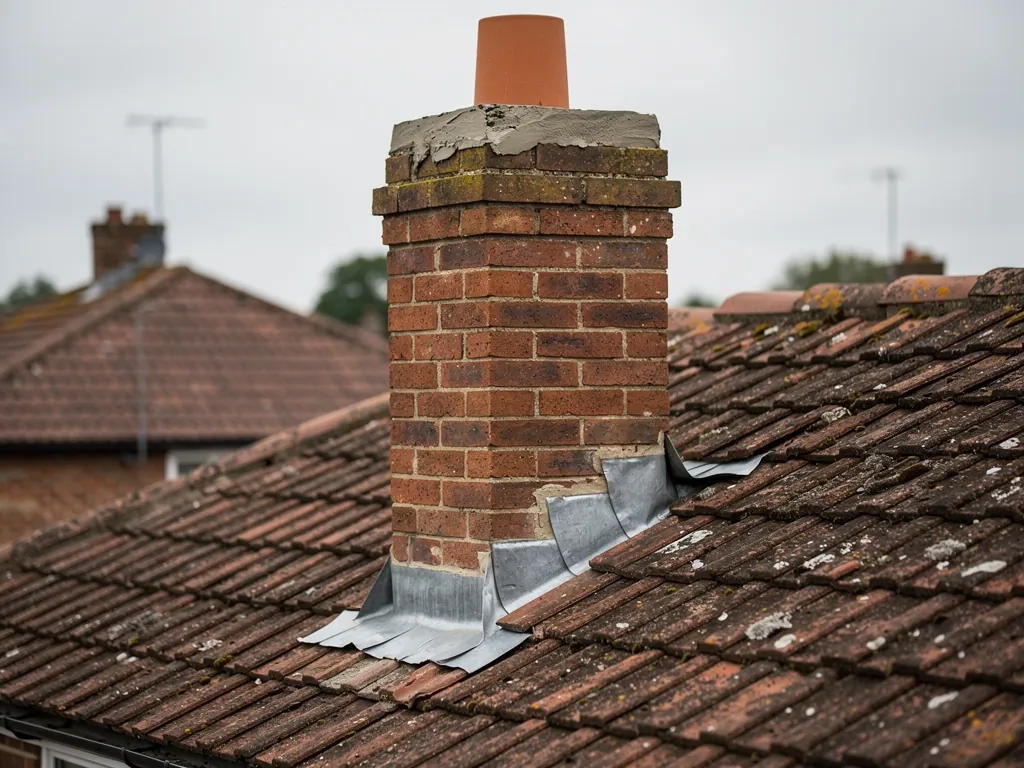
A thatched roof has its own materials and methods. Alongside one, our work is the neighbouring tile or slate outbuildings, the chimney stacks that rise through the thatch and the lead where a stack meets a different covering. Chimney repairs matter here because a fire-safe, weathertight stack protects a roof that cannot easily be patched.
Whichever covering you have, the principle is the same: change as little as the fault allows, keep the character of the roof, and photograph everything before work begins. The photographs go into the written quote, so you can compare them with what is finished.