Brick and limestone cottages around a small village green

Roofers in Ashton Keynes

Pitched roof repairs, re-roofs, lead work and flat roofs in Ashton Keynes, from the stone houses around Holy Cross church to the newer homes and outbuildings near the Water Park lakes, each priced in writing after a survey.

Ashton Keynes roofs, between the Thames and the lakes

Old stone cottages beside a village stream
The old core beside the river

The Thames splits into two channels that form a large square around the parish and enclose the western half of the village. Around those channels sit the Grade I listed Church of the Holy Cross, of coursed limestone and restored by William Butterfield in 1876 to 1877, the Grade II listed Gumstool Bridge and Ashton Mill, and Ashton House, also Grade II. Roofs on buildings like these are laid with real attention to detail: lead-lined valleys, hand-dressed flashings and ridges that meet old masonry. A leak at one of those junctions is a small repair if it is found early. Left through a winter it can reach timbers that are hard to replace, so we trace the path of the water before touching the covering.

Converted barn with a long tiled roof
Cottages, farmhouses and conversions

Away from the listed landmarks and the riverside, the village has the mix you would expect of a place that has grown for centuries: cottages along the lanes, farmhouses with later extensions, and barns converted into homes. Pitched roofs of this sort show their age at the same points. Hips and valleys open up, chimney stacks lose their flashings, and rafter feet decay where a gutter has leaked for years. Barn conversions bring a further question, because a large roof with few penetrations hides its faults well. A proper look in the roof space, with a torch and a moisture meter, finds damp patches before they stain a ceiling.

Garden room with a flat membrane roof
Lakeside homes and outbuildings

The village lies within the Cotswold Water Park, designated in 1967, where twentieth-century gravel extraction left the lakes. Houses and garden buildings close to open water and tall trees collect leaves, needles and bird droppings in their valleys and gutters, and the damp air encourages moss and algae on shaded slopes. Garden rooms, garages and extension roofs there are often flat or shallow in pitch, in felt, EPDM or GRP. Ponding after rain, blocked outlets and cracked edge trims are the faults we expect, and clearing and re-sealing is sometimes all a flat roof needs.

From Swindon up to the Water Park

Map showing Ashton Keynes and central Swindon. 14 road miles north-west of central Swindon.

Distance
14 road miles north-west of central Swindon
Council
Wiltshire Council
Conservation area
Ashton Keynes Conservation Area, with a Conservation Area Statement
Setting
Thames-side village in the Cotswold Water Park, near the Gloucestershire border
Council
Wiltshire Council

What Ashton Keynes householders ask about roofs

Does the Ashton Keynes conservation area cover my house?

Wiltshire Council holds the boundary. Like-for-like work seldom needs consent, but check the boundary and whether the house is listed before changing any roof material.

Can lakeside damp shorten the life of a roof?

It speeds up moss, algae and gutter blockage, which are routine to fix. Neglected, they can send water behind flashings and into the roof timbers.

Do you repair roofs on the Grade II houses near Gumstool Bridge?

Yes, in matching materials and methods. Work that alters what makes a listed building special needs consent, and the method is fixed with you before a start date is chosen.

Q1

What does Ashton Keynes' conservation area mean for roofing?

Roofers on a slate roof along a limestone village street
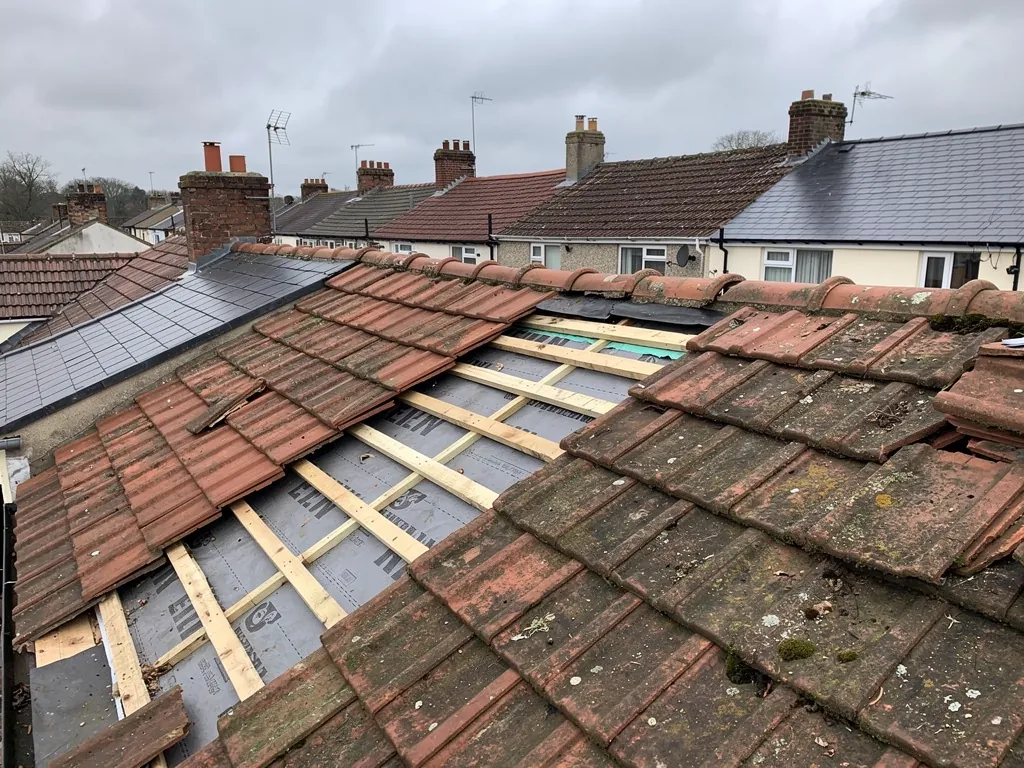
Clay tile roof opened to battens and membrane for repair

The short answer

Ashton Keynes has a conservation area with its own Conservation Area Statement, and the council's job there is to protect the village's character. A repair that puts back the same materials seldom needs an application. Switching the covering, adding roof windows or touching a listed building usually does, so ask before you order anything. A phone call to the planning team is quick and gives you a definite answer.

Wiltshire Council's open data shows an Ashton Keynes Conservation Area, and a Conservation Area Statement exists for it. The statement is the document to read if you want to know what the council values about the village before you plan anything visible from the street.

Do repairs and replacements need consent?

Putting back what was there counts as maintenance, and nobody needs to apply for it. Refixing slipped tiles, replacing cracked ones with a match, or re-bedding a ridge are all work that leaves the appearance as it was. The question changes when the covering itself changes. Swapping clay for concrete, or stone slate for a lookalike, alters how the roof reads from the lane, and that is the sort of change a conservation team wants to see first.

What other protected-land rules apply?

Land inside a conservation area counts as article 2(3) land. That does not stop a normal re-roof, but it does remove permitted development for dormers. Roof windows are covered in our skylights section, where the planning rules are set out in full.

If your house is listed, the position is stricter. Listed building consent is needed for alterations that affect its character, and the planning team can confirm whether the listing takes in the roof. Asking costs nothing, and a refused application costs months.

None of this is a reason to put off a repair. A slipped tile that lets water into a rafter does more harm than a short phone call to the planning team, so send us a photograph and the address, and we will draft the question to put to the council before any work is priced.

Before you order

Match the old covering and little needs permission; change it and ask the council first.

Q2

Does lakeside damp damage roofs near the Water Park?

The answer

Not directly, but it makes small problems grow faster. Shaded slopes grow moss and algae, leaves clog valleys and gutters, and water that cannot drain backs up under tiles and behind flashings. Regular clearing and a check of the junctions keeps the roof sound without major work.

Ashton Keynes sits inside the Cotswold Water Park, designated in 1967 on land where gravel extraction left a scatter of lakes. The Thames runs through the parish in two channels, and parts of the parish flood periodically. A house here lives with more water in the air and the ground than most.

What do moss, algae and shade do to a roof?

Roofs under trees and on north-facing slopes stay damp longer after rain. Moss holds water against tiles, and in winter that water freezes and expands in the pores of the material. A gentle clean followed by a check of every tile is usually enough. Pressure-washing a tile or slate risks stripping the surface and driving water into the joints, so we avoid it. Our roof cleaning and moss removal page explains the methods.

Why do gutters and drainage matter here?

The roof is only half of the water system. Downpipes that discharge close to the wall, soakaways that have filled with silt, and gutters sagging under leaf litter all send water into the structure. On a plot that already floods now and again, getting rain away from the building quickly is the best protection the roof can have.

What about flat roofs and outbuildings?

Garden rooms and garages close to water suffer more from standing water on a flat covering. Falls that were too shallow when the roof was built show up as puddles, and a membrane that sits in water ages faster. We can often adjust outlets or add a local fall without relaying everything.

A twice-yearly look at gutters, valleys and the shaded slopes is low-cost upkeep that heads off most of the bigger jobs, and it takes an hour or so with a ladder and a torch. Where branches overhang the roof, trimming them back also cuts the leaf fall and lets sunlight dry the slope, which slows moss for years.

Q3

Can listed Ashton Keynes roofs be repaired like for like?

Rolled lead roof covering over a bay above white windows
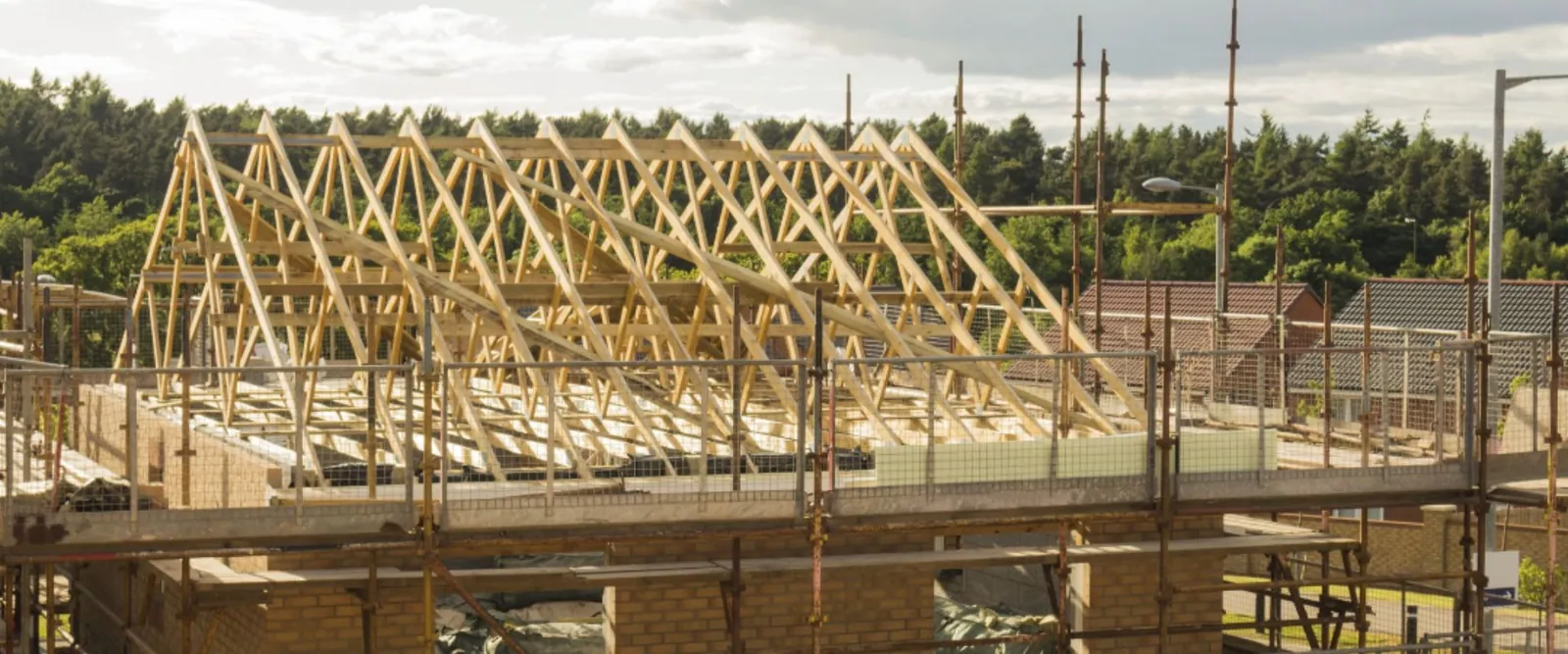
Timber roof trusses on a new brick house behind scaffolding

The short answer

Yes. Repairs that use the same materials, in the same way, are the usual approach on listed buildings, and they generally leave the building's character unchanged. Changes to appearance, or removal of original covering, call for listed building consent, so the method is fixed with you, and with the council where needed, before work begins.

Ashton Keynes has the Church of the Holy Cross, listed Grade I in 1955, and Grade II buildings including Gumstool Bridge, Ashton Mill and Ashton House. Not every old house in the village is listed, and listed status often applies to a whole building including its roof, so it is worth checking before you start.

What does like for like mean?

It means the same material, in the same size, fixed in the same way. A stone or clay tile that has failed is replaced with a match. A lead valley is renewed in lead, not swapped for a plastic liner. Where original covering survives, we keep as much of it as the structure allows and make up any shortfall from sound salvage taken from the same building. Our page on Cotswold stone roofing covers how stone coverings are laid and repaired, for roofs where that applies.

How are churches and chapels handled?

A church still used by the Church of England goes through the faculty system rather than the council's listed building process. That route belongs to the parish, whose architect knows what the diocese expects. The rule for most other denominations is similar, but a Unitarian or Quaker building is not exempt, and a church that has closed is subject to ordinary controls.

What about the timber and lead you cannot see?

The roof covering is only what you can see. Underneath, rafters, purlins and wall plates carry the load, and on an old building they often need as much attention as the tiles. We photograph hidden timbers when the covering comes off, and what we find may alter the scope before a decision is made.

Unsure about your own house? The National Heritage List and Wiltshire Council can both confirm its status, and we can read the entry through with you.


MythListed buildings cannot have their roofs touched.

FactCareful like-for-like repair is normal on listed roofs; consent is needed when the work changes the building's character.

Roofing services in Ashton Keynes

Questions from the village by the Thames

Why do roofs near the river and lakes seem to grow moss so quickly?

Shade, trees and damp air keep a slope wet for long periods, and moss thrives in that. It is not a fault in the roof itself. We clear it gently, check every tile underneath for damage, and advise on keeping gutters and overhanging branches under control.

Can you mend the roof of a converted barn in Ashton Keynes?

Yes. Barn roofs are large, with few joints to watch, so the work is about checking the covering, valleys and the junctions with any new rooflights or extensions. We look at the underside from inside before pricing, because hidden damp is common on long, quiet slopes.

Do you cover the hamlets around Ashton Keynes?

Yes. Somerford Keynes, Leigh, Cricklade and the other places nearby are within our area. If your lane is not named here, the areas page shows the full list of places we reach.

My flat garage roof holds water after rain. Does it need replacing?

Not necessarily. Ponding comes from low falls, blocked outlets or a sagging deck. We check the deck first, then the outlets, and recommend a local repair when the membrane is otherwise sound. A full replacement is advised only when the covering has failed overall.

Ask us about your roof

Tell us what’s happening and we’ll call you back.

  • Photos of what we find
  • A written quote
  • 10-year workmanship guarantee

Or call 01793 626096

Call Get a quote