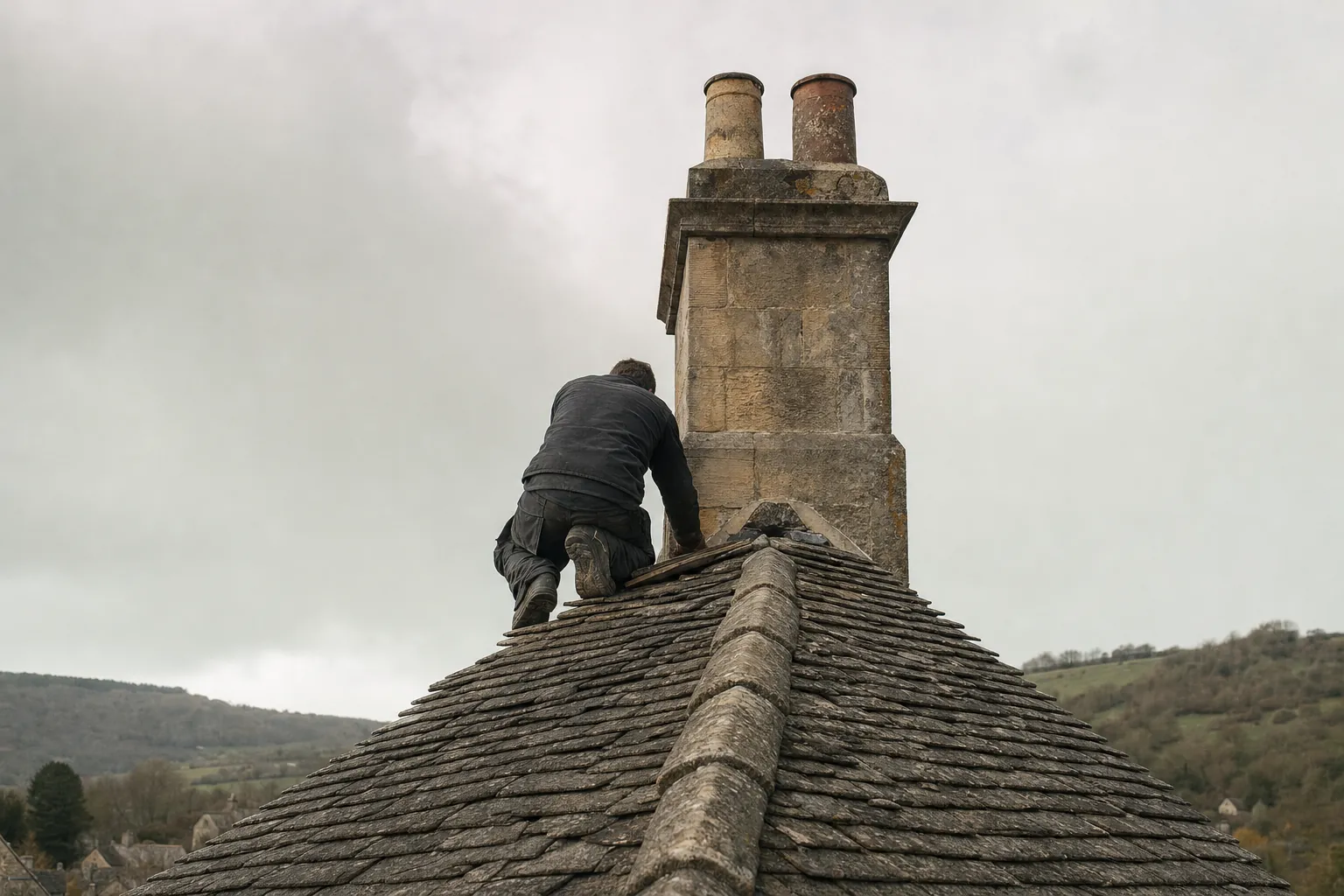
The short answer
Look for stones that have slipped or dropped into the gutter, daylight or damp patches in the loft, and a roof line that has gone wavy. Fixings, battens and any felt beneath usually give way before the covering itself does, so the stone is seldom the culprit.
Where a house in Ampney Crucis carries a stone slate roof, the surface can look tired for years while the structure beneath stays sound. The skill lies in telling cosmetic age from real trouble.
Q1.1What does age do to stone slate?
Stone slates weather, take on lichen and soften at the edges, and none of that is a fault. What does matter is movement: stones sliding down their pegs, courses opening up, and gaps showing at the ridge. Cotswold District Council's own technical guidance, written in 2000, records that a Cotswold roof can easily last a hundred years with regular maintenance, and that a common finding at stripping is that a good share of the slates have perished.
Q1.2What sits under the stones?
Traditional stone slates are hung from pegs, often oak, over timber battens. Pegs rot and battens soften long before the stone does, so a roof can be sound in the stone and failing in what supports it. A loft inspection after rain, looking for fresh staining on battens and rafters, tells us more than any view from the ground. If you can tell us which rooms get damp, and in which wind direction, we can focus the survey on the slope that matters.
Q1.3Should the roof be repaired or re-laid?
Where only a few stones have gone, they are refixed or replaced with matching stone. If an entire slope is on the move, it is wiser to strip it, sort the stones by size, fit new battens and re-lay everything in its original sequence of courses. Our Cotswold stone roofing page sets out that process in more detail.
Before anything is decided, the survey records your roof in photographs, and the written quote is built on what those pictures show. A roof like this rewards patience, and the loft visit often matters as much as the climb outside.