
A ridge job looks small from the pavement: a row of curved tiles capping the roof, with a strip of crumbling mortar beneath them. The price, though, swings with the length of the run, the number of hips, the height of the eaves and whether the tiles underneath are fit to go back on. A short ridge on a bungalow and a long ridge with two hips on a three-storey Victorian house are different jobs, even though both are called a rebed.
This guide sets out the national ranges that third-party cost guides publish for rebedding, replacing and repointing ridge and hip tiles, then explains what pushes a real figure up or down. Those ranges are typical UK numbers, not a Skyline price list. Our own figure is put in writing after we have been up to look at your roof, because a ridge can only be priced properly by seeing it. If you are still deciding what the work should be, our guide to rebedding ridge tiles covers the method step by step, and the wider ridge, verge and dry-fix section covers the alternatives.
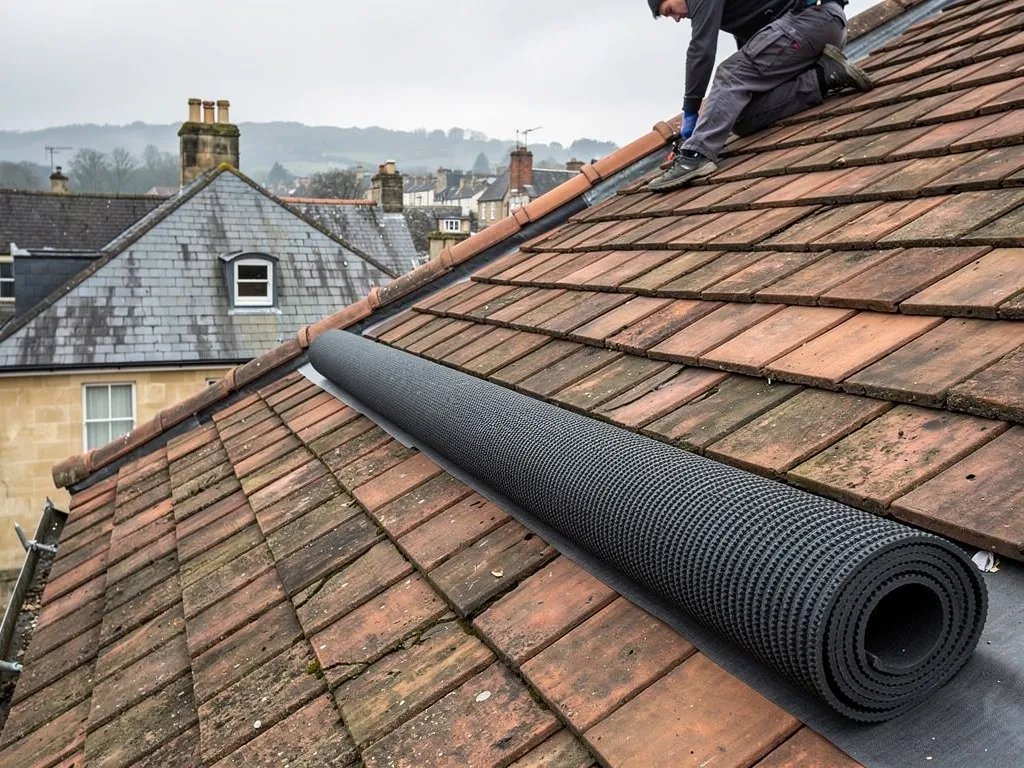
What do ridge and hip repairs cost in the UK?
MyBuilder's slate roof cost guide, updated on 21 August 2026, gives two figures that apply to ridge and hip work on pitched roofs generally. Re-bedding or replacing ridge tiles is listed at £300 to £600. Repointing ridge or hip tiles is listed at £200 to £400. Because both come from a national guide, a Wiltshire job can land inside them, above them or below them.
| Job | Typical UK range | Source |
|---|---|---|
| Re-bedding or replacing ridge tiles | £300 to £600 | MyBuilder slate roof cost guide, updated 21 August 2026 |
| Repointing ridge or hip tiles | £200 to £400 | MyBuilder slate roof cost guide, updated 21 August 2026 |
| Dry ridge system | £40 to £60 per linear metre; typical job £500 to £1,000 | MyBuilder dry ridge installation guide, updated 21 August 2026 |
Read the table as a map of where a job is likely to sit, not as a promise. A guide that covers the whole country averages cheap regions with dear ones, small roofs with large ones, and easy access with awkward access. It also cannot see your tiles.
If you want the dry-fix figures worked out per metre for a hip as well as a ridge, our page on dry ridge and dry hip cost goes further into those numbers.
Why repointing costs less than rebedding
Repointing leaves the ridge tiles where they are. The roofer rakes out the loose or cracked pointing along the joints and the lower edges and fills it with fresh mortar. It is quicker, uses less material and rarely needs more than one person up at the ridge for part of a day, which is why MyBuilder's range sits lower.
Rebedding means lifting every tile, cleaning off the old mortar, laying a new bed and setting the tiles back, usually with mechanical fixings added. That takes longer and brings more risk of breakage, since old clay and concrete ridge tiles can crack as they come off. Any that break are replaced, which moves the work towards the upper end of the replacing range.
Is repointing ever the right answer?
Sometimes. If the tiles are sound, firmly bedded and the pointing alone has weathered, repointing is the gentlest repair that works, and it is what goes into our quote. If the tiles rock when pressed, or the bedding underneath has dropped away, fresh pointing hides the problem for a season and the tiles come loose in the next gale.
What about the 2014 fixing change?
BS 5534:2014 no longer lets a bed of mortar count as the only fixing for the tiles along a ridge or hip, which are screwed or clipped down too. A repoint does nothing to add those fixings, so on an older roof built before the change we say plainly when a repoint would be a short-term repair and when a rebed with fixings is the sounder spend. Our answer on whether you can just repoint ridge tiles explains the choice.
What moves the price of a ridge job up or down?
Four things matter most, and a survey settles all of them.
- Length. A ridge is priced by its run. A hipped roof adds a hip to each corner, and every hip has its own tiles, bedding and often a hip iron at the foot to stop the lowest tile sliding.
- Tile type. Plain half-round and angled concrete tiles are easy to source. Old clay ridge tiles, crested ridges and some colour-matched ones take longer to find and cost more to replace one by one.
- Condition. Tiles that lift cleanly and can be reused keep the total down. Cracked ones are replaced, and a bed that has failed along its whole length may reveal a rotten ridge batten or loose end tiles that also need attention.
- Height and shape. A short bungalow roof, a ridge tucked behind a parapet and a ridge three storeys up above a narrow terrace yard are all different problems to reach.
Nothing here is unusual. It is simply why two houses that look alike from the street can produce two very different written quotes. Colour and finish matter as well: a ridge that has weathered to a mottled grey rarely matches a box of new tiles, and a roofer who is asked to blend the repair in will spend longer sorting reclaimed and new pieces along the run. Hips raise the stakes further because a cut tile has to meet the hip ridge cleanly where two slopes join, and that detail takes time to get right and to seal against driven rain. When we survey, we photograph the ridge close up and show you the tiles that move, so you can see why the work is what it is.
Look for a plain statement in every price you are given of whether VAT and scaffold are included. Those two answers explain much of the gap between prices for the same ridge.
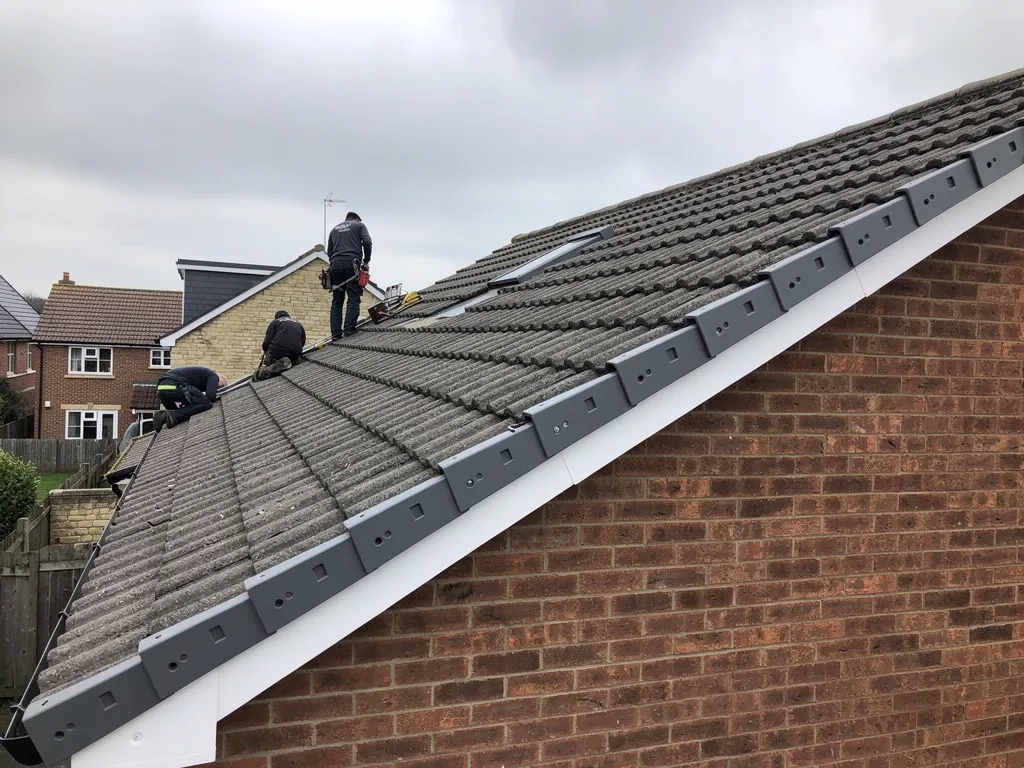
What does access add to a ridge repair?
Access is the largest swing factor that has nothing to do with the tiles. A ridge over a low rear extension may be reachable with a long ladder and a roof ladder hooked over the top. A ridge on a two-storey semi usually needs scaffold at the eaves, or a tower where the ground allows one, because a roofer has to work in a way that is safe for the length of the job, not only reach it.
MyBuilder's scaffolding guide, updated on 21 August 2026, gives around £850 to £1,200 to put scaffold up around an ordinary two-storey house, and £400 to £900 for high-level chimney scaffold. Checkatrade's scaffolding guide, updated in February 2026, quotes a monthly figure of around £875 for a semi, and £660 for a week of chimney scaffolding. These are national figures for different scaffold set-ups, so none of them is the price of your house.
Can access be shared with other work?
Yes, and it is often the least wasteful route. If the gutters are due to be replaced, or a chimney needs repointing, one scaffold can serve several jobs. We flag this at the survey when we spot it, because paying for scaffold twice is an avoidable cost.
Do you always need scaffold?
No. On low roofs, a few loose ridge tiles can be refixed from a ladder with roof access equipment. Our answer on whether ridge tile repairs need scaffolding sets out when we would and would not use it.
How do mortar and dry-fix totals compare?
Dry ridge replaces the mortar bed with a batten, clips or screws, rubber or foam seals and a cap system. MyBuilder's dry ridge guide, updated 21 August 2026, gives £40 to £60 per linear metre and a typical job of £500 to £1,000. Checkatrade's 2026 roof repair guide gives £50 to £70 per metre for dry ridge and £70 to £100 per metre for dry hip, exclusive of VAT.
Set beside the £300 to £600 that MyBuilder publishes for rebedding or replacing mortar-bedded tiles, dry-fix usually costs more on the day. The case for it is on the other side of the ledger: there is no mortar to crack, so the ridge needs less attention over the years, and the tiles are held mechanically, and BS 8612:2018 is the specification that dry-fix products are tested against.
For some roofs, though, dry-fix is not the right call. Where tiles are of an unusual profile, where a heritage ridge is part of the building's character, or where the whole covering is nearly worn out and due for renewal soon, a mortar rebed with proper fixings is often the sensible smaller job. Our comparison of dry ridge against mortar goes through the trade-offs, and the page on how dry ridge systems work explains what you are paying for.
When does a ridge repair turn into something bigger?
Occasionally a ridge job is the start of a larger conversation. Once the old bed is off, the roofer can see things that were hidden: a ridge batten that has rotted where water got in, split rafter tops, or a line of nails that has rusted through along the ridge course. Those are repairs in their own right and they are priced on what the survey and the opened-up ridge show.
A fair question to ask is whether the tiles themselves have had their day. A roof where slipped or crumbling tiles are appearing across the slopes, not only at the top, may be better served by planning a larger piece of work than by paying for a ridge now and a re-tile in two years. If that is what we find, the survey photographs will show it. Where the ridge is the only fault, the quote will be for the ridge alone.
What do you get with the written quote?
The survey leaves you with photographs of your own ridge and a written quote. If a repoint cures the fault, a repoint is what the quote will describe. The guarantee on our workmanship lasts ten years and comes in writing. Afterwards we sweep up, and the old mortar and broken tiles leave with us rather than staying in your driveway skip or garden.
If you suspect water is already getting in at the ridge, our answer on whether a ridge can leak explains the signs.