
Roofs are hard to judge from the ground, and the person you hire is asking you to trust what you cannot see. That is the real difficulty. You are not choosing between two kitchens you can walk round; you are choosing between promises about a covering well above your head, built in a week and tested by every winter after it.
The way through is to make the roofer show you things. Photographs, a written scope, a guarantee you can read, a total price in black and white. A good firm is happy to do all of that. This page walks through the sequence in order, with notes for the kinds of roof Swindon has: slate-covered railway terraces, concrete-tiled estate houses, stone cottages on the downs and the villages beyond. We are Skyline Swindon Roofing, and this is how we would want you to judge us. If you already have one name and want to test it, our shorter page on how to check a roofer is the faster route.
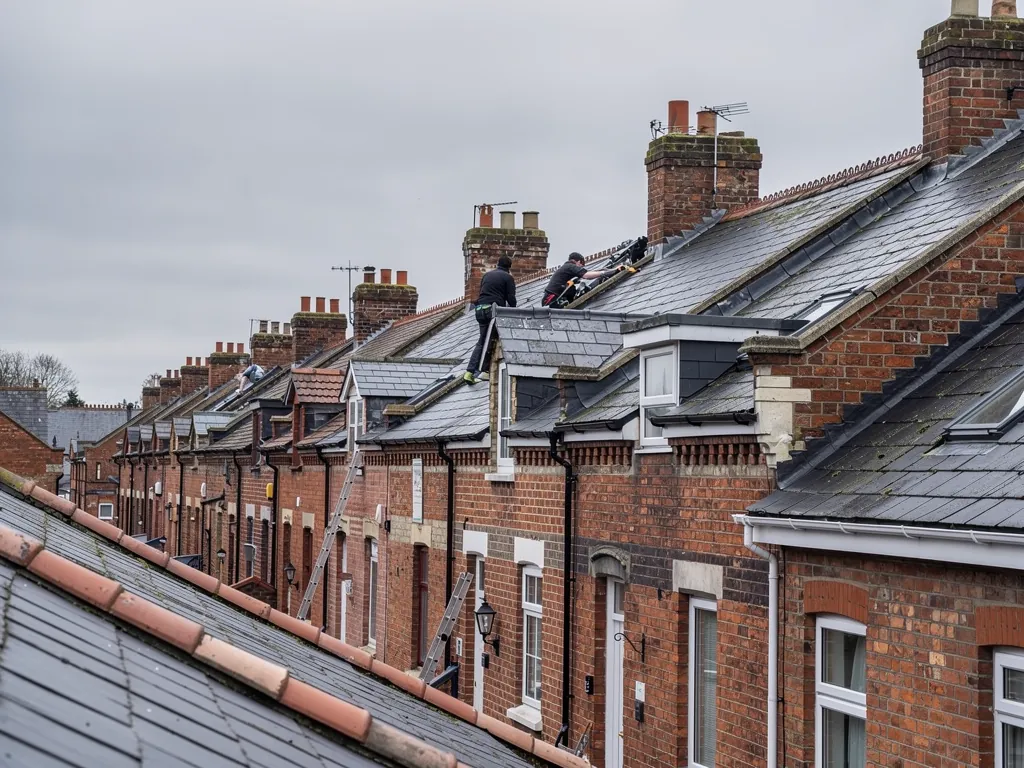
Before you ring anyone: know what you are asking for
The first mistake is to call a roofer with no idea what you want. "My roof is leaking" is a symptom. "I need a new roof" is a guess. A better opening describes what you have noticed: the position of the stain, the weather that brings it on, and what the roof is covered with.
Spend ten minutes first. Look at the roof from the street and the garden. Note the covering (slate, plain tile, interlocking tile, felt), the age if you know it, and any recent work. Check the loft with a torch for damp timbers or daylight. Take photographs. If you have a recent survey, a house purchase report or an insurance letter, find it.
Repair or replace: have a view, but keep it open
Some homeowners start certain that a whole new roof is needed when a repair would hold, and the opposite mistake happens too. Our guide to repairing or replacing a roof walks through how to weigh it up. Keep an open mind. The right roofer will tell you which it is and why, even when the answer is the smaller job.
Know your building type
A Victorian terrace, a 1980s estate house and a Cotswold-edge cottage need different skills and materials. Our overview of Swindon roof types helps you describe yours. If the roof is stone, slate or in a conservation area, ask specifically about experience with that kind of covering.
The first call and the survey visit
A first call tells you more than a website does. Listen for whether the person asks questions about the roof before offering a price. A firm that quotes a figure over the phone, for a roof it has not seen, is guessing or selling.
What you want from the first conversation:
- Questions about the problem, the covering and access.
- A clear explanation of what happens next.
- An offer to visit, or to inspect with photographs, before pricing anything.
- No pressure to decide that day.
What a proper survey includes
A survey means someone looks at the roof, the roof edge and, where it is safe and possible, the loft. They should photograph what they find, including the faults, and talk you through it. Ask for the photographs. We send survey photographs of your own roof with the quote, because you should be able to see what we are describing without climbing a ladder.
Be wary of the roofer who has just been passing
The knock on the door followed by "I noticed some tiles loose" is a pattern covered on our page about doorstep roofers. It does not mean everyone who knocks is dishonest, but unsolicited offers, a price that appears on the spot and urgency about a fault you cannot verify are all reasons to slow down.
The written scope and the total price
Once the survey is done, you should receive a written quote. It should describe the work in plain words: which slopes, which covering, what is stripped, what goes back, what happens at the edges, chimneys and valleys, and how the site is left. It should give one total price and spell out whether VAT and scaffolding sit inside it. If it is silent on either, ask.
A scope is not a list of materials. It is a description of the job. If you read it and cannot tell what will be done to the ridge, the flashings or the underlay, ask. Our roofing quote checklist sets out what a written quote should cover so you can hold any firm to it.
How many quotes?
Two or three comparable quotes is a sensible number for most jobs. More than that tends to produce confusion rather than clarity. What matters is that each firm priced the same job. Give everyone the same description, and compare the scope as well as the number. A much lower total often means something has been left out: a layer of underlay, scaffolding, new battens, waste removal.
Deposits
Ask what is expected up front and why. Materials for a big job may justify a payment; a large deposit before anyone has seen the roof is a warning sign. Our page on the roofer deposit explains what is reasonable.
What moves a price is access, the size of the roof, the covering chosen and anything the visit uncovers. National guides such as MyBuilder give an idea of scale, but only a survey gives your number. Our roofing costs guide has the national ranges.
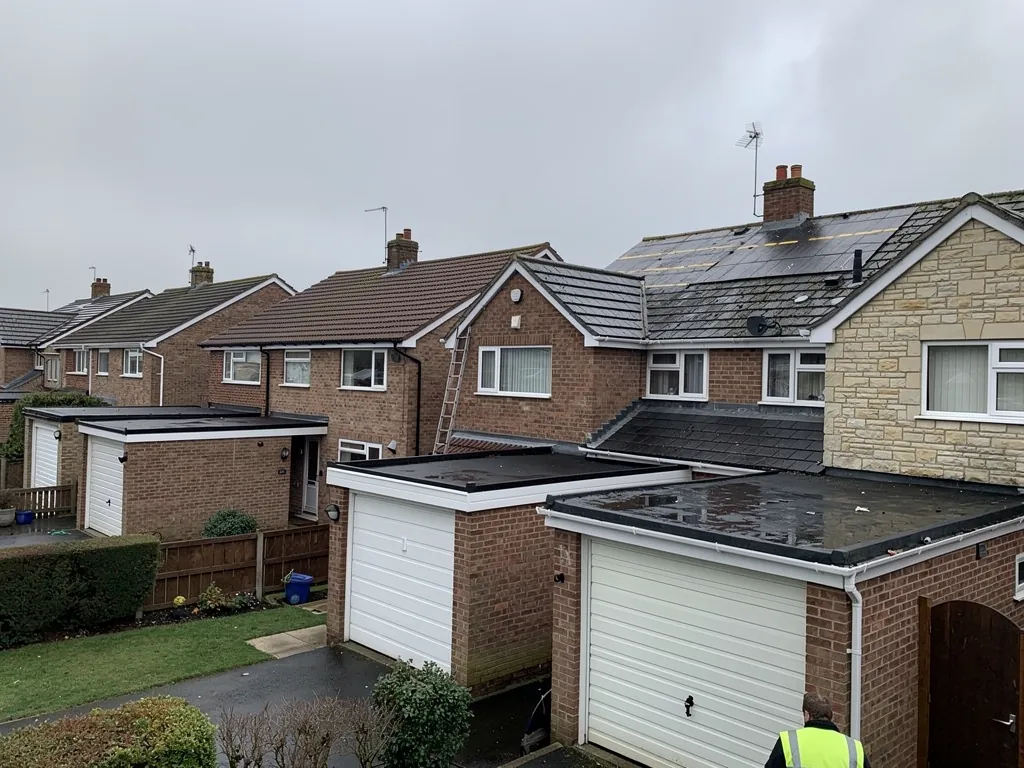
Guarantees: read the wording, not the headline
Almost every roofer offers a guarantee. The word on its own means little. What counts is what it covers, who stands behind it, how long it lasts and whether you have it in writing.
Ask three questions. First, what exactly is guaranteed: the workmanship, the materials, or both? Materials often carry a separate manufacturer warranty, which is not the roofer's promise and is not a lifespan. Second, who pays if the firm closes, changes name or disappears? A guarantee is only as strong as the business giving it, unless something independent stands behind it. Third, what voids it? Some guarantees lapse if you do not keep the roof maintained or if someone else works on it.
Our guarantee is 10 years on workmanship, in writing. It is a promise from us, not an insurance policy, and it is described as exactly that.
Insurance-backed or not
Some guarantees sit behind an insurer, so cover carries on if the contractor stops trading. Others are simply the contractor's word. Both can be offered in good faith, but they are different things and you should know which one you are being given. Our page on guarantees that an insurer stands behind explains the difference. For a clear view of what your own home policy will and will not do for a roof, see roof insurance cover.
Finally, check that the guarantee covers the work you are buying. A firm that guarantees a new roof but not the chimney flashings it also touched has left a gap.
Your rights once you sign
The law helps you more than most people expect. The Consumer Rights Act 2015 treats every contract to supply a service as including a term that the trader must perform it with reasonable care and skill. If they do not, remedies include the right to require repeat performance and the right to a price reduction.
The 14-day cancellation period
If you sign a contract at your home, it is what the regulations call an off-premises contract. You can cancel without giving a reason within 14 days after the day the contract is made. For a service, the period ends at the end of 14 days after the day the contract is entered into. If the trader does not give you the right information about cancelling, the period can extend. A roofer may begin inside that window only if you have expressly asked, and for a contract made at your home the request has to be in writing, as a letter or an email. If you cancel after work has started, you pay in proportion to what has been supplied.
Our page on the cooling-off period covers this with examples. Do not let anyone tell you the period does not apply because you invited them round.
Planning and Building Regulations
A competent roofer should explain whether your job needs consent. Replacing like with like seldom needs a planning application, with listed buildings and Article 4 streets as the exceptions. According to the Planning Portal, a building control application is not usually required unless the work reaches 25 per cent of the building envelope or 50 per cent of the roof. Where a job is notifiable under the Building Regulations, we explain the consent and make the notification. If you want to check yourself, speak to Swindon Borough Council's planning team or your building control body.
Red flags, from first knock to final invoice
Most bad experiences share a handful of warning signs. None of these on its own proves anything, but several together are reason to stop.
- A price given without seeing the roof.
- Pressure to decide today because materials are "left over" or the weather is turning.
- Cash only, or a request for the full price up front.
- No written quote, or a quote that does not describe the work.
- No fixed address or landline, only a mobile and a messaging app.
- Refusal to give photographs, or photographs that look like anyone's roof.
- Vague answers about guarantees, waste removal and who will actually be on site.
When the work has gone wrong
If work is poor, tell the firm in writing, with photographs, and give them a chance to put it right. Keep every message. Our page on spotting a bad roofer helps you recognise problems early, while the page on roofer or builder covers the hiring choice for bigger projects where the roof is one part of a wider job.
What good looks like
The opposite list is simple. A roofer who asks questions, visits, photographs, writes down a total price, explains the guarantee, answers the awkward questions without sighing and leaves the site clear. Our crews take the rubbish away and leave the site tidy, and the phone number is on every page: 01793 626096, or WhatsApp, or the enquiry form.
Matching the firm to the roof
The last step is to make sure the firm suits your building. Swindon is not one kind of roof. Railway terraces carry slate and shared chimney stacks, where lead and party walls matter. Estate houses from later decades usually mean tiles, ridge and hip fixings and extensions with flat roofs. Villages towards the downs and the Cotswold edge can mean clay, stone slate or the occasional thatch.
Ask each firm about their experience with your type of roof, and what they would do differently from a standard re-tile. A good answer is specific. "We would check the lead at the party wall and re-use the slates where they are sound" says more than "we do all roofs".
Materials and the long view
Do not choose the covering by price alone. Lifespans differ: natural slate is often quoted at 80 to 100 years or more, concrete tile more often 30 to 60, and a flat roof 15 to 30 depending on material. These are typical ranges, not promises. Our guide to roofing materials compared sets them side by side.
Take your time
A roof that has leaked for a season will leak a week longer while you decide. The exception is an active leak, where a roofer can make the roof safe first and quote for the rest afterwards. Leaks and storm damage are prioritised, starting with stopping the water coming in. Beyond that, a decision made calmly beats one made under pressure.
And if the trade itself interests you, our page on how to become a roofer shows what a career on the tools involves.